




| Research Article | ||
Open Vet. J.. 2026; 16(7): 4904-4914
Open Veterinary Journal, (2026), Vol. 16(7): 4904-4914 Research Article Assessment of trypanocidal drug use for the control of bovine trypanosomiasis in Benin: a cross-sectional study among cattle owners in the northeastern zoneYao Akpo1, Aretas B. N. Tonouhewa2*, Justin K. Adinci2, Traore Alkoiret1 and Souaibou Farougou11Laboratory of Animal Ecology, Health and Production (LESPA), University of Parakou, Parakou, Benin 2Research Unit on Communicable Diseases (URMAT), Polytechnic School of Abomey-Calavi, University of Abomey, Cotonou, Benin *Corresponding Author: Aretas B. N. Tonouhewa. Research Unit on Communicable Diseases (URMAT), Polytechnic School of Abomey-Calavi, University of Abomey, Cotonou, Benin. Email: tonouhewaaretas [at] gmail.com Submitted: 27/11/2025 Revised: 20/05/2026 Accepted: 02/06/2026 Published: 27/07/2026 © 2025 Open Veterinary Journal
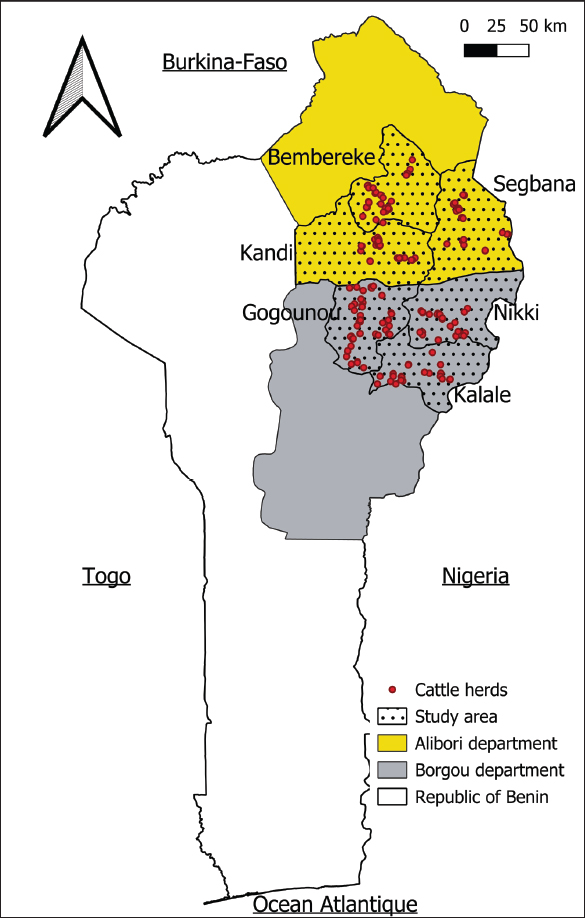
ABSTRACTBackground: Trypanocidal drug use is the main method used by farmers to control bovine trypanosomiasis in Benin. However, the recurring therapeutic failures observed on farms recently following trypanosomiasis treatment suggest the emergence of chemoresistance. Aim: To assess the use of trypanocidal drugs and livestock farmers’ knowledge of bovine trypanosomiasis in northwestern Benin. Methods: A cross-sectional survey was conducted using a semistructured questionnaire among 346 cattle farmers from six municipalities in the region. Farmers were selected using a stratified random sampling approach, and data were analyzed using descriptive statistics (frequencies and percentages) and inferential statistical tests, including the chi-square test, Wilcoxon test, and Kruskal–Wallis test. Results: Bovine trypanosomiasis was the most common disease reported by 98% of farmers, followed by foot-and-mouth disease (72%) and dermatosis (64%). More than half of the farmers (58%) self-diagnosed the disease based on clinical signs and treated it themselves (43%). Three main trypanocide families were identified: diminazene aceturate (60%), isometamidium chloride (30%), and quinapyramine (0.3%). Silizen, a drug based on the active ingredient diminazene aceturate, was the most widely used product despite not being available through the official distribution chain. Approximately 74% of livestock farmers obtained these drugs from the informal market, engaging in risky practices such as reusing leftover products (47%) and mixing them with antibiotics (20%). Treatment failure was reported by 32% of the respondents. Conclusion: This study demonstrates the prevalence of trypanosomiasis in cattle in northern Benin and highlights the recurrence of self-diagnosis and treatment of animals with trypanosomiasis by farmers, as well as the use of the black market to obtain trypanocides. These practices encourage drug misuse and increase the risk of drug resistance. Strengthening pharmaceutical control, training veterinary assistants, and raising awareness among livestock farmers are essential for improving disease management. Keywords: African animal trypanosomosis, Cattle, Drug resistance, Trypanocidal drug. IntroductionIn West Africa, African animal trypanosomiasis (AAT), commonly known as Nagana and transmitted by tsetse flies, significantly hinders cattle productivity (Maichomo et al., 2021). Caused by various Trypanosoma species, this parasitic disease remains a major obstacle to livestock development in at least 14 African countries (Vreysen and Marc, 2006; Kaboret, 2011; Cecchi et al., 2024; Cecchi et al., 2025). Despite the implementation of numerous control programs aimed at eradicating the disease in Africa since the 2000s, it remains endemic in many countries, resulting in considerable economic losses due to mortality, morbidity, and the costs associated with control measures (Oluwafemi et al., 2007; Meyer et al., 2016; Odeniran et al., 2020). In Nigeria, Odeniran et al. (2021) estimated the annual economic losses attributed to AAT in livestock at $577.7 million, making the disease a major concern for cattle farmers in this West African country. In Ethiopia, trypanosomiasis has been estimated to cause national economic losses of approximately $94 million per year, demonstrating that the disease remains a major obstacle to animal production in the country (Abro et al., 2021; Rebuma et al., 2024). To the best of our knowledge, there is still no effective vaccine to prevent the disease. To date, the fight against trypanosomiasis has primarily relied on two strategies in the absence of such a management tool: vector control and chemotherapy, which mainly rely on trypanocides (Kuzoe and Schofield, 2005; Pal et al., 2024). In West African countries, livestock farmers mainly use trypanocidal compounds such as diminazene aceturate and isometamidium chloride to control the disease. However, the efficacy of this strategy is increasingly compromised by the development of trypanosome resistance to these primary drugs, highlighting the imperative to evaluate the use of trypanocides in ruminant farms (Mungube et al., 2012; Tchamdja et al., 2017; Ogolla et al., 2024; Kikwai and C, 2025). In Benin, most livestock farmers adopt this strategy. However, recurring treatment failures on livestock farms in recent years, following the treatment of animals affected by trypanosomiasis, suggest the emergence of chemoresistance in the country (Akpo et al., 2025; Iwaka et al., 2025). This situation is often associated with the irrational use of drugs, in particular, underdosing, failure to comply with prescribed routes of administration, use of dubious quality products, and lack of standard diagnosis. The uncontrolled use of trypanocides not only aggravates the epidemiological situation of the disease by promoting the emergence of resistant strains, but also poses a threat to public health due to the potential presence of drug residues in the food chain. Therefore, evaluating the practices of trypanocide use in ruminant farms is imperative to identify the risk factors associated with the misuse of these drugs. In this context, this cross-sectional study was conducted to evaluate the use of trypanocides for the treatment of animal trypanosomiasis in cattle farms in the departments of Alibori and Borgou in Benin. In particular, the study consisted of (i) identifying the most commonly used trypanocides in the region, (ii) documenting the therapeutic and prophylactic regimens applied in the field, and (iii) assessing the knowledge of stakeholders in the livestock sector and their compliance with use recommendations. The results of this study will serve as a basis for the formulation of future programs to combat this vector-borne disease and manage chemoresistance. Materials and MethodsStudy duration and locationThis study was conducted between August and October 2025 in the northeastern zone of the Republic of Benin in West Africa (Fig. 1). To this end, a cross-sectional survey was conducted among cattle farmers in six municipalities, namely, Bembereke, Gogounou, Kalale, Kandi, Nikki, and Segbana, using stratified random sampling. These municipalities were part of the Alibori and Borgou Departments, which have a high concentration of cattle herds. These districts cover an area of around 30,900 km² and have a dry tropical climate dominated by savannah vegetation. This provides an ideal habitat for tsetse flies.
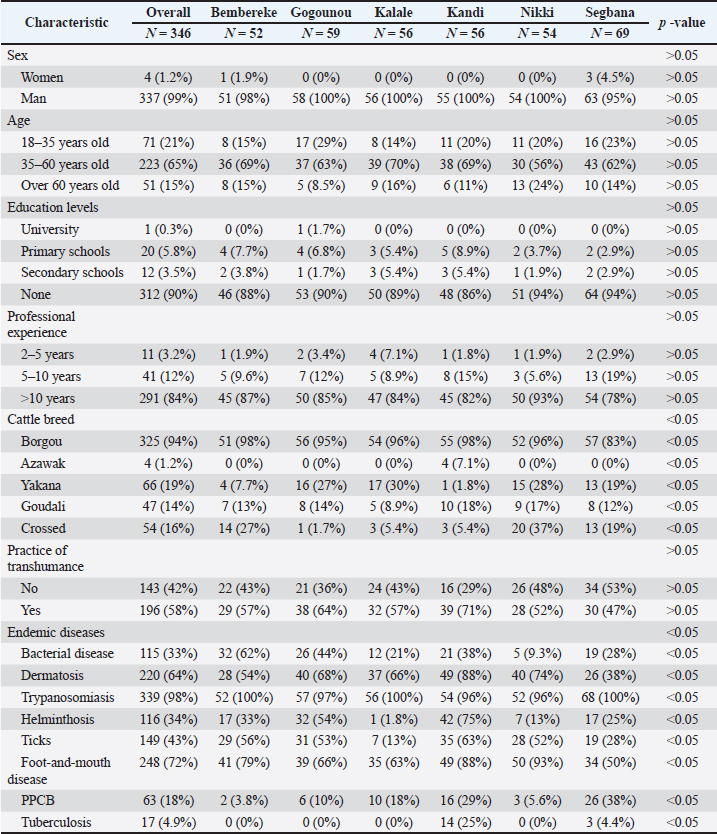
Fig. 1. Study location. Study design and sampling strategyThe minimum required sample size for this study was calculated using Thrusfield’s (2007) formula, assuming that 99% of farmers in Benin used trypanocides to control trypanosomiasis, as reported by Akpo et al. (2025). The minimum sample size was estimated to be 16 livestock owners using a 95% confidence level and 5% margin of error. A substantially larger sample of 353 livestock owners was surveyed to improve the representativeness and statistical robustness. A multistage sampling strategy was used. First, the municipalities included in the study area were the primary sampling units. Five villages were randomly selected from each municipality. In each selected village, livestock owners were identified with the assistance of local livestock associations. The inclusion criteria required respondents to be at least 18 years of age and have been engaged in cattle farming for a minimum of 2 years. This approach ensured that the participants had sufficient experience in cattle management and Trypanosomiasis Practice Control practices. Development and collection of dataA semistructured questionnaire was developed to collect relevant information on the practices of livestock farmers in managing trypanosomiasis. Before data collection, the questionnaire was pilot-tested with a small group of cattle farmers outside the study area to assess its clarity, cultural relevance, and reliability. The feedback from the pilot testing was used to refine the questions’ wording and structure. The final questionnaire comprised three sections: (i) sociodemographic characteristics, (ii) knowledge of bovine trypanosomiasis, and (iii) disease management strategies, with particular emphasis on trypanocide use practices. Data were collected using KoboCollect, a mobile-based platform that enabled real-time data entry by trained interviewers to ensure data quality. The interviewers received standardized training before the survey to ensure consistency and maintain data quality during fieldwork. Data management and statistical analysisThe collected data were exported to Microsoft Excel 2016 for variable recoding and consistency checks and subsequently analyzed using R statistical software (version 4.4.3). Descriptive statistics, including means and frequencies, were computed to summarize the study population’s characteristics. Inferential statistical analyses were conducted to examine the differences in sociodemographic characteristics and study variables across municipalities. Accordingly, non-parametric tests, including the chi-square test for categorical variables and Wilcoxon and Kruskal–Wallis tests for continuous variables, were applied as appropriate. All statistical tests were two-sided, and the level of statistical significance (α) was set at 5%. Ethical approvalThe study was observational in nature and did not involve experimental manipulation of animals; therefore, approval from an institutional ethics committee was not required. All participants were informed about the purpose of the study, and each farmer provided verbal informed consent before data collection. ResultsSociodemographic characteristics of the livestock farmersA total of 346 cattle farmers from the communes included in the study were interviewed. The majority of farmers were male (99%), with no significant difference between the communes (p < 0.05). Furthermore, 65% of the participants were between 35 and 60 years old, while nearly all (90%) had no formal education. The Borgou breed was the most common in most herds (94%), followed by Yakanas (19%), which were very frequent in Kalale (30%) but not in Bèmbèrekè (7.7%). Moreover, cattle farming was a long-standing occupation practiced for at least 10 years by 84% of the farmers, with 58% practicing transhumance. The most frequently observed disease was trypanosomiasis (98%), which affected farms in the six municipalities (between 96% and 100% depending on the municipality). The next most common diseases were foot-and-mouth disease (78%), dermatoses (64%), and ticks and related diseases (43%). Table 1 illustrates the Sociodemographic characteristics of the livestock farmers. Table 1. Sociodemographic characteristics of the livestock farmers.
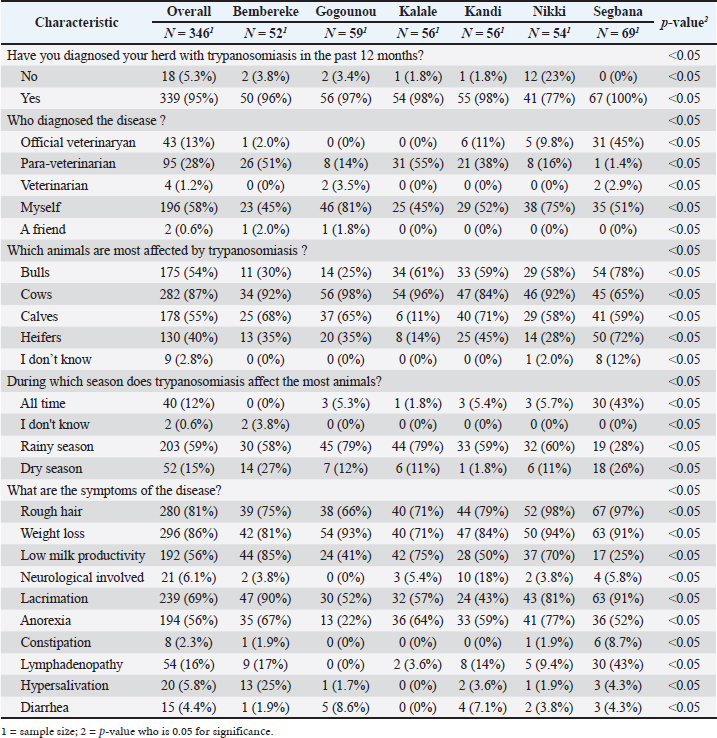
Knowledge about trypanosomiasis in animalsTrypanosomiasis burden and diagnosisA significant proportion of livestock farmers (95%) reported the diagnosis of trypanosomiasis in their herds within the past 12 months based on clinical signs. This demonstrates that trypanosomiasis is a major health concern in the study area. Nevertheless, the Ségbana region (100%) appears to be more affected by the disease than the Nikki commune (77%) or other municipalities. Regarding disease diagnosis, self-diagnosis by the farmer was the most common method, used by 58% of those interviewed, followed by consulting a paramedic (28%) and a government animal health worker (13%). The frequency of self-diagnosis by farmers is particularly high in Gogounou (81%) and Nikki (75%) compared with other communes. Furthermore, para-veterinarians play a very important role in disease detection in Kalale (55%) and Bembereke (51%), while it is primarily the government’s animal health agents in Segbana. These were the most frequently used (45%) for diagnosis, representing a very localized phenomenon. Animal trypanosomiasis remains a serious livestock health problem in the study area, with marked variation between municipalities, with Segbana having the highest burden. The predominance of farmer-led diagnosis indicates limited access to formal veterinary services, which increases the risk of misdiagnosis and inappropriate treatment. Susceptible animal groups, seasonality, and clinical manifestationsRegarding the animals most vulnerable to trypanosomiasis, cows were the most affected by the disease (87% of the farmers). Bulls (54%), calves (55%), heifers (40%), and dry cows (32%) were also vulnerable, but at lower frequencies. The majority of farmers (59%) perceive the rainy season as the most conducive period to a resurgence of cases in herds, which can be explained by the proliferation of tsetse fly populations, the vectors of the disease, during this time of the year. However, a significant proportion (12%) considered the disease to be present in all seasons, especially in the municipality of Segbana, where 43% of farmers reported that the disease was present throughout the year. The symptoms commonly cited by the majority of farmers included weight loss (86%), a classic sign of the chronic form, and quilted hair (81%), inappetence (56%), and low milk production (56%). Cows were identified as the most vulnerable group to trypanosomiasis, highlighting the disease’s direct impact on herd productivity. Farmers predominantly associated disease occurrence with the rainy season, reflecting the role of tsetse fly proliferation, although reports of year-round presence in Segbana indicate persistent transmission. Diagnosis relies mainly on observable clinical signs, underscoring the need for improved diagnostic support to enable timely and accurate disease management. Table 2 illustrates the farmers’ knowledge of trypanosomosis. Table 2. Farmers’ knowledge of trypanosomosis.
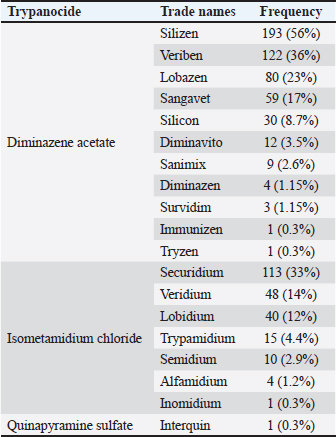
Diversity of the trypanocides usedThree main trypanocide families have been identified in various municipalities. These include diminazene aceturate, isometamidium chloride, and, to a lesser extent, quinapyramine. The most commonly used products are as follows: Silizen (56%), Veriben (36%), Lobazen (23%), and Sangavet (17%) for diminazene aceturate; Securidium (33%), Veridium (14%), and Lobidium (12%) are used for isometamidium chloride; and Interquin (0.3%) is used for quinapyramine. Thus, diminazene aceturate-based products are the most frequently used medications for treating the disease, accounting for 60% of cases in the region, and Silizen is the most commonly used product in the six municipalities. This diminazene aceturate-based product is not available through the official drug distribution system in Benin, and most livestock farmers obtain it from the black market. This suggests that farmers have a particular preference for this product or its easier accessibility compared with other medications. Isometamidium chloride (30%) is also used, but to a lesser extent than the aceturate of diminazene. Finally, quinapyrine-based products are rarely used. The diversity of specialties suggests a multiplicity of supply channels with a predominance of the black market, while the use of numerous specialties based on the same active ingredient could promote trypanosome resistance with diverse dosages. Table 3 illustrates the diversity of trypanocides used. Table 3. Diversity of trypanocides used.
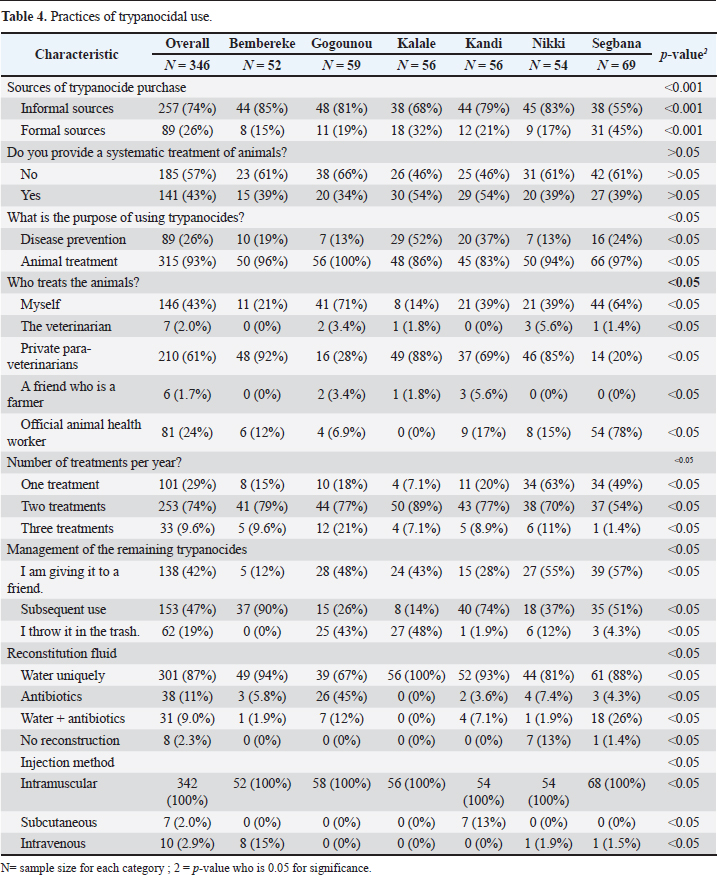
Trypanocidal drug usage practicesTrypanocide supply chains and treatment practicesThe majority of livestock farmers (74%) resort to the black market for trypanocides, and only 26% of these products are purchased from veterinary clinics. This situation results in significant losses for the official drug distribution network and demonstrates a highly informal supply chain, exposing the sector to the large circulation of substandard products. Bembereke (85%), Nikki (83%), and Gogounou (81%) are the communes with a high prevalence of the black market, while in the municipality of Segbana, purchases of trypanocides on the black market are relatively low (55%). Regarding treatment methods, most respondents tended to treat animals after identifying the clinical signs. Thus, only 43% of the respondents systematically treated all animals in their herds, while 57% preferred to treat only those animals exhibiting disease symptoms. Furthermore, the main method of controlling animal trypanosomiasis in the region is curative treatment (93%), followed by prevention (26%). In most cases, animal treatment is carried out by para-veterinarians (61%) or by the farmers themselves, with only 2% using official animal health agents. This demonstrates weak technical support and the risk of inappropriate trypanocide use. The symptom-based treatment approach may allow subclinical infections to persist, thereby increasing the risk of incomplete parasite clearance and drug resistance development. Otherwise, the limited engagement of trained veterinary professionals increases the risk of trypanocide misuse, which may further contribute to treatment failure and resistance. Frequency of trypanocide treatment, handling, and administration practicesRegarding treatment frequency, approximately 74% of farmers performed two treatments per year, compared with approximately 10% who performed three treatments. Regarding the management of leftover trypanocides after treatment, 47% of the respondents practiced reuse, while 42% donated them to neighboring farmers. Few farmers discarded the leftover trypanocides (19%) and stored them for later use, exposing these products to a high risk of improper storage and contamination. In most cases, aqueous solutions were the most commonly used liquids for reconstitution; however, 11% of respondents used antibiotic solutions, and 9% combined antibiotics with aqueous solutions for reconstitution. These mixtures are noncompliant and can compromise treatment efficacy and safety; 100% of all farmers inject treatment solutions intramuscularly, which is the norm, but a few cases of intravenous or subcutaneous injection (2%–3%) have been reported. Overall, trypanocide use is associated with several non-compliant practices. The reuse of leftover antimicrobials and inappropriate reconstitution solutions may compromise treatment efficacy and increase health and antimicrobial resistance risks, highlighting the need for improved farmer training and stronger guidelines on the proper handling and administration of trypanocides. Table 4 illustrates the practices of trypanocidal use. Table 4. Practices of trypanocidal use.
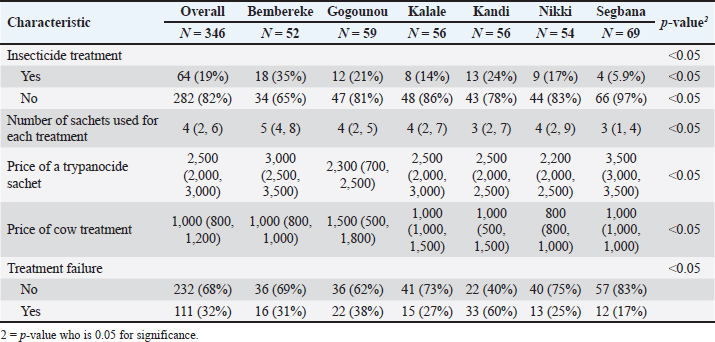
Economic cost of trypanocidal useA small proportion of livestock farmers (19%) used insecticides on their animals, whereas between two and six sachets of trypanocides were needed to treat a herd, with an average of four sachets. The average cost of a trypanocide sachet is $4.47, ranging from $3.56 to $6.23. Each farmer spends an average of $1.78 to treat a diseased cow. Regarding treatment failures, 32% of farmers have already experienced this, which can result from poor product quality, increased trypanosome resistance, and improper administration. Table 5 presents the treatment cost. Table 5. Treatment cost.
DiscussionAlthough various control programs implemented for trypanosomiasis have succeeded in eradicating human trypanosomiasis in most countries in West Africa, AAT remains endemic and remains one of the main constraints to improving cattle productivity (Meyer et al., 2016; Franco et al., 2020; Cecchi et al., 2025). The results of the present study confirm this trend in the region’s herds, as reported by farmers, with 98% of them recognizing bovine trypanosomiasis (BT) as one of the major health constraints affecting their herds. This observation aligns with that of Akpo et al. (2025), who reported that bovine trypanosomiasis remained one of the main health constraints to cattle productivity in the Atakora and Donga departments of northwestern Benin. Most interviewed farmers demonstrated relatively good knowledge of the disease, particularly regarding its typical clinical manifestations, such as weight loss and reduced milk yield. However, this knowledge has not been translated into appropriate disease management practices. More than half of the respondents relied on self-diagnosis (58%), and a substantial proportion treated sick animals without veterinary supervision (43%). These behaviors likely stem from limited access to veterinary services, low availability of diagnostic facilities, and inadequate extension support rather than disease awareness. These practices increase the likelihood of misdiagnosis and inappropriate drug use. Similar patterns have been reported in other African contexts, including Nigeria, Uganda, and Kenya, where farmers commonly interpret nonspecific signs, such as anemia and emaciation, as trypanosomiasis and initiate treatment without parasitological confirmation (Kasozi et al., 2023; Kikwai, 2025; Odeniran et al., 2024). This study further revealed considerable heterogeneity in the types and sources of the trypanocides used. In Benin, Diminazene Aceturate-based products, including Silizen, Veriben, and Lobazen, dominate the market, with the majority (74%) obtained through informal or black-market supply chains. This widespread reliance on unofficial supply routes reflects both the ease of access to informal vendors and the structural weaknesses in the national veterinary drug distribution system. Several risky practices were documented, including predominantly curative (93%) rather than preventive treatment strategies, reuse of leftover trypanocides (47%), improper drug reconstitution, and minimal involvement of qualified veterinary practitioners. Collectively, these behaviors create favorable conditions for trypanocide resistance emergence and may explain why approximately one-third of farmers reported reduced treatment efficacy. These findings align with evidence from other African studies, demonstrating that inappropriate drug use, the circulation of substandard products, and dependence on informal markets significantly undermine the sustainable control of BT. The involvement of unlicensed para-veterinarians in drug distribution and administration exacerbates these challenges. This observation supports the conclusions of Pal et al. (2024), who highlighted the pervasive role of unregulated informal networks in the dissemination of veterinary pharmaceuticals across West Africa. Such systems have repeatedly been implicated in the selection and spread of drug-resistant trypanosome strains, threatening the long-term effectiveness of the limited arsenal of available trypanocides (Pal et al., 2024). The marked differences in drug access and usage practices across municipalities highlight the unequal distribution of veterinary services and infrastructure. Farmers in some communes benefit from proximity to veterinary clinics and better access to professional guidance, whereas in others, the adoption of good practices is constrained by limited service availability. Akpo et al. (2025) documented similar spatial disparities, showing that both the farmer education level and distance to veterinary services significantly influenced trypanocide use practices in northern Benin. These findings underscore the need for decentralized, context-specific control strategies tailored to local realities. Regarding disease seasonality, most farmers associated increased trypanosomiasis incidence with the rainy season. Entomological studies have demonstrated a strong relationship between tsetse fly density, humidity, and rainfall, which enhances vector survival and transmission during wet periods (Van den Bossche et al., 2010; Vreysen and Marc, 2006). Such seasonal dynamics justify the implementation of targeted control measures during high-risk periods, including strategic prophylactic treatments and vector control interventions. Taken together, these results highlight the urgent need to strengthen the regulatory frameworks governing veterinary drug distribution, improve the training and certification of veterinary paraprofessionals, and enhance farmer education on diagnosis, dosage, and proper drug handling. Establishing a national surveillance system for trypanocide resistance alongside the quality control of drugs circulating in informal markets is equally critical. Future control efforts should adopt a spatially and seasonally informed approach that accounts for local disparities and seasonal transmission patterns. Effective control of bovine trypanosomiasis in northern Benin will require integrated animal health policies that combine pharmaceutical regulation, epidemiological surveillance, and sustained technical support for farmers within a coordinated and sustainable One Health framework. ConclusionThis study confirmed that bovine trypanosomiasis continues to be a significant challenge to cattle productivity in northern Benin. Despite farmers’ good knowledge of the clinical signs, the frequent recourse to self-diagnosis, informal supply channels, and non-compliant practices in the use of trypanocides compromise therapeutic efficacy and promote resistance. It is necessary to strengthen regulations on the distribution of veterinary drugs, improve access to qualified veterinary and para-veterinary services, and systematically monitor the quality and efficacy of trypanocides to achieve sustainable control of this parasitic disease. Targeted preventive strategies that consider seasonality and local contexts should be prioritized. Integrating these actions into a decentralized, coordinated “One Health” approach is essential for reducing disease burden and providing sustainable support for animal production systems. AcknowledgmentsThe authors would like to thank all animal health workers of the Departmental Directorate of Agriculture, Livestock, and Fisheries of the Ministry of Agriculture, Livestock, and Fisheries (DDAEP/MAEP) of Borgou and Alibori for their assistance during the data collection campaign among livestock farmers in Benin. Conflict of interestThe authors have no conflicts of interest to declare. FundingThis work was supported by the URMAT/EPAC/UAC. Authors’ contributionsConceptualization, Y.A. and A.B.N.T; methodology, Y.A., A.B.N.T, and J.K.A; software, A.B.N.T; validation, Y.A. and A.B.N.T; formal analysis, Y.A. and A.B.N.T; investigation, Y.A. and J.K.A; data curation, A.B.N.T; writing—original draft preparation, Y.A. and A.B.N.T; writing-review and editing, T.A., M.T.K., and S.F; visualization, Y.A; supervision, S.F. All authors have read and agreed to the published version of the manuscript. Data availabilityAll data supporting these findings are available upon request. ReferencesAbro, Z.A., Fetene, G.M., Kassie, M. and Melesse, T.M. 2021. The economics of trypanosomiasis: empirical evidence on its impacts on livestock production and welfare. In 2021 Conf. August 17-31 2021 Virtual, 2021 Conference, August 17-31, 2021, International Association of Agricultural Economists, Virtual. Akpo, Y., Tonouhewa, A.B., Alkoiret, T. and Kpodekon, M.T. 2025. Managing African animal trypanosomiasis in Benin: cattle owners’ knowledge, attitudes, and practices in the West Atacora zone. Vet. World. 18, 1508. Cecchi, G., Ngari, N., Paone, M., de Gier J., Onyango, S., Barreaux, A., Thévenon, S., Solano, P., Kaye, A., Tennant, W., Tildesley, M.J. and Halos, L. 2025. Disease intelligence and modeling for progressive control of animal trypanosomosis in Africa. Trends Parasitol. 41, 734–745; doi:10.1016/j.pt.2025.07.003 Cecchi, G., Paone, M., de Gier, J. and Zhao, W. 2024. The continental atlas of tsetse flies’ distribution in Africa. International Association of Agricultural Economists. Franco, J.R., Cecchi, G., Priotto, G., Paone, M., Diarra, A., Grout, L., Simarro, P.P., Zhao, W. and Argaw, D. 2020. Monitoring the elimination of human African trypanosomiasis at the continental and country levels: update to 2018. PLos Negl. Trop. Dis. 14, 8261. Iwaka, C., Azando, E.V.B., Tohozin, R.A., Assani, A.S., Attakpa, E.Y., Olounladé, P.A., Alkoiret, I.T. and Hounzangbé-Adoté, S.M. 2025. Epidemiological study of bovine trypanosomosis and potential vectors of African Animal Trypanosomosis in North-East Benin. Vet. Parasitol. Reg. Stud. Rep. 66, 101375; doi:10.1016/j.vprsr.2025.101375 Kaboret , Y.Y. 2011. L’élevage dans le sous-espace center de l’Afrique de l’Ouest: impact économiques des maladies du bétail. Proc. Proceedings of a workshop held in Abidjan, Côte d’Ivoire, 17–18 September 2001, Nairobi, Kenya, ILRI, pp: 22–26. Kasozi, K.I., MacLeod, E.T., Sones, K.R. and Welburn, S.C. 2023. Use of trypanocide in the cattle belt of southwestern Uganda. Front. Microbiol. 14, 1296522. Kikwai, C. 2025. Review of the use and misuse of trypanocidal drugs. International Association of Agricultural Economists. Kuzoe, F.A. and Schofield, C. 2005. Strategic review of traps and targets for the control of tsetse and African trypanosomiasis. International Association of Agricultural Economists. Maichomo, M.W., Orenge, C.O. and Gamba, D.O. 2021. Introduction of African animal trypanosomosis (AAT)/Nagana. In Combating and Controlling Nagana and Tick-Borne Diseases in Livestock, IGI Global, pp 1–23. Meyer, A., Holt, H.R., Selby, R. and Guitian, J. 2016. Past and ongoing control operations for tsetse and animal trypanosomiasis in five African countries: a systematic review. PLos Negl. Trop. Dis. 10, 5247. Mungube, E.O., Vitouley, H.S., Allegye-Cudjoe, E., Diall, O., Boucoum, Z., Diarra, B., Sanogo, Y., Randolph, T., Bauer, B., Zessin, K.-H. and Clausen, P.-H. 2012. Detection of multiple drug-resistant Trypanosoma congolense populations in village cattle of South-East Mali. Parasit. Vectors. 5, 155; doi:10.1186/1756-3305-5-155 Odeniran, P.O., Ademola, I.O. and Adejinmi, J.O. 2024. Trypanocidal resistance in two cattle farms using varying diagnostic techniques in southwest Nigeria. Comparative Clin. Pathol. 33, 725–735; doi:10.1007/s00580-024-03589-z Odeniran, P.O., Onifade, A.A., MacLeod, E.T., Ademola, I.O., Alderton, S. and Welburn, S.C. 2020. Mathematical modeling and control of African animal trypanosomosis with interacting populations in West Africa—Could bite flies important in maintaining disease endemicity?. PLoS One 15(11), e0242435. Odeniran, P.O., Onifade, A.A., Omolabi, K.F. and Ademola, I.O. 2021. Financial losses estimation of African animal trypanosomosis in Nigeria: field reality-based model. Trop. Anim. Health. Prod. 53, 159; doi:10.1007/s11250-021-02603-8 Ogolla, K.O., Mugunieri, L.G., Mdachi, R.E., Wanjala, K.B., Mireji, P.O., Mang’era, C.M., Kurgat, R.K., Alusi, P.M., Malimo, K.N. and Chemuliti, J.K. 2024. Quality, supply chain, and use of trypanocidal drugs among camel keepers in northeastern Kenya: a cross-sectional study. Vet. Parasitol. Reg. Stud. Rep. 54, 101095. Oluwafemi, R.A., Ilemobade, A.A. and Laseinde, E.A.O. 2007. Impact of African animal trypanosomosis and tsetse on the livelihood and wellbeing of cattle and their owners in the Nigerian BICOT study area. Sc. Res. Essays. 2, 380–383. Pal, M., Kebenu, M., Rebuma, T., Tashoma, M. and Baidya, S. 2024. Bovine trypanosomosis and its control challenges: a critical appraisal. Indian J. Vet. Public Health 10(12), 12. Rebuma, T., Regassa, M., Tariku, F. and Girma, W. 2024. Review on epidemiology and economic impact of Tsetse-transmitted bovine trypanosomiasis in Ethiopia. Int. J. Med. Parasitol. Epidemiol. 5, 24–30; doi:10.34172/ijmpes.3138 Tchamdja, E., Kulo, A.E., Vitouley, H.S., Batawui, K., Bankolé, A.A., Adomefa, K., Cecchi, G., Hoppenheit, A., Clausen, P.H., De Deken, R., Van Den Abbeele, J., Marcotty, T. and Delespaux, V. 2017. Cattle breeding, trypanosomosis prevalence, and drug resistance in northern Togo. Vet. Parasitol. 236, 86–92. Thrusfield, M. 2007. Veterinary epidemiology, 3rd ed. London, UK: Black Well Science Ltd, pp: 46–65. Van Den Bossche, P., De La Rocque, S., Hendrickx, G. and Bouyer, J. 2010. A changing environment and tsetse-transmitted livestock trypanosomiasis epidemiology. Trends. Parasitol. 26, 236–243. Vreysen, M.J. and Marc, J.B. 2006. Prospects for area-wide integrated control of tsetse flies (Diptera: glossinidae) and trypanosomosis in sub-Saharan Africa. Rev. Soc. Entomol. Argent. 65, 1–21. | ||
| How to Cite this Article |
| Pubmed Style Akpo Y, Tonouhewa ABN, Adinci JK, Alkoiret T, Farougou S. Assessment of trypanocidal drug use for the control of bovine trypanosomiasis in Benin: a cross-sectional study among cattle owners in the northeastern zone. Open Vet. J.. 2026; 16(7): 4904-4914. doi:10.5455/OVJ.2026.v16.i7.67 Web Style Akpo Y, Tonouhewa ABN, Adinci JK, Alkoiret T, Farougou S. Assessment of trypanocidal drug use for the control of bovine trypanosomiasis in Benin: a cross-sectional study among cattle owners in the northeastern zone. https://www.openveterinaryjournal.com/?mno=299862 [Access: July 27, 2026]. doi:10.5455/OVJ.2026.v16.i7.67 AMA (American Medical Association) Style Akpo Y, Tonouhewa ABN, Adinci JK, Alkoiret T, Farougou S. Assessment of trypanocidal drug use for the control of bovine trypanosomiasis in Benin: a cross-sectional study among cattle owners in the northeastern zone. Open Vet. J.. 2026; 16(7): 4904-4914. doi:10.5455/OVJ.2026.v16.i7.67 Vancouver/ICMJE Style Akpo Y, Tonouhewa ABN, Adinci JK, Alkoiret T, Farougou S. Assessment of trypanocidal drug use for the control of bovine trypanosomiasis in Benin: a cross-sectional study among cattle owners in the northeastern zone. Open Vet. J.. (2026), [cited July 27, 2026]; 16(7): 4904-4914. doi:10.5455/OVJ.2026.v16.i7.67 Harvard Style Akpo, Y., Tonouhewa, . A. B. N., Adinci, . J. K., Alkoiret, . T. & Farougou, . S. (2026) Assessment of trypanocidal drug use for the control of bovine trypanosomiasis in Benin: a cross-sectional study among cattle owners in the northeastern zone. Open Vet. J., 16 (7), 4904-4914. doi:10.5455/OVJ.2026.v16.i7.67 Turabian Style Akpo, Yao, Aretas B. N. Tonouhewa, Justin K. Adinci, Traore Alkoiret, and Souaibou Farougou. 2026. Assessment of trypanocidal drug use for the control of bovine trypanosomiasis in Benin: a cross-sectional study among cattle owners in the northeastern zone. Open Veterinary Journal, 16 (7), 4904-4914. doi:10.5455/OVJ.2026.v16.i7.67 Chicago Style Akpo, Yao, Aretas B. N. Tonouhewa, Justin K. Adinci, Traore Alkoiret, and Souaibou Farougou. "Assessment of trypanocidal drug use for the control of bovine trypanosomiasis in Benin: a cross-sectional study among cattle owners in the northeastern zone." Open Veterinary Journal 16 (2026), 4904-4914. doi:10.5455/OVJ.2026.v16.i7.67 MLA (The Modern Language Association) Style Akpo, Yao, Aretas B. N. Tonouhewa, Justin K. Adinci, Traore Alkoiret, and Souaibou Farougou. "Assessment of trypanocidal drug use for the control of bovine trypanosomiasis in Benin: a cross-sectional study among cattle owners in the northeastern zone." Open Veterinary Journal 16.7 (2026), 4904-4914. Print. doi:10.5455/OVJ.2026.v16.i7.67 APA (American Psychological Association) Style Akpo, Y., Tonouhewa, . A. B. N., Adinci, . J. K., Alkoiret, . T. & Farougou, . S. (2026) Assessment of trypanocidal drug use for the control of bovine trypanosomiasis in Benin: a cross-sectional study among cattle owners in the northeastern zone. Open Veterinary Journal, 16 (7), 4904-4914. doi:10.5455/OVJ.2026.v16.i7.67 |


