




| Research Article | ||
Open Vet. J.. 2026; 16(7): 4250-4262 Open Veterinary Journal, (2026), Vol. 16(7): 4250-4262 Research Article Green, red, and yellow betel leaves' active phytochemical profiles and their impact as feed additives on rumen fermentation and methane production in vitroRifa Ratna Sari1, Mardiati Zain2*, Elihasridas Elihasridas2, Despal Despal3, Laras Sukma Sucitra1 and Bella Veliana Utami11Doctoral Program, Faculty of Animal Science, Andalas University, Padang, Indonesia 2Department of Animal Nutrition, Faculty of Animal Science, Andalas University, Padang, Indonesia 3Department of Animal Nutrition and Feed Technology, Faculty of Animal Science, IPB University, Bogor, Indonesia *Corresponding Author: Mardiati Zain. Department of Animal Nutrition, Faculty of Animal Science, Andalas University, Padang, Indonesia. Email: mardiati [at] ansci.unand.ac.id Submitted: 10/12/2025 Revised: 22/04/2026 Accepted: 05/05/2026 Published: 02/07/2026 © 2025 Open Veterinary Journal
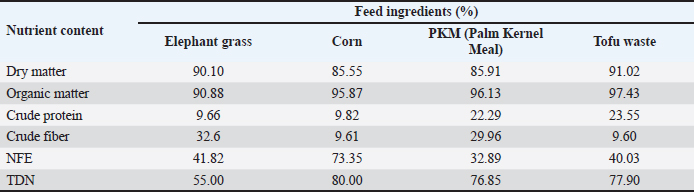
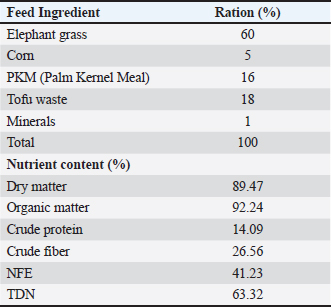
ABSTRACTBackground: Indonesia, a tropical country with rich biodiversity, is home to numerous native plant species, including the betel leaf. Several varieties of betel leaf are found across the country, such as green betel (Piper betle Linn.), red betel (Piper ornatum), and yellow betel (Piper betle Linn. var. aureum). Despite their widespread use in traditional practices, little research has examined the bioactive compounds in each type of betel leaf. Studies exploring their potential as feed additives for ruminants also remain limited. Aim: This study aimed to determine the optimal inclusion rate and to characterize the bioactive compound profiles of green, red, and yellow betel leaves when used as feed additives for ruminant livestock. Methods: An in vitro experiment was carried out using a completely randomized 3 × 5 factorial design with three replicates. The first factor was betel leaf type (green, red, and yellow) and the second factor was the inclusion dose (0%, 2.5%, 5%, 7.5%, and 10%). The basal diet consisted of a 60:40 ratio of forage and concentrate. Parameters measured included total gas and methane gas production, rumen protozoa population, protein digestibility, microbial protein synthesis (MPS), NH₃ concentration, partial VFA profile (acetate, propionate, n-butyrate, iso butyrate, isovaleric acid, and n-valerate), and the bioactive compound composition of the betel leaves. Results: The supplementation of green, red, or yellow betel leaves significantly influenced total gas and methane gas production, rumen protozoa population, protein digestibility, MPS, NH₃ concentration, and partial VFA (p < 0.01). Morphological differences among the three betel leaf types were associated with variations in secondary metabolite composition. These differences resulted in different optimal inclusion doses. Conclusion: The findings indicate optimal inclusion doses of 7.5% for green betel leaf, 5% for red betel leaf, and 2.5% for yellow betel leaf. The optimal dose is based on the most favorable balance between methane reduction and maintenance of rumen fermentation performance. MPS, protein digestibility, NH3, and partial VFA indicated this. Keywords: Betel leaf, Methane, Microbial protein, Partial VFA, Secondary metabolite. IntroductionThe ruminant livestock sector plays a crucial role in maintaining national food security through its provision of animal protein. During rumen fermentation, these animals generate methane gas as an inherent by-product. This process results in energy loss that could otherwise be utilized by the animal and contributes to greenhouse gas emissions. It is estimated that approximately 3%–12% of the energy produced from rumen fermentation is lost in the form of methane (Ku-Vera et al., 2020), thereby reducing energy utilization efficiency and livestock performance. However, methane gas formation serves as a mechanism used by rumen microbes to maintain optimal rumen conditions. High hydrogen concentrations can disrupt microbial activity during feed digestion (Oematan, 2023). A concise and increasingly popular strategy for optimizing the fermentation process in the rumen and reducing methane gas formation involves the strategic utilization of plant-derived bioactive compounds that have antimicrobial and antioxidant properties (Cheong et al., 2023). According to Vasta et al. (2019), feed containing polyphenols from forage affects the rumen microbiota responsible for rumen fermentation and methane gas production. Betel leaf is a traditional plant native to Indonesia that is rich in natural bioactive compounds. These include tannins, saponins, flavonoids, apigenin, myricetin, kaempferol, caryophyllene, quercetin, rutin, eugenol, hydroxychavicol, and essential oils, as well as antioxidant properties (Purba and Paengkoum, 2019; Purba et al., 2020; Purba et al., 2022; Heliawati et al., 2022; Singh et al., 2023). These bioactive compounds tend to influence microbial activity in the rumen (Vasta et al., 2019; Olagaray & Bradford, 2019; Ku-Vera et al., 2020). Several studies have indicated that these compounds are able to reduce the number of protozoa and methane gas production, while increasing nitrogen utilization through the formation of MPS. However, most studies have focused solely on green betel leaves (Piper betle Linn.), while information on red betel leaves (Piper ornatum) and yellow betel leaves (Piper betle Linn. var. aureum) remains very limited, particularly regarding their utilization as feed additives in ruminant livestock diets. Morphological differences in betel leaves may result in differences in the bioactive compound content of the three types of betel leaves, which may cause different effects on the rumen fermentation process. Therefore, comprehensive research is required to compare the bioactive content of these betel leaves and determine the optimal dosage of each type of betel leaf as a feed additive in ruminant feed. Materials and MethodsFeed and treatmentsThree types of betel leaves, namely green betel leaves (Piper betle Linn.), red betel leaves (Piper ornatum), and yellow betel leaves (Piper betle Linn. var. aureum), were used and processed into powder form. The basic feed consisted of forage and concentrate in a ratio of 60:40, with a protein content of 14.09% and a total digestible nutrient (TDN) content of 63.32%. The nutritional and ration formulation composition of basal and concentrate feed ingredients is presented in Tables 1 and 2. The research method used a complete randomized design (CRD) factorial (3 x 5) with three replications. The first factor was the type of betel leaf (green, red, and yellow), and the second factor included 0%, 2.5%, 5%, 7.5%, and 10% doses. The selection of dosage levels (0%-10%) was based on previous research and practical considerations in feed additives application. Ahmad, (2024) study reported that the supplementation of betel leaves up to a dose of 7.19% did not show any negative effects on the VFA produced. Therefore, the treatment dose was expanded to 10% to evaluate the dose response of betel leaf supplementation. This was done while still considering the safe limits for rumen microbial activity. The 0% treatment was considered the control group. Table 1. Nutritional content of basal and concentrated feed ingredients (%).
Table 2. Ration formulation and nutritional content of the basal diet.
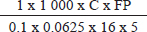
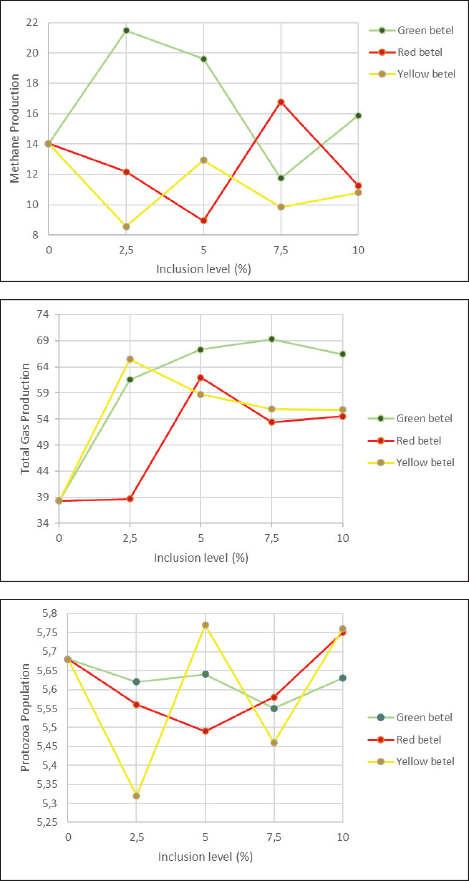
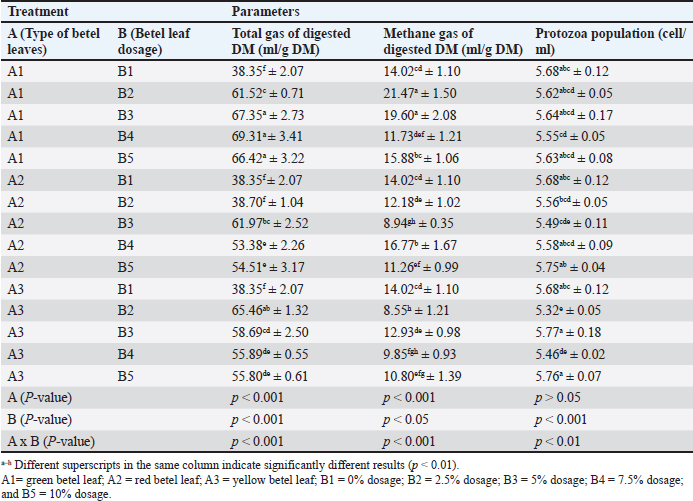
In vitro experimentRumen fluid, obtained from goats slaughtered at the abattoir, was used as the source of rumen microbial inoculum. The rumen fluid was collected immediately after slaughter from five goats processed at a licensed slaughterhouse. The rumen fluid collected from all animals was pooled prior to incubation to obtain a representative microbial inoculum. The in vitro procedure followed the method outlined by Tilley and Terry (1963). A total of 2.5 g of sample was placed into a 250 ml Erlenmeyer flask, to which 200 ml of McDougall’s buffer solution and 50 ml of rumen fluid were added. The mixture was flushed with CO₂ for 30 seconds to establish anaerobic conditions. The Erlenmeyer flask was then tightly sealed with a ventilated rubber stopper and secured with plastic film. Incubation was carried out at 39°C for 48 hours in a shaker incubator (Series 126, New Brunswick Scientific, Shanghai, P.R. China). After the incubation period, fermentation was halted by placing the flask in an ice bath. The pH of the mixture was subsequently measured using a calibrated pH meter (Shanghai, P.R. China). The liquid fraction and residual feed material resulting from the incubation were centrifuged at 3.000 rpm for 30 minutes. The residue settled at the bottom of the centrifuge tube, while the supernatant remained above. The supernatant was stored at − 20°C for subsequent analyses, including microbial protein synthesis (MPS) according to Lowry et al. (1951)in which absorbance was measured at 650 nm using a UV–Vis spectrophotometer, and bovine serum albumin (BSA) served as the standard. NH₃ concentration was determined following the method of Conway and O’Malley (1942). Partial volatile fatty acid (VFA) composition was analyzed using gas chromatography (Hewlett Packard 5890, USA) equipped with a flame ionization detector (FID). A stainless-steel column (inner diameter 0.2 cm; outer diameter 0.4 cm) was employed for compound separation. High-purity nitrogen was used as the carrier gas at a flow rate of 0.5 ml/s, while hydrogen and oxygen were supplied at 0.5 ml/s and 5 ml/s, respectively, to support combustion. The column temperature was maintained isothermally at 125°C, with injector and detector temperatures set at 160°C and 200°C, respectively. Calibration was conducted using a standard mixture of acetate, propionate, and butyrate (Supelco®), and individual VFA components were identified based on retention times relative to the standards. The filtered and oven-dried residue was subsequently used to assess protein digestibility using the Kjeldahl method. Total gas and methane productionTotal gas and methane measurements were carried out using the indirect method described by Fievez et al. (2005). Gas production was measured at 24 hours and 48 hours of incubation. The accumulated gas in each fermentation bottle was first withdrawn using a gas-tight syringe to determine the total gas volume. The collected gas was then transferred into a sealed vacuum bottle containing 35% NaOH solution through a rubber septum. The NaOH solution absorbed carbon dioxide (CO2), while methane (CH4) remained in the gas phase. The remaining gas was subsequently drawn into a second syringe, and the methane volume was determined by reading the volume scale on the syringe. To ensure reproducibility, each treatment was conducted in three independent replicates, and all equipment (syringes and vacuum bottles) was calibrated before use. Gas volume was recorded under consistent temperature and pressure conditions, and each sample was analyzed at the same incubation times (24 and 48 hours). In addition, the CO2 absorption procedure using 35% NaOH solution was performed in a standardized manner for all samples to minimize technical variation. Protozoa population analysisThe determination of the protozoa population was carried out based on Ogimoto and Imai (1981) . This study utilized a counting chamber with a thickness of 0.1 mm, with each square measuring 0.062 mm. There were a total of 16 squares, and 4 squares were read. The protozoa population was further observed under a microscope (Binocular Microscope 107 bn) equipped with a 40X objective lens and a 10X eyepiece lens, then counted using the method described by Ogimoto and Imai (1981) with the following formula: Protozoa population (cell/mL)= (1) Where: C – number of counted colonies FP – dilution factor. Metabolomic analysis (Bioactive compounds)The bioactive constituents of betel leaves were analyzed using untargeted metabolomics with liquid chromatography–high-resolution mass spectrometry (LC-HRMS), following the approach of Windarsih et al. (2022) . The analysis was carried out using a Thermo Scientific Vanquish ultra-high-performance liquid chromatography system (Thermo Fisher Scientific, USA), coupled to a Q Exactive Hybrid Quadrupole-Orbitrap mass spectrometer. Chromatographic separation was achieved on a Phenyl Hexyl analytical column (100 × 2.1 mm, 2.6 µm) maintained at 40°C. The mobile phases consisted of (A) water with 0.1% formic acid and (B) methanol with 0.1% formic acid, delivered at a flow rate of 0.3 mL/min. The gradient program commenced at 5% B, increased to 90% over 16 minutes, was held for 4 minutes, and subsequently returned to the initial conditions at 25 minutes. Full-scan and data-dependent MS² acquisition were conducted in both positive and negative ionization modes. Nitrogen was used as the carrier gas (32 AU), auxiliary gas (8 AU), and sweep gas (4 AU). The spray voltage was set at 3.30 kV, with the capillary and heater temperatures maintained at 320°C and 30°C, respectively. The scan range covered m/z 66.7–1000, with resolutions of 70.000 (MS¹) and 17.500 (MS²). Instrument control and data acquisition were performed using XCalibur 4.4 software (Thermo Scientific). Weekly calibration with Pierce ESI ion standards ensured mass accuracy within < 5 ppm and maintained system stability. Tannin analysisTannin content was quantified following the method described by Fajrina et al. (2016). A stock solution of 1,000 ppm was prepared by dissolving 50 mg of dried concentrated extract in 50 ml of 70% ethanol. This stock was then diluted by pipetting 1 ml into a 10 ml volumetric flask and topping up with 70% ethanol to obtain a 100 ppm working solution. The tannin concentration of the test solution was determined spectrophotometrically using a UV–Vis spectrophotometer, with absorbance measured at λ323 nm. Saponin analysisSaponin content was measured according to the procedure outlined by Obadoni and Ochuko (2001). Two grams of samples were placed into an Erlenmeyer flask, followed by the addition of 100 ml of 20% aqueous ethanol. The mixture was heated at 55°C–60°C for 4 hours with continuous stirring and subsequently filtered. The residue was re-extracted with 200 ml of 20% aqueous ethanol. The combined filtrates were concentrated to approximately 40 ml using a water bath at 90°C. The concentrate was transferred to a separating funnel, mixed with 20 ml of diethyl ether, and vigorously shaken; the aqueous layer was retained, and the ether layer discarded. This purification step was repeated. Subsequently, 60 ml of n-butanol was added, and the butanol fraction was washed twice with 10 ml of 5% sodium chloride solution. The remaining solution was heated until evaporation, and the extract was dried in an oven to a constant mass. Saponin content was expressed as mg/g of dried extract. Statistical analysisAll data were subjected to analysis of variance (ANOVA) using SPSS (Statistical Package for the Social Sciences) version 27.0 (IBM Corp., New York, NY). Where significant differences were identified, Duncan’s Multiple Range Test was employed for post hoc comparisons of means. Statistical significance was accepted at p < 0.05. Results are presented as mean (±) SD. Ethical approvalThis study did not require ethical review as no animal subjects were used. The rumen fluid was collected immediately after slaughter from goats processed at a licensed slaughterhouse. The animals were not slaughtered specifically for the purposes of this study. Ethical approval was not required as no live animals were used during the study. The collection of rumen fluid from slaughtered animals is categorized as the utilization of by-products from slaughterhouses and complies with institutional and national ethical guidelines that exempt the use of biological materials from slaughterhouses from ethical review. This procedure ensures a humane source of samples while maintaining the safety and integrity of the samples. ResultsGas production and rumen protozoa populationThe effects of supplementing green, red, and yellow betel leaves in feed on total gas production, methane gas, and rumen protozoa population are presented in Table 4. The analysis of variance indicated that both main effects (betel leaf type and inclusion level) and their interaction significantly influenced total gas production, methane production, and protozoa population (p < 0.01 for A, B, and A x B). Only the protozoa population was not affected by the type of betel leaf (A), but the dose (B) used affected the protozoa population. Treatment A1B4 produced the highest total gas production with an 80% increase, followed by treatment A3B2 with a 70% increase and treatment A2B3 with a 61% increase compared to the control. The lowest methane gas production was observed in treatment A3B2, with a decrease of 38%, followed by treatment A2B3, with a decrease of 36%, and treatment A1B4, with a decrease of 16% compared to the control group. Meanwhile, the protozoa population decreased by 6.3% in A3B2, 3.3% in A2B3, and 2.1% in A1B4. To improve the clarity of the data, the dose-response patterns for methane gas production, total gas production, and protozoa population at various addition doses are presented in Figure 1.
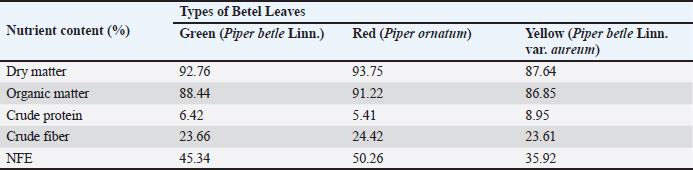
Fig. 1. Dose–response effects of adding green, red, and yellow betel leaves on methane production, total gas production, and protozoa population. Table 3. Nutritional content of betel leaves.
Table 4. Gas production and rumen protozoa population.
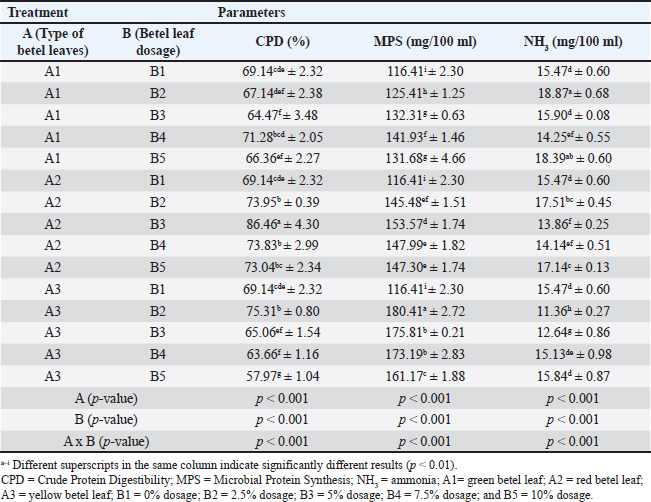
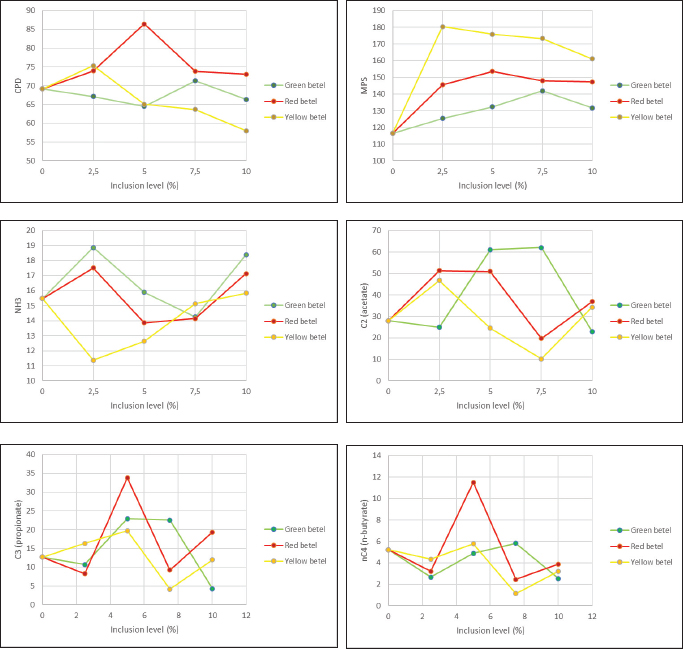
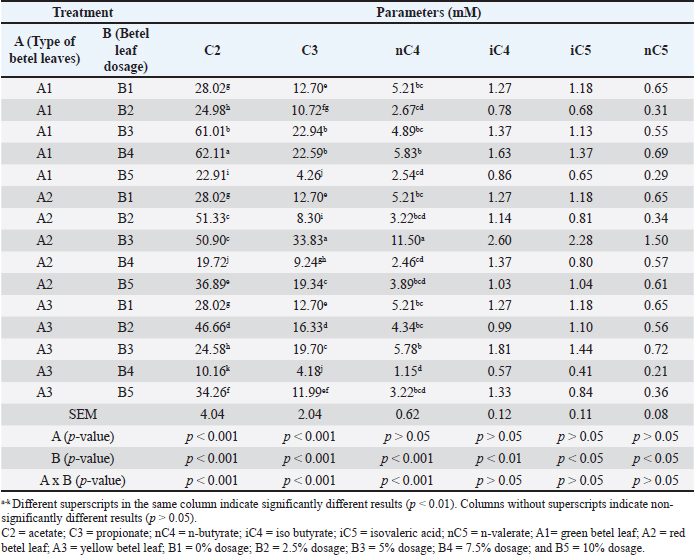
Protein digestibility and rumen fermentation characteristicsSupplementation with green, red, or yellow betel leaves as feed additives influenced protein digestibility, microbial protein synthesis (MPS), and NH₃ concentration, as presented in Table 5, as well as partial volatile fatty acids (VFA), as shown in Table 6. Analysis of variance indicated that both the main effects (betel leaf type and inclusion level) and their interaction significantly influenced protein digestibility, MPS, and NH₃ (p < 0.01 for A, B, and A × B). The greatest improvement in protein digestibility (25.06%) occurred in treatment A2B3, while the highest increase in MPS (54.98%) and the greatest reduction in NH₃ (26.56%) were observed in A3B2 when compared with the control. The addition type of betel leaf significantly affected the production of acetate and propionate (p < 0.01), but did not affect the production of butyrate, isobutyrate, isovalerate, and n-valerate (p > 0.05). Meanwhile, the dose of betel leaves used significantly affected the production of acetate, propionate, butyrate, and isobutyrate (p < 0.01) and had a moderate effect on isovalerate and n-valerate (p < 0.05). An interaction between the type and dose of betel leaf was detected, showing a highly significant effect on acetate, propionate, butyrate (p < 0.01), and no effect on isobutyrate, isovalerate, and n-valerate (p > 0.05). To improve the clarity of the data, the dose–response patterns for protein digestibility, MPS, NH3, and partial VFA at various addition doses are presented in Figure 2. Table 5. Protein digestibility and rumen fermentation characteristics.
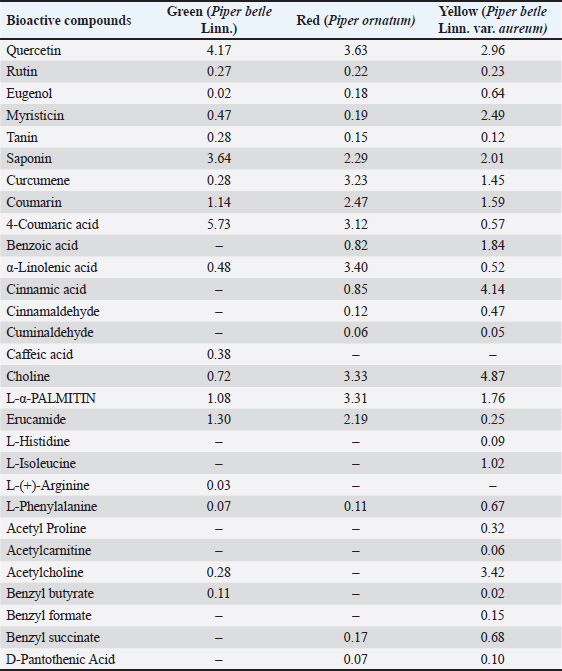
Fig. 2. Dose–response effects of adding green, red, and yellow betel leaves on crude protein digestibility (CPD), Microbial Protein Synthesis (MPS), NH3, C2 (acetate), C3 (propionate), nC4 (n-butyrate). Profile of bioactive compounds in betel leafThe bioactive compounds profiles of green, red, and yellow betel leaves are presented in Table 7. This includes both unique constituents and compounds that are common to all varieties but are present in varying concentrations. Green betel leaves contain higher levels of quercetin and rutin than red and yellow betel leaves. However, eugenol levels are higher in yellow betel leaves. All three types of betel leaves contain tannins and saponins; the flavonoid group such as quercetin and rutin, the phenolic acid group such as 4-coumaric acid, caffeic acid in green betel leaves, and cinnamic acid in red and yellow betel leaves; the essential oils group such as eugenol, curcumene, and cinnamaldehyde in red and yellow betel leaves; and the amino acids group such as phenylalanine, and histidine, isoleucine in yellow betel leaves as well as arginine in red betel leaves. Yellow betel leaves additionally contain amino derivatives such as acetyl proline, acetyl carnitine, and acetyl choline. DiscussionGas production and rumen protozoa populationTotal gas production reflects the extent of organic matter fermentation in the rumen, with methane forming a component of the total fermentative gas output. An increase in total gas production typically indicates enhanced organic matter digestibility and is associated with the rate of substrate degradation. A more rapid degradation rate accelerates gas production (Akanmu and Hassen, 2017). Akanmu and Hassen (2017) note that betel leaves contain biologically active enzymes, including catalase and diastase, which may promote digestive processes. However, an increase in total gas does not always indicate an increase in fermentation efficiency. Total gas consists of several fermentation gases, mainly CO2 and CH4, so changes in gas composition can occur depending on the microbial metabolic pathway that takes place. An increase in total gas production accompanied by a decrease in methane production may indicate a change in the hydrogen utilization pathway in the rumen. This does not necessarily reflect increased fermentation efficiency. Methane is produced by methanogenic archaea that convert H₂ and CO₂ into CH₄. This process serves as a hydrogen sink, thereby preventing the accumulation of H₂, which could otherwise inhibit rumen microbial activity, particularly that of cellulolytic bacteria (Oematan 2023). When the methanogenesis process is partially inhibited due to a decrease in protozoa or methanogenic archaea, or a lack of available hydrogen substrates, hydrogen utilization is diverted to other metabolic pathways, such as propionate formation or reductive pathways involving phenolic compound metabolism. This diversion allows fermentation to continue actively despite reduced methane production. As a result, total gas production may still increase. Several medicinal plants are believed to modulate the rumen ecosystem through their bioactive compounds, thereby enabling reductions in methane production. Betel leaf is one such plant. Betel leaves contain essential oils that have been reported to selectively suppress methanogenic archaea and protozoa associated with methane gas formation without substantially inhibiting fibrolitic bacteria activity (Daning et al., 2020). Essential oils are volatile mixtures of secondary metabolites (Daning et al., 2020). Eugenol is one of the phenol groups found in the essential oil content of betel leaves (Table 7). These phenol groups are known to possess antimicrobial activity attributable to their hydroxyl group, which interacts with microbial membrane proteins and lipids. Such interactions can lead to membrane dysfunction through increased permeability (Tahir et al., 2022). Table 6.. Partial volatile fatty acids (VFAs).
Table 7. Profile of bioactive compounds in betel leaves (%).
Methanogenic archaea contain unique ether-linked isoprenoid lipids. This structure makes them particularly susceptible to disruption. Their metabolism is highly specialized, relying on hydrogen-dependent methanogenesis. It is therefore plausible that eugenol compromises archaeal membrane integrity, leading to impaired hydrogen utilization and thus inhibiting methanogenesis. In contrast, rumen bacteria generally exhibit greater adaptive capacity, enabling them to degrade phenolic compounds into less toxic forms and to withstand oxidative and membrane stresses more effectively. In the present study, the lowest methane production was observed with 2.5% yellow betel leaf supplementation (Fig. 1). This finding corresponded with the lowest protozoal counts, indicating reduced methanogenic activity. This is believed to be because yellow betel leaves contain 0.64% more of the bioactive compound eugenol compared to green and red betel leaves (Table 7), making it one of the limiting factors for the use of yellow betel leaves, thus making yellow betel leaves an effective feed additive even at a dosage of only 2.5%. Simple phenolic compounds, such as quercetin, rutin, cinnamic acid, caffeic acid, and benzoic acid, as well as tannin and saponin compounds, can also reduce methane production (Rochfort et al., 2008; Sarwono et al., 2019; Muslykhah et al., 2024). These compounds are contained in betel leaves (Table 7). Phloroglucinol is a simple phenolic compound produced as an intermediate metabolite through the degradation of flavonols such as quercetin and rutin by rumen microbes, and several studies have shown that certain rumen bacteria are capable of reducing phloroglucinol using H2 or formate to produce acetate as the final product (1 molecule phloroglucinol + 1 molecule H2=2 molecules acetate + 2 molecules carbon dioxide) (Lowry and Kennedy, 1996; Martinez-Fernandez et al., 2017) . Phloroglucinol can utilize H₂ to reduce itself, thereby maintaining H₂ pressure in the rumen and utilizing H₂ as energy that can be utilized by livestock. Although protozoa and methanogenic populations decrease, H₂ pressure does not interfere with rumen microbial activity because it has been used as a phloroglucinol reducer, and fermentation and gas production activities remained high even though methane production decreased. However, these proposed mechanisms should be interpreted with caution, as this study was conducted under in vitro conditions. Protein digestibility and rumen fermentation characteristicsNH₃ serves as an indicator of protein degradation within the rumen and reflects the extent to which rumen microbes utilize nitrogen for microbial protein synthesis (MPS) (Gomaa et al., 2024). NH₃ is produced through the degradation of protein by rumen microbes and subsequently serves as a substrate for microbial protein synthesis (Putri et al., 2025; Pazla et al., 2025). It represents a readily degradable end product of protein fermentation within the rumen (Mutsvangwa et al., 2016; Zain et al., 2020). In this study, NH₃ concentrations declined at inclusion doses of 7.5% for green betel leaf, 5% for red betel leaf, and 2.5% for yellow betel leaf. This decrease indicates that NH₃ was effectively utilized by rumen microbes for microbial protein formation, supported by an adequate supply of fermentative energy. According to Jamarun et al. (2024) sufficiently high VFA production can enhance microbial energy availability, allowing NH₃ to be used more efficiently. The reduction in NH3 concentration alongside increased MPS indicates improved nitrogen utilization efficiency. This indicates that bioactive compounds in betel leaves not only influence carbon metabolism but also enhance nitrogen capture by rumen microbes, thereby contributing to overall nutritional efficiency. Microbial protein, synthesized in the rumen, represents a major source of high-quality protein for ruminant animals. Its formation depends on the availability of fermentable energy and nitrogen sources within the rumen. According to Pazla et al., (2025), high levels of tannins may inhibit the utilization of NH₃ by microbes, thereby reducing microbial protein yield. The present study, however, recorded relatively high MPS values, indicating that the tannin concentration in betel leaves was sufficiently low so as not to impair microbial activity (Table 7). Elihasridas et al. (2024) similarly reported that low tannin levels may support rumen microbial function. In this study, the greatest improvements in protein digestibility were observed at supplementation doses of 7.5% for green betel leaves, 5% for red betel leaves, and 2.5% for yellow betel leaves. These dosages also yielded the lowest NH₃ concentrations in each respective betel leaf treatment, indicating an optimal balance of energy and nitrogen availability for MPS formation. Betel leaves also contain several amino acids and amino acid derivatives (Table 7), as well as crude protein content (Table 3), thus contributing to providing sufficient nitrogen for microbial growth as well as adequate energy to support MPS. Furthermore, reductions in protozoal populations (defaunation) can enhance the utilization of starch, as protozoa typically compete with amylolytic bacteria for this substrate. Consequently, defaunation promotes the proliferation of amylolytic bacterial species (Ahmad, 2024). Volatile fatty acids (VFA) constitute the principal energy source for mature ruminants. They are produced in the rumen and subsequently absorbed through the ruminal epithelium. The major VFAs, acetate, propionate, and butyrate, provide key insights into the efficiency of rumen fermentation and the functional response to dietary interventions (Shakeel et al., 2024). In this study, the acetate-to-propionate ratio was relatively high, which may be attributed to the reduction of phloroglucinol by rumen microbes. VFAs also facilitate microbial growth, with branched-chain VFAs (iso butyrate, isovalerate, and n-valerate) serving as precursors for specific amino acids and components of bacterial cell membranes (Oematan, 2023). Variations in VFA concentrations depend on several factors, including the rate of feed fermentation, substrate availability, feed intake, and absorption dynamics (Beckett et al., 2021). The balance between VFA production and absorption across the rumen wall is crucial to maintaining optimal rumen function (Gleason et al., 2022). The balance between VFA production and absorption affects the efficiency of nutrient absorption in the rumen. Profile of bioactive compounds in betel leavesThe diverse array of bioactive constituents present in betel leaves highlights their potential as functional feed additives in ruminant diets. Green, red, and yellow betel leaves contain numerous essential oil components and related compounds such as eugenol, myristicin, curcumene, cinnamaldehyde, and cuminaldehyde, numerous flavonoid components such as quercetin and rutin, each of which may influence and contribute to modulating rumen fermentation. Betel leaves also contain tannin and saponin compounds that contribute to affecting fermentation in the rumen (Table 7). The identified bioactive compounds show strong biological relevance to the modulation of rumen fermentation. For example, eugenol, which is found in higher concentrations in yellow betel leaves, is known to have strong antimicrobial activity that can inhibit methanogenic archaea, thereby contributing to the reduction of methane gas production (Tahir et al., 2022). Meanwhile, flavonol compounds such as quercetin and rutin play a role in alternative hydrogen utilization pathways through the formation of metabolic intermediate compounds, namely phloroglucinol, which is subsequently directed towards acetate production (Martinez-Fernandez et al., 2017). Betel leaves also provide amino acids, including histidine, isoleucine, arginine, and phenylalanine, together with various fatty acids that may enhance the nutritive value of the diet. Yellow betel leaves additionally contain amino derivatives such as acetyl proline, acetyl carnitine, and acetyl choline, which may regulate protein metabolism and contribute to lipid-to-energy conversion. Compounds contributing to feed palatability were also identified, such as benzyl butyrate (0.11%) in green betel, benzyl formate (0.15%) in yellow betel, and benzyl succinate (0.17% in red betel, 0.68% in yellow betel). Betel leaves furthermore contain choline that functions similarly to vitamins (vitamin B complex and B9) at concentrations of 0.72% (green), 3.33% (red), and 4.87% (yellow), as well as pantothenic acid (vitamin B5), detected in red (0.07%) and yellow (0.10%) varieties. Current studies show that supplementation with various types of betel leaves modulates rumen fermentation through mechanisms driven by phytochemicals that go beyond simple antimicrobial effects. The results indicate a coordinated shift in microbial metabolism, where bioactive compounds regulate hydrogen utilization pathways, microbial population dynamics, and fermentation end products simultaneously. This integrative response indicates that plant secondary metabolites act as functional regulators of rumen ecology, rather than merely inhibiting microbial activity, thereby allowing methane reduction without compromising fermentation performance. Although this study employed three replicates (n=3), which is generally acceptable for in vitro experiments, this number remains relatively limited and may affect the statistical power and generalizability of the results. Therefore, the results should be interpreted with caution, and future studies with a larger number of replicates are recommended to enhance the robustness of the conclusions. ConclusionBetel leaves, whether green, red, or yellow, show strong potential as feed additives for ruminant diets, with each type requiring a different recommended inclusion dose. The significant interaction (A x B) indicates that the effect of inclusion level depended on the type of betel leaf. Supplementation with betel leaves can lower methane production while maintaining normal rumen microbial activity. Variations in leaf morphology and bioactive compound profiles account for the differences in optimal dosage. Based on the results of this study, the inclusion rates are 7.5% for green betel leaf, 5% for red betel leaf, and 2.5% for yellow betel leaf. This inclusion level is considered optimal, as it significantly reduces methane production while maintaining MPS concentration, protein digestibility, and VFA levels comparable to or better than those of the control. These findings demonstrate promising effects on rumen fermentation and nutrient utilization. However, in vivo studies are still needed to confirm the optimal dosage and ensure long-term safety without compromising rumen function. AcknowledgmentsThe authors acknowledge the facilities, scientific and technical support from the Food Laboratory Science and Technology Area Gunung Kidul, National Research and Innovation Agency through E- Layanan Sains BRIN. Conflict of interest The authors declare no conflict of interest. FundingThis research was funded by: UNIVERSITAS ANDALAS in accordance with the Scheme Research Contract for the Master's to Doctoral Degree Program for Outstanding Graduates Mandiri UNAND Batch I Number: 126/UN16.19/PT.01.03/PMDSU/2025 Fiscal Year 2025. Authors' contributionsRRS and MZ designed the study, drafted and reviewed the manuscript. EE and DD provided technical support and supervision. RRS, LSS, and BVU conducted laboratory observations, analyzed data, and wrote the manuscript. All authors reviewed and approved the final version of the manuscript. Data availability All data supporting the findings of this study are available within the manuscript. ReferencesAhmad, M. 2024. Partial VFA and acetate/propionate ratio goat feed with the addition of Piper betle Linn flour. J. Trop. Anim. Sci. Technol. 6(1), 1–8. Akanmu, A.M. and Hassen, A. 2017. The use of certain medicinal plant extracts reduced in vitro methane production while improving in vitro organic matter digestibility. Anim. Prod. Sci. 58, 900–908. Beckett, L., Gleason, C.B., Bedford, A., Liebe, D., Yohe, T.T., Hall, M.B., Daniels, K.M. and White, R.R. 2021. Rumen volatile fatty acid molar proportions, rumen epithelial gene expression, and blood metabolite concentration responses to ruminally degradable starch and fiber supplies. J. Dairy. Sci. 104, 8857–8869. Cheong, K.L., Zhang, Y., Li, Z., Li, T., Ou, Y., Shen, J., Zhong, S. and Tan, K. 2023. Role of polysaccharides from marine seaweed as feed additives for methane mitigation in ruminants: a critical review. Polymers 15, 3153. Conway, E.J. and O'Malley, E. 1942. Microdiffusion methods. Ammonia and urea using buffered absorbents (revised methods for ranges greater than 10 μg N). Biochem. J. 36, 655–661. Daning, D.A.R., Hanim, C., Widyobroto, B.P. and Yusiati, L.M. 2020. The use of essential oils as rumen modifier in dairy cows. Wartazoa – Bul. Ilmu. Peternak. Kesehat. Hewan. Indones. 30, 189–200. Elihasridas, E., Pazla, R., Jamarun, N., Yanti, G., Asmairicen, S., Marlina, L., Hadriatry, M.C., Arief, R.W., Bansi, H., Khan, S.U., Khan, F.A., Putri, E.M., Antonius, A., Ikhlas, Z., Ikhsan, Z., Ardani, L.R., Siva, A.T., Yendrita, H. and Zelinea, F. 2024. Effect of tannin degradation of mangrove (Sonneratia alba) fruit on nutrient digestibility, protozoa population and methane gas production. Czech J. Anim. Sci. 69, 292–301. Fajrina, A., Jubahar, J. and Sabirin, S. 2016. Penetapan kadar tanin pada teh celup yang beredar di pasaran secara spektrofotometri UV-Vis. J. Farm. Higea. 8, 133–142. Fievez, V., Babayemi, O.J. and Demeyer, D. 2005. Estimation of direct and indirect gas production in syringes: a tool to estimate short chain fatty acid production that requires minimal laboratory facilities. Anim. Feed. Sci. Technol. 123–124(1), 197–210. Gleason, C.B., Beckett, L.M. and White, R.R. 2022. Rumen fermentation and epithelial gene expression responses to diet ingredients designed to differ in ruminally degradable protein and fibre supplies. Sci. Rep. 12, 2933. Gomaa, W.M.S., Saleem, A.M., Mcgeough, E.J., Ominski, K., Chen, L.Y. and Yang, W.Z. 2024. Effect of red osier dogwood extract on in vitro gas production, dry matter digestibility, and fermentation characteristics of forage-based diet or grain-based diet. Heliyon 10, e27991. Heliawati, L., Lestari, S., Hasanah, U., Ajiati, D. and Kurnia, D. 2022. Phytochemical profile of antibacterial agents from red betel leaf (Piper crocatum Ruiz & Pav) against bacteria in dental caries. Molecules 27, 2861. Jamarun, N., Ikhlas, Z., Zain, M., Negara, W. and Yanti, R.P.G. 2024. Feed wafers from fermented sugarcane tops and Tithonia diversifolia with added tapioca starch: effects on physical quality and in vitro parameters for ruminant feed. Open. Vet. J. 14, 3599–3613. Ku-Vera, J.C., Jiménez-Ocampo, R., Valencia-Salazar, S.S., Montoya-Flores, M.D., Molina-Botero, I.C., Arango, J., Gómez-Bravo, C.A., Aguilar-Pérez, C.F. and Solorio-Sánchez, F.J. 2020. Role of secondary plant metabolites on enteric methane mitigation in ruminants. Front. Vet. Sci. 7, 584. Lowry, J.B. and Kennedy, P.M. 1996. Fermentation of flavonols by rumen organisms. Proc. Aust. Soc. Anim. Prod. 21, 366. Lowry, O.H., Rosebrough, N.J., Farr, A.L. and Randall, R.J. 1951. Protein measurement with the Folin reagent. J. Biol. Chem. 193, 265–275. Martinez-Fernandez, G., Denman, S.E., Cheung, J. and Mcsweeney, C.S. 2017. Phloroglucinol degradation in the rumen promotes the capture of excess hydrogen generated from methanogenesis inhibition. Front. Microbiol. 8, 1871. Muslykhah, U., Phupaboon, S., Suriyapha, C., Sommai, S., Pongsub, S., Dagaew, G., Matra, M. and Wanapat, M. 2024. Effects of phytonutrient-based encapsulation of Wolffia globosa on gas production, in vitro fermentation characteristics, and methane mitigation using in vitro study techniques. Ital. J. Anim. Sci. 23, 1869–1883. Mutsvangwa, T., Davies, K.L., Mckinnon, J.J. and Christensen, D.A. 2016. Effects of dietary crude protein and rumen-degradable protein concentrations on urea recycling, nitrogen balance, omasal nutrient flow, and milk production in dairy cows. J. Dairy Sci. 99, 6298–6310. Obadoni, B.O. and Ochuko, P.O. 2001. Phytochemical studies and comparative efficacy of the crude extracts of some homeostatic plants in Edo and Delta States of Nigeria. Glob. J. Pure Appl. Sci. 8, 203–208. Ogimoto, K. and Imai, S. 1981. Atlas of rumen microbiology. Tokyo: Japan: Japan Science Societes Press, p 231. Oematan, G. 2023. Ruminologi. PT Global Eksekutif Teknologi, Padang (ID). 167 p. Olagaray, K.E. and Bradford, B.J. 2019. Plant flavonoids to improve productivity of ruminants – A review. Anim. Feed. Sci. Technol. 251, 21–36. Pazla, R., Antonius, A., Ikhlas, Z., Jayanegara, A., Ardani, L.R., Hadiatry, M.C., Jumjunidang, J., Budiyanti, T., Firsoni, F., Ardinal, A., Iswari, K., Febrina, D. and Ratni, E. 2025. The potential of tannin from Sonneratia alba fruit in defaunation of rumen protozoa and reducing methane gas production: an approach to increase livestock digestive efficiency. Czech. J. Anim. Sci. 70, 223–233. Purba, R.A.P. and Paengkoum, P. 2019. Bioanalytical HPLC method of Piper betle L. for quantifying phenolic compound, water-soluble vitamin, and essential oil in five different solvent extracts. J. Appl. Pharm. Sci. 9, 33–39. Purba, R.A.P., Paengkoum, S., Yuangklang, C. and Paengkoum, P. 2022. Mammary gene expressions and oxidative indicators in ruminal fluid, blood, milk, and mammary tissue of dairy goats fed a total mixed ration containing Piper betle L. Ital. J. Anim. Sci. 21, 129–141. Purba, R.A.P., Yuangklang, C. and Paengkoum, P. 2020. Enhanced conjugated linoleic acid and biogas production after ruminal fermentation with Piper betle L. supplementation. Cienc. Rural 50, e20191001. Putri, E.M., Negara, W., Gopar, R.A., Prastiwi, H.A., Purba, R.D., Negoro, P.S., Khan, F.A., Atmoko, B.A., Zain, M., Candra, R.H. and Amanah, U. 2025. Comparative analysis of leguminous substitutes versus conventional concentrates on nutrient digestibility and rumen fermentation in livestock. Andalasian. Livest. 2, 126–134. Rochfort, S., Parker, A.J. and Dunshea, F.R. 2008. Plant bioactives for ruminant health and productivity. Phytochemistry 69, 299–322. Sarwono, K.A., Kondo, M., Ban-Tokuda, T., Jayanegara, A. and Matsui, H. 2019. Effects of phloroglucinol on in vitro methanogenesis, rumen fermentation, and microbial population density. Trop. Anim. Sci. J. 42, 121–130. Shakeel, F., Widiawati, Y., Asmairicen, S., Purnomoadi, A., Herliatika, A., Anggraeny, Y.N., Setiasih, S., Rizwan, M., Gopar, R.A., Antonius, A., Sunante, I.A., Idris, I., Riyanti, S., Widaringsih, W., Shakir, F.A. and Irfan, S. 2024. The effect of the dried Gracilaria spp. undergoing different drying methods on in vitro rumen fermentation. Czech J. Anim. Sci. 69, 441–449. Singh, T., Singh, P., Pandey, V.K., Singh, R. and Dar, A.H. 2023. A literature review on bioactive properties of betel leaf (Piper betel L.) and its applications in food industry. Food Chem. Adv. 3, 100536. Tahir, M., Hafsah, H., Damayanti, A.P. and Tantu, R.Y. 2022. Pengaruh konsentrasi penambahan eugenol daun cengkeh terhadap kecernaan nutrien ransum pada ayam pedaging. J. Ilm. Fillia. Cendekia. 7, 33–38. Tilley, J.M.A. and Terry, R.A. 1963. A two-stage technique for in vitro digestion of forage crops. J. Brit. Grassl. Soc. 18, 104–111. Vasta, V., Daghio, M., Cappucci, A., Buccioni, A., Serra, A., Viti, C. and Mele, M. 2019. Invited review: plant polyphenols and rumen microbiota responsible for fatty acid biohydrogenation, fiber digestion, and methane emission: Experimental evidence and methodological approaches. J. Dairy. Sci. 102, 3781–3804. Windarsih, A., Warmiko, S., Indrianingsih, A.W., Rohman, A. and Ulumuddin, Y.I. 2022. Untargeted metabolomics and proteomics approach using liquid chromatography–Orbitrap high resolution mass spectrometry to detect pork adulteration in Pangasius hypophthalmus meat. Food. Chem. 386, 132856. Zain, M., Putri, E.M. and W.S.N, R. 2020. Effects of supplementing Gliricidia sepium on ration-based ammoniated rice straw in ruminant feed to decrease methane gas production and to improve nutrient digestibility (in vitro). Int. J. Adv. Sci. Eng. Inf. Technol. 10, 724–729. | ||
| How to Cite this Article |
| Pubmed Style Sari RR, Zain M, Elihasridas E, Despal D, Sucitra LS, Utami BV. Green, red, and yellow betel leaves' active phytochemical profiles and their impact as feed additives on rumen fermentation and methane production in vitro. doi:10.5455/OVJ.2026.v16.i7.12 Web Style Sari RR, Zain M, Elihasridas E, Despal D, Sucitra LS, Utami BV. Green, red, and yellow betel leaves' active phytochemical profiles and their impact as feed additives on rumen fermentation and methane production in vitro. https://www.openveterinaryjournal.com/?mno=302605 [Access: June 30, 2026]. doi:10.5455/OVJ.2026.v16.i7.12 AMA (American Medical Association) Style Sari RR, Zain M, Elihasridas E, Despal D, Sucitra LS, Utami BV. Green, red, and yellow betel leaves' active phytochemical profiles and their impact as feed additives on rumen fermentation and methane production in vitro. doi:10.5455/OVJ.2026.v16.i7.12 Vancouver/ICMJE Style Sari RR, Zain M, Elihasridas E, Despal D, Sucitra LS, Utami BV. Green, red, and yellow betel leaves' active phytochemical profiles and their impact as feed additives on rumen fermentation and methane production in vitro. doi:10.5455/OVJ.2026.v16.i7.12 Harvard Style Sari, R. R., Zain, . M., Elihasridas, . E., Despal, . D., Sucitra, . L. S. & Utami, . B. V. (2026) Green, red, and yellow betel leaves' active phytochemical profiles and their impact as feed additives on rumen fermentation and methane production in vitro. doi:10.5455/OVJ.2026.v16.i7.12 Turabian Style Sari, Rifa Ratna, Mardiati Zain, Elihasridas Elihasridas, Despal Despal, Laras Sukma Sucitra, and Bella Veliana Utami. 2026. Green, red, and yellow betel leaves' active phytochemical profiles and their impact as feed additives on rumen fermentation and methane production in vitro. doi:10.5455/OVJ.2026.v16.i7.12 Chicago Style Sari, Rifa Ratna, Mardiati Zain, Elihasridas Elihasridas, Despal Despal, Laras Sukma Sucitra, and Bella Veliana Utami. "Green, red, and yellow betel leaves' active phytochemical profiles and their impact as feed additives on rumen fermentation and methane production in vitro." doi:10.5455/OVJ.2026.v16.i7.12 MLA (The Modern Language Association) Style Sari, Rifa Ratna, Mardiati Zain, Elihasridas Elihasridas, Despal Despal, Laras Sukma Sucitra, and Bella Veliana Utami. "Green, red, and yellow betel leaves' active phytochemical profiles and their impact as feed additives on rumen fermentation and methane production in vitro." doi:10.5455/OVJ.2026.v16.i7.12 APA (American Psychological Association) Style Sari, R. R., Zain, . M., Elihasridas, . E., Despal, . D., Sucitra, . L. S. & Utami, . B. V. (2026) Green, red, and yellow betel leaves' active phytochemical profiles and their impact as feed additives on rumen fermentation and methane production in vitro. doi:10.5455/OVJ.2026.v16.i7.12 |


