




| Research Article | ||
Open Vet. J.. 2026; 16(7): 4724-4730
Open Veterinary Journal, (2026), Vol. 16(7): 4724-4730 Research Article Selective antibacterial activity of Aceh’s Linot Honey (Trigona itama) against Gram-negative foodborne pathogensGraciela Deandra1, M. Daud AK2*, Mahdi Abrar2, Amiruddin Amiruddin3 and Juliani Juliani41Undergraduate Program of Veterinary Medicine, Faculty of Veterinary Medicine, Universitas Syiah Kuala, Banda Aceh, Indonesia 2Department of Microbiology, Faculty of Veterinary Medicine, Universitas Syiah Kuala, Banda Aceh, Indonesia 3Department of Clinic and Surgery, Faculty of Veterinary Medicine, Universitas Syiah Kuala, Banda Aceh, Indonesia 4Department of Food Technology, Faculty of Agricultural Technology, Universitas Serambi Mekkah, Banda Aceh, Indonesia *Corresponding Author: M. Daud AK. Department of Microbiology, Faculty of Veterinary Medicine, Universitas Syiah Kuala, Banda Aceh, Indonesia. Email: m.daud.ak [at] usk.ac.id Submitted: 08/01/2026 Revised: 05/05/2026 Accepted: 25/05/2026 Published: 20/07/2026 © 2025 Open Veterinary Journal
AbstractBackground: Honey is a natural antimicrobial agent with activity attributed to acidity, osmotic effects, hydrogen peroxide, and bioactive compounds. However, evidence regarding the antibacterial activity of Aceh linot honey against Gram-negative foodborne pathogens remains limited. Aim: This study aimed to evaluate the in vitro antibacterial activity of Aceh linot honey against Escherichia coli and Salmonella typhimurium. Methods: A laboratory-based experimental study was conducted using the Kirby–Bauer disc diffusion assay as a preliminary screening method. Linot honey was tested at concentrations of 20%, 40%, 60%, and 80% against reference strains of E. coli ATCC 25922 and S. typhimurium ATCC 14028. Ciprofloxacin (5 µg/disc) and chloramphenicol (30 µg/disc) were used as positive controls, and sterile distilled water was used as a negative control. Antibacterial activity was assessed by measuring the mean inhibition zone diameter and analyzed using one-way analysis of variance. Results: Linot honey exhibited concentration-dependent antibacterial activity against E. coli, with inhibition zones observed at ≥40%. The highest activity was recorded at 80% (8.8 ± 0.95 mm), indicating weak inhibition. No inhibitory effect was observed against S. typhimurium at any concentration. Statistical analysis showed significant differences among treatments for E. coli (p < 0.05). Conclusion: Aceh linot honey demonstrates selective antibacterial activity against E. coli but not against S. typhimurium under in vitro conditions. These findings indicate that linot honey may serve as a complementary natural antimicrobial agent. However, further studies using quantitative methods, such as minimum inhibitory concentration and chemical characterization, are required to confirm its antibacterial potency. Keywords: Antibacterial-activity, Escherichia coli, Linot honey, Salmonella typhimurium, Trigona itama. IntroductionIndonesia continues to face a great burden of infectious diseases, particularly those associated with the gastrointestinal system. Foodborne infections remain a major public health concern due to challenges in food safety, sanitation, and increasing demand for animal-derived products (Simadibrata, 2017; Rohr et al., 2019). Meat products are recognized as significant vehicles for zoonotic pathogens, including Escherichia coli and Salmonella spp., which can cause a wide spectrum of illnesses ranging from mild gastroenteritis to severe systemic infections (Sugrue et al., 2019; Abebe et al., 2020). The emergence of Antimicrobial resistance (AMR) has further complicated the control of foodborne pathogens. E. coli and Salmonella resistant strains have been increasingly reported in food products, limiting treatment options and posing serious public health risks (Conceição et al., 2023; Ahmed et al., 2025). E. coli is one of the most prevalent foodborne pathogens in Indonesia, with a high proportion of multidrug-resistant isolates detected in poultry products (Arisanti et al., 2018; Wibawati et al., 2023). Given the limitations of conventional antibiotics, natural antimicrobial agents have gained increasing attention as alternative or complementary strategies. Honey is one such product with well-documented antimicrobial properties, attributed to its acidity, osmotic pressure, hydrogen peroxide production, and phytochemical components (Almasaudi, 2021). Linot is Acehnese language of stingless bee, produced by T. itama is widely cultivated in Aceh Province and has shown promising antibacterial activity. Trigona honey inhibits bacterial growth; however, its efficacy varies depending on bacterial species, botanical origin, and physicochemical composition (Almasaudi et al., 2017; Al Kafaween et al., 2019). Notably, strong antibacterial effects have been reported against Gram-positive bacteria, whereas evidence against Gram-negative foodborne pathogens remains limited. Despite these findings, there is a lack of specific data on the antibacterial activity of Aceh-origin linot honey against major Gram-negative pathogens, such as E. coli and S. typhimurium Addressing this gap is important for evaluating its potential role in food safety and antimicrobial strategies. Therefore, this study aimed to evaluate the antibacterial activity of Aceh linot honey against E. coli and S. typhimurium using a disc diffusion assay as an initial screening approach. This study provides baseline data to support further quantitative and mechanistic investigations. Materials and MethodsStudy designThis study employed an experimental, quantitative, in vitro design to evaluate the antibacterial activity of Aceh linot honey against selected foodborne Gram-negative bacteria. The experiment followed a completely randomized design with multiple honey concentrations and included appropriate positive and negative controls. Antibacterial efficacy was assessed using a standardized agar disc diffusion assay, enabling the comparative evaluation of inhibition zones across treatments under controlled laboratory conditions. Samples and microbial strainsLinot honey produced by Trigona itama stingless bees was obtained from a certified linot bee farm in Blang Bintang, Aceh Besar, Indonesia. Honey samples were collected aseptically and stored at 4°C to maintain physicochemical stability until analysis. Two reference bacterial strains were used: E. coli ATCC 25922 and S. typhimurium ATCC 14028. These strains were chosen based on their clinical relevance as major foodborne pathogens and their widespread use as standard quality-control organisms in antimicrobial susceptibility testing. The inclusion criteria for bacterial strains included (i) reference status, (ii) stable phenotypic characteristics, and (iii) reproducible growth under laboratory conditions. Materials and equipment usedPrimary materials included raw linot honey, sterile distilled water (Aquadest), Nutrient Broth (NB), and Mueller Hinton Agar (MHA). Antibiotic discs containing ciprofloxacin and chloramphenicol were used as positive controls for E. coli and S. typhimurium, respectively. Sterile distilled water was used as the negative control. Laboratory equipment included a 37°C incubator, sterile cotton swabs, blank sterile paper discs, micropipettes with sterile tips, a vortex mixer, calibrated calipers for inhibition zone measurement, and standard microbiological glassware. All media and reagents were prepared according to the manufacturer’s instructions and standard microbiological protocols. Sample preparationLinot honey solutions were prepared aseptically at concentrations: 20%, 40%, 60%, and 80% (v/v). Each concentration was prepared by diluting raw honey to a final volume of 5 ml with sterile distilled water. Specifically, the 20% solution consisted of 1 ml honey and 4 ml distilled water; the 40% solution contained 2 ml honey and 3 ml distilled water; the 60% solution contained 3 ml honey and 2 ml distilled water; and the 80% solution contained 4 ml honey and 1 ml distilled water. All solutions were homogenized using gentle vortexing to ensure uniformity before use. Experimental setupBacterial cultures were revived and grown in NB at 37°C for 18–24 hours. The turbidity of each bacterial suspension was then adjusted to match a 0.5 McFarland standard, corresponding to approximately 1.5 × 10⁸ CFU/ml. To ensure consistency across experimental runs, inoculum density was standardized. MHA plates were inoculated using a sterile cotton swab by evenly swab testing the standardized bacterial suspension over the entire agar surface. The plates were allowed to dry briefly at room temperature under aseptic conditions before disc placement. Antibacterial testThe Kirby–Bauer disc diffusion method was used to evaluate the antibacterial activity of linot honey as a preliminary screening assay (Hudzicki, 2009). Although this method is widely used for antimicrobial susceptibility testing, it provides qualitative and semi-quantitative data and does not determine the minimum inhibitory concentration (MIC) (Bouacha et al., 2023; Suhartatik et al., 2023). Sterile blank paper discs were impregnated with each concentration of honey and placed onto inoculated MHA plates. Ciprofloxacin (5 µg/disc) and chloramphenicol (30 µg/disc) were used as positive controls for E. coli and S. typhimurium. Negative control discs impregnated with sterile distilled water were also included to confirm the absence of intrinsic inhibitory effects. All plates were incubated in an inverted position at 37°C for 24 hours. Clear zones of inhibition surrounding each disc were visually inspected after incubation. Measurement of the parametersThe diameter of the inhibition zone expressed in millimeters (mm) was the primary parameter measured. Measurements were taken using a calibrated digital caliper, and to minimize measurement error, the diameter was recorded as the mean of two perpendicular readings. Mean inhibition zone values and SDs were calculated from three independent replicates for each treatment concentration. Data analysis and statistical methodsQuantitative data obtained from inhibition zone measurements were statistically analyzed to determine the significance of differences among treatments. Data normality was assessed before inferential testing. One-way analysis of variance was used to evaluate the effect of honey concentration on antibacterial activity. A significance level of p < 0.05 was considered significant. When significant differences were detected by analysis of variance, post hoc comparisons were performed using Duncan’s multiple range test to identify specific differences between treatment groups. Statistical analyses were conducted using standard statistical software, and all analytical procedures were selected to ensure reproducibility, transparency, and alignment with accepted practices in antimicrobial susceptibility research. Ethical approvalNot required for this study. ResultsPhysicochemical properties of Aceh linot honeyThe physicochemical characteristics of Aceh linot honey are presented in Table 1. The honey exhibited acidic properties, high total soluble solids, and moderate moisture content. Measured values were potential of Hydrogen (pH): 4.12 ± 0.03, indicating an acidic environment potentially contributing to antibacterial activity. Total soluble solids: 72.4 ± 0.5°Brix, reflecting high sugar concentration and strong osmotic potential, key factors in honey’s antibacterial effect. Moisture content: 24.1% ± 0.6%. Titratable acidity: 38.6 ± 1.2 meq/kg. These results are consistent with physicochemical profiles reported for stingless bee honey from tropical regions (Fatima et al., 2018; Muhamad Ridzwan et al., 2020). Previous studies have linked acidic pH and high osmotic pressure with antimicrobial effects against foodborne pathogens (Biluca et al., 2016; Chuttong et al., 2016; Zulkhairi Amin et al., 2018; Tiang et al., 2025). Table 1. Physicochemical and phytochemical properties of Aceh linot honey.
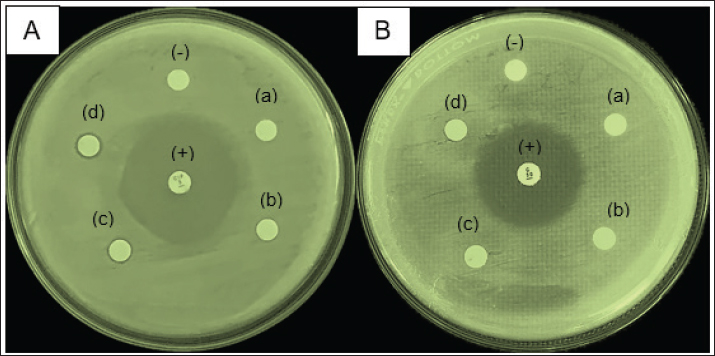
Phytochemical screening indicated the presence of alkaloids, flavonoids, tannins, and saponins, while steroid compounds were not detected (Buchari and Amirsyah, 2024). These bioactive compounds may contribute to antimicrobial and antioxidant activities through mechanisms such as membrane disruption, oxidative stress induction, and interference with bacterial metabolism (Biluca et al., 2016; Tiang et al., 2025). Antibacterial activity of linot honeyThe antibacterial activity of Aceh linot honey against E. coli and S. typhimurium was evaluated using a disc diffusion assay. The results are summarized in Tables 1 and 2 and presented in Figure 1,. Clear inhibition zones were observed around the E. coli discs impregnated with linot honey at concentrations of 40%, 60%, and 80%. In contrast, no inhibition zones were detected at any tested concentration against S. typhimurium, indicating a selective antibacterial effect (Pratiwi et al., 2025). Table 2. The antibacterial activity of Aceh linot honey against the tested bacteria.
Fig. 1. The inhibition test of Aceh linot honey against E. coli (A) and S. typhimurium (B). Description: (a) 20%, (b) 40%, (c) 60%, (d) 80%, (+) ciprofloxacin (A), chloramphenicol (B), and () aquadest. Quantitative analysis revealed a concentration-dependent increase in the inhibition zone diameter against E. coli. No inhibitory activity was observed at a concentration of 20%. At 40% and 60%, linot honey produced mean inhibition zones of 5.6 ± 0.5 mm and 7.1 ± 0.6 mm, respectively, which are classified as weak antibacterial activity. The highest concentration tested (80%) resulted in a mean inhibition zone of 8.8 ± 0.95 mm, corresponding to a weakly sensitive response according to established criteria (Li et al., 2019; Raheem et al., 2025). The positive control ciprofloxacin produced a markedly larger inhibition zone (32.0 ± 0.85 mm), confirming assay validity and illustrating the substantially greater efficacy of ciprofloxacin than conventional antibiotics. Linot honey did not produce measurable inhibition zones at any concentration for S. typhimurium, whereas the positive control, chloramphenicol, exhibited strong antibacterial activity (Bubonja-Šonje et al., 2020). This contrast highlights differential susceptibility between the two Gram-negative bacterial species. Statistical analysisThe inhibition zone data for E. coli were normally distributed (p > 0.05). One-way analysis of variance demonstrated significant differences among treatments (p < 0.05), indicating that the concentration of linot honey significantly affected antibacterial activity. Duncan’s multiple range test confirmed significant differences between all concentrations, indicating a graded inhibitory response. Statistical analysis was not conducted for S. typhimurium because of the absence of inhibition across all treatments. DiscussionAceh linot honey exhibits selective antibacterial activity against E. coli but not against S. typhimurium (Cilia et al., 2020). Although both are Gram-negative bacteria, species-specific susceptibility was observed. This selectivity warrants mechanistic consideration, particularly given that the antimicrobial properties of honey are generally attributed to multiple interacting factors, including osmotic pressure, acidity, hydrogen peroxide generation, and phytochemical constituents such as phenolic acids and flavonoids (Almasaudi, 2021; Al-Sayaghi et al., 2022). Gram-negative bacteria possess a complex, multilayered cell envelope consisting of an outer membrane rich in lipopolysaccharides, a thin peptidoglycan layer, and an inner cytoplasmic membrane. This structure inherently limits the penetration of antimicrobial compounds and facilitates efflux mechanisms (Sudano Roccaro et al., 2004; Stavri et al., 2007). Although E. coli and Salmonella share this architecture, species-specific differences in membrane composition, porin expression, and stress response systems may influence susceptibility (Nohynek et al., 2006). One plausible explanation for the observed selectivity is differential acid tolerance. Honey typically has a pH range of 3.2–4.5, which is inhibitory to many bacterial pathogens (Koochak et al., 2010). The minimum growth pH for E. coli is approximately 4.3, whereas Salmonella spp. can tolerate slightly more acidic conditions, with a minimum growth pH of around 4.0 (Shamala et al., 2002). Aceh linot honey has a pH of approximately 4.1, which may be sufficient to inhibit E. coli at higher concentrations but remains marginal for S. typhimurium (Ridoni et al., 2020). This narrow pH threshold provides a biologically plausible basis for the selective antibacterial activity observed. Hydrogen peroxide and phytochemical compounds may contribute differently depending on bacterial detoxification capacity. Salmonella spp. possess robust catalases and peroxidases that neutralize hydrogen peroxide more efficiently than E. coli, reducing susceptibility (Taormina et al., 2001). Phytochemicals such as alkaloids, flavonoids, tannins, and saponins may further enhance antibacterial effects through membrane disruption, oxidative stress induction, and interference with bacterial metabolism (Biluca et al., 2016; Tiang et al., 2025). The antibacterial activity observed here was lower than reported for Trigona honey from other regions. For instance, honey from Kuala Terengganu produced inhibition zones of 18.2 ± 0.6 mm against E. coli (Al Kafaween et al., 2019), significantly higher than in this study. Differences are likely due to botanical origin, geographical location, bee species, and environmental factors, which influence honey composition. The Aceh linot honey in this study was produced by T. itama bees that predominantly forage on Acacia mangium, a plant known to contain alkaloids, flavonoids, phenols, glycosides, saponins, steroids, tannins, and terpenoids (Yousof et al., 2021). Variability in the concentration and relative proportions of these compounds likely contributed to the observed weak rather than strong antibacterial activity. The findings also contrast with previous reports of the strong antibacterial activity of Aceh linot honey against S. aureus (Pratiwi et al., 2025). This difference reinforces the established understanding that Gram-positive bacteria, which lack an outer membrane, are generally more susceptible to honey than Gram-negative bacteria. By explicitly demonstrating limited efficacy against E. coli and no activity against S. typhimurium, this study refines the existing knowledge by defining the antibacterial spectrum of Aceh linot honey rather than assuming broad-spectrum effectiveness (Prasasti et al., 2025). From a scientific perspective, this study clarifies that the antibacterial activity of linot honey is species-specific and concentration-dependent (Yupanqui Mieles et al., 2022). Integrating inhibition data with physicochemical and phytochemical parameters provides a mechanistic understanding of honey-bacteria interactions. From an applied perspective, Aceh linot honey may be unsuitable as a stand-alone agent against S. typhimurium, but its moderate inhibition of E. coli suggests potential use as a complementary natural product, e.g., functional food ingredient, mild preservative, or adjunct to other antimicrobial strategies (Bubonja-Šonje et al., 2020; Ogwu and Izah, 2025). The disc diffusion method was used as an initial screening approach to evaluate antibacterial activity. Although this method is widely accepted for preliminary assessment, it does not provide quantitative parameters such as MIC or minimum bactericidal concentration (MBC). Therefore, the findings of this study should be interpreted as indicative of antibacterial potential rather than definitive evidence of efficacy (Graham et al., 1985; Hindler and Munro, 2024). Compared with reports on Apis (sting bee) honey, which often demonstrate stronger and broader antibacterial activity, the inhibition observed in this study was relatively weak (Fernandes et al., 2025). However, E. coli was found to be more susceptible to the antibacterial effects of H. itama-produced stingless bee honey (Ng et al., 2020). In this work, there was no antibacterial activity of Salmonella, but there was an inhibition of 7.2 ± 0.3 mm and 8.1 ± 0.4 mm in the report study (Sulaiman and Sarbon, 2022). This difference may be attributed to variations in chemical composition, including phenolic content and H2O2 levels, which are influenced by bee species and floral sources. Such comparisons highlight the importance of considering honey type when evaluating antimicrobial potential (Nweze et al., 2016; Aburayyan et al., 2024). This study has several limitations. First, the use of disc diffusion does not allow the determination of MIC or MBC values. Second, chemical characterization of the honey, such as Gas Chromatography-Mass Spectrometry (GC-MS) analysis, was not performed, limiting the understanding of specific bioactive compounds. Third, only a single honey type was evaluated without comparison with other honey sources. Future studies should address these limitations by incorporating quantitative antimicrobial assays, chemical profiling, and comparative analyses. Overall, the study confirms the selective antibacterial potential of Aceh linot honey and provides a clear evidence-based explanation for its activity against E. coli but not S. typhimurium, addressing scientific relevance and contribution. ConclusionAceh linot honey exhibits selective antibacterial activity against E. coli but is ineffective against S. typhimurium under in vitro conditions. The findings indicate that the antimicrobial potential of linot honey is species-specific and influenced by both bacterial tolerance mechanisms and honey physicochemical and phytochemical properties. This study provides a more nuanced understanding of the antibacterial spectrum of stingless bee honey and supports its potential use as a complementary natural agent rather than a broad-spectrum antimicrobial. Future research should explore quantitative antibacterial assays and molecular analyses to further elucidate mechanisms and optimize applications. AcknowledgmentsNone. Conflict of interestThe authors declare no conflict of interest. Data availabilityAll data are within the manuscript. Authors’ contributionsAll authors contributed equally. ReferencesAbebe, E., Gugsa, G. and Ahmed, M. 2020. Review on major food-borne zoonotic bacterial pathogens. J. Trop. Med. 2020(1), 4674235. Aburayyan, W.S., Seder, N., Al-Fawares, O., Fararjeh, A., Majali, I.S. and Al-Hajaya, Y. 2024. Characterization of antibiofilm and antimicrobial effects of Trigona stingless bee honey compared to stinging bee Centaurea hyalolepis and citrus honeys. J. Evid. Based Integr. Med. 29, 1–11. Ahmed, M.J., Hossain, M.I., Bhuiyan, M.I.H., Rahman, M.A., Kaderi, I.J., Nirob, A.I. and Chowdhury, M.J. 2025. Antimicrobial resistance in meat and meat products from Asia: an urgent One Health challenge—a systematic review and meta-analysis. Poult. Sci.104(11), 105811. Al Kafaween, M.A., Hilmi, A.B.M., Khan, R.S., Bouacha, M. and Amonov, M. 2019. Effect of Trigona honey on Escherichia coli cell culture growth: in vitro study. J. Apitherapy 5(2), 10–17. Al-Sayaghi, A.M., Al-Kabsi, A.M., Abduh, M.S., Saghir, S.A.M. and Alshawsh, M.A. 2022. Antibacterial mechanism of action of two types of honey against Escherichia coli through interfering with bacterial membrane permeability, inhibiting proteins, and inducing bacterial DNA damage. Antibiotics 11(9), 1182. Almasaudi, S. 2021. The antibacterial activities of honey. Saudi J. Biol. Sci. 28(4), 2188–2196. Almasaudi, S.B., Al-Nahari, A.A.M., El Sayed, M., Barbour, E., Al Muhayawi, S.M., Al-Jaouni, S. and Harakeh, S. 2017. Antimicrobial effect of different types of honey on Staphylococcus aureus. Saudi J. Biol. Sci. 24(6), 1255–1261. Arisanti, R.R., Indriani, C. and Wilopo, S.A. 2018. Kontribusi agen dan faktor penyebab kejadian luar biasa keracunan pangan di Indonesia: kajian sistematis. Berita Kedokteran Masyarakat. 34(3), 99–106. Biluca, F.C., Braghini, F., Gonzaga, L.V., Costa, A.C.O. and Fett, R. 2016. Physicochemical profiles, minerals and bioactive compounds of stingless bee honey (Meliponinae). J. Food Compos. Anal. 50, 61–69. Bouacha, M., Besnaci, S. and Boudiar, I. 2023. An overview of the most used methods to determine the in vitro antibacterial activity of honey. Acta Microbiol. Hell. 39(1), 23–30. Bubonja-Šonje, M., Knežević, S. and Abram, M. 2020. Challenges to antimicrobial susceptibility testing of plantderived polyphenolic compounds. Arhiv za higijenu rada i toksikologiju. 71(4), 300–311. Buchari, U.B. and Amirsyah, M. 2024. Antibacterial potential of linot honey, yellow honey, and black honey extracts against Methicillin-Resistant Staphylococcus aureus (MRSA): inhibition study on wound infections. Gema Lingkungan Kesehatan. 22(2), 174–177. Chuttong, B., Chanbang, Y., Sringarm, K. and Burgett, M. 2016. Physicochemical profiles of stingless bee (Apidae: Meliponini) honey from Southeast Asia (Thailand). Food Chem. 192, 149–155. Cilia, G., Fratini, F., Marchi, M., Sagona, S., Turchi, B., Adamchuk, L. and Kacániová, M. 2020. Antibacterial activity of honey samples from Ukraine. Vet. Sci. 7(4), 181. CLSI. 2020. Performance standards for antimicrobial susceptibility testing. 30th ed. CLSI supplement M100. Wayne, PA: Clinical and Laboratory Standards Institute. Conceição, S., Queiroga, M.C. and Laranjo, M. 2023. Antimicrobial resistance in Bacteria from meat and meat products: a one health perspective. Microorganisms 11(10), 2581. Fernandes, K.E., Aviva, L., Cokcetin, N.N., Dean, H., Jasmin, L., Peter, B. and Carter, D.A. 2025. Strong antimicrobial activity and unique physicochemical characteristics in honey from Australian stingless bees Tetragonula carbonaria, Tetragonula hockingsi, and Austroplebeia australis. Appl. Environ. Microbiol. 91(6), e02523–24. Fatima, I.J., Mohd Hanim, A.B., Salwani, I. and Lavaniya, M. 2018. Physicochemical characteristics of Malaysian stingless bee honey from Trigona species. IIUM Med. J. Malays. 17(1), 187–191. Graham, D.R., Dixon, R.E., Hughes, J.M. and Thornsberry, C. 1985. Disk diffusion antimicrobial susceptibility testing for clinical and epidemiologic purposes. Am. J. Infect. Control 13(6), 241–249. Hindler, J.F. and Munro, S. 2024. Antimicrobial susceptibility testing. In Clinical Microbiology Procedures Handbook, 3th ed. UK: StatPearls Publishing. Hudzicki, J. 2009. Kirby-Bauer disk diffusion susceptibility test protocol. ASM. 15(1), 1–23. Koochak, H., Seyyednejad, S.M. and Motamedi, H. 2010. Preliminary study on the antibacterial activity of some medicinal plants of Khuzestan (Iran). Asian Pac. J. Trop. Med. 3(3), 180–184. Li, Z.H., Cai, M., Liu, Y.S., Sun, P.L. and Luo, S.L. 2019. Antibacterial activity and mechanisms of essential oil from Citrus medica L. var. sarcodactylis. Molecules 24(8), 1577. Muhamad Ridzwan, H.J., Ismail, N.S., Yusop, M.A.S., Wan Razali, W.A. and Mohammed, A. 2020. Physicochemical characteristics of stingless bee honey from Heterotrigona itama. Gading J. Sci. Technol. 3(2), 53–58. Ng, W., Sit, N.W., Ooi, P.A.C., Ee, K.Y. and Lee, T.L. 2020. The antibacterial potential of honeydew honey produced by stingless bee (Heterotrigona itama) against antibiotic-resistant bacteria. Antibiotics 9(12), 871. Nohynek, L.J., Alakomi, H.-L., Kähkönen, M.P., Heinonen, M., Helander, I.M., Oksman-Caldentey, K.-M. and Puupponen-Pimiä, R.H. 2006. Berry phenolics: antimicrobial properties and mechanisms of action against severe human pathogens. Nutr. Cancer 54(1), 18–32. Nweze, J.A., Okafor, J.I., Nweze, E.I. and Nweze, J.E. 2016. Comparison of antimicrobial potential of honey samples from Apis mellifera and two stingless bees from Nsukka, Nigeria. J. Pharmacogn. Nat. Prod. 2(4), 1–7. Ogwu, M.C. and Izah, S.C. 2025. Honey as a natural antimicrobial. Antibiotics 14(3), 255 Prasasti, A.M., Silvia, E., Utami, D. and Syukri, D.M. 2025. Efektivitas madu trigona sebagai antibakteri terhadap pertumbuhan bakteri. Ilmu Kedokteran dan Kesehatan. 12(12), 2614–2623. Pratiwi, S. M., Anggunan, A., Silvia, E., and Kurniati, M. 2025. Potensiasi Madu Trigona Sebagai Antibakteri Terhadap Pertumbuhan Bakteri (Staphylococcus aureus) Penyebab Furunkel Dan Karbunkel. JIKK, 12(6), 1303–1311. Raheem, S.S., Abd Ali, A.H., Al-Saffar, M.F., Ayad, Z.M. and Hadi, O.M. 2025. Antibacterial activity of orange peel extract against Staphylococcus aureus in vitro. Open Vet. J. 15(12), 6224-6229. Ridoni, R., Radam, R. and Fatriani, F. 2020. Analisis kualitas madu kelulut (trigona sp) dari desa mangkauk kecamatan pengaron kabupaten banjar. J. Sylva Sc. 3(2), 346–355. Rohr, J.R., Barrett, C.B., Civitello, D.J., Craft, M.E., Delius, B., DeLeo, G.A. and Ostfeld, R.S. 2019. Emerging human infectious diseases and the links to global food production. Nat. Sustain. 2, 445–456. Shamala, T.R., Shri Jyothi, Y.P. and Saibaba, P. 2002. Antibacterial effect of honey on the in vitro and in vivo growth of Escherichia coli. World J. Microbiol. Biotechnol. 18(9), 863–865. Simadibrata, M. 2017. Current issues of gastroenterology in Indonesia. Acta Med. Indones. 49(3), 270–278. Stavri, M., Piddock, L.J.V. and Gibbons, S. 2007. Bacterial efflux pump inhibitors from natural sources. J. Antimicrob. Chemother. 59(6), 1247–1260. Sudano Roccaro, A., Blanco, A.R., Giuliano, F., Rusciano, D. and Enea, V. 2004. Epigallocatechin-gallate enhances the activity of tetracycline in staphylococci by inhibiting its efflux from bacterial cells. Antimicrob. Agents Chemother. 48(6), 1968–1973. Sugrue, I., Tobin, C., Ross, R.P., Stanton, C. and Hill, C. 2019. Foodborne pathogens and zoonotic diseases. Raw Milk. Amsterdam, Netherlands: Academic Press. Suhartatik, N., Karyantina, M. and Lestari, E. 2023. The minimum inhibitory concentrations (MICs) of four types of honey against several bacteria. IOP Conf. Ser. Earth Environ. Sci. 1177(1), 012031. Bristol, UK: IOP Publishing. Sulaiman, N.H.I. and Sarbon, N.M. 2022. Physicochemical, antioxidant and antimicrobial properties of selected Malaysian honey as treated at different temperature: a comparative study. J. Apic. Res. 61(4), 567–575. Taormina, P.J., Niemira, B.A. and Beuchat, L.R. 2001. Inhibitory activity of honey against foodborne pathogens as influenced by the presence of hydrogen peroxide and level of antioxidant power. Int. J. Food Microbiol. 69(3), 217–225. Tiang, E.R., Han, L. and Hu, F. 2025. Physicochemical characteristics, antioxidant capacity, and antimicrobial activity of stingless bee honey from Malaysia: Heterotrigona itama, Lophotrigona canifrons, and Tetrigona binghami. Foods 14(6), 995. Wibawati, P.A., Hartadi, E.B., Kartikasari, A.M., Wardhana, D.K. and Abdramanov, A. 2023. Prevalence and profile of antimicrobial resistance in Escherichia coli isolated from broiler meat in East Java, Indonesia. Int. J. One Health 9(1), 27-31. Yousof, K., Nor-Khaizura, M.A.R., Nur Hanani, Z.A. and Ismail-Fitry, M.R. 2021. Antibacterial properties of tualang, acacia and Yemeni sumur honey against selected food spoilage bacteria and foodborne pathogens. Food Res. 5(1), 448–460. Yupanqui Mieles, J., Vyas, C., Aslan, E., Humphreys, G., Diver, C. and Bartolo, P. 2022. Honey: an advanced antimicrobial and wound healing biomaterial for tissue engineering applications. Pharmaceutics 14(8), 1–36. Zulkhairi Amin, F.A., Sabri, S., Mohammad, S.M., Ismail, M., Chan, K.W., Ismail, N. and Zawawi, N. 2018. Therapeutic properties of stingless bee honey in comparison with European bee honey. Adv. Pharmacol. Sci. 2018(1), 1-12. | ||


| How to Cite this Article |
| Pubmed Style Deandra G, Ak MD, Abrar M, Amiruddin A, Juliani J. Selective antibacterial activity of Aceh’s Linot Honey (Trigona itama) against Gram-negative foodborne pathogens. doi:10.5455/OVJ.2026.v16.i7.52 Web Style Deandra G, Ak MD, Abrar M, Amiruddin A, Juliani J. Selective antibacterial activity of Aceh’s Linot Honey (Trigona itama) against Gram-negative foodborne pathogens. https://www.openveterinaryjournal.com/?mno=306135 [Access: July 15, 2026]. doi:10.5455/OVJ.2026.v16.i7.52 AMA (American Medical Association) Style Deandra G, Ak MD, Abrar M, Amiruddin A, Juliani J. Selective antibacterial activity of Aceh’s Linot Honey (Trigona itama) against Gram-negative foodborne pathogens. doi:10.5455/OVJ.2026.v16.i7.52 Vancouver/ICMJE Style Deandra G, Ak MD, Abrar M, Amiruddin A, Juliani J. Selective antibacterial activity of Aceh’s Linot Honey (Trigona itama) against Gram-negative foodborne pathogens. doi:10.5455/OVJ.2026.v16.i7.52 Harvard Style Deandra, G., Ak, . M. D., Abrar, . M., Amiruddin, . A. & Juliani, . J. (2026) Selective antibacterial activity of Aceh’s Linot Honey (Trigona itama) against Gram-negative foodborne pathogens. doi:10.5455/OVJ.2026.v16.i7.52 Turabian Style Deandra, Graciela, M. Daud Ak, Mahdi Abrar, Amiruddin Amiruddin, and Juliani Juliani. 2026. Selective antibacterial activity of Aceh’s Linot Honey (Trigona itama) against Gram-negative foodborne pathogens. doi:10.5455/OVJ.2026.v16.i7.52 Chicago Style Deandra, Graciela, M. Daud Ak, Mahdi Abrar, Amiruddin Amiruddin, and Juliani Juliani. "Selective antibacterial activity of Aceh’s Linot Honey (Trigona itama) against Gram-negative foodborne pathogens." doi:10.5455/OVJ.2026.v16.i7.52 MLA (The Modern Language Association) Style Deandra, Graciela, M. Daud Ak, Mahdi Abrar, Amiruddin Amiruddin, and Juliani Juliani. "Selective antibacterial activity of Aceh’s Linot Honey (Trigona itama) against Gram-negative foodborne pathogens." doi:10.5455/OVJ.2026.v16.i7.52 APA (American Psychological Association) Style Deandra, G., Ak, . M. D., Abrar, . M., Amiruddin, . A. & Juliani, . J. (2026) Selective antibacterial activity of Aceh’s Linot Honey (Trigona itama) against Gram-negative foodborne pathogens. doi:10.5455/OVJ.2026.v16.i7.52 |


