



| Research Article | ||
Open Vet. J.. 2026; 16(7): 4891-4903
Open Veterinary Journal, (2026), Vol. 16(7): 4891-4903 Research Article Effects of black seed oil on hormones in the pituitary hypothalamus gonadal axis in rats with polycystic ovarian syndromeRozhgar Salar Majeed* and Shelanah Mohammed SalihDepartment of Medical Laboratory Analysis, College of Science, Charmo University, Chamchamal, Iraq *Corresponding Author: Rozhgar Salar Majeed. Department of Medical Laboratory Analysis, College of Science, Charmo University, Chamchamal, Iraq. Email: rozhgar.salar [at] chu.edu.iq Submitted: 09/01/2026 Revised: 01/05/2026 Accepted: 09/05/2026 Published: 27/07/2026 © 2025 Open Veterinary Journal
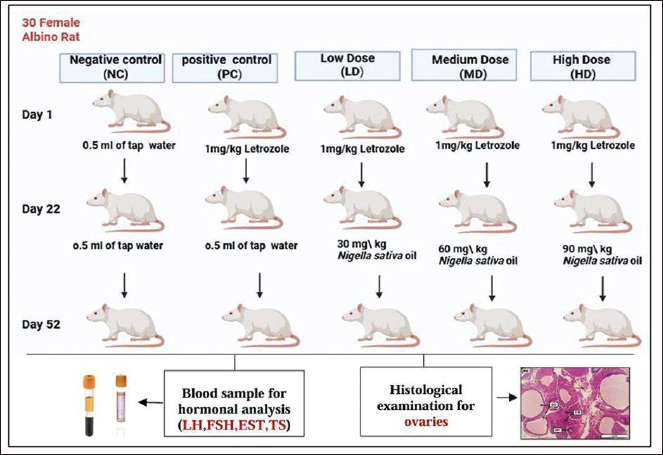
AbstractBackground: Polycystic ovarian syndrome (PCOS) is characterized by hyperandrogenism, anovulation, and abnormal polycystic ovarian morphology. Natural plant metabolites, such as Nigella sativa oil extract (NSOE), may serve as complementary therapies for managing PCOS symptoms. Aim: This study aimed to investigate the effect of NSOE on ovarian histopathology, reproductive hormone irregularities, and body weight changes in rats with letrozole (LTZ)-induced PCOS. Methods: Thirty female albino rats were divided equally into 5 groups as negative control (NC), positive control (PC), and three NSOE treatment groups. LTZ was used to induce PCOS in all patients, except those with NC. Once PCOS was confirmed after 21 days, the rats were given Tap water (NC and PC) or treated with 30, 60, or 90 mg/kg of NSOE for 30 days. On day 52, blood was collected, serum was obtained, and serum luteinizing hormone (LH), follicle-stimulating hormone (FSH), testosterone (TS), and estradiol (EST) levels were measured. In contrast, the ovaries were excised for histopathological assessments. Body weights were recorded on days 0, 21, and 52. Results: LTZ increases LH and TS levels, with multiple cystic follicles, high follicular atrophy, and stromal depletion in the ovaries, along with increased body weight, confirming the successful induction of PCOS. NSOE treatment decreased TS and LH levels, increased FSH and EST, and improved ovarian histopathology by reducing cyst formation and decreasing the number of follicular atrophy and stromal depletion. In addition, body weight decreased in a dose-dependent manner. Conclusion: NSOE treatments markedly improved the hormonal imbalance induced by LTZ, decreased the number of ovarian cysts, restored folliculogenesis, increased stromal thickness, and reduced body weight gain, especially at the HD. Keywords: Extracted oil, Histopathological study, Hormonal assay, PCOS, Plant metabolite. IntroductionPolycystic ovarian syndrome (PCOS) is one of the most prevalent causes of infertility and metabolic disturbance (Lentscher et al., 2021), affecting 11%–13% of women of reproductive age worldwide (Stener-Victorin et al., 2024). In patients with PCOS, 2/3 will not regularly ovulate (Marouf et al., 2022). Elevated androgen levels (Xu et al., 2020), irregular menstrual cycles (Marouf et al., 2022), increased weight, ovarian enlargement, cystic formation, hirsutism, infertility, and acne (Nicolaides et al., 2020) are all indicators of this condition. The pathogenesis of PCOS is not well understood, but some factors, including unhealthy lifestyle, genetic, and obesity variables, can cause PCOS (Marouf et al., 2022, Zhulikova et al., 2023). The hypothalamus-pituitary-gonadal (HPG) axis is the hormonal mechanism that controls sex hormone release. Gonadotropin-releasing hormone (GnRH), which is produced by the hypothalamus, activates the system. The anterior pituitary then releases follicle-stimulating hormone (FSH) and leutinizing hormone (LH) in response to GnRH stimulation, which acts on the gonads to stimulate the secretion of sex hormones, such as progesterone, estrogen, and testosterone (TS). To regulate the release of GnRH, LH, and FSH, the hypothalamus and pituitary gland then receive feedback from the sex hormones (Trifunović et al., 2016). In the case of a defect in GnRH pulse rates, an increase in LH promotes androgen production in the ovaries, whereas a lack of FSH inhibits the ovaries’s ability to convert estradiol (EST) into estrogen, delays follicle maturation, and ultimately hinders ovulation (Šimková et al., 2020). Letrozole (LTZ) causes hyperandrogenism by blocking the ovarian conversion of androgen to estrogen and hormonal imbalances, resulting in elevated LH and TS levels and polycystic ovarian changes (Xu et al., 2020, Qi et al., 2025). LTZ mimics the reproductive, endocrine, and morphological features of human PCOS through a targeted mechanism of action. Thus, it is an appropriate and widely accepted method for inducing PCOS in an animal model (Qi et al., 2025). Oral contraceptives and insulin sensitizers are current pharmaceutical therapies for PCOS that may have adverse effects and frequently treat symptoms rather than the underlying causes. As a result, interest in complementary treatments, such as medicinal plants with endocrine-modulating effects, low cost, and few side effects, has increased (Fatma and ÇOLAK, 2025; Unver et al., 2025). Nigella sativa (NS), black cumin, or black seed, has encouraging effects on resolving PCOS-induced ovarian dysregulation by improving follicular growth and stromal depletion and reducing cyst formation (Khani et al., 2021), despite its antioxidant, antimicrobial (Chatterjee et al., 2025), anti-inflammatory, and immunomodulatory effects (Elsayed et al., 2025). A controlled clinical trial on the management of adolescents with PCOS was conducted using short-term NS supplementation, and the data showed that NS effectively reduced ovarian volume, improved hormonal balance, and improved menstrual irregularities (Mahmoudian et al., 2024). At the same time, thymoquinone from NS restores LH, FSH, EST, and TS in rats with PCOS (Javanshir et al., 2018) and reduces ovarian cysts (Jaafar et al., 2024). However, published data on animal studies remain limited, although NS may have beneficial effects on the HPG axis, which might help patients with PCOS regain their ability to conceive (Hamid et al., 2024). Further investigation is required to clarify how NS affects the HPG axis in PCOS. Currently, there are no published data on the efficacy of NSEO for the prevention and management of PCOS, especially when supplemented with targeted therapy. Thus, this study aimed to evaluate the therapeutic effect of Nigella sativa oil extract (NSOE) in rats with PCOS by measuring serum hormone levels (TS, LH, FSH, and EST), ovarian histopathological examinations, and body weight alteration. The outcomes might help pharmaceutical companies collaborate with researchers and clinicians to commercialize the product and make it available to patients. Materials and MethodsNigella sativa oil was obtained from the licensed Suli Organic Company in Sulaymaniyah, Kurdistan Region, Iraq, while the LTZ was obtained from DENK PHARMA GmbH, Germany. Animal groups and treatments usedThirty female albino rats of 6–8 weeks and weighing 150 ± 5 g were obtained from the animal house of the College of Medicine, University of Sulaimani, Sulaimaniyah, Iraq, on March 30, 2025. The rats were kept in plastic cages with woodchips and acclimatized for 2 weeks to standardized conditions (12 hours light/dark at 23°C ± 3°C) before treatment, with free access to tap water and diet. Then, rats were divided into 5 groups of 6 rats each. Group 1 served as a negative control (NC), while Groups 2–5 were induced with PCOS using LTZ (1.0 mg/kg) dissolved in Tap water, administered orally once daily for 21 days (Marouf et al., 2022). On day 22, after confirming PCOS induction through hormonal and histopathological analysis, groups 1 and 2 (positive control, PC) were drenched with Tap water. In contrast, Groups 3–5 received NSOE as low dose (LD, 30 mg/kg), medium dose (MD, 60 mg/kg), and high dose (HD, 90 mg/kg), respectively (Khani et al., 2021, Balasubramanian et al., 2023). All treatments were administered orally using a force-feeding needle for up to 30 consecutive days (Fig. 1).
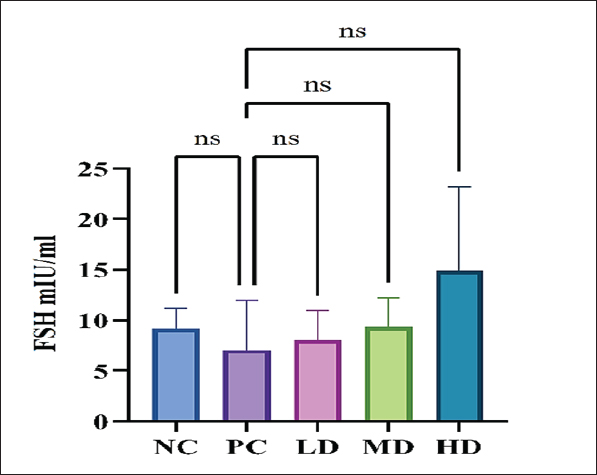
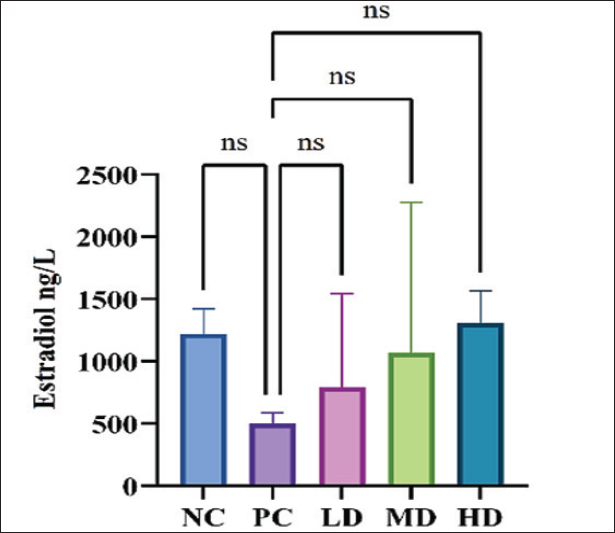
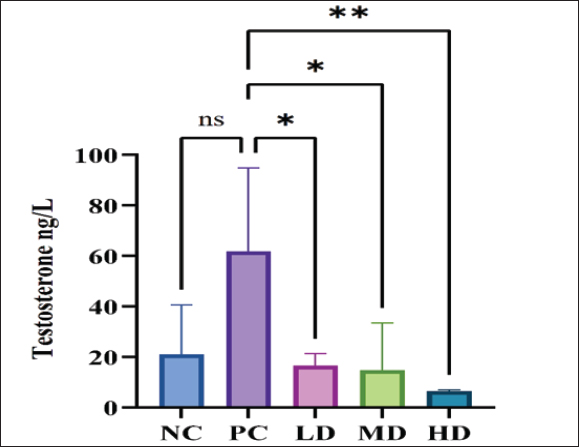
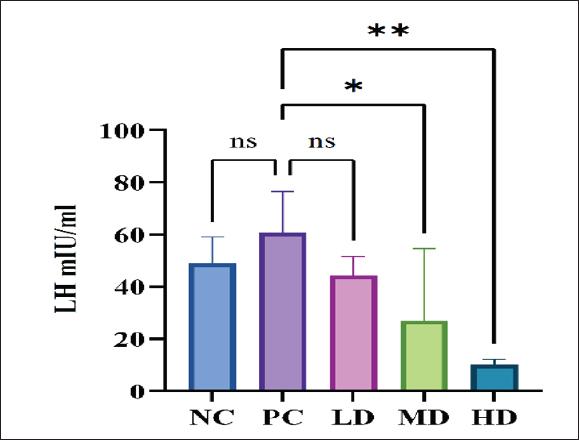
Fig. 1. Study design and allocation of animal groups with treatments. Physical observationAnimals were observed clinically for abnormal behaviors, food intake, defecation, segregation, hair alterations, cannibalism, and aggressiveness throughout the study (Mohammed et al., 2024). Measurements of body weightAnimals were weighed on days 0, 21, and 52 to determine body weight changes using a measurable balance. Animal scarification and collection of samplesOn day 31, the overnight fasted rats were euthanized using humanely euthanized via inhalation of 25% chloroform vapor in a sealed chamber, ensuring rapid and ethical sacrifice., and blood samples were collected from the caudal vena cava and kept in a serum collection gel tube for hormonal analysis. The ovaries were removed for histopathological examination (Hassan et al., 2024). Finally, the animals were incinerated. Hormonal analysisThe collected blood was centrifuged for 10 minutes at 4,000 rpm (Hettich, Germany), and the serum was obtained to measure LH, FSH, TS, and EST levels were measured using commercially available enzyme-linked immunosorbent assay kits (BT-LAB Bioassay Technology Laboratory, California, USA) according to the manufacturer’s instructions. Histopathological analysisAfter excising the ovarian specimens, they were rinsed in normal saline, fixed in 10% neutral buffered formalin, and placed in tissue cassettes for approximately 48 hours to preserve morphological integrity. Then, the samples were gradually dehydrated through an ascending ethanol series (50%, 60%, 70%, 90%, and 100%), followed by a couple of xylene treatments for tissue clearing. Subsequently, the samples were infiltrated and embedded in molten paraffin wax at 60°C–70°C. Paraffin blocks were then sectioned at 5 µm using a rotary microtome, mounted on glass slides, and dried on a heated slide dryer. Deparaffinization was achieved by immersing the slides in xylene for 30 minutes, followed by drying in a hot air oven at 50°C for 5 minutes. Finally, tissue sections were stained with Harris’s hematoxylin and eosin (H&E) and mounted with coverslips for examination under a light microscope (Ahmed et al., 2024). Semi-quantitative lesion scoringLesion scoring was conducted using a semi-quantitative approach with image analysis software (AmScope, version 3.7) and a microscope-mounted digital eyepiece camera (MU300, 2024). Histological evaluations were performed using a light microscope (NOVEL XSZ-N107T, China), focused on evaluating follicular regression, degeneration, stromal depletion and thickness, regenerative follicular counts, and the number of cyst formations with the lining epithelium of the ovary. Quantitative analysis involved calculating the mean percentages of newly regenerative, atrophic, and intact follicles within four randomly selected microscopic fields per section. The same was applied to the mean percentage of calculated cyst counts within a selected microscopic field. The counted cyst numbers were estimated as the mean across different microscopic areas after calculating the mean percentage. At the same time, stromal thickness and depletion were quantified and expressed as the mean percentage of the affected area in micrometers (µm). Lesion severity was classified as 0%–10%: No detectable lesions, 10%–25%: Mild lesions, 25%–50%: Moderate lesions, 50%–75%: Severe lesions, and 75%–100%: Critical lesions. Statistical analysisThe mean ± standard deviation was used to represent all values. Tukey’s post hoc multiple comparison test was used after one-way analysis of variance (ANOVA) to assess group differences, with a one-sample t-test applied when appropriate using GraphPad Prism software (V.10.4.1), and a significance level of p < 0.05 was considered significant. Ethical approvalThe study protocol was approved by the Ethics Committee of the College of Science, University of Charmo, Chamchamal, Sulaimaniyah, Kurdistan Region, Iraq (Approval No. 17, June 11, 2024). All measurements were performed in accordance with the ARRIVE guidelines for animal experimentation. ResultsEffects of NSOE on the hormonal levelsThe PC group exhibited higher TS and LH levels than the NC group (p > 0.05), indicating successful hormonal dysregulation associated with the induction of PCOS. TS was significantly decreased (p < 0.05) in the NSOE-treated groups (dose-dependent) compared with the PC group (Fig. 2). Treatment with LD-NSOE did not significantly (p > 0.05) decrease LH levels in the PC group, whereas both the MD and HD groups showed a significant dose-dependent decrease in LH (p < 0.05) (Fig. 3). Serum FSH levels were non-significantly decreased in the PC group compared with the NC group (p > 0.05). NSOE treatment dose-dependently increased FSH levels (p > 0.05) (Fig. 4) (Fig. 5). The PC group showed lower EST levels than the NC group (p > 0.05), whereas the NSOE dose-dependently increased the EST level (p > 0.05) (Fig. 5).
Fig. 4. Effects of low-dose (LD), median-dose (MD), and high-dose (HD) Nigella sativa oil extract (NSOE) at the end of study (day 52) on serum follicle-stimulating hormone (FSH). Ordinary one-way ANOVA with Tukey’s post-hoc multiple comparison was used. *:
Fig. 5. Effects of low-dose (LD), median-dose (MD), and high-dose (HD) Nigella sativa oil extract (NSOE) at the end of the study (day 52) on serum estradiol (EST). Ordinary one-way ANOVA with Tukey’s post hoc multiple comparison was used.
Fig. 2. Effects of low-dose (LD), median-dose (MD), and high-dose (HD) Nigella sativa oil extract (NSOE) on serum testosterone at the end of the study (day 52) Ordinary one-way analysis of variance with Tukey’s post-hoc multiple comparison was used. *: p < 0.05 and **: p < 0.01 are significant compared to the positive control (PC), ns: non-significant compared to the PC group (p > 0.05). NC: Negative control.
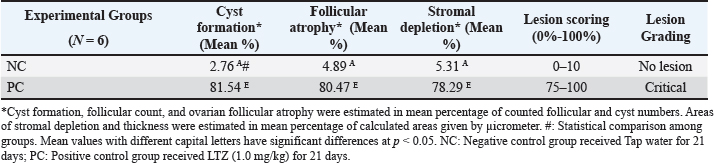
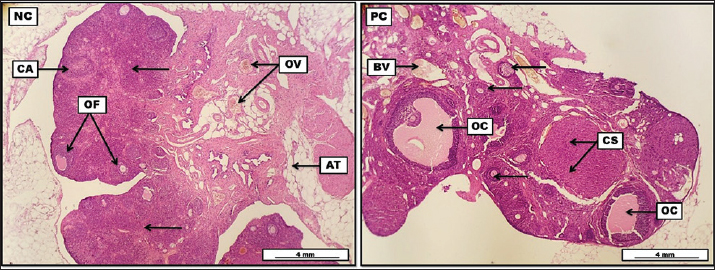
Fig. 3. Effects of low-dose (LD), median-dose (MD), and high-dose (HD) Nigella sativa oil extract (NSOE) on serum LH at the end of the study (day 52) Ordinary one-way analysis of variance with Tukey’s post hoc-multiple comparison was used. *: p < 0.05 and **: p < 0.01 indicate significance difference compared to the positive control (PC), ns: non-significant difference compared to the positive control (PC) group (p > 0.05). Histopathology findingsStatistical evaluation of ovarian tissue lesion scoring on day 22Animals from the NC group had preserved ovarian architecture, with well-organized follicles and a uniform distribution of stromal tissue, and were slightly smaller, as expected for an inactive ovary. In contrast, the ovaries from the PC showed more marked histopathological alterations than those from the NC. These changes included extensive cystic follicle formation, pronounced follicular degeneration, and a notable reduction in stromal tissue support (Fig. 6). The comparative semi-quantitative lesion scores summarize these morphological differences (NC vs. PC groups), highlighting the severity of PCOS changes, follicular degeneration, atrophy, and stromal depletion in the cystic ovarian disorder model (Table 1) Table 1. Semi-quantitative evaluation of ovarian histological sections on day 22 of the experiment.
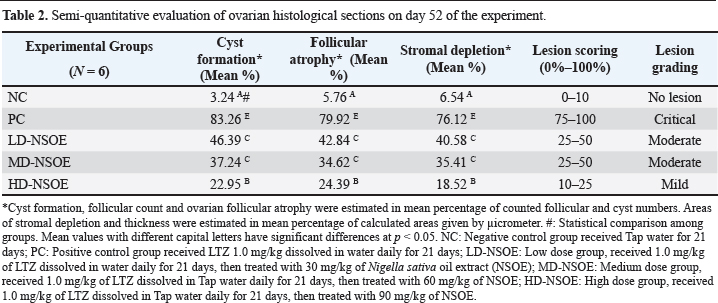
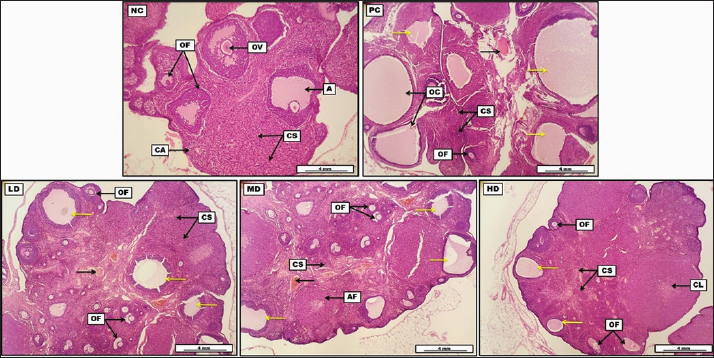
Fig. 6. Photomicrograph of the ovary from the negative control group that received Tap water for 21 days. The ovarian section demonstrates no obvious atypical morphological changes, with ovarian follicles (OF) displaying a typical arrangement and various morphological sizes encased by supportive connective tissue stroma (black arrows). In addition, the section reveals some degenerating corpus albicans (CA), with many congested ovarian (OV) blood vessels and connecting adipose tissue surrounding the ovarian parenchyma. The PC group received 1.0 mg/kg of letrozole dissolved in water daily for 21 days. Pronounced ovarian atrophy, accompanied by regression and degeneration of numerous ovarian follicles (black arrows). In addition, multiple larger-sized OCs with numerous engorged blood vessels within a regressed connective tissue stroma were observed. H&E. Scale bar: 4 mm. Statistical evaluation of ovarian tissue lesion scoring on day 52The analysis revealed significant follicular regeneration accompanied by a marked reduction in cystic formations and stromal depletion across all NSOE treatment groups. Notably, animals in the HD group demonstrated the most substantial histopathological improvements, with a significant reduction in lesion severity, indicated by a score improvement from critical in the PC group to mild in the HD group (Table 2). Similarly, the MD and HD groups showed moderate lesion scores, indicating dose-dependent reduction of ovarian pathology. The NC group showed normal ovarian architecture, which was characterized by well-organized follicles and a regular distribution of stromal tissue (Fig. 7). In contrast, the PC group exhibited pronounced pathological features, including widespread cyst formation, particularly along the ovarian surface epithelium, severe follicular degeneration, and a significant reduction in stromal support tissue. NSOE treatment significantly mitigated ovarian histopathological lesions. The most pronounced improvement was achieved in the HD group, with lesion scores reduced to mild severity, whereas both the LD and MD groups demonstrated moderate lesion attenuation. These findings underscore the dose-responsive protective effects of NSOE against LTZ-induced polycystic ovarian changes. Table 2. Semi-quantitative evaluation of ovarian histological sections on day 52 of the experiment.
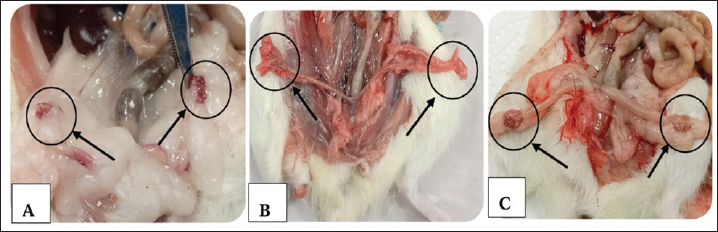
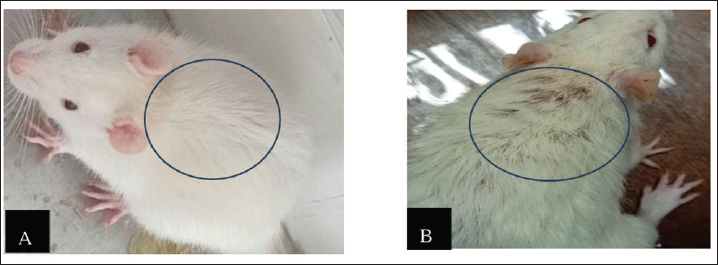
Fig. 7. A photomicrograph of the ovary from the negative control (NC) group revealed no apparent morphological abnormalities, in which ovarian follicles (OF) appeared normally organized with pleomorphic assemblies, some of which contained a mature nucleated follicular ovum (OV). Each follicle also includes a protein-rich pinkish antral fluid (A) and is encompassed by a supportive connective tissue stroma (CS). Additionally, the section displays a prominent, structurally hypoplastic corpus albicans (CA), suggestive of post-ovulatory changes. The positive control (PC) group displayed severely distributed multiple pleomorphic fluid-filled OCs, which were variable in size and shape (yellow arrows). The section also shows significant and severe regression and atrophy of many OF, with congested blood vessels (black arrow) embedded within a depleted and regenerated CS. Low-dose (LD) group demonstrates numerous, extensively distributed, multifocal-small regenerative OF, with the occurrence of some other large fluid-filled cysts (yellow arrows), all embedded within a reformed CS, alongside the numerous congested ovarian blood vessels (black arrows) in cross-section. LD group demonstrates numerous, extensively distributed, multifocal-small regenerative OF. The MD group revealed newly regenerative variable-sized intact OF implanted randomly within a plentiful CS. The sections also display several pleomorphic ovarian cysts (yellow arrows), with many congested blood vessels (black arrows). The high-dose (HD) group exhibited numerous newly regenerated OFs alongside hyalinized, large, and highly cellular corpus luteum (CL). Additionally, regenerating, nonovulated follicles with a granular, eosinophilic antrum are observed, situated within a comparatively considerable area of reproduced CS. Multiple foci of relatively small fluid-filled cysts (yellow arrows) are also prominent. H&E. Scale bar: 4 mm. Physical observationRats in the PC group exhibited hair loss around the neck to the head (Fig. 8). Following the initiation of NSOE treatment, the rats in all groups showed a noticeable reduction in food intake, whereas the PC group showed increased appetite. Upon sacrifice, excessive abdominal fat surrounds the ovaries of the PC group, particularly on one side. After removing the fat, both ovaries in PC revealed multiple cysts larger than those in NC (Fig. 9).
Fig. 9. (A): Ovaries and abdomen with high fat during the administration of letrozole (positive control); (B): Ovaries and abdomen with no fat (negative control); and (C): Ovaries and abdomen of the treatment group with Nigella sativa oil extract showing low fat.
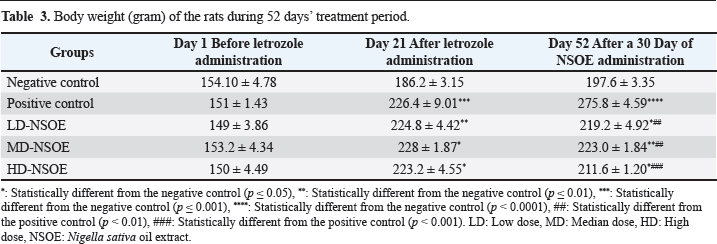
Fig. 8. Observation of the experimental rats. (A) A healthy rat in the negative control group with no hair loss and (B) a rat with letrozole-induced polycystic ovarian syndrome and hair loss. Effects of NSOE on body weightLTZ-induced rats gained a significantly higher body weight than NC rats over 21 and 52 days, which correlates with metabolic disturbances of PCOS, including hyperandrogenism and the consequent adiposity. After 30 days of NSOE (Day 52), all treatment groups showed significantly lower body weights than the PC group, which approached NC, indicating attenuation of LTZ-induced weight gain. The LD-NSOE group showed increased body weights on day 21 (p ≤ 0.01) due to LTZ, with significant reductions on day 52. The MD and HD groups also demonstrated marked increases in body weight on day 21 (p ≤ 0.05) and reductions on day 52, indicating a strong therapeutic effect. (Table 3) Table 3. Body weight (gram) of the rats during 52 days’ treatment period.
DiscussionPCOS is an endocrine disorder distinguished by an irregular menstrual cycle, anovulation, hyperandrogenism, disruption in the HPG axis, and the histomorphology of the ovary (Goudarzi et al., 2025). In this study, PCOS was induced in rats using LTZ, an aromatase inhibitor, which increased androgen levels by disrupting the HPG axis and producing PCOS-like characteristics. This disruption led to hormonal imbalances, including hyperandrogenism, polycystic ovarian morphology, and follicular atresia (Reddy et al., 2016). LTZ caused a marked increase in LH and TS levels in the PCOS group. The effects of NSOE on TS and LH regulation in rats with LTZ-induced PCOS showed a dose-dependent response, consistent with previous studies (Liu et al., 2024). This dose-dependent response indicates a significant effect of NSOE on endocrine regulation (Kafali et al., 2004). The PC group showed markedly higher levels of TS and LH than the NC group (Xie et al., 2021), indicating that they maintained the lowest baseline concentrations, consistent with normal endocrine physiology. However, LH levels were lower in the HD group than in the LD group, consistent with the findings of another study (Ammar and Salem, 2021). In the MD group, both TS and LH levels showed a significant reduction (p < 0.05), and the TS levels in the LD group decreased significantly (p < 0.05), while the LH levels in the LD group decreased (p > 0.05). Previous studies support these results, in which NSOE significantly reduces TS and LH levels in patients with PCOS. The mechanisms behind these effects might be due to the main bioactive component, thymoquinone, which can improve hormonal balance in PCOS through multiple pathways. Similar findings were reported by Brian et al. (2025), who demonstrated that thymoquinone improved hormonal profiles and ovarian outcomes in a letrozole-induced PCOS model. However, PCOS is associated with increased androgen and insulin levels and, consequently, increased oxidative stress. Thus, thymoquinone plays a strong anti-inflammatory role in PCOS by reducing inflammation and increasing antioxidant production. Thymoquinone also has neuroprotective roles (Hatipoglu et al., 2025), improving insulin sensitivity and lowering circulating insulin, thereby decreasing insulin-driven LH secretion and androgen synthesis via feedback mechanisms (Khani et al., 2021, Balasubramanian et al., 2023). In the FSH analysis, the PC group showed a slight decrease compared with the NC group. Following NSOE treatment, FSH levels increased (p > 0.05) in a dose-dependent manner, approaching levels in the NC group (Alaee et al., 2023). However, EST levels were lower in the PC group than in the NC (Ullah et al., 2017, Xie et al., 2021) and treatment groups; however, a dose-dependent increase was observed following NOSE treatment (p > 0.05). This finding is consistent with those of earlier studies on the effects of LTZ on estrogen and androgen retention (Balasubramanian et al., 2023, Ercan et al., 2025). NSOE enables the pituitary gland to physiologically regulate FSH secretion. Furthermore, by mitigating LH-induced theca cell androgen production and re-establishing estrogen-mediated feedback, NSOE helps rebalance gonadotropin secretion, leading to improved follicular maturation and ovulation, which is supported by evidence that NS and its bioactive compound improve ovarian histological architecture, reduce cyst formation, and enhance overall ovarian function (Khani et al., 2021; Marouf et al., 2022). At HD, it may serve as a potential therapeutic agent for PCOS-related endocrine disturbances by supporting TS and LH hypersecretion, consistent with its ability to restore endocrine balance in reproductive disorders (Hannan et al., 2021). LTZ-induced PCOS leads to complex dysregulated ovarian pathology (Abdollahi et al., 2012) that results in cystic ovarian, follicular atrophy, stromal depletion, weight gain, and hair loss (Akbar, 2018). These changes were strikingly clear in the PC group, which was characterized by critical lesion scores and severe structural damage. NSOE showed dose-dependent therapeutic effects (Parhizkar et al., 2016; Akbar, 2018), with HD producing the most notable improvements, including reduced cystic lesions, stromal atrophy, and enhanced follicular regeneration (Parhizkar et al., 2016; Ammar and Salem, 2021). Moderate improvements were observed at LD and MD, supporting the dose-responsive efficacy of NSOE (Alaee et al., 2023, Balasubramanian et al., 2023). This study employed a semi-quantitative lesion scoring to assess ovarian tissue integrity, thereby reducing observer bias and facilitating accurate comparison of treatment dosages. This study also incorporates dose-dependent testing to demonstrate the therapeutic gradient of NSOE, thereby enhancing scientific rigor and understanding of its role in PCOS. Consequently, the findings from the NC group supported the normal ovarian architecture, confirming the experimental framework’s validity. The changes in the NSOE-treated groups indicate the possible effectiveness of NSOE in reversing the functional and morphological disturbances caused by hyperandrogenism (Shaukat et al., 2018). NSOE influences ovarian morphology by facilitating follicular restoration, preserving stromal support, and minimizing cystic changes, which may be due to the bioactive components of NS, specifically thymoquinone, which has antioxidant (Chatterjee et al., 2025), anti-inflammatory, and endocrine-modulating properties (Alaee et al., 2023, Goudarzi et al., 2025). This leads to reduced androgen biosynthesis and increased aromatase activity. Regulation of EST in rats induced PCOS, also improved follicular cells (Nafiu et al., 2019; Balasubramanian et al., 2023). In summary, NSOE exerts protective and restorative effects on the ovaries in a rat model of PCOS. The improvement in lesion scores and associated histological criteria reflects the significant therapeutic potential of NSOE as a natural alternative or adjunct treatment in the management of this condition. Furthermore, NS supports ovarian health primarily through anti-inflammatory and antioxidant mechanisms rather than direct estrogenic effects (Parhizkar et al., 2016). A significant increase in body weight was observed in the PC group compared with the treated groups (Ollila et al., 2016; Anwar et al., 2021), confirming the successful induction of PCOS and metabolic alterations (Xie et al., 2021; Hamid et al., 2024). This weight gain is consistent with the pathophysiology of PCOS, which involves increased hyperandrogenism, increased adipose tissue, insulin resistance, and compensatory hyperinsulinemia (Ollila et al., 2016). Elevated insulin can stimulate the hypothalamic hunger center, leading to increased food consumption and weight gain (Anwar et al., 2021). NSOE treatment significantly reduced body weight gain in a dose-dependent manner compared with that in the PC group. In the HD group, body weight was significantly reduced throughout the experiment, although in the LD group, body weight showed notable improvement. These findings are consistent with those of earlier studies demonstrating that NSOE decreases body weight and improves metabolic profiles in PCOS models by improving insulin sensitivity, decreasing insulin resistance, enhancing pancreatic β-cell activity, and lowering blood glucose levels (Anwar et al., 2021). The anti-obesogenic effect of NSOE may be attributed to its ability to suppress appetite, block intestinal glucose absorption, reduce hepatic gluconeogenesis, and stimulate insulin secretion (Mathur and Sharma, 2021). NSOE normalizes glucose and lipid metabolism through these mechanisms, which may indirectly minimize fat buildup. NSOE administration restored body weight to near-normal levels in PC rats, indicating its potential to ameliorate the metabolic disturbances associated with PCOS (Nafiu et al., 2019; Ammar and Salem, 2021; Anwar et al., 2021). The limitations of this study include the lack of elucidation of the molecular pathways of NSOE, the lack of evaluation of its long-term safety, and the lack of confirmation of its clinical applicability in human PCOS. ConclusionNSOE treatment significantly reduced ovarian cysts, restored folliculogenesis, increased stromal thickness, and decreased body weight gain, especially in the HD, indicating strong therapeutic potential. In addition, it normalized reproductive hormones by reducing TS and LH, while increasing FSH and EST. Overall, NSOE is a safe, natural, and low-cost coexisting therapeutic option for PCOS. However, these therapeutic effects may be attributed to the phytoconstituents of NS, especially thymoquinone, which is known for its protective and restorative effects and antioxidant, anti-inflammatory, anti-androgenic, and insulin-sensitizing properties. Although the results are promising, long-term safety, toxicity profiling, molecular study, and pharmacokinetic evaluations are recommended. Further investigations should include comparative evaluation with standard PCOS therapies to establish relative efficacy. AcknowledgmentsThe authors would like to thank the College of Science, Charmo University, and the Animal House of the College of Medicine, University of Sulaimani, Sulaymaniyah, Iraq, for their technical assistance and encouragement. Conflict of interestThe authors have no conflicts of interest to declare. FundingThis research received no local or international funding. Authors’ contributionRSM: Data curation, formal analysis, funding acquisition, investigation, methodology, and writing the original draft. SMS: Conceptualization, methodology, project administration, supervision, final draft review, and editing. Data availabilityData are available from the corresponding author upon request. ReferencesAbdollahi, M., Mirghazanfari, S.M. and Mehri, M. 2012. Investigating the possible reducing impact of black seed (Nigella sativa) hydroethanolic extract on liver and brain tissue in a rat model of polycystic ovary. J Am Coll Cardiol. 57, 73–84. Ahmed, V.A., Rahman, H.S., Mohammed Raheem, M.O., Othman, H.H., Algarawi, M. and Ibnaouf, K.H. 2024. Antidiabetic, antihyperlipidemic, and antioxidant effects and regulation of miRNA expression by D. orientalis Adams extract in a diabetic rat model. Nat. Prod. Commun. 19(6), 1934578X. Akbar, S. 2018. “Nigella sativa” (black seeds): Panacea or hyperbole?: a critical review of experimental and clinical observations. J. Herb. Naturopathic Med. 30(4), 157–172. Alaee M Mirani., Derakhshan F Koohpeyma. and Bakhtari. 2023. Thymoquinone improves folliculogenesis, sexual hormones, gene expression of apoptotic markers and antioxidant enzymes in polycystic ovary syndrome rat model. J. Vet. Med. 9(1), 290–300. Ammar, I.M.M. and Salem, M.A.A. 2021. Reduction of polycystic ovary syndrome-related disorders by supplementation of thymoquinone and metformin. J. Middle East Fertil. Soc. J. 26(1), 29. Anwar, N., Hamid, S., Nadeem, A., Asad, A., Waseem, N. and Mehmood, N. 2021. Effect of Nigella sativa on serum testosterone levels in letrozole induced polycystic ovarian syndrome in mice. Pak. Armed Forces Med. J. 1(1), 338–342. Anwar, N., Nadeem, A., Naheed, K., Ahmad, N., Akhtar, N., Javed, M., Khan, S. and Iqbal, M. 2021. Impact of Nigella sativa on body weight, volume and weight of ovary in letrozole induced polycystic ovarian syndrome in mice. Pak. J. Med. Health Sci. 15(9), 2355–2357. Balasubramanian, R., Maideen, N.M.P., Muthusamy, S. and Gobinath, M. 2023. A review of clinical and preclinical studies on the therapeutic potential of black seeds (Nigella sativa) in the management of polycystic ovarian syndrome (PCOS). J. Pharmacopunct. 26(1), 1. Brian, O., Dokuyucu, R., Yuksel, E. and Ozgur, T. 2025. Thymoquinone vs Metformin in Letrozole-Induced PCOS: comparative Insights into Metabolic, Hormonal, and Ovarian Outcomes. J. Clin. Med. 14(18), 6561. Chatterjee, G., Saha, A.K., Khurshid, S. and Saha, A. 2025. A comprehensive review of the antioxidant, antimicrobial, and therapeutic efficacies of black cumin (Nigella sativa L.) seed oil and its thymoquinone. J. Med. Food. 28(4), 325–339. Elsayed, M., Al-Marakby, K.M., Abdel Hafez, S. and Abdelnour, S.A. 2025. The supplementation of dietary black cumin (Nigella Sativa) seeds on performance, blood hematology, post-metabolic responses, antioxidant status, immunity, and inflammatory markers in pre-weaning calves. Trop. Anim. Health Prod. 57(3), 151. Ercan, O., Dokuyucu, R., Yuksel, E. and Ozgur, T. 2025. Thymoquinone versus metformin in letrozole-induced pcos: comparative insights into metabolic, hormonal, and ovarian outcomes. J. Clin. Med. 14(18), 6561. Fatma, A.L. and ÇOLAK, A.M. 2025. Phytochemical and antioxidant characterization of myrtle (Myrtus communis L) fruit. J. Agric. Sci. 9(4), 1182–1193. Goudarzi, K., Kamalpour, J., Zekri, S., Aringazina, R.A., Safarzoda, R.S., Tamadon, A. and Tanideh, N 2025. Polycystic ovary syndrome herbal treatments and medicinal plants: a comprehensive review. J. Infertil. Reprod. Biol. 2025, 24–26. Hamid, F., FadhIL, N. and Sultan, S. 2024. Exploring the prevalence and knowledge gap surrounding polycystic ovary syndrome and its treatment among women in Kut City, Iraq: a survey-based study. Latin. Am. J. Pharm. 43(2), 629–637. Hannan, M.A., Rahman, M.A., Sohag, A.A.M., Uddin, M.J., Dash, R., Sikder, M.H., Rahman, M.S., Timalsina, B., Munni, Y.A., Sarker, P.P., Alam, M., Mohibbullah, M., Haque, M.N., Jahan, I., Hossain, M.T., Afrin, T., Rahman, M.M., Tahjib-Ul-Arif, M., Mitra, S., Oktaviani, D.F., Khan, M.K., Choi, H.J., Moon, I.S. and Kim, B 2021. Black cumin (Nigella sativa L.): a comprehensive review on phytochemistry, health benefits, molecular pharmacology, and safety. J. Nutrients 13(6), 1784. Hassan, E.S., Rahman, H. and Omer, S.H. 2024. Subchronic toxicity study of Heracleum lasiopetalum extract in healthy Sprague Dawley Rats. Iran. J. Pharm. Res. 23(1), e144209. Hatipoglu, D., Burak Ates, M., Senturk, G., Koca, O., Bulut, A. and Donmez, N. 2025. Neuroprotective role of Nigella sativa seed oil in mitigating bisphenol a-induced neurodegeneration. Scientific Rep. 15(1), 22477. Jaafar, N.H., Jalani, S.M., Mohamed, R. and Mutalip, S.S.M. 2024. Nigella sativa on the improvement of ovarian dysfunctions in polycystic ovary syndrome (PCOS): a short review. World. J. Environ. Biosci. 13(2-2024), 36–40. Javanshir, S.T., Yaghmaei P. and Hajebrahimi, Z. 2018. Thymoquinone ameliorates some endocrine parameters and histological alteration in a rat model of polycystic ovary syndrome. Int. J. Reprod. Biomed. 16(4), 275–284. Kafali, H., Iriadam, M., Ozardalı, I. and Demir, N. 2004. Letrozole-induced polycystic ovaries in the rat: a new model for cystic ovarian disease. J. Arch. Med. Res. 35(2), 103–108. Khani, S., Abdollahi, M., Khalaj, A., Heidari, H. and Zohali, S. 2021. The effect of hydroalcoholic extract of Nigella sativa seed on dehydroepiandrosterone-induced polycystic ovarian syndrome in rats: an experimental study. J. Int. J. Reprod. Biomed. 19(3), 271. Lentscher, J.A., Slocum, B. and Torrealday, S. 2021. Polycystic ovarian syndrome and fertility. J. Clin. Obstet. Gynecol. 64(1), 65–75. Liu, Y., Yu, J., Li, J., Li, W. and Ma, H. 2024. Bioinformatics-based analysis of potential therapeutic target genes for polycystic ovary syndrome. Cell. Mol. Biol. 70(4), 169–175. Mahmoudian, A., Ashouri, A., Bilandi, R.R., Mohammadzadeh, F., Dashti, S. and Bahri, N. 2024. The possible short-term of Nigella sativa–L in the management of adolescent polycystic ovarian syndrome: results of a randomized controlled trial. J. Ovarian Res. 17, 144. Marouf, B.H., Ismaeel, D.O., Hassan, A.H. and Ali, O.J. 2022. Therapeutic effects of silibinin against polycystic ovary syndrome induced by letrozole in rats via its potential anti-inflammatory and anti-oxidant activities. J. Inflamm. Res. 2022, 5185–5199. Mathur, V. and Sharma, M. 2021. Therapeutic use of nigella sativa on metabolic disorders: a review. Int. J. Bot. Stud. 5, 42–49. Mohammed, T.H., Rahman, H.S. and Omer, S.H. 2024. Phytochemical analysis and in vivo toxicity study of extracted walnut oil in Sprague Dawley rats. Nat. Prod. Commun. 19(8), 1934578X. Nafiu, A., Alimi, S., Babalola, A., Ogunlade, A., Muhammad, F., Abioye, A., Oluwafuyi, A., Oyewole, L., Akinola, O., Olayemi, J., Amin, A., Abdulmajeed, W., Musa, I. and Rahman, M. 2019. Anti-androgenic and insulin-sensitizing actions of Nigella sativa oil improve polycystic ovary and associated dyslipidemia and redox disturbances. J. J. Complement. Med. Res. 10(4), 186–199. Nicolaides, N.C., Matheou, A., Vlachou, F., Neocleous, V. and Skordis, N. 2020. Polycystic ovarian syndrome in adolescents: from diagnostic criteria to therapeutic management. J. Acta Bio Medica. Atenei Parmensis 91(3), e2020085. Ollila, M.M.E., Piltonen, T., Puukka, K., Ruokonen, A., Järvelin, M.R., Tapanainen, J.S., Franks, S. and Morin-Papunen, L. 2016. Weight gain and dyslipidemia in early adulthood associate with polycystic ovary syndrome: prospective cohort study. J. Clin. Endocrinol. Metab. 101, 739–747. Parhizkar, S., Latiff, L.A. and Parsa, A. 2016. Effect of Nigella sativa on reproductive system in experimental menopause rat model. J. Phytomed. 6, 95. Qi, S., Yu, H., Hu, W., Xia, D., Shi, Q. and Wang, K. 2025. Evaluation of representativeness and sustainability of PCOS rat models induced by letrozole with or without high-fat diet. Sci. Rep. 15(1), 30754. Reddy, P.S., Begum, N., Mutha, S. and Bakshi, V. 2016. Beneficial effect of curcumin in letrozole induced polycystic ovary syndrome. J. Asian Pac. J. Reprod. 5(2), 116–122. Shaukat, A., Zaidi, A., Anwar, H. and Kizilbash, N. 2018. Mechanism of the antidiabetic action of Nigella sativa and thymoquinone: a review. J. Clin. Nutr. 57, 59–69. Šimková, M., VÍTKŮ, J., Kolatorova, L., Vrbíková, J., Vosátková, M., Včelák, J. and Dušková, M. 2020. Endocrine disruptors, obesity, and cytokines—how relevant are they to PCOS? Physiol. Res. 69(Suppl 2), S279–S293. Stener-Victorin, E., Teede, H., Norman, R.J., Legro, R., Goodarzi, M.O., Dokras, A., Laven, J., Hoeger, K. and Piltonen, T.T. 2024. Polycystic ovary syndrome. Nat. Rev. Dis. Primers 10(1), 27. Trifunović, S., Manojlović-Stojanoski, M., Ristić, N., Jurijević, B.S., Balind, S.R., Brajković, G., Perčinić-Popovska, F. and Milošević, V. 2016. Effects of prolonged alcohol exposure on somatotrophs and corticotrophs in adult rats: stereological and hormonal study. Acta Histochemica 118(4), 353–360. Ullah, A., Jahan, S., Razak, S., Pirzada, M., Ullah, H., Almajwal, A., Rauf, N. and Afsar, T. 2017. Protective effects of GABA against metabolic and reproductive disturbances in letrozole induced polycystic ovarian syndrome in rats. J. Ovarian Res. 10, 62. Unver, T., Özalp Erenler, A.S. and Kıran, T.R. 2025. Anti-infective effect of Aquilaria malaccensis L. essential oil against Candida strains, the leading cause of yeast infectious. Int. J. Agric. Environ. Food. Sci. 9(2), 325–330. Xie, Y., Xiao, L. and Li, S. 2021. Effects of metformin on reproductive, endocrine, and metabolic characteristics of female offspring in a rat model of letrozole-induced polycystic ovarian syndrome with insulin resistance. J. Clin. Invest. 57, 150. Xu, J., Dun, J., Yang, J., Li, P., Lin, Q., Huang, M., Huang, L., You, X. and Lin, Y. 2020. Letrozole rat model mimics human polycystic ovarian syndrome and insulin signaling pathways. Med. Sci. Monitor 26, e923073. Zhulikov, O.O., Pustova, N.O., Bibichenko, V.O., Lytvynenko, O.Y. and Kucheriavchenko, M.O. 2023. Reactive oxygen species generation by blood leucocytes of rats with polycystic ovary syndrome under the conditions of intermittent cold exposure. Wiadomosci. Lekarskie Med. Adv. 76(7), 1670–1676. | ||
| How to Cite this Article |
| Pubmed Style Majeed RS, Salih SM. Effects of black seed oil on hormones in the pituitary hypothalamus gonadal axis in rats with polycystic ovarian syndrome. Open Vet. J.. 2026; 16(7): 4891-4903. doi:10.5455/OVJ.2026.v16.i7.66 Web Style Majeed RS, Salih SM. Effects of black seed oil on hormones in the pituitary hypothalamus gonadal axis in rats with polycystic ovarian syndrome. https://www.openveterinaryjournal.com/?mno=306265 [Access: July 27, 2026]. doi:10.5455/OVJ.2026.v16.i7.66 AMA (American Medical Association) Style Majeed RS, Salih SM. Effects of black seed oil on hormones in the pituitary hypothalamus gonadal axis in rats with polycystic ovarian syndrome. Open Vet. J.. 2026; 16(7): 4891-4903. doi:10.5455/OVJ.2026.v16.i7.66 Vancouver/ICMJE Style Majeed RS, Salih SM. Effects of black seed oil on hormones in the pituitary hypothalamus gonadal axis in rats with polycystic ovarian syndrome. Open Vet. J.. (2026), [cited July 27, 2026]; 16(7): 4891-4903. doi:10.5455/OVJ.2026.v16.i7.66 Harvard Style Majeed, R. S. & Salih, . S. M. (2026) Effects of black seed oil on hormones in the pituitary hypothalamus gonadal axis in rats with polycystic ovarian syndrome. Open Vet. J., 16 (7), 4891-4903. doi:10.5455/OVJ.2026.v16.i7.66 Turabian Style Majeed, Rozhgar Salar, and Shelanah Mohammed Salih. 2026. Effects of black seed oil on hormones in the pituitary hypothalamus gonadal axis in rats with polycystic ovarian syndrome. Open Veterinary Journal, 16 (7), 4891-4903. doi:10.5455/OVJ.2026.v16.i7.66 Chicago Style Majeed, Rozhgar Salar, and Shelanah Mohammed Salih. "Effects of black seed oil on hormones in the pituitary hypothalamus gonadal axis in rats with polycystic ovarian syndrome." Open Veterinary Journal 16 (2026), 4891-4903. doi:10.5455/OVJ.2026.v16.i7.66 MLA (The Modern Language Association) Style Majeed, Rozhgar Salar, and Shelanah Mohammed Salih. "Effects of black seed oil on hormones in the pituitary hypothalamus gonadal axis in rats with polycystic ovarian syndrome." Open Veterinary Journal 16.7 (2026), 4891-4903. Print. doi:10.5455/OVJ.2026.v16.i7.66 APA (American Psychological Association) Style Majeed, R. S. & Salih, . S. M. (2026) Effects of black seed oil on hormones in the pituitary hypothalamus gonadal axis in rats with polycystic ovarian syndrome. Open Veterinary Journal, 16 (7), 4891-4903. doi:10.5455/OVJ.2026.v16.i7.66 |


