




| Research Article | ||
Open Vet. J.. 2026; 16(7): 4760-4773
Open Veterinary Journal, (2026), Vol. 16(7): 4760-4773 Research Article Correlation analysis of Semen quality parameters in Pesisir bull: Production bulls and traditionally managed breeding bullsAprisal Aprisal1, Jaswandi Jaswandi1*, Tinda Afriani1, Hartati Hartati2, Widya Bayu Pintaka Putra3, Pajri Anwar4,5, Rifkhan Rifkhan51Faculty of Animal Husbandry, Andalas University, Padang, Indonesia 2Research Center for Animal Husbandry, National Research and Innovation Agency, Bogor, Indonesia 3Research Center for Applied Zoology, National Research and Innovation Agency, Bogor, Indonesia 4Department of Animal Science, Faculty of Agriculture, Kuantan Singing Islamic University, Riau, Indonesia 5Department of Animal Production and Technology, Faculty of Animal Science, IPB University, Bogor, Indonesia *Corresponding Author: Jaswandi Jaswandi. Faculty of Animal Husbandry, Andalas University, Padang, Indonesia. Submitted: 23/01/2026 Revised: 25/05/2026 Accepted: 11/06/2026 Published: 20/07/2026 © 2025 Open Veterinary Journal
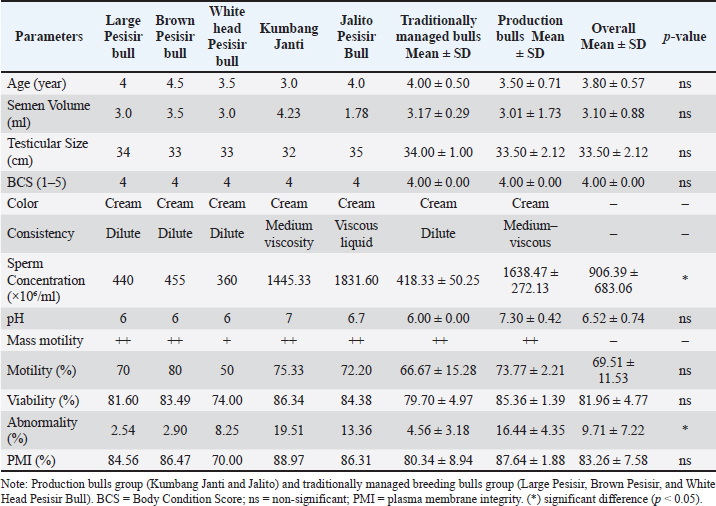
AbstractBackground: The Pesisir cattle are an indigenous genetic resource of Indonesia, widely distributed in the coastal areas of West Sumatra. The breeding program still faces a major limitation, namely the restricted availability of superior sires, which may lead to a decline in the genetic quality of the population. The selection of Pesisir bulls is necessary to produce high-quality frozen semen and constitutes a crucial component in sustainable genetic improvement efforts. Aim: This study evaluated semen quality in two groups of Pesisir bulls and identified candidate protein markers related to reproductive function based on molecular weight profiles. Methods: Five bulls were used and divided into a production group and a traditionally managed breeding group. Semen quality was assessed using computer-assisted sperm analysis, while sperm protein profiling was performed using Gel Electrophoresis 1D sodium dodecyl sulfate PAGE. Results: The results showed that semen quality in both management systems was within the normal range and met cryopreservation standards, with no significant differences (p > 0.05) in sperm motility and viability between groups. Protein analysis did not reveal group-specific proteins; 18 candidate proteins potentially involved in reproductive processes were identified, including those associated with sperm maturation, capacitation, acrosome reaction, and motility. Conclusion: These findings indicate that these proteins may serve as potential molecular markers of semen quality in Pesisir bull and suggest that bulls under traditional management possess comparable reproductive potential and may be considered as candidates for breeding programs aimed at genetic improvement. Keywords: Biomarkers, Pesisir bulls, Semen quality, Sperm Protein, Reproductive. IntroductionPesisir cattle are one of Indonesia's indigenous genetic resources that are naturally distributed along the coastal areas of West Sumatra. This cattle breed, locally known as Jawi Ratuih, exhibits relatively good reproductive performance, as reflected by a higher calving ability compared with other local cattle breeds. Numerous studies have reported that Pesisir cattle possess strong adaptability to tropical environments and low-quality feed resources without causing a significant decline in reproductive function, thereby supporting successful calving under smallholder farming systems (Zain et al., 2024). In bulls, improvements in nutritional management and the use of additives in semen extenders have been reported to maintain sperm motility and viability, which are key indicators of fertility (Afriani et al., 2023). In line with this, proteomic studies on sperm of local cattle have identified key proteins involved in motility, energy metabolism, and fertilization processes, which have the potential to serve as molecular markers of male fertility (Anwar et al., 2025). The combination of their status as an indigenous genetic resource, their reputation as ratuih cattle, positive responses to nutritional interventions, and supporting molecular evidence underscores the superior genetic potential of Pesisir cattle to be developed as a genetic resource with high reproductive performance. One of the major constraints in Pesisir cattle breeding under smallholder production systems is the limited availability of superior breeding bulls. As a result, most females are mated with undersized or growth-retarded bulls, a situation that is further exacerbated by extensive management practices, leading to the production of small and underdeveloped calves. The use of sires with semen characteristics that have low heritability values has the potential to produce offspring with poor reproductive quality (Susilawati et al., 2020). The utilization of bulls with superior genetic quality is a key factor in enhancing the effectiveness of selection programmes (Yin et al., 2019). The use of such unfit bulls is commonly associated with inadequate age and suboptimal physical performance (Wahyuni and Dewi, 2018). This issue is further emphasized by Iskandar and Sartika (2019), who reported that the scarcity of superior bulls meeting the requirements for breeding stock represents a major reproductive constraint in Pesisir cattle production. Strategies to improve bull performance, including the selection of superior bulls and the determination of their fertility levels, are considered crucial. Ugur et al. (2019) emphasized that more comprehensive research, encompassing different developmental stages and the application of robust methodologies, is required to ensure bull quality and to accurately predict fertility in support of precision farming development. One of the most recent approaches for evaluating bull fertility involves the characterization of sperm proteins through qualitative and quantitative analyses, commonly referred to as proteomics. Various sperm-specific proteins, including those found in seminal plasma, have been reported to play a key role in determining sperm fertility in bulls (Pardede et al., 2021; Iskandar et al., 2022) toraya buffalo (Maulana et al., 2024), holstein friesian bulls (Elango et al., 2023). These proteins have the potential to serve as molecular markers for determining bull reproductive status and are considered more effective for assessing bull fertility than conventional methods (Rabaglino et al., 2022; Westfalewicz et al., 2021). Moreover, specific protein patterns in sperm are known to be associated with sperm motility, viability, and fertilization capacity, thereby enabling more accurate identification of bull fertility levels (Selvam et al., 2019). Sperm contains a wide array of proteins with biological functions distributed across the plasma membrane, flagellum, cytoplasm, acrosome, and nucleus, which collectively play crucial roles in maintaining physiological functions and determining the fertilizing capacity of sperm. Some of these proteins function as enzymes involved in energy metabolism and directly contribute to the regulation of sperm motility through structural mechanisms (Leite et al., 2022) and cellular signaling pathways (Sengupta et al., 2020). Other proteins exhibit diverse roles, including the regulation of motility, phosphorylation processes, energy metabolism (Kumaresan et al., 2023), and chromatin organization (Satrio et al., 2024). Although several studies have investigated fertility-related proteins in local cattle breeds, information on functional proteins involved in reproductive processes in Pesisir bulls remains limited. This lack of information poses a challenge to the development of accurate and objective molecular-based bull selection methods. Therefore, this study aims to evaluate the semen quality of Pesisir bulls under two rearing system groups and to identify sperm proteins in Pesisir cattle as candidate molecular markers of reproductive protein function, thereby supporting a more precise selection of superior breeding bulls. Materials and MethodsAnimals and ethical clearanceThis study utilized five Pesisir bulls consisting of two bulls from the Tuah Sakato Artificial Insemination Center (BIB Tuah Sakato), West Sumatra, namely Jalito and Kumbang Janti, representing the production managed Pesisir bull group, and three traditionally managed Pesisir bulls originating from coastal areas of West Sumatra with relatively similar body weight ranges, namely Large Pesisir Bull (PB), Brown Pesisir Bull (PC), and White Head Pesisir Bull (PKP). The experimental procedures included semen collection, semen quality evaluation, cryopreservation, post-thaw semen evaluation, and protein profile analysis using one-dimensional sodium dodecyl sulfate (SDS) polyacrylamide gel electrophoresis (1D SDS-PAGE). All experimental procedures involving animals were approved by the Health Research Ethics Committee of Universitas Negeri Padang (KEPK-UNP), Ministry of Higher Education, Science, and Universitas Negeri Padang under ethical clearance number No.099/KEPK-UNP/12/2025. Semen collectionSemen collection in the production bull group was conducted using healthy and superior Pesisir bulls maintained intensively at the Regional Technical Implementation Unit for Livestock Breeding and Animal Resources (UPTD BPTSD), Tuah Sakato, West Sumatra, namely Jalito and Kumbang Janti, which served as frozen semen production bulls. Meanwhile, three traditionally managed Pesisir bulls originating from coastal areas of West Sumatra, namely PB, PC, and PKP, were first transferred to the BIBD Tuah Sakato facility for adaptation and management standardization before semen collection. All semen collection and frozen semen production procedures were carried out in accordance with the standard operating procedures of UPTD BPTSD Tuah Sakato under the supervision of a veterinary reproduction specialist. Fresh semen collection was performed in the morning using an artificial vagina (AV) by trained professionals experienced in animal reproduction and artificial insemination to ensure optimal semen quality while minimizing the risk of contamination and sperm damage during handling procedures. Semen quality observationThe quality of fresh and frozen semen from Pesisir bulls was evaluated through the assessment of sperm motility and concentration using a computer-assisted sperm analysis system to obtain objective and quantitative measurements of sperm movement characteristics. In addition, several reproductive and semen quality parameters were also examined, including bull age (years), semen volume (ml), testicular size (cm), body condition score (BCS; 1–5), semen color, semen consistency, pH, mass motility, sperm viability (%), sperm abnormalities (%), and plasma membrane integrity (PMI, %). These parameters were evaluated subjectively through microscopic and macroscopic examinations. Post-thaw frozen semen quality was assessed using the same parameters to provide a comprehensive overview of the structural and functional quality of sperm before and after the cryopreservation process. Sperm protein isolationThe sperm protein isolation method used in this study was adapted from Maulana (2025). Frozen semen samples were thawed at 37°C, followed by three washes with phosphate-buffered saline and centrifugation at 1,800 rpm. The resulting sperm pellet was subsequently extracted using PRO-PREP protein extraction solution (iNtRON Biotechnology, Korea) in accordance with the manufacturer’s instructions. The concentration of total soluble protein was determined prior to 1D SDS PAGE analysis using the Bradford assay (1976) with bovine serum albumin (BSA; Sigma-Aldrich) as the standard. Molecular weight analysis of sperm proteins (1D SDS page)1D SDS PAGE analysis was conducted to characterize the protein profile based on molecular weight, as visualized by distinct protein bands on the gel. Protein separation was performed using a 12.5% polyacrylamide resolving gel containing SDS and a 4% stacking gel, operated at 60 V with a current of 20 mA for 3.5 hours. Following electrophoresis, the gel was stained with Coomassie Brilliant Blue. Molecular weight determination was carried out using an ExcelBand™ 3-Color Broad Range Protein Marker PM2700 (SMOBIO® Technology, Inc., Taiwan), covering a molecular weight range of 10–245 kDa. analysisFresh and frozen semen quality data were analyzed descriptively to characterize each observed parameter through the presentation of mean values, percentages, and distribution patterns of semen quality variables. Comparative analysis between groups was conducted using a descriptive comparative approach followed by the Mann-Whitney U test, with differences considered statistically significant at p < 0.05. The 1D SDS PAGE analysis data were evaluated by estimating the molecular weights of protein bands based on a protein marker reference. The migration distance from the stacking gel to the end of the resolving gel (a) and the migration distance from the stacking gel to each protein band (b) were measured, and the retardation factor (Rf) was subsequently calculated using the ratio b/a. The logarithmic molecular weight values of the protein marker were used to generate a linear regression equation (Y=a + bX), where the Rf value was plotted on the x-axis and the logarithm of molecular weight (log MW) on the y-axis. The Rf values of the sample protein bands were then substituted into the marker regression equation to obtain the antilogarithmic values used to estimate the molecular weights of proteins in each sample. ResultsFresh semen quality in Pesisir BullsThe results of the study demonstrated that semen quality characteristics in Pesisir bulls varied among individuals (Table 1). The average age of the bulls used in this study was 3.80 ± 0.57 years, ranging from 3 to 4.5 years old. All bulls exhibited relatively uniform body conditions and were categorized as being in good condition, as indicated by a Body Condition Score of 4.00 ± 0.00. The average testicular size was recorded at 33.50 ± 2.12 cm, suggesting that the bulls possessed relatively optimal reproductive potential. Table 1. Fresh semen quality characteristics and comparative analysis between production bulls and traditionally managed Pesisir bulls.
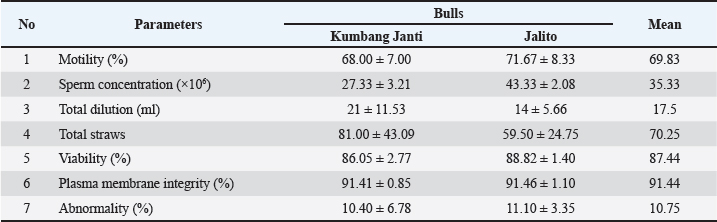
Based on macroscopic evaluation, all semen samples exhibited a cream color, which is considered a normal characteristic of bovine semen. Semen consistency ranged from watery to viscous liquid; however, most samples showed a relatively dilute consistency. Semen volume ranged from 1.78 to 4.23 ml, with an average value of 3.10 ± 0.88 ml, indicating differences in semen production capacity among bulls. Semen pH values ranged from 6 to 6.7, with an average of 6.54 ± 0.74. This range remained within the normal physiological limits for bovine semen, although one sample exhibited a relatively higher pH value compared to the others. Microscopic evaluation revealed considerable variation in sperm concentration among bulls, ranging from 360 × 106 to 1,831.6 × 106 sperm/ml, with a mean value of 906.39 ± 683.06 × 10⁶ sperm/ml. The relatively high SD indicated variability in spermatogenic capacity among the animals. Sperm motility averaged 69.51% ± 11.53%, with the highest value observed in the PC (80%) and the lowest in the PKP (50%). Overall, the observed motility values still met the acceptable standards for good-quality semen intended for reproductive purposes. Sperm viability percentage was relatively high, averaging 81.96% ± 4.77%, indicating that most sperm remained viable and possessed good membrane integrity. Sperm abnormalities ranged from 2.54% to 19.51%. Although some individuals exhibited relatively higher abnormality rates, these values were generally still within the tolerable range for breeding bulls. Furthermore, the PMI test showed values ranging from 70% to 88.97%, indicating that the sperm plasma membrane remained functionally intact and capable of supporting the fertilization process. The evaluation results demonstrated that the semen quality of Pesisir bulls used for frozen semen production, namely Kumbang Janti and Jalito, was generally superior to that of traditionally managed Pesisir bulls, including PB, PC, and PKP. In terms of sperm motility, Kumbang Janti (75.33%) and Jalinto (72.20%) exhibited higher values than PKP (50%) and showed relatively more stable performance compared to PB (70%) and PC (80%). sperm concentration in Jalinto (1,831.60 × 10⁶ sperm/ml) and Kumbang Janti (1,445.33 × 10⁶ sperm/ml) was substantially higher than that observed in PB (440 × 10⁶ sperm/ml), PC (455 × 10⁶ sperm/ml), and PKP (360 × 10⁶ sperm/ml), indicating a more optimal spermatogenic capacity in bulls designated for frozen semen production. Furthermore, sperm viability values in Kumbang Janti (86.34%) and Jalito (84.38%) were higher than those observed in traditionally managed bulls, particularly PKP (74%). PMI values were also superior in Kumbang Janti (88.97%) and Jalito (86.31%) compared to PB (84.56%) and PKP (70%). Although sperm abnormalities in Kumbang Janti (19.51%) and Jalito (13.36%) were relatively higher than those recorded in PB (2.54%) and PC (2.90%), these values remained within the acceptable limits established by the Indonesian National Standard (SNI). Pesisir bulls used for frozen semen production exhibited better semen quality performance than traditionally managed Pesisir bulls, particularly in terms of sperm concentration, viability, and PMI. The comparative analysis of fresh semen quality between production bulls and traditionally managed Pesisir bulls, as presented in Table 1, revealed significant differences (p < 0.05) in sperm concentration and sperm abnormalities. Production bulls exhibited a substantially higher sperm concentration (1,638.47 ± 272.13 × 10⁶/ml) compared with traditionally managed bulls (418.33 ± 50.25 × 10⁶/ml). The percentage of sperm abnormalities was also significantly higher in production bulls. On the contrary, no significant differences (p > 0.05) were observed in age, semen volume, semen pH, testicular size, sperm motility, viability, or PMI between the two groups. Nevertheless, production bulls tended to show higher motility, viability, and PMI values than traditionally managed bulls. These findings indicate that intensive reproductive management in production bulls contributes to improved fresh semen quality, particularly in parameters associated with sperm production and functional sperm characteristics. Post-thaw sperm motility in Kumbang Janti and Jalito was 68.00% ± 7.00% and 71.67% ± 8.33%, respectively, with an overall mean of 69.83%. These values exceeded the minimum SNI requirement, which specifies a minimum post-thaw motility of ≥40% for frozen bovine semen. Sperm concentration varied between bulls, with values of 27.33 ± 3.21 × 10⁶ sperm in Kumbang Janti and 43.33 ± 2.08 × 10⁶ sperm in Jalito, resulting in a mean concentration of 35.33 × 10⁶ sperm per straw, which remained within the recommended range of SNI. The average total dilution volume was 17.5 ml, producing a mean of 70.25 straws per ejaculate. Although differences were observed between bulls, both dilution volume and straw production complied with the technical standards for frozen semen processing according to SNI (Table 2). Table 2. Characteristics of frozen semen quality from the production Pesisir bull group.
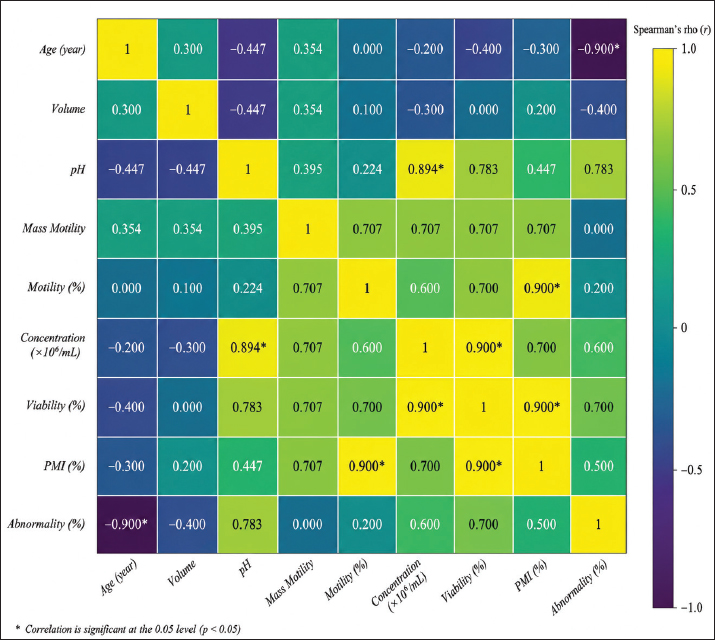
Sperm viability was high in both bulls, reaching 86.05% ± 2.77% in Kumbang Janti and 88.82% ± 1.40% in Jalito, with a mean of 87.44%, exceeding the minimum viability threshold set by SNI. PMI values were consistently high in both bulls, with an overall mean of 91.44%, indicating good membrane stability during cryopreservation. The percentage of sperm abnormalities was low in both bulls, averaging 10.75%, and remained below the maximum limit established by SNI. Overall, the frozen semen quality of Pesisir bulls met the SNI standards and was suitable for use in artificial insemination programs, despite individual variation between bulls. In general, the findings of this study indicate that the semen quality of Pesisir bulls can be categorized as relatively good, particularly in terms of motility, viability, abnormality, and PMI parameters. However, substantial variation in sperm concentration was observed, suggesting differences in reproductive quality among individual bulls, which may be associated with the physiological condition of each animal. Correlation between sperm proteins and semen quality in Pesisir bulls The results of the correlation analysis on semen quality parameters of Pesisir bulls (Fig. 1) demonstrated the presence of both positive and negative correlations among semen characteristics. A very strong negative correlation was identified between bull age and sperm abnormality percentage (r=−0.900; p < 0.05). This finding suggests that older bulls tended to exhibit lower levels of sperm abnormalities. Such a condition may reflect increased reproductive maturity and greater stability of the spermatogenesis process with advancing age. However, age only showed weak to moderate correlations with other semen quality parameters, including semen volume, sperm motility, and sperm viability.
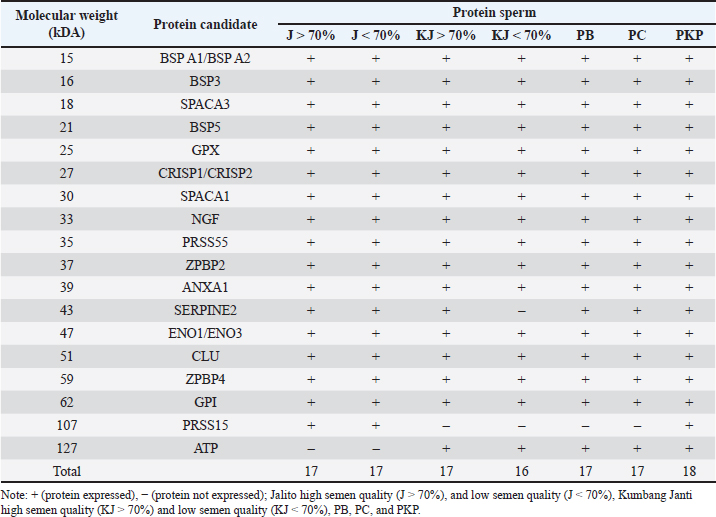
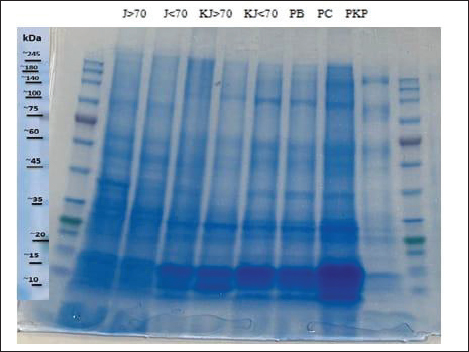
Fig. 1. Heatmap visualization of the correlation of semen quality parameters in Pesisir bulls. Color intensity represents the strength and direction of correlations, ranging from blue (positive correlation) to yellow (negative correlation). Asterisks indicate significant correlations (p < 0.05). Parameters associated with sperm functional quality exhibited consistently positive relationships. Sperm motility showed a very strong positive correlation with PMI (r=0.900; p < 0.05), indicating that spermatozoa with intact plasma membranes tended to possess superior motility capacity. Sperm concentration was also strongly and positively correlated with sperm viability (r=0.900; p < 0.05), suggesting that ejaculates with higher sperm concentrations generally contained a greater proportion of viable spermatozoa. In addition, sperm viability demonstrated a strong positive correlation with PMI (r=0.900; p < 0.05), highlighting the close physiological association between PMI and sperm survival. Moderate to strong positive correlations were also observed among several other semen quality parameters. Mass motility was positively correlated with sperm motility (%), sperm concentration, viability (%), and PMI (%) with identical correlation coefficients (r=0.707). These findings indicate that mass motility may serve as a representative indicator of overall semen quality. Furthermore, sperm viability (%) exhibited positive correlations with sperm motility (%) (r=0.700) and sperm abnormality (%) (r=0.700). Meanwhile, PMI (%) showed positive correlations with sperm concentration (r=0.700) and sperm abnormality (%) (r=0.500). Regarding the physical characteristics of semen, semen pH exhibited a very strong positive correlation with sperm concentration (r=0.894; p < 0.05), indicating that optimal seminal pH conditions may support increased sperm production. In addition, semen pH showed relatively high positive correlations with sperm viability (r=0.783) and sperm abnormality (r=0.783), although these relationships were not statistically significant. Overall, the correlation analysis demonstrated that sperm motility, concentration, viability, and PMI were closely interconnected and could serve as major indicators of semen quality in Pesisir bulls. These findings indicate that improvements in one reproductive parameter may positively influence other semen quality parameters, thereby potentially enhancing the reproductive performance of the bulls. Profiles of candidate sperm proteins expressed in individual Pesisir bulls The identification of sperm protein profiles in Pesisir bulls demonstrated that most potential candidate proteins were expressed across all individual bulls, including both high- and low-semen-quality groups (Table 3). The protein profiles were visualized using 1D SDS-PAGE analysis, as presented in Figure 2. Based on the analysis, a total of 20 candidate proteins with molecular weights ranging from 15 to 127 kDa were identified among seven bull groups, namely Jalito with high semen quality (J > 70%), Jalinto with low semen quality (J < 70%), Kumbang Janti with high semen quality (KJ > 70%), Kumbang Janti with low semen quality (KJ < 70%), PB, PC, and PKP. Table 3. Candidate sperm protein profiles expressed in each individual Pesisir bull.
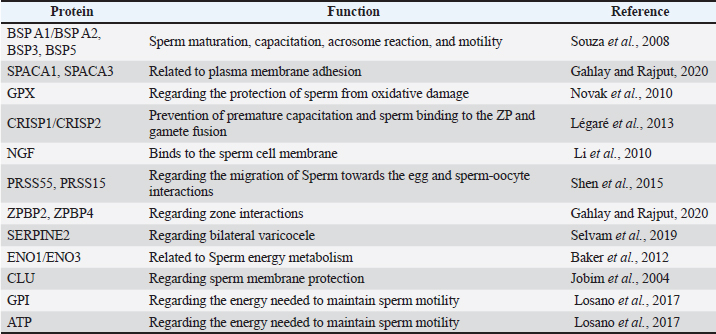
Fig. 2. Protein profiles of sperm samples from Jalito Pesisir bulls with high semen quality (J > 70%) and low semen quality (J < 70%), Kumbang Janti Pesisir bulls with high semen quality (KJ > 70%) and low semen quality (KJ < 70%), as well as PB, PC, and PKP. The 15-kDa protein identified as BSP A1/BSP A2 was detected in all bull groups. Similarly, BSP3 (16 kDa), SPACA3 (18 kDa), BSP5 (21 kDa), GPX (25 kDa), CRISP1/CRISP2 (27 kDa), SPACA1 (30 kDa), NGF (33 kDa), PRSS55 (35 kDa), ZPBP2 (37 kDa), ANXA1 (39 kDa), ENO1/ENO3 (47 kDa), CLU (51 kDa), ZPBP4 (59 kDa), GPI (62 kDa), ANXA6 (75 kDa), and HSP90 (80 kDa) also showed positive expression (+) in all observed Pesisir bulls. These findings indicate that these proteins represent dominant sperm proteins consistently present in Pesisir bull sperm. Differences in protein expression were identified in several specific proteins. SERPINE2 (43 kDa) was not expressed in the KJ < 70% and PKP groups but was detected in the remaining groups. In addition, PRSS15 (107 kDa) was only expressed in J > 70%, J < 70%, and PKP groups, whereas no expression was observed in KJ > 70%, KJ < 70%, PB, and PC groups. Meanwhile, the ATP-associated protein (127 kDa) was not detected in either high- or low-quality Jalinto semen groups but was expressed in all other bull groups. The total number of expressed proteins varied slightly among bull groups. The J > 70%, J < 70%, KJ > 70%, PB, PC, and PKP groups each expressed 19 proteins, whereas the KJ < 70% group expressed only 18 proteins due to the absence of SERPINE2 and PRSS15 expression. Overall, these findings suggest that the sperm protein profiles of Pesisir bulls were relatively conserved among individuals, although several proteins exhibited differential expression patterns across bulls and semen quality groups. Table 4 presents the potential candidate proteins identified in spermatozoa proteins associated with reproductive biological functions in Pesisir bulls. Several members of the binder of sperm (BSP) protein family, including BSP A1/A2, BSP3, and BSP5, were identified and are known to play key roles in sperm maturation, capacitation, acrosome reaction, and the regulation of sperm motility in Pesisir bulls. Proteins involved in sperm plasma membrane adhesion, such as SPACA1 and SPACA3, were also detected, indicating their involvement in sperm membrane interactions. Subsequently, antioxidant-related proteins, including glutathione peroxidase (GPX), were identified and are associated with protecting sperm of Pesisir bulls from oxidative damage. Proteins related to the regulation of capacitation and gamete interaction, such as CRISP1 and CRISP2, were detected and are known to prevent premature capacitation while facilitating sperm binding to the zona pellucida and gamete fusion. Nerve growth factor (NGF), which binds to the sperm cell membrane, was also identified and may contribute to sperm functionality in Pesisir bulls. Table 4. Identification of suppose candidate protein sperm in Pesisir bulls.
In addition, the serine proteases PRSS55 and PRSS15, along with the zona pellucida-binding proteins ZPBP2 and ZPBP4, were successfully identified and are known to play important roles in sperm migration toward the oocyte as well as sperm oocyte interaction. SERPINE2, a protein involved in sperm ovum interaction and membrane dynamics, was also detected and has previously been associated with reproductive disorders, such as bilateral varicocele, suggesting its potential contribution to the regulation of reproductive function in Pesisir bulls. Several proteins related to energy metabolism, including ENO1, ENO3, GPI, and ATP-associated proteins, were identified and are essential for maintaining sperm motility. Moreover, clusterin was detected and is known to contribute to sperm membrane protection, regulation of sperm motility, and protection against oxidative stress, thermal stress, and apoptosis. Collectively, the identified proteins are closely associated with sperm maturation, motility, energy metabolism, stress protection, and sperm oocyte interaction, underscoring their potential as fertility-related molecular markers in Pesisir bulls. DiscussionThe evaluation of fresh semen quality before and after the cryopreservation process is a critical indicator for predicting the fertilization potential of bulls. The evaluation results of Pesisir bull semen quality from two assessment groups indicated that the semen characteristics were within the normal category. These semen characteristics exhibited good motility and viability, thereby meeting the quality standards for semen cryopreservation and demonstrating optimal fertilization potential. High sperm motility and viability in frozen semen play a pivotal role in supporting fertilization success, which is directly associated with increased pregnancy rates and calf births. These findings are consistent with previous reports in Bali bull, where high sperm motility resulted in a service per conception value of 1.5, leading to successful pregnancy (Diansyah et al., 2025). Similarly, several studies on other Indonesian local bull breeds, including Bali bull (Iskandar et al., 2022), Aceh bull (Pardede et al., 2021), Madura bull (Rosyada et al., 2023), and Pasundan bull (Baharun et al., 2023), have reported semen quality that meets the criteria for processing into frozen semen. In general, high-quality semen is a fundamental prerequisite for the success of artificial insemination programs, as semen quality characteristics strongly influence reproductive efficiency and the economic sustainability of breeding programs (Khan et al., 2024). Therefore, the high motility, viability, and sperm integrity observed in Pesisir bull semen confirm its suitability as a superior genetic resource, supporting successful artificial insemination and contributing to the sustainable development of cattle populations in West Sumatra. The management system significantly influenced several parameters of fresh semen quality in Pesisir bulls. Bulls managed under the production system exhibited a significantly higher sperm concentration than those maintained under the traditional system, as well as a greater percentage of sperm abnormalities. This quantitative advantage is influenced by nutritional management in the production system, which provides a complete ration, whereas the traditional system relies solely on forage without supplementation, thereby limiting the potential for increasing semen quantity. Nevertheless, the comparative analysis showed that differences in management systems did not exert a significant effect on the functional quality of sperm cells, including sperm motility, viability, and PMI. Similar conditions have also been reported in buffaloes (Said et al., 2024) and cattle (Pardede et al., 2020), indicating that sperm motility and PMI are major indicators of male fertility that do not always show a positive correlation with sperm quantity. It has been demonstrated that a decline in functional sperm quality is influenced by various external factors, including environmental stress, husbandry management conditions, and the nutritional adequacy of the bulls (Yen et al., 2020). These findings indicate that more intensive reproductive management in bulls maintained under the production system contributes to the improvement of fresh semen quality; however, bulls maintained under traditional systems still demonstrate comparable reproductive potential and are, therefore, feasible to be recommended as superior male candidates in sustainable Pesisir cattle breeding programs. The present study showed that the average motility of frozen semen from Pesisir bulls was 69.83%. Comparable results have been reported in other Indonesian local bulls, with frozen semen motility reaching 71.23% ± 1.10% in Bali bull (Indriastuti et al., 2020), whereas markedly lower values were observed in Pasundan cattle (47.73% ± 0.67%) (Widaningsih et al., 2024). The average sperm concentration of frozen semen from Pesisir bulls was 35.33 × 10⁶ sperm per straw, which exceeded the concentration reported in Bali bulls (27.92 ± 0.42 × 10⁶/straw) (Pardede et al., 2020). Sperm viability of frozen Pesisir bull semen averaged 87.44%, higher than values reported for Bali bull (79.92% ± 0.84%) and Pasundan bull (65.80% ± 0.90%) (Pardede et al., 2020). In addition, the mean PMI (MPU) of Pesisir bull sperm reached 91.44%, surpassing those observed in Bali bull (77.09% ± 0.58%) and Pasundan bull (79.71% ± 1.30%). The average proportion of sperm abnormalities in frozen semen from Pesisir bulls was 10.75%, which was slightly higher than that reported in Bali bull (7.80% ± 1.29%) and Madurese bull (4.25% ± 0.07%) (Indriastuti et al., 2020). The results of this study indicate that the observed semen motility meets the eligibility criteria for artificial insemination, with a minimum threshold of 40% as stipulated by the Indonesian National Standard (Pardede et al., 2020; BSN, 2017). Sperm motility is a critical determinant of artificial insemination success, as it enables sperm to reach the ovum, interact with the oocyte membrane, and penetrate the egg during fertilization. Impaired sperm motility is frequently associated with infertility, even when sperm concentration remains within acceptable limits (Gai et al., 2022). Progressive motility is particularly important during the transport of sperm through the female reproductive tract. During this process, sperm is subjected to natural selection and must overcome multiple physiological barriers, with progressive motility serving as a key factor for successful progression (Dcunha et al., 2022). Sperm exhibiting poor progressive motility is unable to penetrate cervical mucus and is consequently eliminated through this natural selection mechanism (Sakkas et al., 2015). Furthermore, the semen concentration of Pesisir cattle observed in this study satisfies the minimum requirement for artificial insemination, namely at least 25 million sperm per dose as specified by SNI (BSN, 2017). Frozen semen concentration is closely associated with fertilization success, as higher sperm concentrations increase the likelihood of achieving the threshold number of normal sperm required for fertilization (Morrel et al., 2018). In addition, increasing sperm concentration has been shown to positively influence fertility outcomes, with fertilization rates rising in response to higher sperm doses (Mohanty et al., 2018). The sperm viability of Pesisir bull semen reached 87.44%, exceeding the minimum threshold established by the Indonesian National Standard (SNI), thereby indicating high semen quality and fertilization potential. Sperm viability is a critical parameter for successful fertilization, and reductions in frozen semen are commonly associated with cryopreservation-induced stress (Hossain et al., 2011); however, the high viability observed in this study suggests strong resistance of Pesisir bull sperm to the freezing process. The PMI value of 91.44% reflects excellent membrane stability, which is essential for maintaining cellular homeostasis and supporting key physiological processes such as capacitation, acrosome reaction, and zona pellucida binding (Rahman et al., 2020). High PMI values have been positively correlated with male fertility, indicating greater fertilization capacity in sperm with intact membranes (Rahman et al., 2020). The sperm abnormality rate of 10.75% remained below the maximum acceptable limit set by SNI (≤20%), suggesting no significant adverse effect on fertility; abnormality levels below 10%–15% generally do not impair fertility, whereas values exceeding 25% may result in unpredictable fertility decline (Komariah et al., 2013). Overall, the combination of high sperm viability, excellent PMI, and low sperm abnormality indicates that semen from Pesisir bulls possesses good reproductive quality and strong potential for application in artificial insemination programs. Correlation analysis demonstrated that sperm motility, concentration, viability, and PMI were strongly associated and collectively contributed to the overall semen quality of Pesisir bulls. The positive correlations among these parameters indicate that improvements in the physiological quality of sperm are accompanied by enhanced semen quality. Maintenance of PMI plays a crucial role in preserving cellular homeostasis, metabolic stability, ion transport, and ATP production required for sperm motility activity (Twambaze et al., 2026). Sperm energy metabolism is also essential for maintaining motility and fertilization capacity and is considered a key indicator of fertilization success (Zakaria et al., 2025). These findings are consistent with previous studies reporting positive associations among motility, viability, PMI, and semen quality (Gongora et al., 2025). Bulls with highly motile sperm generally exhibit superior reproductive performance (Toledo-Guardiola et al., 2025). Furthermore, conventional reproductive parameter evaluation may serve as a practical preliminary approach for selecting superior breeding bulls to improve the reproductive efficiency of local cattle populations (Anwar et al., 2026). Proteomic analysis in both groups of Pesisir bulls successfully identified 18 potential candidate proteins in sperm associated with reproductive functions, with no specific proteins detected that distinguished the two groups. Furthermore, bulls maintained under the traditional management system exhibited reproductive potential comparable to that under the production system, indicating their suitability as candidate superior sires in sustainable Pesisir cattle breeding programs. Among the identified proteins, BSP proteins with a molecular weight of 15–21 kDa were recognized as dominant multifunctional proteins that play important roles in several reproductive processes, including the regulation of sperm motility, formation of the sperm reservoir, and particularly sperm capacitation (Divyashree and Roy, 2018). BSP proteins are known to play a crucial role in sperm capacitation by binding to sperm membrane phospholipids and interacting with high-density lipoproteins and glycosaminoglycans, thereby influencing sperm motility and viability (Diaz-Miranda et al., 2024). In addition, a protein with a molecular weight of approximately 18 kDa, identified as SPACA3, was also detected; this protein is associated with plasma membrane adhesion and contributes to the ability of the sperm membrane to attach to the oocyte before sperm oocyte fusion (Gahlay and Rajput, 2020). Furthermore, SPACA3 has been reported to interact with other proteins, such as IZUMO, which are directly involved in the fertilization process (Barbaux et al., 2020). Proteins within the intermediate molecular weight range (27–59 kDa), including CRISP1/CRISP2, SPACA1, NGF, PRSS55, ZPBP2, ANXA1, SERPINE2, ENO1/ENO3, CLU, and ZPBP4, play crucial roles in multiple stages of fertilization through integrated biological mechanisms. CRISP1 and CRISP2, as members of the CAP protein superfamily, are involved in several key phases of fertilization, ranging from cumulus cell penetration to gamete fusion, exhibiting both specific and partially redundant functions that enhance fertilization success (Gaikwad et al., 2020). In addition, CRISP proteins have been reported to hold potential as biomarkers for the diagnosis of male infertility and fertility in sires (Gonzalez et al., 2021). Proteins that directly associate with the zona pellucida, such as SPACA1, ZPBP2, ZPBP4, and ANXA1, contribute to sperm membrane adhesion, zona pellucida recognition, and sperm penetration required for gamete fusion (Tumova et al., 2021). NGF detected in seminal plasma and sperm functions as a signaling mediator that enhances sperm motility and migratory capacity toward the oocyte (Sari et al., 2021). Several proteins associated with energy metabolism, such as ENO1, ENO3, GPI, PRESS15, and ATP-related proteins, have been identified and are essential for sustaining sperm motility in Pesisir bulls. ENO1 and ENO3 function as key enzymes in the glycolytic pathway, providing the energy required to support sperm motility during fertilization (Park et al., 2019). In Bali bull, protein ENO1 has been detected on the sperm plasma membrane and is correlated with sperm concentration but not with semen quality (Sumarsono et al., 2023). Furthermore, Park et al. (2022) reported that significantly elevated ENO1 expression in sperm with low motility suggests its potential utility as a proteomic marker for assessing sperm motility. In addition, PRSS55, a serine protease, contributes to sperm migration toward the oocyte and promotes sperm oocyte interactions, highlighting its role in the fertilization process (Shen et al., 2015). Collectively, these proteins represent critical determinants of sperm functional competence and fertilization success. ConclusionThe results showed that semen quality in both maintenance systems fell within the normal category and met the standards for cryopreservation, as well as the maximum allowable threshold for sperm abnormalities. Comparative analysis revealed no significant differences (p > 0.05) in sperm motility and viability between the two groups. Protein profile analysis found no specific proteins distinguishing the two groups, and 18 potential candidate proteins with functional relevance to reproductive processes were identified. These findings indicate that these proteins may serve as potential candidates associated with protein functions related to semen quality in Pesisir bulls. Furthermore, bulls managed under the traditional system exhibited reproductive potential comparable to that in the production system, indicating their suitability as candidate superior sires in sustainable breeding programs for Pesisir cattle. AcknowledgmentsThe authors would like to express their sincere gratitude to the Indonesia Education Scholarship (BPI), the Center for Higher Education Funding and Assessment (PPAPT), and the Indonesia Endowment Fund for Education (LPDP) for their support. The author would also like to thank the Animal Husbandry Research Centre, the National Research and Innovation Agency (BRIN), Bogor, Indonesia, for its contribution to the conduct of this research. Furthermore, The authors also extend their appreciation to the Tua Sekato Artificial Insemination Center, West Sumatra, for its significant contribution to the implementation of this research. Conflict of interestThe authors declare that no competing interests or relationships exist that might affect the conduct or reporting of this study. ReferencesAfriani, T., Jaswandi, J., Rastosari, A., Cadilac Al Razzak, M. and Wahyudi, D. 2023. Addition of tomato juice as additive in diluent of egg yolk citrate on the quality of pesisir cattle semen. J. Anim. Health. Prod. 11(1), 62–67; doi:10.17582/journal.jahp/2023/11.1.62.67 Anwar, P., Maulana, T., Sumantri, C., Arifiantini, I. and Gunawan, A. 2025. Proteomic analysis of pesisir bull sperm in different age groups for the identification of reproductive function proteins. Trop. Anim. Sci. J. 48(5), 393–401; doi:10.5398/tasj.2025.48.5.393 Anwar, P., Sumantri, C., Arifiantini, I. and Gunawan, A. 2026. Individual sperm protein profile and its correlation with kinematics motility in Pesisir bulls. Int. J. Agriculture Biosciences 15(4), 1465–1474; doi:10.47278/journal.ijab/2026.054 Baharun, A., Rahmi, A., Handarini, R., Maulana, T., Said, S., Iskandar, H., Darussalam, I., Nalley, W. and Arifiantini, R. 2023. Semen quality and frozen semen production in Pasundan bulls: a molecular weight perspective on seminal plasma and spermatozoa protein. J. Adv. Vet. Anim. Res. 10(4), 730–737; doi:10.5455/javar.2023.j728 Barbaux, S., Ialy-Radio, C., Chalbi, M., Dybal, E., Homps-Legrand, M., Do Cruzeiro, M., Vaiman, D., Wolf, J.P. and Ziyyat, A. 2020. Sperm SPACA6 protein is required for mammalian Sperm-Egg Adhesion/Fusion. Sci. Rep. 10(1), 1–15; doi:10.1038/s41598-020-62091-y BSN. 2017. Standar Nasional Indonesia: Semen Beku–Bagian 1: Sapi. Jakarta, ID: Badan Standarisasi Nasional. Dcunha, R., Hussein, R.S., Ananda, H., Kumari, S., Adiga, S.K., Kannan, N., Zhao, Y. and Kalthur, G. 2022. Current insights and latest updates in sperm motility and associated applications in assisted reproduction. Reproductive Sci. 29(1), 7–25; doi: 10.1007/s43032-020-00408-y Diaz-Miranda, E.A., Hamilton, L.E., Zigo, M., Fallon, L., Ortega, M.S., D’avila Assumpção, M.E.O., Guimarães, J.D. and Sutovsky, P. 2024. Regional abundances of binder of sperm (BSP) proteins are negatively associated with the quality of frozen-thawed bovine spermatozoa. Reproduction 167(1), 167; doi: 10.1530/REP-23-0305 Divyashree, B.C. and Roy, S.C. 2018. Species-specific and differential expression of BSP-5 and other BSP variants in normozoospermic and asthenozoospermic buffalo (Bubalus bubalis) and cattle (Bos taurus) seminal plasma. Theriogenology 106, 279–286; doi: 10.1016/j.theriogenology.2017.10.014 Elango, K., Karuthadurai, T., Kumaresan, A., Sinha, M.K., Ebenezer Samuel King, J.P., Nag, P., Sharma, A., Raval, K., Paul, N. and Talluri, T.R. 2023. High-throughput proteomic characterization of seminal plasma from bulls with contrasting semen quality. 3 Biotech. 13(2), 60; doi:10.1007/s13205-023-03474-6 Gahlay, G.K. and Rajput, N. 2020. The enigmatic sperm proteins in mammalian fertilization: an overview. Biol. Reprod. 103(6), 1171–1185; doi: 10.1093/biolre/ioaa140 Gai, J., Dervisevic, E., Devendran, C., Cadarso, V.J., O’Bryan, M.K., Nosrati, R. and Neild, A. 2022. High-frequency ultrasound boosts bull and human sperm motility. Adv. Sci. 9(11), 1–10; doi: 10.1002/advs.202104362 Gaikwad, A.S., Hu, J., Chapple, D.G. and O’Bryan, M.K. 2020. The functions of CAP superfamily proteins in mammalian fertility and disease. Hum. Reprod. Update. 26(5), 689–723; doi:10.1093/humupd/dmaa016 Gongora, A., Johnston, S., Contreras, P., López-Fernández, C. and Gosálvez, J. 2025. The nexus between sperm membrane integrity, sperm motility, and DNA fragmentation. Membranes 15(4), 1–11; doi: 10.3390/membranes15040109 Gonzalez, S.N., Sulzyk, V., Weigel Muñoz, M. and Cuasnicu, P.S. 2021. Cysteine-Rich Secretory Proteins (CRISP) are key players in mammalian fertilization and fertility. Front. Cell Develop. Biol. 9, 1–13; doi:10.3389/fcell.2021.800351 Hossain, M.S., Johannisson, A., Wallgren, M., Nagy, S., Siqueira, A.P. and Rodriguez-Martinez, H. 2011. Flow cytometry for the assessment of animal sperm integrity and functionality: State of the art. Asian J. Androl. 13(3), 406–419; doi: 10.1038/aja.2011.15 Indriastuti, R., Ulum, M.F., Arifiantini, R.I. and Purwantara, B. 2020. Individual variation in fresh and frozen semen of Bali bulls (Bos sondaicus). Vet. World 13(5), 840–846; doi: 10.14202/vetworld.2020.840-846 Iskandar, I. and Sartika, W. 2019. Study of the application of technical aspects of Pesisir cattle in several regions of West Sumatera to maintain the existence of native Indonesian beef cattle. IOP Conf. Ser. Earth Environ. Sci. 287(1), 012036; doi: 10.1088/1755-1315/287/1/012036 Iskandar, H., Sonjaya, H., Arifiantini, R.I. and Hasbi, H. 2022. The quality of fresh and frozen semen and its correlation with molecular weight of seminal plasma protein in Bali cattle. Trop. Anim. Sci. J. 45(4), 405–412; doi:10.5398/tasj.2022.45.4.405 Khan, M.Z., Chen, W., Naz, S., Liu, X., Liang, H., Chen, Y., Kou, X., Liu, Y., Ashraf, I., Han, Y., Peng, Y., Wang, C. and Zahoor, M. 2024. Determinant genetic markers of semen quality in livestock. Front. Endocrinol. 15, 1–14; doi:10.3389/fendo.2024.1456305 Komariah, K., Arifiantini, L. and Nugraha, F.W. 2013. Kaji Banding Kualitas Spermatozoa Sapi Simmental, Limousin, Dan Friesian Holstein Terhadap Proses Pembekuan. Buletin Peternakan 37(3), 143; doi: 10.21059/buletinpeternak.v37i3.3078 Kumaresan, A., Sinha, M.K., Paul, N., Nag, P., Ebenezer Samuel King, J.P., Kumar, R. and Datta, T.K. 2023. Establishment of a repertoire of fertility associated sperm proteins and their differential abundance in buffalo bulls (Bubalus bubalis) with contrasting fertility. Scientific. Rep. 13(1), 1–16; doi:10.1038/s41598-023-29529-5 Leite, R.F., Losano, J.D.D.A., Kawai, G.K.V., Rui, B.R., Nagai, K.K., Castiglioni, V.C., Siqueira, A.F.P., D'avila Assumpção, M.E.O., Baruselli, P.S. and Nichi, M. 2022. Sperm function and oxidative status: effect on fertility in Bos taurus and Bos indicus bulls when semen is used for fixed-time artificial insemination. Anim. Reprod. Sci. 237(2021), 106922; doi:10.1016/j.anireprosci.2022.106922 Maulana, T., Iskandar, H., Said, S., Arifiantini, R.I., Jakaria. and Gunawan.. 2024. Electrophoretic protein profiles of seminal plasma and their correlation with fresh semen quality in Indonesia Toraya Buffalo (Bubalus bubalis carabanesis) Bulls. Int. J. Vet. Sci. 5(1), 44–47; doi:10.47278/journal.ijvs/2024.170 Maulana, T., Said, S., Arifiantini, R.I., Jakaria, J. and Gunawan, A. 2025. Proteomic analysis of Toraya buffalo seminal plasma and sperm: uncovering insights to optimize reproductive success. Front. Vet. Sci. 12(April), 1–11; doi: 10.3389/fvets.2025.1492135 Mohanty, T.K., Lone, S.A., Kumaresan, A., Bhakat, M., Kumar, R., Baithalu, R.K., Sinha, R., Paray, A.R., Yadav, H.P., Sahu, S.K. and Mohanty, A.K. 2018. Sperm dosage and site of insemination in relation to fertility in bovines. Asian Pacific J. Reprod. 7(1), 1–5; doi: 10.4103/2305-0500.220977 Morrell, J.M., Valeanu, A.S., Lundeheim, N. and Johannisson, A. 2018. Sperm quality in frozen beef and dairy bull semen. Acta Vet. Scand. 60(1), 1–10; doi: 10.1186/s13028-018-0396-2 Pardede, B.P., Agil, M., Yudi, Y. and Supriatna, I. 2020. Relationship of frozen-thawed semen quality with the fertility rate after being distributed in the Brahman Cross Breeding Program. Vet. World 13(12), 2649–2657; doi:10.14202/vetworld.2020.2649-2657 Pardede, B.P., Maulana, T., Kaiin, E.M., Agil, M., Karja, N.W.K., Sumantri, C. and Supriatna, I. 2021. The potential of sperm bovine protamine as a protein marker of semen production and quality at the National Artificial Insemination Center of Indonesia. Vet. World. 14(9), 2473–2481; doi:10.14202/vetworld.2021.2473-2481 Park, Y.J., Lee, B.M., Pang, W.K., Ryu, D.Y., Rahman, M.S. and Pang, M.G. 2022. Low sperm motility is determined by abnormal protein modification during epididymal maturation. World J. Men’s. Health 40(1), 526–535; doi:10.5534/wjmh.210180 Park, Y.J., Pang, W.K., Ryu, D.Y., Song, W.H., Rahman, M.S. and Pang, M.G. 2019. Optimized combination of multiple biomarkers to improve diagnostic accuracy in male fertility. Theriogenology 139, 106–112; doi:10.1016/j.theriogenology.2019.07.029 Rabaglino, M.B., Le Danvic, C., Schibler, L., Kupisiewicz, K., Perrier, J.P., O'Meara, C.M., Kenny, D.A., Fair, S. and Lonergan, P. 2022. Identification of sperm proteins as biomarkers of field fertility in Holstein-Friesian bulls used for artificial insemination. J. Dairy Sci. 105(12), 10033–10046; doi:10.3168/jds.2022-22273 Rahman, M.M., Naher, N., Isam, M.M., Hasan, M., Naznin, F., Bhuiyan, M.M.U., Bari, F.Y. and Juyena, N.S. 2020. Natural vs synchronized estrus: determinants of successful pregnancy in ewes using frozen-thawed Suffolk semen. J. Anim. Reprod. Biotechnol. 35(2), 183–189; doi: 10.12750/JARB.35.2.183 Rosyada, Z.N.A., Pardede, B.P., Kaiin, E.M., Gunawan, M., Maulana, T., Said, S., Tumbelaka, L.I.T.A., Solihin, D.D., Ulum, M.F. and Purwantara, B. 2023. A proteomic approach to identifying spermatozoa proteins in Indonesian native Madura bulls. Front. Vet. Sci. 10, 1–10; doi:10.3389/fvets.2023.1287676 Sakkas, D., Ramalingam, M., Garrido, N. and Barratt, C. L.R. 2015. Sperm selection in natural conception: What can we learn from Mother Nature to improve assisted reproduction outcomes? Hum. Reprod. Update 21(6), 711–726; doi: 10.1093/humupd/dmv042 Said, S., Maulana, T., Iskandar, H., Kaiin, E., Khaerunnisa, I., Putra, W., Hasan, F. and Arifiantini, R. 2024. Sperm protein profile and their correlation with frozen semen quality of indigenous Indonesian buffalo bulls. J. Adv. Vet. Anim. Res. 11(4), 846–855; doi:10.5455/javar.2024.k836 Sari, L.M., Zampini, R., Gonzalez Del Pino, F., Argañaraz, M.E., Ratto, M.H. and Apichela, S.A. 2021. Effects of NGF addition on Llama (Lama glama) sperm traits after cooling. Front. Vet. Sci. 7, 1–8; doi:10.3389/fvets.2020.610597 Satrio, F.A., Karja, N.W.K., Setiadi, M.A., Kaiin, E.M., Pardede, B.P. and Purwantara, B. 2024. Age-dependent variations in proteomic characteristics of spermatozoa in Simmental bull. Front. Vet. Sci. 11(6), doi: 10.3389/fvets.2024.1393706 Shen, C., Wang, J., Zhuang, H., Liu, J., Wang, X., Chen, X., Wu, Z., Wu, W., Wu, Y., Sun, Y., Yan, H., Fei, J., Kuang, Y. and Wang, Z. 2015. Establishment, characterization, and application of pAcr–SP–NTP–EGFP transgenic mice in visualizing the oviduct-migrating ability of sperm from Prss37-null mice. Acta Biochim. Biophys. Sin. 47(6), 466–473; doi: 10.1093/abbs/gmv031 Selvam, M.K.P., Agarwal, A., Baskaran, S., Bendou, H. and Pushparaj, P.N. 2019. Sperm proteome analysis and identification of. Genes 10(7), 1–14; doi:10.3390/genes10070522 Sengupta, P., Durairajanayagam, D. and Agarwal, A. 2020. Fuel/Energy sources of spermatozoa. In Male Infertility. Springer International Publishing, pp: 323–335; doi: 10.1007/978-3-030-32300-4_26 Sumarsono, T., Supriatna, I., Setiadi, M.A., Agil, M. and Purwantara, B. 2023. Detection of Plasma Membrane Alpha Enolase (ENO1) and its relationship with sperm quality of Bali Cattle. Trop. Anim. Sci. J. 46(1), 36–42; doi:10.5398/tasj.2023.46.1.36 Susilawati, T., Sholikah, N., Wahjuningsih, S., Herwiyanti, E., Kuswati. and Yekti, A.P.A. 2020. Relationship of scrotal circumference with spermatozoa production in various breed of Indonesian local bulls. Am. J. Anim. Vet. Sci. 15(2), 102–107; doi:10.3844/ajavsp.2020.102.107 Toledo-Guardiola, S.M., Luongo, C., Martínez-Pastor, F., Soriano-Úbeda, C. and Matás, C. 2025. The individual variations in sperm quality of high-fertility boars impact the offspring production and early physiological functions. Vet. Sci. 12(6), 1–21; doi:10.3390/vetsci12060582 Tumova, L., Zigo, M., Sutovsky, P., Sedmikova, M. and Postlerova, P. 2021. Ligands and receptors involved in the sperm-zona pellucida interactions in Mammals. Cells 10(1), 1–36; doi:10.3390/cells10010133 Twambaze, M.F., Adebayo, I.A., Odoma, S. and Alagbonsi, A.I. 2026. Electrolyte homeostasis in sperm biology and channelopathies in male infertility: a scoping review. Andrology 1, 1–23; doi:10.1111/andr.70252 Ugur, M.R., Saber Abdelrahman, A., Evans, H.C., Gilmore, A.A., Hitit, M., Arifiantini, R.I., Purwantara, B., Kaya, A. and Memili, E. 2019. Advances in cryopreservation of bull sperm. Front. Vet. Sci. 6, 1–15; doi: 10.3389/fvets.2019.00268 Widaningsih, R., Widianingrum, D. and Somanjaya, R. 2024. Kualitas Spermatozoa Dari Semen Beku Sapi Pasundan Post-Thawing Dengan Jenis Pengencer Yang Berbeda. Trop. Livestock Sci. J. 3(1), 38–48; doi: 10.31949/tlsj.v3i1.11458 Wahyuni, R. and Dewi, R.A. 2018. Appropriate technology in order to development of Pesisir Local cattle at the West Sumatera. J. Litbang Pert. 37(2), 49; doi: 10.21082/jp3.v37n2.2018.p49-58 Westfalewicz, B., Słowińska, M., Judycka, S., Ciereszko, A. and Dietrich, M.A. 2021. Comparative proteomic analysis of young and adult bull (Bos taurus) cryopreserved semen. Animals 11(7), 11; doi:10.3390/ani11072013 Yen, C.A., Ruter, D.L., Turner, C.D., Pang, S. and Curran, S.P. 2020. Loss of flavin adenine dinucleotide (FAD) impairs sperm function and male reproductive advantage in C. elegans. ELife 9, 1–22; doi:10.7554/eLife.52899 Yin, H., Fang, L., Qin, C. and Zhang, S. 2019. Estimation of the genetic parameters for semen traits in Chinese Holstein bulls. BMC. Genet. 20(1), doi:10.1186/s12863-019-0752-x Zain, M., Tanuwiria, U.H., Syamsu, J.A., Yunilas, Y., Pazla, R., Putri, E.M., Makmur, M., Amanah, U., Shafura, P.O. and Bagaskara, B. 2024. Nutrient digestibility, characteristics of rumen fermentation, and microbial protein synthesis from Pesisir cattle diet containing non-fiber carbohydrate to rumen degradable protein ratio and sulfur supplement. Vet. World 17(3), 672–681; doi:10.14202/vetworld.2024.672-681 Zakaria, A., Diawara, I., Bouziyane, A. and Louanjli, N. 2025. Exploring human sperm metabolism and male infertility: a systematic review of genomics, proteomics, metabolomics, and imaging techniques. Int. J. Mol. Sci. 26(15), 1–18; doi:10.3390/ijms26157544 Note: Production bulls group (Kumbang Janti and Jalito) and traditionally managed breeding bulls group (Large Pesisir, Brown Pesisir, and White Head Pesisir Bull). BCS=Body Condition Score; ns=non-significant; PMI=plasma membrane integrity. (*) significant difference (p < 0.05). Note: + (protein expressed), − (protein not expressed); Jalito high semen quality (J > 70%), and low semen quality (J < 70%), Kumbang Janti high semen quality (KJ > 70%) and low semen quality (KJ < 70%), PB, PC, and PKP. | ||
| How to Cite this Article |
| Pubmed Style Aprisal A, Jaswandi J, Afriani T, Hartati H, Putra WBP, Anwar P, Rifkhan R. Correlation analysis of Semen quality parameters in Pesisir bull: Production bulls and traditionally managed breeding bulls. doi:10.5455/OVJ.2026.v16.i7.55 Web Style Aprisal A, Jaswandi J, Afriani T, Hartati H, Putra WBP, Anwar P, Rifkhan R. Correlation analysis of Semen quality parameters in Pesisir bull: Production bulls and traditionally managed breeding bulls. https://www.openveterinaryjournal.com/?mno=307790 [Access: July 15, 2026]. doi:10.5455/OVJ.2026.v16.i7.55 AMA (American Medical Association) Style Aprisal A, Jaswandi J, Afriani T, Hartati H, Putra WBP, Anwar P, Rifkhan R. Correlation analysis of Semen quality parameters in Pesisir bull: Production bulls and traditionally managed breeding bulls. doi:10.5455/OVJ.2026.v16.i7.55 Vancouver/ICMJE Style Aprisal A, Jaswandi J, Afriani T, Hartati H, Putra WBP, Anwar P, Rifkhan R. Correlation analysis of Semen quality parameters in Pesisir bull: Production bulls and traditionally managed breeding bulls. doi:10.5455/OVJ.2026.v16.i7.55 Harvard Style Aprisal, A., Jaswandi, . J., Afriani, . T., Hartati, . H., Putra, . W. B. P., Anwar, . P. & Rifkhan, . R. (2026) Correlation analysis of Semen quality parameters in Pesisir bull: Production bulls and traditionally managed breeding bulls. doi:10.5455/OVJ.2026.v16.i7.55 Turabian Style Aprisal, Aprisal, Jaswandi Jaswandi, Tinda Afriani, Hartati Hartati, Widya Bayu Pintaka Putra, Pajri Anwar, and Rifkhan Rifkhan. 2026. Correlation analysis of Semen quality parameters in Pesisir bull: Production bulls and traditionally managed breeding bulls. doi:10.5455/OVJ.2026.v16.i7.55 Chicago Style Aprisal, Aprisal, Jaswandi Jaswandi, Tinda Afriani, Hartati Hartati, Widya Bayu Pintaka Putra, Pajri Anwar, and Rifkhan Rifkhan. "Correlation analysis of Semen quality parameters in Pesisir bull: Production bulls and traditionally managed breeding bulls." doi:10.5455/OVJ.2026.v16.i7.55 MLA (The Modern Language Association) Style Aprisal, Aprisal, Jaswandi Jaswandi, Tinda Afriani, Hartati Hartati, Widya Bayu Pintaka Putra, Pajri Anwar, and Rifkhan Rifkhan. "Correlation analysis of Semen quality parameters in Pesisir bull: Production bulls and traditionally managed breeding bulls." doi:10.5455/OVJ.2026.v16.i7.55 APA (American Psychological Association) Style Aprisal, A., Jaswandi, . J., Afriani, . T., Hartati, . H., Putra, . W. B. P., Anwar, . P. & Rifkhan, . R. (2026) Correlation analysis of Semen quality parameters in Pesisir bull: Production bulls and traditionally managed breeding bulls. doi:10.5455/OVJ.2026.v16.i7.55 |


