




| Research Article | ||
Open Vet. J.. 2026; 16(7): 4147-4157 Open Veterinary Journal, (2026), Vol. 16(7): 4147-4157 Research Article Oral vaccine platform based on Saccharomyces cerevisiae expressing multi-epitope hemagglutinin–neuraminidase and fusion protein constructs against Newcastle disease virus in broiler chickensMohammed Raoof Mohammed Hasan* and Nafea Sabih JasimDepartment of Pathology and Poultry Diseases, College of Veterinary Medicine, University of Al-Qadisiyah, Al Diwaniyah, Iraq *Corresponding Author: Mohammed Raoof Mohammed Hasan. Department of Pathology and Poultry Diseases, College of Veterinary Medicine, University of Al-Qadisiyah, Al Diwaniyah, Iraq. Email: Submitted: 27/11/2025 Revised: 22/05/2026 Accepted: 02/06/2026 Published: 02/07/2026 © 2026 Open Veterinary Journal
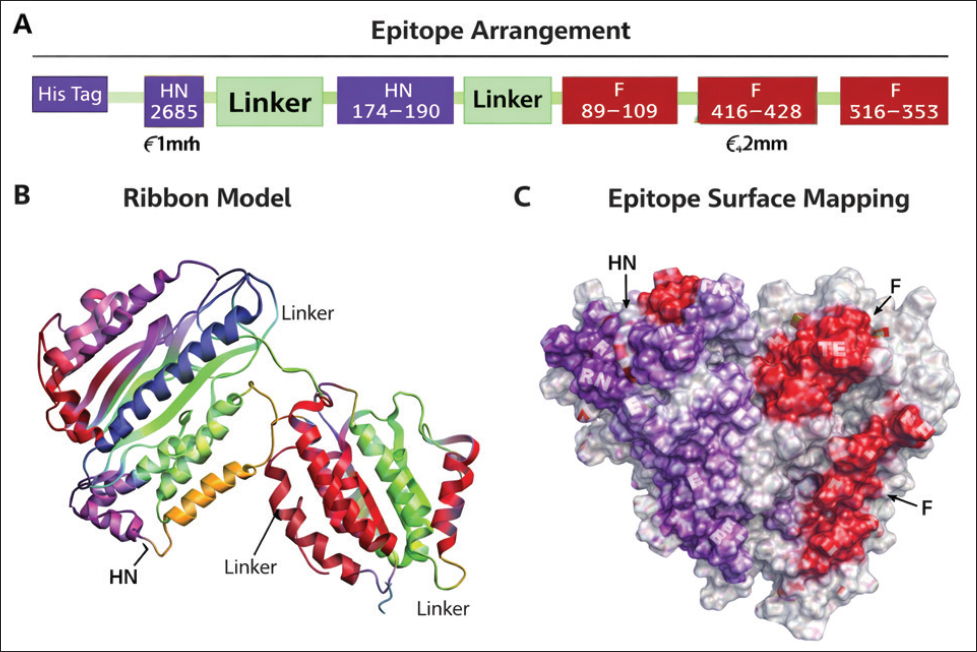
ABSTRACTBackground: Newcastle disease virus (NDV) remains a major threat to poultry despite widespread vaccination. Limitations of conventional vaccines highlight the need for stable oral platforms capable of inducing both systemic and mucosal immunity. Aim: This study evaluated a recombinant Saccharomyces cerevisiae–based oral vaccine expressing a multi-epitope hemagglutinin–neuraminidase and fusion (HN–F) construct for its immunogenicity, protective efficacy, and safety in broiler chickens. Methods: A total of 150 Ross 308 broiler chickens were allocated into three groups (n=50/group): yeast vaccine, live attenuated vaccine, and non-immunized control. Birds were immunized on days 7 and 21. Immune responses were evaluated at defined time points (n=10–12/group). NDV-specific immunoglobulin Y (IgY) and IgA were quantified by enzyme-linked immunosorbent assay, hemagglutination inhibition and virus neutralization assays were performed, and cellular immunity was assessed by flow cytometry and cytokine gene expression. Protective efficacy was evaluated following virulent NDV challenge. Results: Yeast-vaccinated birds showed significantly higher IgY levels at day 28 (2.34 ± 0.19 µg/ml) compared to controls (0.41 ± 0.06 µg/ml, p < 0.001), with comparable levels to LAV (2.49 ± 0.22 µg/ml, p > 0.05). Intestinal IgA was significantly elevated (1.95 ± 0.14 µg/ml) versus LAV (1.18 ± 0.11 µg/ml) and control (0.34 ± 0.05 µg/ml, p < 0.001). HI titers exceeded protective thresholds (≥6 log2). CD4⁺ (29.6% ± 2.2%) and CD8⁺ (21.9% ± 1.8%) T-cell populations were significantly increased compared to controls (p < 0.01). Cytokine expression showed upregulation of interferon-gamma (4.7 ± 0.6-fold) and IL-2 (3.8 ± 0.5–fold). Post-challenge survival reached 92% versus 28% in controls (p < 0.001). Viral loads were reduced by >3 log10, and shedding duration decreased to 3–4 days compared to 8–10 days in controls. Conclusion: The yeast-based HN–F vaccine induced strong systemic, mucosal, and cellular immunity and provided significant protection against NDV challenge, supporting its potential as a safe and effective oral vaccine platform. Keywords: Hemagglutinin–neuraminidase, Multi-epitope vaccine, Newcastle disease, Saccharomyces cerevisiae. IntroductionNewcastle disease virus (NDV) is considered one of the most destructive viral pathogens affecting poultry globally, contributing to significant economic losses due to high mortality, lowered productivity, and trade quarantines (Mozafari et al., 2022). Outbreaks are still occur despite the use of live attenuated and inactivated vaccines, mainly due to poor biosecurity and limited vaccination methods. Even though live vaccines are effective, they are associated with the risks of reversion to virulence, shedding viral vaccine, and lose of efficacy under poor cold-chain conditions. Inactivated vaccines tend to fail with respect to the production of high levels of mucosal immunity that is needed to effectively block viral entry via the respiratory and gastrointestinal tracts. These shortcomings have steered the scientific community into the search for vaccines that are considered to be safer and have more stable and easier-to-use vaccine platforms that eliciting broad and long-lasting immune responses (Cao et al., 2022). In recent years, the field of immunoinformatics has allowed the development of multi-epitope vaccines using rational design techniques that integrate immunogenic T and B lymphocyte epitopes to broaden immunogenic coverage and cross-protection. Constructing epitope-based vaccines turned out to be infection-neutralizing and to provide cellular immunity in silico and in real-world experimental models to several NDV structural protein profiles, especially hemagglutinin–neuraminidase (HN) (Raza et al., 2022). Besides, computational and experimental studies confirmed that multi-epitope construction of HN and related glycoproteins has the potential to become next-generation ND vaccines because of the high antigenicity and low risks associated (Jamil et al., 2022; Tataje-Lavanda et al., 2023 ; Zeb et al., 2024; Randriamamisolonirina et al., 2025). The success of such construction, however, depends ultimately on a suitable delivery system that can maintain and preserve the integrity of the antigen while prompting the desired immune response(s) in vivo. The polysaccharide components of its cell wall have been noted to strengthen cell-mediated immunity and the uptake of antigens (Bi et al., 2022). Furthermore, recombinant Saccharomyces cerevisiae has been used as an oral vaccine vector for multiple avian pathogens, an induction of cellular and humoral immune responses was achieved, and considerable protection was provided against a virulent challenge (Li et al., 2023; Lu et al., 2025). Several limitations of ND vaccination strategies promote other yeast-based oral vaccines. The diverse range of immunological and practical challenges encountered. While significant progress has been made in the design of multi-epitope vaccines, the challenges of efficiently incorporating these constructs into a stable and scalable oral delivery system have not been adequately investigated. Specifically, the incorporation of the rationally designed hemagglutinin–neuraminidase and fusion (HN–F) multi-epitope constructs into S. cerevisiae and their assessment in in vivo poultry models has not been addressed. Thus, this study aims to investigate the possibility of an oral yeast-based multi-epitope vaccine eliciting sufficient systemic and mucosal immune responses and protection comparable to live vaccines. Materials and MethodsSample selection and reference sequence for newcastle disease virusUsing the National Center for Biotechnology Information GenBank database, NDV HN–F protein amino acid reference sequences were obtained using virulent genotype VII representative strains from the poultry outbreak reports. Using MEGA (version 11.0, Pennsylvania State University, USA) software, the sequences from the different NDV strains were aligned to determine the variable and conserved sequences. We used 90% sequence identity as the cutoff for selecting appropriate NDV strains and for assuring coverage across strains. Sampling was conducted at predefined time points: days 14, 28, and 35 post-primary immunization for immunological assays, and days 3, 5, 7, and 10 post-challenge for viral shedding analysis. In silico epitope prediction and multi-epitope construct designB-cell and T-cell epitopes were selected based on antigenicity, surface accessibility, and conservancy using immunoinformatics tools. Only epitopes with high antigenicity scores, non-allergenic properties, and predicted strong binding affinity to major histocompatibility complex (MHC) class I and II molecules were included. Overlapping epitopes were prioritized to enhance immune recognition. Using BepiPred-2.0, we predicted the linear B-cell epitopes, and for the conformational epitopes, the secondary structure of the predicted protein was used. Predictions of CD4⁺ (MHC class II) and CD8⁺ (MHC class I) T-cell epitopes were done via the NetMHCpan algorithm tailored for the respective chicken MHC haplotypes. The candidate epitopes were refined using the criteria of predicted binding affinity, antigenicity, and the absence of allergenic and toxic motifs. Epitope predictors’ selections of the HN and F protein epitopes were merged into one synthetic multi-epitope construct. This construct was made using the B-cell epitopes’ precursor processing and presentation glycine-rich linker (GPGPG) and proteasome (AAY) sequencer insert. The construct was then analyzed for molecular weight, theoretical isoelectric point, stability, and predicted solubility. The last multi-epitope construct included some chosen B-cell, CD4⁺ T-cell, and CD8⁺ T-cell epitopes from the conserved sites of NDV HN and F proteins. Candidate epitopes were chosen for their predicted antigenicity, Virulent/Non-virulent, non-allergenic/toxic motifs, and strong binding to chicken MHC. Epitopes were selected for predicted binding affinity values above the threshold and high antigenicity, while scores were below the accepted threshold (IC50 < 500 nM). The epitopes were to be topologically sequential and were separated by the GPGPG and AAY linkers to promote preferential antigen processing and presentation (Fig. 1). Lists the exact amino acid sequences of the selected epitopes and their predicted binding scores.
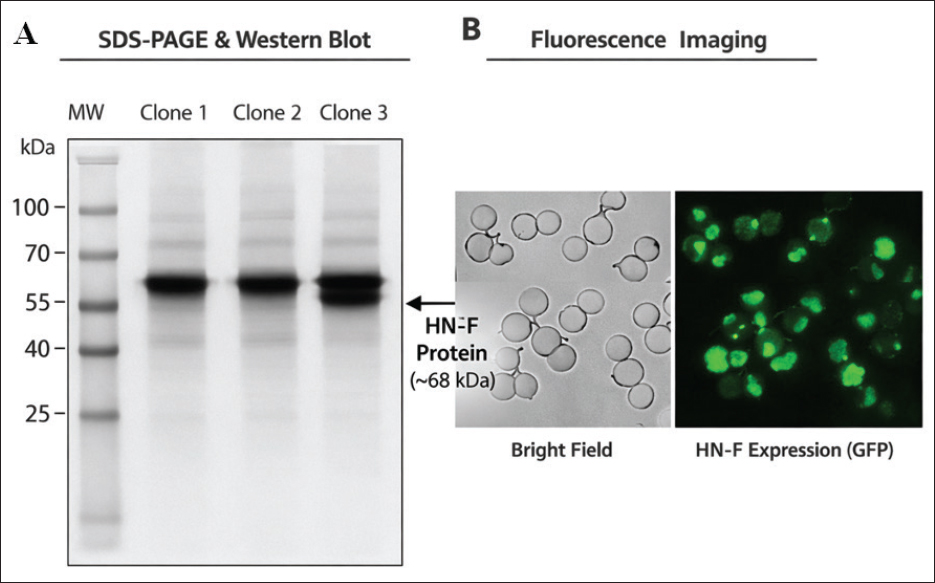
Fig. 1. The computational model for the structuring of the HN–F multi-epitope vaccine. (A) single linear epitope structure corresponds to the order of the immunodominant epitopes of the hemagglutinin-neuraminidase (HN) and the fusion (F) proteins (i.e., HN and F proteins). Linked to each other via flexible linker sequences and to the N-terminal affinity tags, the vaccine construct comprises distinct HN and F functional domains. (B) As a ribbon-style schematic, the second image revolves around the conceptual design of the multi-epitope structure and its expected contours and folds. Distinct constituents of the structure are the HN and F regions as well as the linker regions ribbon-style (i.e., the regions that appear as blocks of color). Gray and white regions are void of chromatic constituent parts of the vaccine. The primary purpose of C) is to display the F epitope and HN epitope constructs of the vaccine, outlining the exposed regions that the immune system could recognize. Remember that all of the images are illustrations/models to aid in understanding the organization of the epitopes. Gene synthesis, codon optimization, and construction of expression vectorsA yeast optimization algorithm used for codon optimization of the complete multi-epitope HN–F gene cassette, made specifically for S. cerevisiae, enhances translational efficacy. The optimized sequence underwent commercial gene synthesis, then it was cloned into a yeast expression vector, which contains a constitutive promoter and transcriptional terminator (GenScript, Piscataway, NJ, USA). Confirmation of the plasmid integrity and the orientation of the insert was done via restriction digestion and Sanger sequencing. Yeast strain, media, and culture conditionsVaccine delivery hosts were constructed using laboratory-grade strains of S. cerevisiae. Yeast cultures were stored on "Yeast Extract – Peptone – Dextrose" (YPD) agar, which contains Yeast Extract (10 g/l), Peptone (20 g/l), and Dextrose (20 g/l) (Oxoid, UK, Cat. No. CM0010). In a temperature-controlled incubator (Thermo Scientific, USA), liquid cultures were grown in YPD broth with o rbital shaking at 200 rpm at 30°C. Selective media were made based on the specific requirements of each selective plasmid. Yeast transformation and selection of clonesThe lithium acetate/polyethylene glycol method was used to transform yeast cells. Harvesting of yeast cells was done at mid-log phase, followed by a wash and incubation with lithium acetate, single-stranded carrier deoxyribonucleic acid (DNA), and recombinant plasmid DNA. To promote the uptake of the DNA, a heat shock was done at 42°C. Cells that were transformed were spread on select agar that was incubated at 30°C for 48–72 hours. Screening by colony polymerase chain reaction (PCR) to positive colonies were the ones detected using specific primers for the gene. Confirmation of the expression of recombinant antigensClones of recombinant yeasts were cultured, collected, and lysed via mechanical disruption with glass beads in lysis buffer containing protease inhibitors (Sigma-Aldrich, USA). A bicinchoninic acid assay kit (Thermo Scientific, USA; Cat. No. 23225) was used to determine the total protein concentration. Protein expression was confirmed using SDS-PAGE and a Western blot with primary antibodies to NDV, and secondary antibodies conjugated to horseradish peroxidase. Signal detection was performed using a chemiluminescent substrate (Bio-Rad, USA) enhanced for chemiluminescence. The recombinant construct was expressed in S. cerevisiae using a constitutive expression system. Yeast cells were transformed using standard protocols, and successful expression of the recombinant antigen was confirmed by fluorescence microscopy and molecular analysis. The yeast system was selected due to its safety, scalability, and ability to preserve antigen stability during oral delivery. Testing for thermal and gastrointestinal stabilityRecombinant yeast preparations were subjected to controlled thermal stress at 37°C and 42°C for specific durations to mimic field and feed-processing scenarios. To assess acid resistance, the yeast was subjected to a simulated gastric fluid (pH 2.5) made with HCl and pepsin. For each of the stress conditions, yeast was plated so that the yeast viability could be determined by counting colony-forming units, and the integrity of the antigen was assessed by Western blot analysis. Birds and living conditionsCommercially available day-old Ross 308 broiler chicks were ordered from a commercially certified hatchery with full national veterinary oversight. A visual inspection of the chicks was performed at the hatchery to check for any abnormalities or signs of illness. In order to tag the birds and for allocation purposes, a computer randomized the allocation of birds to experimental pens. Birds were wing-tagged and allocated individually. Birds were placed in floor pens measuring 1.5 by 1.5 m and had fresh, autoclaved wood shavings in a 7–10 cm bedding depth. A quaternary ammonium disinfectant was used for the first sanitation and was followed by a formaldehyde-potassium permanganate fumigation. For the duration of the study, the environmental parameters were closely monitored. In the first week, the brooding temperature was set to 33°C–34°C, and for the following weeks it was decreased by 2°C–3°C until reaching a temperature range of 22°C–24°C by the fourth week. Ventilation was changed to maintain a relative humidity of 55%–65% and to provide a sufficient air exchange without creating any draughts. During the acclimation week of the experiment, birds were exposed to a 23 hours light: 1 hour dark photoperiod, followed by shifts to a 20 hours light: 4 hours dark photoperiod. Birds had ad libitum access to water via nipple drinkers and were fed a commercial starter and grower diet free of antibiotics. The diet met the NRC poultry nutrition requirements. No anticoccidials, antibiotics, or growth promoters were included in the diet. Before the start of the experiment, birds were acclimatized for three days. To ensure no chicks had NDV antibodies passed through the egg, blood samples were taken from 10 chicks on day 1, which were randomly selected, and the sera were screened for NDV antibodies using a hemagglutination inhibition (HI) test. Birds were included in the experiment if HI titers were ≤2 log2. Vaccination regimenFor the current experiment, 150 birds were divided equally into three experimental groups and housed in separate pens to avoid cross-contamination; these groups were: recombinant yeast vaccine group, live attenuated ND vaccine group, and unvaccinated control group. For the recombinant vaccine group, Saccharomyces spp. expressing the multi-epitope HN–F construct were collected during the exponential growth phase, washed twice in sterile phosphate-buffered saline (PBS; pH 7.2), and adjusted to a final concentration of 1 × 10⁸ yeast cells per 0.5 ml dose. Oral vaccination was done by individual gavage with the use of sterile flexible feeding tubes to accurately dose the vaccine directly into the crop. Primary immunizations were given at 7 days of age with a booster dose at 21 days of age to assess the immune recall responses. Antigen uptake was enhanced by fasting the birds for 2 hours before oral vaccination. The live vaccine group was given a commercial lentogenic ND vaccine (LaSota strain), which was given via drinking water, as per the manufacturer’s instructions, in which prior water withdrawal and vaccine stabilization with skim milk were necessary. The control group received sterile PBS via oral gavage and followed the same schedule as the recombinant vaccine group. Sample size and experimental designTo balance the detection of biologically meaningful differences and the retention of adequate statistical power for the study, sample size was set at 150 broiler chickens, which were then randomly assigned to 1 of the 3 study groups (n=50 per group) comprising recombinant yeast vaccine, live attenuated vaccine (LAV), and non-immunized control. Immunology assays were performed on undisclosed subsets of study birds at specified time intervals (n=10–12 per group per sampling time). This study design was adequate to cover the evaluation of systemic, mucosal and cellular immune responses and for sustaining adequate study populations for subsequent challenge experiments. Collection and processing of samplesBlood samples (approximately 2–3 ml from each bird) were obtained from the brachial (wing) vein using 23-gauge needles and blood collection tubes (vacuum tubes) with no anticoagulant. Samples were left to clot for 30 minutes at room temperature, and then were spun in a centrifuge at 3,000 rpm for 10 minutes. Serum was transferred into sterile microtubes and stored at−20°C for later analysis. To evaluate mucosal immunity, birds were humanely euthanized at the pre-established time points using cervical dislocation. The small intestine was then exposed using aseptic procedures, and intestinal washings were obtained by sterilely flushing the intestinal lumen with 5–10 ml of sterile PBS containing protease inhibitors. Washings were clarified by centrifugation at 4,000 rpm for 15 minutes, and the supernatants were stored at −80°C. Spleens were aseptically removed and placed into cold RPMI-1,640 medium containing 10% fetal bovine serum, and then immediately processed to carry out cellular immune assays. Assays of the humoral immune responseNDV-specific immunoglobulin Y (IgY) and IgA were quantified using commercial enzyme-linked immunosorbent assay kits (MyBioSource, San Diego, CA, USA, Cat. No. MBS8808100 for IgY and MBS564152 for IgA) as the manufacturer directs. A microplate reader was used to record the optical density at 450 nm, and standard curves were used to determine the concentration of antibodies. Assays for HI were used with NDV antigen (4 hemagglutinating units, HAU) and 1% washed chicken red blood cells. Before the testing, sera were heat-inactivated for 30 minutes at 56°C. HI titers were recorded as a reciprocal value to the highest serum dilution that completely blocked hemagglutination. In the case of the virus neutralization assay, serum was pre-incubated with NDV at a constant dose, and cell culture infection was performed. The NDV was added to susceptible cell cultures, and then the neutralization titers were measured. Assessment of cellular immune responseThe cells were separated using a sterile cell strainer and were then subjected to a density gradient purification. The cell concentration was adjusted to 1 × 10⁶ cells/ml using trypan blue exclusion. The measurement of the CD4⁺ and CD8⁺ T-cell populations was performed using a flow cytometer, and the analysis was done using flow cytometry software. To analyze the expression of cytokine genes, total RNA was extracted from splenocytes (Invitrogen, USA, Cat. No. 15596026). RNA was quantified and assessed for purity spectrophotometrically. Using an Applied Biosystems (USA; Cat. No. 4368814) high-capacity reverse transcription kit, cDNA was synthesized. Quantitative PCR was conducted with SYBR Green Master Mix, and β-actin was used as the housekeeping gene. The 2⁻∆∆Ct method was used to calculate relative gene expression. Quantitative PCR reactions were performed in 20 µl volumes containing SYBR Green Master Mix (Applied Biosystems, USA, Cat. No. A25742), 0.4 µM of each primer, and 2 µl cDNA template. Cycling conditions consisted of initial denaturation at 95°C for 10 minutes followed by 40 cycles of 95°C for 15 seconds and 60°C for 60 seconds. Relative expression levels were calculated using the 2⁻ΔΔCt method with β-actin as the reference gene. The primer sequences used for qRT-PCR were as follows: interferon-gamma (IFN-γ), F: 5′-AGCTCCCGATGAACGACTTG-3′ and R: 5′-CTCCTCTGAGACTGGCTCCT-3′, product size 118 bp; IL-2, F: 5′-GTGGCTAACTAATCTGCTGTCC-3′ and R: 5′-GTAGGGCTTACAGAAAGGATCAA-3′, product size 105 bp; IL-4, F: 5′-GCTCTCAGTGCCGCTGATG-3′ and R: 5′-GAAACCTCTCCCTGGATGTCAT-3′, product size 60 bp; IL-17A, F: 5′-CATGGGATTACAGGATCGATGA-3′ and R: 5′-GCGGCACTGGGCATCA-3′, product size 68 bp; and β-actin, F: 5′-CGTTGTTGACAATGGCTCCG-3′ and R: 5′-GGCCCATACCAACCATCACA-3′, product size 122 bp. All primers were used at a final concentration of 0.4 µM (Ma et al., 2012; Flaujac Lafontaine et al., 2020; Calik et al., 2022; Chen et al., 2023). NDV challenge experimentAt 35 days, the birds were exposed to a virulent NDV strain of genotype VII through the oculonasal route at a specific infectious dose. For 14 days, birds were monitored and documented for signs of clinical symptoms, which included depression, respiratory distress, and any neurological signs, as well as diarrhea. Using the clinical scoring rubric, the birds were given a score. The virulent NDV challenge strain used in this study was a genotype VII velogenic NDV strain. The virus was propagated in specific-pathogen-free embryonated chicken eggs and titrated to determine the infectious dose. Birds were challenged at 35 days of age with 10^6 EID50/0.1 ml per bird via the oculo-nasal route. We collected oropharyngeal and cloacal swabs at set times following the challenge and placed the swabs in a medium that is used for the transport of viruses. Viral RNA was extracted from the swabs and evaluated for quantity with real-time PCR. Survival and mortality were documented daily. The virulence of the NDV challenge strain was confirmed according to WOAH/OIE standards. The strain showed an intracerebral pathogenicity index of 1.82 and a mean death time of 48 hours, confirming its classification as a velogenic NDV strain. Viral RNA was extracted using a commercial kit (Qiagen, Germany, Cat. No. 52906). Real-time PCR targeted the NDV matrix gene using previously validated primers. Ct values ≤35 were considered positive. Examination of histopathological samplesSmall samples taken from the intestine, spleen, lung, and liver were put in 10% neutral buffered formalin for 48 hours. After that, the samples were dehydrated using a graded ethanol series, cleared and immersed in xylene, and then the samples were embedded in paraffin. After the tissue was embedded in paraffin, tissue sections were cut to a thickness of 4–5 mm. The sections were mounted on slides and stained using a hematoxylin and eosin protocol. The slides were then analyzed using a light microscope to look for pathologic changes, tissue inflammatory changes, and the integrity of the tissue. Histopathological evaluation was performed independently by two blinded observers. Statistical analysisStatistical analysis was performed using GraphPad Prism (version X, GraphPad Software, USA). Data were expressed as mean ± standard error of the mean. Normality of data distribution was assessed using the Shapiro–Wilk test. Differences between groups were analyzed using one-way analysis of variance followed by Tukey’s post hoc test for multiple comparisons. A p-value < 0.05 was considered statistically significant. Ethical approvalAll actions involving animals were carried out per the United States National Research Council guidelines and the World Organization of Animal Health Terrestrial Animal Health Code, specifically for poultry. The Committee for Research Ethics of the College of Veterinary Medicine, University of Al-Qadisiyah, reviewed and approved the protocol (Feb-09-2025). All actions involving the virulent strain of the NDV took place at a biosafety level 2 animal facility with controlled airflow, restricted access, and decontamination standards. ResultsExpression and stability of recombinant HN–F antigen in S. cerevisiaeThe stable expression of the recombinant S. cerevisiae clones containing the HN–F multi-epitope constructs was demonstrated. The immunoblot showed a single distinct band corresponding to the molecular mass of the fusion antigen (~68 kDa). This confirms the expression of the fusion antigen. From the densitometric evaluation, the level of expression was consistent in the different clones, with a coefficient of variation of less than 12%, which is indicative of good stability of the construct (Fig. 2; Table 1).
Fig. 2. Confirmation of expression of the recombinant multi-epitope protein HN–F in Saccharomyces cerevisiae via (A) SDS-PAGE and Western blotting, and (B) fluorescence microscopy. SDS-PAGE and the immunoblot show a protein band at approx. ~60–70 kDa in the 3 independent recombinant yeast clones. This correlates to the expected molecular weight of the HN–F fusion protein. Some background noise is present, but this is typical of the process and is likely due to electrophoretic and extraction artifacts. Microscopic imaging shows expression of the recombinant antigen intracellularly, and the distributed green fluorescence suggests yeast cells contained the antigen. The bright-field images supported the presence of the typical yeast morphology and the budding patterns. Table 1. Stability of recombinant HN–F antigen in yeast.
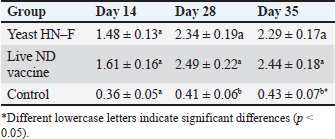
A thermal stress test indicated the recombinant yeast retained 81.6% ± 4.3% of the antigen after 24 hours at 42°C compared to the unstressed controls. The yeast also retained 77.9% ± 3.8% of the antigen after 90 minutes of exposure to gastric conditions (pH 2.5), which confirms that the antigen was effectively protected by the yeast during oral delivery (Table 1). Densitometric analysis showed consistent recombinant antigen expression among the tested yeast clones, with a coefficient of variation below 12%. Humoral immune responseVirus neutralization assayDilution neutralization tests showed significantly (p < 0.05) better immune response in the yeast HN-F and live ND vaccine groups than in the control group. Serum NDV-specific IgYAt day 28, NDV-specific IgY concentrations were significantly higher in the yeast group (2.34 ± 0.19 µg/ml) compared to the control group (0.41 ± 0.06 µg/ml, p < 0.001), while no significant difference was observed compared to the LAV group (2.49 ± 0.22 µg/ml, p > 0.05) (Table 2). Table 2. Serum NDV-specific IgY concentrations (µg/ml).
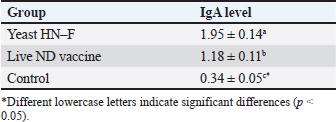
Intestinal NDV-specific IgAIntestinal IgA levels at day 35 were significantly higher in the yeast group (1.95 ± 0.14 µg/ml) compared to both LAV (1.18 ± 0.11 µg/ml) and control groups (0.34 ± 0.05 µg/ml, p < 0.001) (Table 3). Table 3. Intestinal NDV-specific IgA at day 35 (µg/ml).
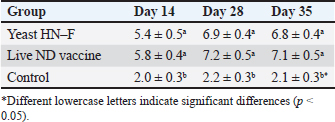
Hemagglutination inhibition antibody titersHI titers reached protective levels in both vaccinated groups, with yeast group titers of 6.9 ± 0.4 log2 at day 28 compared to 2.2 ± 0.3 log2 in controls (p < 0.001) (Table 4). Table 4. HI antibody titers (log2).
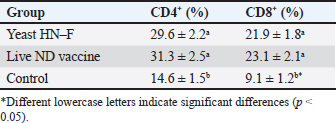
Cellular immune responsesCD4⁺ and CD8⁺ T-cell populationsThe percentage of CD4⁺ and CD8⁺ T cells was significantly higher in the yeast group (29.6% ± 2.2% and 21.9% ± 1.8%, respectively) compared to controls (14.6% ± 1.5% and 9.1% ± 1.2%, p < 0.01) (Table 5). Table 5. Splenic T-cell populations (%).
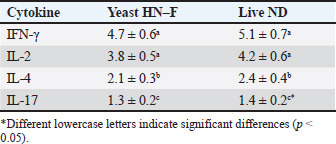
Cytokine gene expressionThe expression of four cytokine genes (IFN-γ, IL-2, IL-4, IL-17) was analyzed by quantitative RT-PCR. All the vaccinated groups showed elevated levels. The expression levels in yeast-vaccinated birds were notably higher for IFN-γ and IL-2, with a modest increase for yeast IL-4. IL-17 expression remained low in both vaccinated groups compared with the other cytokines analyzed (Table 6). Table 6. Relative cytokine gene expression (fold change versus. control).
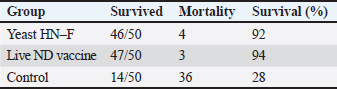
Protective efficacy following virulent NDV challengeSurvival and clinical protectionAfter challenge, the group vaccinated with yeast had a survival rate of 92%, which is comparable to the rate of the live vaccine group, which had a survival rate of 94%. On the contrary, the group that was unvaccinated showed a survival rate of 28%. Survival analysis showed notable distinctions within the vaccinated groups compared to the control groups (χ²=40.04, p=2.49 × 10⁻10), with survival rates being 92% within the yeast-vaccinated group, 94% within the live vaccine group, while the control group showed 28%. Birds in the vaccinated groups showed significantly lower viral replication compared to the control (non-vaccinated) group (Table7). Table 7. Survival outcomes following NDV challenge.
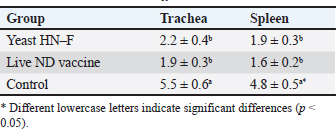
Viral load and sheddingThe yeast group showed significantly lower viral loads in trachea (2.2 ± 0.4 log10 copies/g) and spleen (1.9 ± 0.3 log10 copies/g) compared to controls (5.5 ± 0.6 and 4.8 ± 0.5 log10 copies/g, respectively; p < 0.001) (Table 8). Table 8. NDV viral load (log10 RNA copies/g tissue).
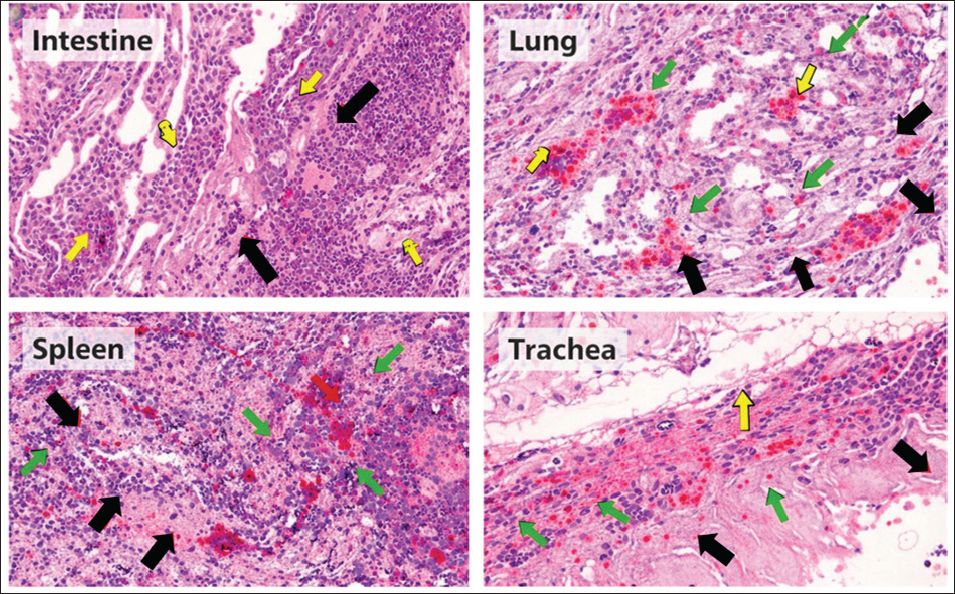
Histopathological safety evaluationNo injuries were observed to the intestines, and the respiratory epithelium was intact; the structure of the liver was normal, with the splenic white pulp organized; the yeast-vaccinated birds had no inflammatory infiltrates, no necrosis, or no hemorrhagic lesions. On the other hand, the control birds showed severe congestion of the trachea, depletion of lymphoid tissue, and damage to tissues of the multicore after challenge (Fig. 3).
Fig. 3. Histopathological sections of the intestine, lung, spleen, and trachea after a challenge with the virulent strain of newcastle disease virus, stained with H and E. The intestinal tissue shows erosion of the epithelial with infiltration of inflammatory cells, the lung sections show the presence of interstitial inflammation with vascular congestion, splenic tissue shows focal necrosis with the depletion of lymphoid tissue; and the tracheal sections show damage to the epithelium, loss of cilia, and congestion of the submucosa. Black arrows: lymphoid necrosis (spleen, intestine) and congestion (lung, trachea). Green arrows: lymphoid depletion (spleen) and epithelial disruption (lung, trachea). Yellow arrows: loss of cilia. DiscussionThe current study proposes that an oral vaccine platform using S. cerevisiae that expresses a multi-epitope construct from NDV HN and F proteins has the potential to elicit systemic, mucosal, and cellular immune responses, and to confer protection from virulent NDV challenge. These results are in line with and expand on the most recent research in recombinant and epitope-based NDV vaccine research, with the most recent research involving novel immunogen delivery systems and rationally designed immunogen constructs. These findings should be interpreted as associations rather than direct causal relationships, as the study design does not allow mechanistic confirmation. The significant humoral immune response observed in the yeast-vaccinated group, characterized by considerable NDV-specific IgY titers and protective levels of HI, corresponds with studies that state recombinant and epitope-centered NDV vaccines gain a response equal to conventional live vaccines (Tan et al., 2024; Fan et al., 2025). However, while recombinant live NDV vectors expressing heterologous antigens continue to pose biosafety and shedding issues, the yeast-based platform in this research is non-replicating and biologically contained; unlike recombinant NDV live vectors, the yeast vaccine used in this study is a biologically contained NDV vaccine and does not have leafing concerns while maintaining strong immunogenicity. In this study, the equivalent HI titers between the yeast vaccine and LAV groups reinforce the notion that rational assembly of epitopes is capable of compensating for the lack of viral replication. The pronounced mucosal IgA response, which exceeds that induced by the LAV, is one of the prominent benefits of the current platform. Such findings are consistent with previous research that suggests oral yeast-based vaccines stimulate mucosal immunity because they come into contact with the gut immune system (Austriaco, 2023; Jaramillo-Ortiz et al., 2025). Although most studies of NDV vaccines are centered on systemic antibody response(s), the enhanced mucosal IgA response is especially important in the case of NDV because the entry and shedding of the virus occurs primarily at the mucosal surfaces, meaning these represent the areas of greatest concern. The fact that injectable and inactivated NDV vaccines do not provide these types of benefits speaks to the great advancements these techniques offer beyond conventional methods. The HN–F Construct's cellular immune responses also suggest its strong immunogenic potential. The remarkable increase in IFN-γ and IL-2 levels alongside significant activations of the CD4 and CD8 T cell subsets underscores the strong cell-mediated immune response. This is quite similar to reports of T cell responses being augmented by yeast-displayed viral antigens and the subsequent remodeling of lymphocyte subsets (Zhang et al., 2023; Ramos-Vega et al., 2025). Balanced levels of Th1 and Th2 cytokines in the current case differ from most recombinant viral vector vaccines that tend to bias the immune response towards a dominant Th1 pattern and thus increase the risk of Th-1-related inflammation. Compared to other cytokines, the expression of IL-17 remained relatively low, indicating the immune activation from the vaccine occurred without adding excessive pro-inflammatory responses. While the current construct incorporates the HN and F glycoprotein epitopes, the analysis was not able to methodically separate the immunological effects of HN versus F epitopes. Rather, the focus was to capture broad antigenic coverage for the viral attachment HN and membrane F processes. Follow-up studies that employ single-antigen constructs or epitope deletion studies are likely to begin to delineate the specific contributions of each epitope group to protective immunity. This dual targeting of NDV fusion and attachment functions is likely the primary contributor to the drastic reduction in viral load and shedding post-challenge. The most recent studies of the immunoinformatic approach aim to construct multi-epitope peptides to provide a wider immune response across the NDV genotype spectrum (Ji et al., 2025). The current construct, by employing both the HN and F glycoprotein sequence(s) of the NDV, targets, simultaneously, the viral attachment and fusion functions of the glycoproteins, a design supported by a detailed understanding of the NDV pathogenesis (Ma et al., 2025). The dual approach to target NC-viral functions likely contributes to the substantial decrease in viral load and shedding after the challenge. The protective efficacy after challenge with virulent NDV represents one of the notable outcomes of this study. The group given the yeast vaccine survived in numbers similar to the group given the LAV, and significantly exceeded the unvaccinated controls. They also demonstrated a significant decrease in the duration of viral replication and shedding. Compared to the recombinant NDV vaccines used in recent studies (Fan et al., 2025; and Ren et al., 2025), there are no live virus vaccine flock release concerns. From an epidemiological standpoint, the decreased shedding of the virus is the most relevant outcome, since it reduces the within and between-farm transmission of the virus. The use of yeast-based systems to make S. cerevisiae an oral vaccine carrier also fits the increased adoption of yeast-based systems for vaccines in both animals and humans (Tan et al., 2022; and Ramos-Vega et al., 2025). Saccharomyces cerevisiae, unlike viral vectors and some nanoparticle systems, is technically an adjuvant, is stable at higher temperatures, and is also simple to manufacture in bulk, without the need for cold-chain distribution. All of these advantages make it much more practical to undertake and implement large-scale vaccination campaigns in resource-poor and high-avian-density production systems, particularly in poultry. Despite the various positive outcomes, some limitations must be noted. The experiment was carried out in a laboratory setting with a single strain of NDV and a singular line of broilers. Field studies are always more complex. There are several additional factors involving the environment that can accrue stress on the animal, cause coinfection, and affect the management of the animal. These variables could affect the outcomes of the vaccination. Additionally, the present study does not look at long-term immunity nor cross-protection for multiple NDV strains. Therefore, future studies are needed with a greater range of field studies and multiple strains to complete the studies on the efficacy of the yeast-based vaccination platform. When compared with available NDV vaccines, our work reveals a balanced consideration of antigen design, safety, and efficacy as compared with yeast-based NDV vaccines. Study limitationsThe present study's remaining limitation concerns the analysis of immune memory responses beyond the experimental period of 35 days. Assessing long-lasting immune memory responses is an especially critical consideration for oral vaccine platforms due to the importance of memory B and T cell responses. Therefore, future studies should focus on the need to evaluate long-term immune responses and the potential need for booster responses in field studies. ConclusionThe HN–F vaccine developed in this study is a yeast-based NDV vaccine and induces strong systemic, mucosal, and cellular immune responses and provides strong protection against NDV challenge. Yeast-based NDV vaccination of birds showed NDV IgY (2.34 ± 0.19 µg/ml), intestinal IgA (1.95 ± 0.14 µg/ml), and a protective HI titer of 6.9 ± 0.4 log2. An increase in levels of CD4⁺ and CD8⁺ with the expression of IFN-γ and IL-2 and of IL-2, was observed after NDV vaccination with yeast. A yeast-based NDV vaccination demonstrated 92% survival in challenged NDV birds, with 28% of control birds surviving; NDV vaccination of yeast-based NDV birds demonstrated a reduction of more than 3 log10 copies/g of NDV in the target tissues. Further field studies with NDV of varying strains with longer periods of observation are warranted. AcknowledgmentThe authors expressed their gratitude to the College of Veterinary Medicine for providing laboratory facilities and technical support throughout the study. Conflict of interestThe authors declared that no conflict of interest existed in this work. FundingThis research was self-funded by the authors with no external financial support. Authors’ contributionsAll authors contributed to the study. Data availabilityData are available from the corresponding author upon request. ReferencesAustriaco, N. 2023. Yeast oral vaccines against infectious diseases. Front. Microbiol. 14, 1150412; doi: 10.3389/fmicb.2023.1150412 Bi, S., Zhang, J., Zhang, L., Huang, K., Li, J. and Cao, L. 2022. Yeast cell wall upregulated cell-mediated immune responses to Newcastle disease virus vaccine. Poultry Sci. 101(4), 101712; doi:10.1016/j.psj.2022.101712 Calik, A., Emami, N.K., Schyns, G., White, M.B., Walsh, M.C., Romero, L.F. and Dalloul, R.A. 2022. Influence of dietary vitamin E and selenium supplementation on broilers subjected to heat stress, Part II: oxidative stress, immune response, gut integrity, and intestinal microbiota. Poultry. Sci. 101(6), 101858; doi:10.1016/j.psj.2022.101858 Cao, H., Hua, D., Zhang, H., Zhang, H., Liu, N., Feng, Z., Li, H., Zhao, B., Zhang, L., Guo, Y., Huang, J. and Zhang, L. 2022. Oral immunization of recombinant Saccharomyces cerevisiae expressing fiber-2 of fowl adenovirus serotype 4 induces protective immunity against homologous infection. Vet. Microbiol. 271, 109490; doi:10.1016/j.vetmic.2022.109490 Chen, T., Kong, D., Hu, X., Gao, Y., Lin, S., Liao, M. and Fan, H. 2023. Influenza H7N9 virus hemagglutinin with T169A mutation possesses enhanced thermostability and provides effective immune protection against lethal H7N9 virus challenge in chickens. Vaccines 11(8), 1318; doi:10.3390/vaccines11081318 Fan, X., Li, B., Zhu, L., Shen, Y., Zhou, H., Ding, G., Li, J., Jiang, Y., Cui, W., Tang, L., Jia, S. and Li, Y. 2025. Development and evaluation of immunogenicity and protective efficacy of two recombinant attenuated newcastle disease viruses expressing the VP2 protein of infectious bursal disease virus. Poultry. Sci. 104(7), 105253; doi:10.1016/j.psj.2025.105253 Flaujac Lafontaine, G.M., Richards, P.J., Connerton, P.L., O’Kane, P.M., Ghaffar, N.M., Cummings, N.J., Fish, N.M. and Connerton, I.F. 2020. Prebiotic driven increases in IL-17A do not prevent Campylobacter jejuni colonization of chickens. Front. Microbiol. 10, 3030; doi: 10.3389/fmicb.2019.03030 Jamil, F., Aslam, L., Laraib, Ali, H., Shoukat, K., Rasheed, M.A., Raza, S. and Ibrahim, M. 2022. An in silico study of derivative of Newcastle disease virus epitopes based vaccine against hemagglutunin neuraminidase protein. J. Anim. Sci. 101; doi:10.1093/jas/skac375 Jaramillo-Ortiz, J.M., Deosthali, S.A., Blake, D.P. and Werling, D. 2025. Short communication: recombinant yeast as an oral vaccine carrier - direct in vivo interaction with chicken gut epithelium. Res. Vet. Sci. 195, 105845; doi:10.1016/j.rvsc.2025.105845 Ji, J., Dong, X., Liu, X., Ding, M., Lin, Y., Zhang, Y., Zhang, W., Lei, B., Yuan, W. and Zhao, K. 2025. Designing a novel multi-epitope trivalent vaccine against NDV, AIV and FAdV-4 based on immunoinformatics approaches. Microorganisms 13(12), 2744; doi:10.3390/microorganisms13122744 Li, H., Hua, D., Qu, Q., Cao, H., Feng, Z., Liu, N., Huang, J. and Zhang, L. 2023. Oral immunization with recombinant Saccharomyces cerevisiae expressing viral capsid protein 2 of infectious bursal disease virus induces unique specific antibodies and protective immunity. Vaccines 11(12), 1849; doi:10.3390/vaccines11121849 Lu, Z., Liu, X., Zhang, Y., Han, Y., Ishfaq, M., Lu, B. and Lu, X. 2025. Oral immunization with recombinant Saccharomyces cerevisiae expressing TM1 of Mycoplasma gallisepticum induces unique specific antibodies and protective immunity. Microbial Pathogenesis 208, M1–108012; doi:10.1016/j.micpath.2025.108012 Ma, D., Ma, C., Gao, M., Li, G., Niu, Z. and Huang, X. 2012. Induction of cellular immune response by DNA vaccine coexpressing E. acervulina 3-1E gene and mature CHIl-15 gene. J. Parasitology Res. 2012, 654279; doi: 10.1155/2012/654279 Ma, S., Xia, R., Wu, W. and Duan, Z. 2025. Insights into the multifunctionality of viral glycoproteins F and HN in the lifecycle and pathogenesis of Newcastle disease virus: a systematic review. Vet. Res. 56(1), 212; doi: 10.1186/s13567-025-01647-0 Mozafari, A., Amani, J., Shahsavandi, S. and Hatef Salmanian, A. 2022. A novel multi-epitope edible vaccine candidate for Newcastle disease virus: in silico approach. Iranian J. Biotechnol. 20(2), 3119. Ramos-Vega, A., Monreal-Escalante, E., Bañuelos-Hernández, B., Angulo, M., Trujillo, E. and Angulo, C. 2025. Yeast vaccine production platform for human and animal infectious diseases. Front. Immunol. 16, 1697177; doi:10.3389/fimmu.2025.1697177 Randriamamisolonirina, N.T., Razafindrafara, M.S. and Maminiaina, O.F. 2025. Design of a multi-epitope vaccine against the glycoproteins of Newcastle disease virus by using an immunoinformatics approach. ACS Omega 10(4), 4007–4018; doi:10.1021/acsomega.4c09890 Raza, A., Asif Rasheed, M., Raza, S., Tariq Navid, M., Afzal, A. and Jamil, F. 2022. Prediction and analysis of multi epitope based vaccine against Newcastle disease virus based on haemagglutinin neuraminidase protein. Saudi. J. Biol. Sci. 29(4), 3006–3014; doi:10.1016/j.sjbs.2022.01.036 Ren, J., Chen, Y., Yao, R., Lai, L., Yan, X., Xiao, H., Lin, Q., Ren, T. and Chen, L. 2025. Genotype-matched recombinant inactivated Newcastle disease virus vaccine confers protection against genotype XII challenge in geese with maternal antibodies. Poultry Sci. 104(11), 105865; doi:10.1016/j.psj.2025.105865 Tan, L., Qiu, X., Liang, L., Liao, X., Wang, F., Sun, Y., Song, C., Liao, Y. and Ding, C. 2024. Safety evaluation of recombinant Newcastle disease virus expressing IBV multi-epitope chimeric live vaccine. Front. Microbiol. 15, 1458252; doi:10.3389/fmicb.2024.1458252 Tan, Y., Chen, L., Li, K., Lou, B., Liu, Y. and Liu, Z. 2022. Yeast as carrier for drug delivery and vaccine construction. J. Controlled Release 346, 358–379; doi:10.1016/j.jconrel.2022.04.032 Tataje-Lavanda, L., Málaga, E., Verastegui, M., Mayta Huatuco, E., Icochea, E., Fernández-Díaz, M. and Zimic, M. 2023. Identification and evaluation in-vitro of conserved peptides with high affinity to MHC-I as potential protective epitopes for Newcastle disease virus vaccines. BMC Vet. Res. 19(1), 196; doi:10.1186/s12917-023-03726-w Zeb, M.T., Dumont, E., Khan, M.T., Shehzadi, A. and Ahmad, I. 2024. Multi-epitopic peptide vaccine against Newcastle disease virus: molecular dynamics simulation and experimental validation. Vaccines 12(11), 1250; doi:10.3390/vaccines12111250 Zhang, H., Li, Z., Zhang, H., Guo, Y., Zhang, X., Zhang, L., Yang, L., Li, S., Li, C., Cui, D., Xie, R., Li, Y. and Huang, J. 2023. Recombinant hemagglutinin displaying on yeast reshapes congenital lymphocyte subsets to prompt optimized systemic immune protection against avian influenza infection. Front. Microbiol. 14, 1153922; doi:10.3389/fmicb.2023.1153922 | ||

| How to Cite this Article |
| Pubmed Style Hasan MRM, Jasim NS. Oral vaccine platform based on Saccharomyces cerevisiae expressing multi-epitope hemagglutinin–neuraminidase and fusion protein constructs against Newcastle disease virus in broiler chickens. doi:10.5455/OVJ.2026.v16.i7.6 Web Style Hasan MRM, Jasim NS. Oral vaccine platform based on Saccharomyces cerevisiae expressing multi-epitope hemagglutinin–neuraminidase and fusion protein constructs against Newcastle disease virus in broiler chickens. https://www.openveterinaryjournal.com/?mno=307813 [Access: June 30, 2026]. doi:10.5455/OVJ.2026.v16.i7.6 AMA (American Medical Association) Style Hasan MRM, Jasim NS. Oral vaccine platform based on Saccharomyces cerevisiae expressing multi-epitope hemagglutinin–neuraminidase and fusion protein constructs against Newcastle disease virus in broiler chickens. doi:10.5455/OVJ.2026.v16.i7.6 Vancouver/ICMJE Style Hasan MRM, Jasim NS. Oral vaccine platform based on Saccharomyces cerevisiae expressing multi-epitope hemagglutinin–neuraminidase and fusion protein constructs against Newcastle disease virus in broiler chickens. doi:10.5455/OVJ.2026.v16.i7.6 Harvard Style Hasan, M. R. M. & Jasim, . N. S. (2026) Oral vaccine platform based on Saccharomyces cerevisiae expressing multi-epitope hemagglutinin–neuraminidase and fusion protein constructs against Newcastle disease virus in broiler chickens. doi:10.5455/OVJ.2026.v16.i7.6 Turabian Style Hasan, Mohammed Raoof Mohammed, and Nafea Sabih Jasim. 2026. Oral vaccine platform based on Saccharomyces cerevisiae expressing multi-epitope hemagglutinin–neuraminidase and fusion protein constructs against Newcastle disease virus in broiler chickens. doi:10.5455/OVJ.2026.v16.i7.6 Chicago Style Hasan, Mohammed Raoof Mohammed, and Nafea Sabih Jasim. "Oral vaccine platform based on Saccharomyces cerevisiae expressing multi-epitope hemagglutinin–neuraminidase and fusion protein constructs against Newcastle disease virus in broiler chickens." doi:10.5455/OVJ.2026.v16.i7.6 MLA (The Modern Language Association) Style Hasan, Mohammed Raoof Mohammed, and Nafea Sabih Jasim. "Oral vaccine platform based on Saccharomyces cerevisiae expressing multi-epitope hemagglutinin–neuraminidase and fusion protein constructs against Newcastle disease virus in broiler chickens." doi:10.5455/OVJ.2026.v16.i7.6 APA (American Psychological Association) Style Hasan, M. R. M. & Jasim, . N. S. (2026) Oral vaccine platform based on Saccharomyces cerevisiae expressing multi-epitope hemagglutinin–neuraminidase and fusion protein constructs against Newcastle disease virus in broiler chickens. doi:10.5455/OVJ.2026.v16.i7.6 |


