




| Research Article | ||
Open Vet. J.. 2026; 16(7): 4943-4951
Open Veterinary Journal, (2026), Vol. 16(7): 4943-4951 Research Article Current distribution of Oncomelania hupensis lindoensis snails in the Napu region of Poso Regency, Central Sulawesi, IndonesiaJunus Widjaja1,2, Fadjar Satrija3*, Yusuf Ridwan3,4 and Triwibowo Ambar Garjito21Doctoral Program in Veterinary Biomedicine, School of Veterinary Medicine and Biomedical Sciences, Postgraduate School, IPB University, Bogor, Indonesia 2Center for Public Health and Nutrition Research, National Research and Innovation Agency, Jakarta, Indonesia 3Veterinary Biomedicine Study Program, School of Veterinary Medicine and Biomedical Sciences, Postgraduate School, IPB University, Bogor, Indonesia 4Faculty of Medicine and Nutrition, IPB University, Bogor, Indonesia *Corresponding Author: Fadjar Satrija. Veterinary Biomedicine Study Program, School of Veterinary Medicine and Biomedical Sciences, Postgraduate School of IPB University, Bogor, Indonesia. Email: fadjar_s [at] apps.ipb.ac.id Submitted: 27/01/2026 Revised: 22/05/2026 Accepted: 07/06/2026 Published: 27/07/2026 © 2025 Open Veterinary Journal
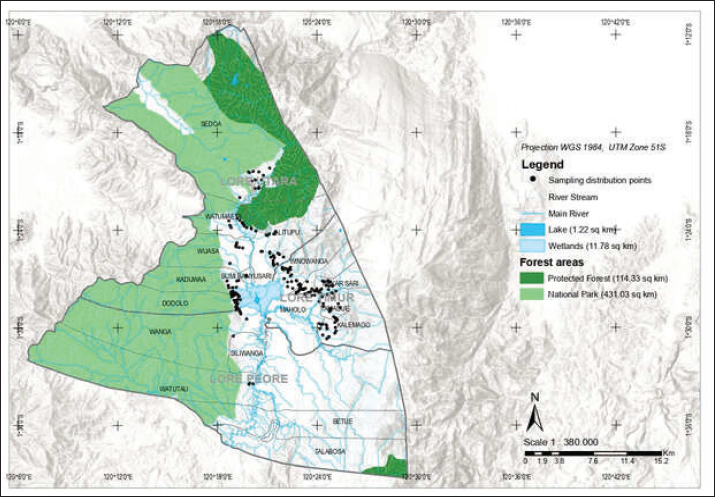
AbstractBackground: Asian schistosomiasis is caused by Schistosoma japonicum and is prevalent in China, the Philippines, and Indonesia. The snail Oncomelania hupensis lindoensis serves as an intermediate host in endemic areas, such as the Napu region of Central Sulawesi, Indonesia. Aim: This study analyzed the types, distribution, density, and prevalence of O. hupensis lindoensis snails for S. japonicum larvae. Methods: Snail sampling was performed at the site using the “man-per-minute” method, and snails were examined via crushing. Habitat locations were recorded using a global positioning system. The analysis included chi-square tests, and habitat data were linked to shapefiles in ArcGIS. Results: In the Napu region, 218 habitats were identified: 148 gardens (67%), 45 abandoned rice fields (21%), 22 grasslands (10%), one swamp (1%), one water seepage area (1%), and one fish pond (1%). Of these habitats, 56% tested positive for cercariae. Garden and rice field habitats are widespread across the region. Snail density ranged from 10 to 71 per minute, and 5.3% of O. hupensis lindoensis snails tested positive for S. japonicum. Densities varied across the area, being lower in North Lore to Lore Peore and higher in East Lore. Conclusion: Habitat types included gardens, abandoned rice fields, grasslands, swamps, water seepage, and fish ponds. The highest distribution was in East Lore, with densities ranging from 10 to 71 man-per-minute, and a prevalence of 5.3% of O. hupensis lindoensis snails were positive for S. japonicum cercariae Keywords: Schistosomiasis, Schistosoma japonicum, Oncomelania hupensis lindoensis, Indonesia. IntroductionSchistosomiasis is a parasitic infection caused by Schistosoma, and it manifests as either intestinal or urogenital disease (Ponzo et al., 2024). Schistosomiasis is the second most common tropical disease worldwide, affecting approximately 240 million people and putting >700 million individuals at risk in rural and impoverished areas of endemic countries. The disease is responsible for an annual loss of 1.4 to 3.3 million healthy life years, respectively (Chen et al., 2018) . Schistosoma japonicum is found exclusively in several East and Southeast Asian countries, including China, Indonesia, and the Philippines (Gordon et al., 2019). According to the WHO’s NTDs roadmap 2021–2030, Asian schistosomiasis will be eliminated by 2030. In Indonesia, three endemic areas for S. japonicum are located in Central Sulawesi Province: the Lindu Highland in Sigi Regency and the Napu and Bada Highlands in Poso Regency (Satrija et al., 2015). Schistosomiasis is a parasitic disease that requires a snail intermediate host (McManus et al., 2018). Oncomelania hupensis lindoensis is an intermediate host of S. japonicum in Indonesia (Navas et al., 2018). The snail population density and disease prevalence presents ongoing challenges for eradicating schistosomiasis in the country. Therefore, accurately predicting the distribution of these snails is crucial for preventing and controlling infection (Lv et al., 2025). Schistosome distribution is directly related to the geographical range of their intermediate snail hosts (Rabone et al., 2019). The transmission cycle of schistosomiasis in Indonesia is well-defined. Schistosoma japonicum eggs are excreted in the feces of infected individuals, and they hatch into a miracidium forms in water. This miracidium then penetrates the body of O. hupensis lindoensis. The miracidium develops into a sporocyst inside the snail, eventually transforming into a cercaria. Humans and other mammals become infected when cercariae penetrate their skin. The parasitic worm relies on this intermediate snail host to continues its life cycle (Ugochukwu et al., 2024). The survey was conducted by collecting snails from both old and new habitats of O. hupensis lindoensis. In addition, coordinates were recorded using a global positioning system (GPS) to gather spatial information on the snails and related environmental factors, which can later be visualized (He et al., 2016; Kirby et al., 2017). Therefore, recent reviews highlight the crucial importance of snail surveys to aid in the understanding of transmission and to improve predictive modeling of future schistosomiasis distributions in relation to climate change and schistosomiasis control (King et al., 2015; Sokolow et al., 2018; Stensgaard et al., 2019). Furthermore, mapping the spatial distribution of O. hupensis lindoensis along with its environmental factors helps clarify its geographical distribution characteristics. One of the goals of the schistosomiasis elimination roadmap in Indonesia is to reduce the prevalence of O. hupensis lindoensis snails. This study aims to describe the current status of the snail O. hupensis lindoensis as an intermediate host for S. japonicum in the Napu area of Poso Regency. Materials and MethodsStudy areaThis study was conducted in the Napu area of Poso Regency from March to October 2023. The study site is a rural area with 15 villages. Geographically, it spans 120°12'E–1°30'S in latitude and longitude (Fig. 1), with an altitude of 1,300 m above sea level.
Fig. 1. Distribution of the existing snail habitats in Napu. Field surveyOncomelania hupensis lindoensis snails were collected from their natural habitats. The collection was conducted between 8:00 AM and 10:00 AM using the “man-per-minute” method and standardized personal protective equipment. In the man-per-minute method, each field assistant collected snails for 5 minutes at each site and repeated the process several times until all plot areas were covered. The minimum displacement of the between points was one square meter. Snails were collected using tweezers and stored in zippered plastic bags. Snails suspected to be O. hupensis lindoensis based on their external morphology were collected. The collected specimens were taken to the laboratory for identification. The formula for calculating the sample size is as follows (Ministry of Health of the Republic of Indonesia, 2022) : Number of samples=Number of people collecting Snails × number of colleting points The calculation formula for O. hupensis lindoensis snail density (number of snails/m2) (Ministry of Health of the Republic of Indonesia, 2022): Snail density was then calculated using the following man-per-minute method: 
The area of one sampling point=the area of 1 iron ring, 1/70 m2. The survey was conducted by trained officers. Laboratory proceduresThe collected samples were transferred to Petri dishes, each labeled with the corresponding sample number. Each dish contained a single sample bag, and the number of snails was recorded on the examination form. Snails were measured individually, starting with the smallest sample number, and the measurements were documented accordingly. The crushing method was used to determine the presence of cercarial larvae. Three to four snails were placed on a clean slide, covered with another slide, and pressed together to crush them. Approximately one to two drops of water were added to the crushed snails before they were examined under a dissecting microscope. The cercarial larvae of S. japonicum were carefully identified using small needles or tweezers. The snail infection rate for S. japonicum was calculated using the following formula: 
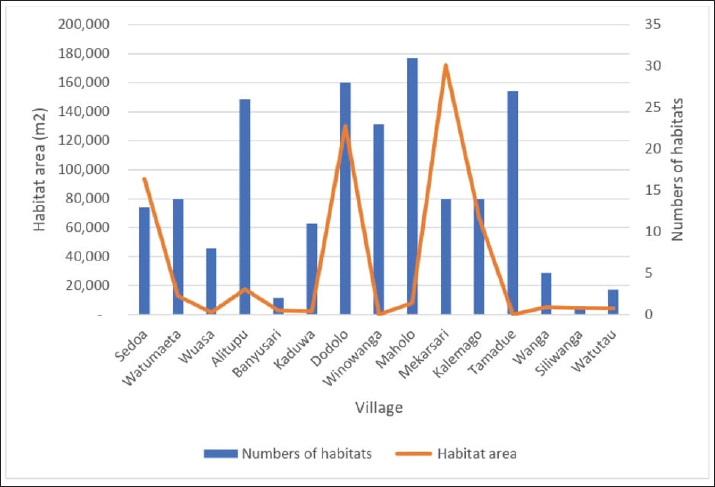
Habitat mappingThe coordinates of key points within the habitat were determined using a GPS. Data analysisAll collected data were entered into Microsoft Excel (v. 2016) to create a database. The Statistical Package for the Social Sciences (SPSS, version 27.0) was used for descriptive analysis. Snail density and infection rates were compared using chi-squared proportional analysis. When the data did not meet the assumptios of normality, Fisher’s exact test was used. Habitat attribute data were linked to shapefiles using ArcGIS (version 10.0, ESRI, Redlands, CA) to visualize habitat distribution and conduct spatial analysis. Ethical approvalThis research has received Ethics Approval from the Health Research Ethics Commission of the National Research and Innovation Agency of Indonesia No.040/KE.03/SK/04/2023, dated April 28, 2023. ResultsGeographical distribution of habitatThe total habitat of O. hupensis lindoensis spans 218 locations across the Napu endemic area, covering 522.919 m². The primary distribution of O. hupensis lindoensis habitats is concentrated in the East Lore sub-district, particularly in the villages of Alitupu, Mekarsari, Maholo, Tamadue, and Kalemago. Generally, O. hupensis lindoensis habitats are located away from riverbanks. The secondary distribution of O. hupensis lindoensis habitats is concentrated in the North Lore sub-district, particularly in the villages of Alitupu, Kaduwa, and Dodolo. Oncomelania hupensis lindoensis habitats are located near riverbanks. The habitat of O. hupensis lindoensis is distributed across all Napu villages, although the habitats’ size and condition vary. Maholo, Alitupu, Winowanga, and Tamadue villages have large but limited habitats. In contrast, Dodolo village contains many habitats over a larger area, whereas Mekarsari village has some relatively large habitats (Fig. 2).
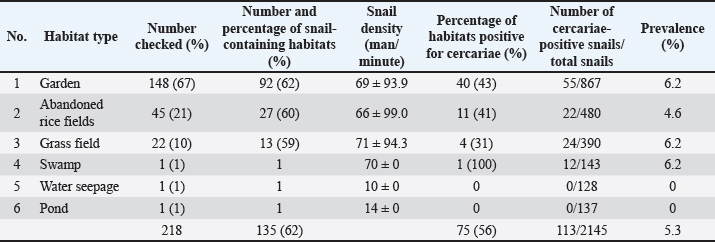
Fig. 2. Number and area of Habitat of O. hupensis lindoensis in Napu. Habitat characteristics, density, and prevalence of snailsThe survey results identified 218 habitats. Snail habitats were most commonly found in gardens and rice fields (67% and 21%, respectively). 56% of habitats were found to be cercaria-positive, with snail high density of 10–71 man/minute. The prevalence of O. hupensis lindoensis in the Napu area was 5.3% (Table 1). The occurrence and density of snails in the Napu region. The highest occurrence (43%) and density were 10–71 man/minute (Table 1 and Fig. 3). Significant variation was also observed in the habitat type. Abandoned gardens and rice fields are the preferred habitats of the O. hupensis lindoensis snail.
Fig. 3. Density of living snails in their habitats. The statistical analysis of the impact of density on O. hupensis lindoensis snail prevalence yielded a p-value of 0.415, indicating no significant relationship between snail density and prevalence across different habitats (Table 2). Table 1. Type, percentage, Prevalence snail of Cercaria-positive habitats of O. hupensis lindoensis in the Napu Region, Poso Regency.
Table 2. Average prevalence of cercarial infection in O. hupensis lindoensis snails in Napu, Poso Regency, 2023.
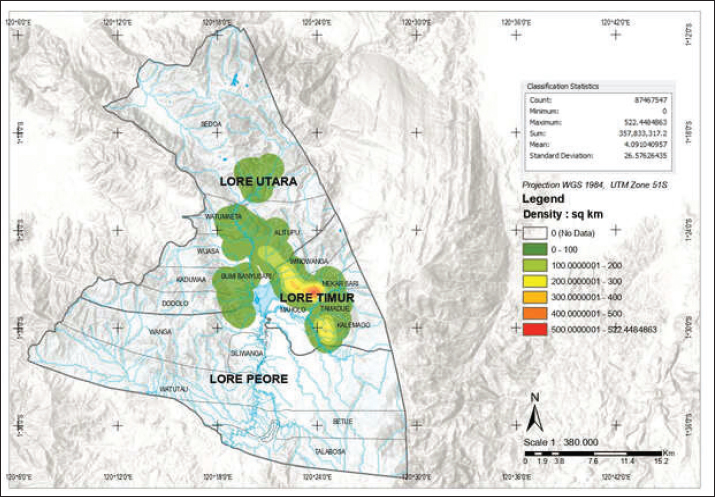
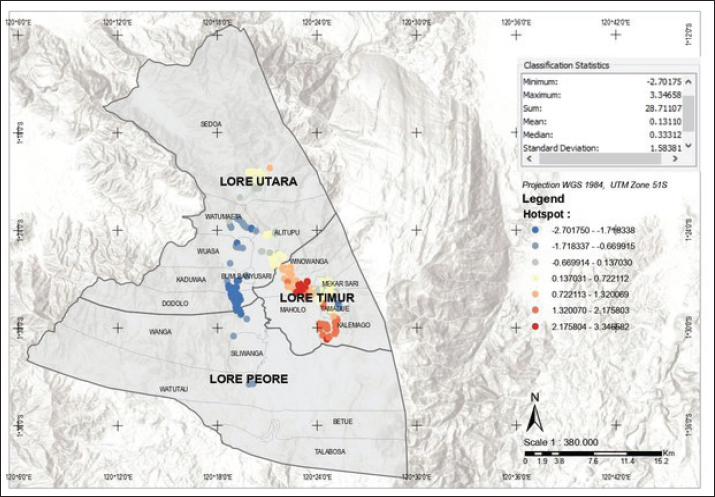
Snail densities varied across the Napu region. As indicated by hotspot analysis, two main clusters with high snail densities and spatial correlations were found: one in East Lore and Lore Peore Districts, and the other in North Lore sub-districts (Fig. 4). Lower snail densities were found in the North Lore to Lore Peore sub-districts, whereas higher densities were found in the East Lore sub-district.
Fig. 4. Hotspot analysis of the snail density. DiscussionControlling the population of O. hupensis remains a crucial strategy for schistosomiasis elimination (Lv et al., 2025). WHO is strengthening snail control as part of its strategic approach to eliminating schistosomiasis as a public health problem by 2030 (WHO, 2022). Schistosomiasis differs from other water-borne diseases in that it is not transmitted through the consumption of contaminated water; rather, a person becomes infected when their skin comes in direct contact with freshwater bodies containing the parasite, particularly while doing laundry, bathing, or swimming (Manji et al., 2021; Falcone et al., 2022). The prevalence of O. hupensis lindoensis snails is not always directly tied to their habitat. Oncomelania hupensis lindoensis snails are highly adaptable and can survive in various microhabitats, including dry or semiaquatic areas, as long as humidity is maintained. Furthermore, human or mammal behavior in the habitat is more important than snail density. The widespread presence of O. hupensis lindoensis snail habitats across 15 villages in the Napu region contributes to ongoing human and livestock infections. The infection rate, defined as the percentage of snails carrying cercariae from S. japonicum worms, indicates a persistent risk of schistosomiasis transmission in endemic areas. The likelihood of community exposure to schistosomiasis increases when snail habitats overlap with human activity zones, such as water channels near homes, cocoa plantations, and rice fields. The predominant land use in Napu is agriculture, with rice fields covering 50%, gardens 40%, and rivers and hills making up the remaining 10%. Cocoa plantations are the habitat of the O. hupensis lindoensis snail, which is most commonly found in the Napu region. Oncomelania hupensis lindoensis snails are frequently found in cocoa gardens, especially in garden areas with water channels. These channels are designed not only to maintain the fertility and moisture of the gardens but also to create an ideal habitat for snails. Slow-flowing water channels covered with trunks and branches from cocoa trees allow less sunlight to reach the water, thereby increasing humidity. In addition, the decomposition of fallen leaves contributies to habitat suitability. These environmental conditions, along with the appropriate temperature, support the survival of the snails and the development of the S. japonicum parasite within them (Stensgaard et al., 2019; Adekiya et al., 2020). Uncultivated or abandoned rice fields are prominent habitats in the Napu region. These abandoned rice fields result from a lack of irrigation water, leading landowners to leave them uncultivated. Several endemic villages in Napu depend on a rain-fed system to grow rice, resulting in temporary habitat loss during active farming periods. Rice fields increase the risk factors for schistosomiasis transmission (Zou et al., 2026). Environmental factors that influence snail habitat include land cover, particularly flooded agricultural land, seasonal land surface temperature (LST), elevation, and rainfall (Gordon et al., 2019). Grasslands and marshes are important habitats for O. hupensis lindoensis snails, although their numbers are limited. These areas are often used to tether cattle or buffalo, posing a potential risk of livestock infection. Buffalo is the primary reservoir of S. japonicum in the Philippines (Tenorio and Molina, 2021). In the schistosomiasis-endemic area of Bada, >30% of mammals were infected (Ginger Budiono et al., 2018; Budiono et al., 2019). Similarly, despite their limited distribution, swamps are significant habitats for snails. Many community members use swamps for fishing, especially at night, with battery-powered equipment, a practice linked to numerous cases of schistosomiasis in Napu. Fish ponds, which are often located near residential areas, further increase the risk of infection for children who frequently play nearby. Water seepage from hillsides is a habitat for O. hupensis lindoensis snails. Communities use seepage areas as a source of clean water. Water flowing from the seepage is often channeled into homes through hoses or pipes for bathing and washing, and some is diverted to irrigate gardens. This is a risk factor for transmission of schistosomiasis in Napu. Both are working as fishermen and children playing in water are at high risk due to frequent water contact, which exposes them to cercariae and increases the risk of infection with schistosomiasis in the Philippines (Olveda et al., 2014). The prevalence rate of O. hupensis lindoensis snails was 5.3%, compared with the low human case discovery rate in 2024 at 0.9%. This is likely due to the community activities in gardens or rice fields already using personal protective equipment such as boots, routine treatment, and environmental management, while the prevalence in mammals is still high because animals have no medicine and are still tethered to positive habitats of O. hupensis lindoensis cercariae. Schistosoma infection occurs after exposure to freshwater containing cercariae released by intermediate-host snails (Lv et al., 2023). This indicates that a natural parasite life cycle could be maintained between wild animals and O. hupensis. A sensitive surveillance and response system should be established for transmission among wild animals in far-reaching habitats and One Health (Zou et al., 2026). Efforts to control the O. hupensis lindoensis population have been ineffective, as snail habitats remain widespread in the Napu region. Routine spraying with niclosamide-based molluscicides cover large areas; however this approach requires careful consideration of environmental factors such as temperature, vegetation, sunlight, soil, rainfall, and the quality and concentration of the chemicals used, as well as the technical skills of those applying them (Dai et al., 2014). These factors can significantly affect the effectiveness of molluscicides in endemic areas. The continued presence of snails in frequently treated gardens underscores the need to evaluate current spraying practices. To effectively control schistosomiasis, especially in snail habitats, cross-sector collaboration is essential because O. hupensis lindoensis serves as an intermediate host in environments affected by human activities. These gastropods are primarily found in agricultural areas, such as rice fields and gardens, as well as in protected forest regions and around fish ponds. Several environmental modification strategies, including the construction of trap tanks, can help reduce both the snail density and infection rates. Cross-sector engagement is crucial to the eliminating of schistosomiasis. For example, the provincial government of Hubei, China, successfully reduced the proportion of infected snail foci to 0% over for 8 years (2005–2012) (Zhu et al., 2022). Cross-sector collaboration has helped mitigate schistosomiasis and improve socioeconomic conditions in endemic areas (Bergquist et al., 2017). In Bada in 2019, increased community participation played a crucial role in reducing snail populations. Landowners, cocoa plantation owners, and rice paddy farmers routinely cleared snail breeding sites (Widjaja et al., 2023). This model was developed in conjunction with initiatives such as the Healthy Living Community Movement (Germas) and the Schistosomiasis danger awareness families (Gadar Basis), which involved midwives, village officials, and security personnel. There are several limitations to this study. First, there was bias in snail sample collection due to the 5-minute sampling period. Second, the season was not optimal, so only a few snails were found. ConclusionThe current distribution of O. hupensis lindoensis snails is observed across various villages in the Napu region. In this area, 56% of the snail habitats tested positive for cercariae, with densities ranging from 10 to 71 man per minute, and a prevalence of 5.3% of O. hupensis lindoensis snails positive for S. japonicum cercariae. The water channels in garden habitats are the most prominent environments in which these snails thrive. The highest distribution is in East Lore District. AcknowledgmentsThe authors are grateful to the National Research and Innovation Agency (BRIN), which provided financial support for this study. FundingThe National Research and Innovation Agency of Indonesia provided financial support for this research (Grant No. 23/III.09/HK/2023). Authors' contributionsWidjaja, J., Satrija, F., Ridwan, Y., and Garjito, T.W. are the main contributors. Widjaja, J. cleaned and analyzed the data. These authors were responsible for the analysis and drafting of the manuscript. They coordinated the team and made the final decisions. Conflict of interestThe authors declare that the research was conducted without any commercial or financial relationships that could be understood as a potential conflict of interest. Data availabilityThe datasets generated and analyzed in this study are available from the corresponding author. ReferencesAdekiya, T.A., Aruleba, R.T., Oyinloye, B.E., Okosun, K.O. and Kappo, A.P. 2020. The effect of climate change and the snail-schistosome cycle in transmission and bio-control of schistosomiasis in Sub-Saharan Africa. Int. J. Environ. Res. Public. Health. 17(1), 181; doi:10.3390/ijerph17010181 Araujo Navas, A.L., Soares Magalhães, R.J., Osei, F., Fornillos, R.J.C., Leonardo, L.R. and Stein, A. 2018. Modelling local areas of exposure to Schistosoma japonicum in a limited survey data environment. Parasites Vectors 11(1), 465; doi:10.1186/s13071-018-3039-6 Bergquist, R., Zhou, X.N., Rollinson, D., Reinhard-Rupp, J. and Klohe, K. 2017. Elimination of schistosomiasis: the tools required. Infect. Dis. Poverty 6(1), 158; doi: 10.1186/s40249-017-0370-7 Braun, L., Grimes, J.E.T. and Templeton, M.R. 2018. The effectiveness of water treatment processes against schistosome cercariae: a systematic review. PLos Negl. Trop. Dis. 12(4), 6364; doi:10.1371/journal.pntd.0006364 Budiono, N.G., Satrija, F., Ridwan, Y., Handharyani, E. and Murtini, S. 2019. The contribution of domestic animals to the transmission of schistosomiasis japonica in the Lindu Subdistrict of the Central Sulawesi Province, Indonesia. Vet. World 12(10), 1591–1598; doi:10.14202/vetworld.2019.1591-1598 Chen, J., Xu, J., Bergquist, R., Li, S.Z., and Zhou, X.N. 2018. “Farewell to the God of Plague”: the importance of political commitment towards the elimination of schistosomiasis. Trop. Med. Infect. Dis. 3(4), 108; doi: 10.3390/tropicalmed3040108 Dai, J., Li, Y., Wang, W., Xing, Y., Qu, G. and Liang, Y. 2014. Sensitivity of oncomelania hupensis to niclosamide: a nation-wide survey in China. Int. J. Environ. Res. Public Health 11(3), 3086–3095; doi:10.3390/ijerph110303086 De Wilton, A., Aggarwal, D., Jäger, H.R., Manji, H. and Chiodini, P.L. 2021. Delayed diagnosis of spinal cord schistosomiasis in a non-endemic country : a tertiary referral centre experience. PLos Negl. Trop. Dis. 15(1), doi:10.1371/journal.pntd.0009161 Falcone, B., Park, S., Wu, H.W., Leenstra, T., Jiz, M.A., Jarilla, B., Mcgarvey, S.T., Kurtis, J.D. and Friedman, J.F. 2022. Comparison of self-reported and observed water contact measures in Schistosoma japonicum-endemic villages in Leyte, The Philippines. Trans. R. Soc. Trop. Med. Hyg. 116(5), 433–439; doi: 10.1093/trstmh/trab149 Budiono, N.G., Satrija, F., Ridwan, Y., Nur, D. and Hasmawati. 2018. Trematodoses in cattle and buffalo around schistosomiasis endemic areas in Central Sulawesi Province of Indonesia. J. Ilmu. Pertan. Indones. 23(2); doi:10.18343/jipi.23.2.112 Gordon, C.A., Kurscheid, J., Williams, G.M., Clements, A.C.A., Li, Y., Zhou, X.N., Utzinger, J., Mcmanus, D.P. and Gray, D.J. 2019. Asian schistosomiasis: current status and prospects for control leading to elimination. Trop. Med. Infect. Dis. 4(1), 40; doi:10.3390/tropicalmed4010040 He, J., Li, W., Bergquist, R., Zhang, J.F., Shi, L., Zhao, S., Wu, F. and Yang, K. 2016. The spatio-temporal distribution of Oncomelania hupensis along Yangtze river in Jiangsu Province, China after implementation of a new, integrated schistosomiasis control strategy. Geospat. Health 211(3), 480; doi:10.4081/gh.2016.480 King, C.H., Sutherland, L.J. and Bertsch, D. 2015. Systematic review and meta-analysis of the impact of chemical-based mollusciciding for control of Schistosoma mansoni and S. haematobium transmission. PLos Negl. Trop. Dis. 9(12), 4290; doi: 10.1371/journal.pntd.0004290 Kirby, R.S., Delmelle, E. and Eberth, J.M. 2017. Advances in spatial epidemiology and geographic information systems. Ann. Epidemiol. 27(1), 1–9; doi:10.1016/j.annepidem.2016.12.001 Lv, C., Li, Y.L., Deng, W.P., Bao, Z.P., Xu, J., Lv, S., Li, S.Z. and Zhou, X.N. 2023. The Current distribution of Oncomelania hupensis snails in the People’s Republic of China based on a Nationwide Survey. Trop. Med. Infect. Dis. 8(2), 120; doi:10.3390/tropicalmed8020120 Lv, S., Xu, J., Li, Y.L., Bao, Z.P., Zhang, L.J., Yang, K., Lin, D.D., Liu, J.B., Wang, T.P., Ren, G.H., Zhong, B., Dong, Y., Cai, L., Wen, L.Y., Jiang, Z.H., Deng, Z.H., Xie, H.G., Li, S.Z., Bergquist, R., Utzinger, J. and Zhou, X.N. 2025. Snail control as a crucial approach to schistosomiasis elimination: evidence from the People's Republic of China. Infect. Dis. Poverty. 14(1), 10; doi:10.1186/s40249-025-01281-0 Mcmanus, D.P., Dunne, D.W., Sacko, M., Utzinger, J., Vennervald, B.J. and Zhou, X.N. 2018. Schistosomiasis. Nat. Rev. Dis. Primers. 4(1), 13; doi:10.1038/s41572-018-0013-8 Ministry of Health of the Republic of Indonesia. 2022. Guidelines for surveillance and control of intermediate snails and reservoir animals of schistosomiasis. South Jakarta, Indonesia: Ministry of Health of the Republic of Indonesia. Olveda, D.U., Li, Y., Olveda, R.M., Lam, A.K., McManus, D.P., Chau, T.N., Harn, D.A., Williams, G.M., Gray, D.J. and Ross, A.G. 2014. Bilharzia in the Philippines: past, present, and future. Int. J. Infect. Dis. 18, 52–56; doi:10.1016/j.ijid.2013.09.011 Ponzo, E., Midiri, A., Manno, A., Pastorello, M., Biondo, C. and Mancuso, G. 2024. Insights into the epidemiology, pathogenesis, and differential diagnosis of schistosomiasis. Eur. J. Microbiol. Immunol. 14(2), 86–96; doi:10.1556/1886.2024.00013 Rabone, M., Wiethase, J.H., Allan, F., Gouvras, A.N., Pennance, T., Hamidou, A.A., Webster, B.L., Labbo, R., Emery, A.M., Garba, A.D. and Rollinson, D. 2019. Freshwater snails of biomedical importance in the Niger River Valley: evidence of temporal and spatial patterns in abundance, distribution and infection with Schistosoma spp. Parasites Vectors 12(1), 498; doi:10.1186/s13071-019-3745-8 Satrija, F., Ridwan, Y., Jastal., Samarang. and Rauf, A. 2015. Current status of schistosomiasis in Indonesia. Acta. Trop. 141(Pt B), 349–353; doi:10.1016/j.actatropica.2013.06.014 Sokolow, S.H., Wood, C.L., Jones, I.J., Lafferty, K.D., Kuris, A.M., Hsieh, M.H. and De Leo, G.A. 2018. To reduce the global burden of human schistosomiasis, use 'old fashioned' snail control. Trends. Parasitol. 34(1), 23–40; doi:10.1016/j.pt.2017.10.002 Stensgaard, A.S., Vounatsou, P., Sengupta, M.E. and Utzinger, J. 2019. Schistosomes, snails and climate change: current trends and future expectations. Acta Trop. 190, 257–268; doi:10.1016/j.actatropica.2018.09.013 Tenorio Jcl, B. and Molina, E.C. 2021. Schistosoma japonicum in the Philippines : its epidemiology, diagnostics, control, and elimination. Asian. J. Res. Infect. Dis. 3(1), 71–87. Ugochukwu, N.C., Orevaoghene, O.E., Ikpeama, R.A., Robinson, N.I. and Ogbonnie, E.S. 2024. Snail transmitted parasitic infections. Acta Sci. Microbiol. 7(1), 30–39. Widjaja, J., Widawati, A.N., Nursafingi, A., Kurniawan, A. and Ullyartha, H. 2023. The impact of snail control on intestinal schistosomiasis endemic areas in Indonesia. J. Commun. Dis. 55(3), 14–21; doi:10.24321/0019.5138.202332 World Health Organization. 2020. Road map for neglected tropical diseases 2021–2030. Geneva: World Health Organization. World Health Organization. 2022. WHO GUIDELINE on control and elimination of human schistosomiasis. Geneva: World Health Organization. Zhu, H., Liu, J.B., Xiao, Y., Tu, Z.W., Shan, X.W., Li, B., Wu, J.L., Zhou, X.R., Sun, L.C., Xia, J., Liu, S. and Huang, X.B. 2022. Efforts to eliminate schistosomiasis in Hubei province, China: 2005–2018. Acta Trop. 231, 106417; doi:10.1016/j.actatropica.2022.106417 Zou, W.W., Grover, E.N., Yang, L. and Carlton, E.J. 2026. One health at the last mile: multi-scale predictors of Schistosoma japonicum infection in southwest China across two decades of control. PLos Negl. Trop. Dis. 20(2), e0013573; doi:10.1371/journal.pntd.0013573/ | ||

| How to Cite this Article |
| Pubmed Style Widjaja J, Satrija F, Ridwan Y, Garjito TA. Current distribution of Oncomelania hupensis lindoensis snails in the Napu region of Poso Regency, Central Sulawesi, Indonesia. Open Vet. J.. 2026; 16(7): 4943-4951. doi:10.5455/OVJ.2026.v16.i7.71 Web Style Widjaja J, Satrija F, Ridwan Y, Garjito TA. Current distribution of Oncomelania hupensis lindoensis snails in the Napu region of Poso Regency, Central Sulawesi, Indonesia. https://www.openveterinaryjournal.com/?mno=308190 [Access: July 27, 2026]. doi:10.5455/OVJ.2026.v16.i7.71 AMA (American Medical Association) Style Widjaja J, Satrija F, Ridwan Y, Garjito TA. Current distribution of Oncomelania hupensis lindoensis snails in the Napu region of Poso Regency, Central Sulawesi, Indonesia. Open Vet. J.. 2026; 16(7): 4943-4951. doi:10.5455/OVJ.2026.v16.i7.71 Vancouver/ICMJE Style Widjaja J, Satrija F, Ridwan Y, Garjito TA. Current distribution of Oncomelania hupensis lindoensis snails in the Napu region of Poso Regency, Central Sulawesi, Indonesia. Open Vet. J.. (2026), [cited July 27, 2026]; 16(7): 4943-4951. doi:10.5455/OVJ.2026.v16.i7.71 Harvard Style Widjaja, J., Satrija, . F., Ridwan, . Y. & Garjito, . T. A. (2026) Current distribution of Oncomelania hupensis lindoensis snails in the Napu region of Poso Regency, Central Sulawesi, Indonesia. Open Vet. J., 16 (7), 4943-4951. doi:10.5455/OVJ.2026.v16.i7.71 Turabian Style Widjaja, Junus, Fadjar Satrija, Yusuf Ridwan, and Triwibowo Ambar Garjito. 2026. Current distribution of Oncomelania hupensis lindoensis snails in the Napu region of Poso Regency, Central Sulawesi, Indonesia. Open Veterinary Journal, 16 (7), 4943-4951. doi:10.5455/OVJ.2026.v16.i7.71 Chicago Style Widjaja, Junus, Fadjar Satrija, Yusuf Ridwan, and Triwibowo Ambar Garjito. "Current distribution of Oncomelania hupensis lindoensis snails in the Napu region of Poso Regency, Central Sulawesi, Indonesia." Open Veterinary Journal 16 (2026), 4943-4951. doi:10.5455/OVJ.2026.v16.i7.71 MLA (The Modern Language Association) Style Widjaja, Junus, Fadjar Satrija, Yusuf Ridwan, and Triwibowo Ambar Garjito. "Current distribution of Oncomelania hupensis lindoensis snails in the Napu region of Poso Regency, Central Sulawesi, Indonesia." Open Veterinary Journal 16.7 (2026), 4943-4951. Print. doi:10.5455/OVJ.2026.v16.i7.71 APA (American Psychological Association) Style Widjaja, J., Satrija, . F., Ridwan, . Y. & Garjito, . T. A. (2026) Current distribution of Oncomelania hupensis lindoensis snails in the Napu region of Poso Regency, Central Sulawesi, Indonesia. Open Veterinary Journal, 16 (7), 4943-4951. doi:10.5455/OVJ.2026.v16.i7.71 |


