Open Veterinary Journal, (2026), Vol. 16(7): 4479-4490
Research Article
10.5455/OVJ.2026.v16.i7.32
Characterization of IGF1 gene marker as potential genes in improving growth performance of Indonesian goats
Depison Depison1*, Ratna Sholatia Harahap1, Gushairiyanto Gushairiyanto1, Sarwo Edy Wibowo2
and Winni Liani Daulay1
1Department of Animal Husbandry, Faculty of Animal Science, Universitas Jambi, Jambi, Indonesia
2Animal Health Study Program, Faculty of Animal Science, Universitas Jambi, Jambi, Indonesia
*Corresponding Author: Depison Depison. Department of Animal Husbandry, Faculty of Animal Science, Universitas Jambi, Jambi, Indonesia. Email: depison.nasution [at] unja.ac.id
Submitted: 02/02/2026 Revised: 02/06/2026 Accepted: 12/06/2026 Published: 11/07/2026
© 2025 Open Veterinary Journal
This is an Open Access article distributed under the terms of the Creative Commons Attribution-Non Commercial-No Derivatives License (http://creativecommons.org/licenses/by-nc-nd/4.0/), which permits non-commercial re-use, distribution, and reproduction in any medium, provided the original work is properly cited, and is not altered, transformed, or built upon in any way.
Abstract
Background: Goat farming development begins with the availability of genetically and phenotypically superior livestock to ensure optimal productivity and reproduction.
Aim: This study aimed to identify IGF1 polymorphisms and evaluate their association with growth performance.
Methods: A total of 105 goats aged between 12 and 24 months were sampled, including 35 individuals from each of three Indonesian goat breeds: Peranakan Etawah (PE), Jawarandu, and Kacang. The measured growth parameters included body weight and morphometric characteristics. The genetic variation of the IGF1 gene was analyzed using Sanger sequencing. Morphometric data were analyzed using principal component analysis (PCA) in R software to explore variation patterns, whereas associations between IGF1 gene polymorphisms and growth traits were evaluated using analysis of variance (ANOVA).
Results: Sequence analysis revealed significant nucleotide variations at certain positions, indicated by overlapping chromatogram peaks of guanine (G) and thymine (T), indicating a heterozygous genotype (G/T) at this locus. The IGF1 gene has diverse genotypes in all goat breeds, namely GG, GT, and TT. All genotypes were present, except for the JW breed, where the TT genotype was absent. IGF1 gene diversity was significantly associated (p < 0.05) with morphometric characteristics, including muzzle circumference, head length, ear length, ear width, rump length, and leg circumference (p=0.05). The GT genotype exhibited the highest morphometric performance compared with the other genotypes.
Conclusion: The IGF1 gene may serve as a potential candidate marker for MAS to improve the growth performance of Indonesian goats, although further validation is required.
Keywords: Breed, Goats, Growth performance, IGF1 gene, Sanger sequencing.
Introduction
The goat population trend in Indonesia has fluctuated in recent years. The BPS-Statistics Indonesia reported that the goat population in Indonesia was 18.31 million in 2018 and continued to show a positive trend until 2021, reaching 18.90 million. However, this number significantly declined in the following years. In 2022, the Indonesian goat population began to decline, reaching 18.56 million. By 2023, this figure had again plummeted to 14.37 million (Badan Pusat Statistik, 2024). Changes in the dynamics of the livestock sector, economic conditions, and market demand have significantly impacted Indonesia’s goat population. This changing trend is also considered to be an impact of the COVID-19 outbreak that lasted from 2020 to 2023 (Okolie and Ogundeji, 2022; Mahmood et al., 2024). The goat population is beginning to show signs of recovery, returning to a positive trend, reaching 15.71 million in 2024 (Badan Pusat Statistik, 2024). This increase is a positive sign for Indonesia’s goat farming sector. This change in goat population also reflects the increasing demand and market trends, especially for goat meat, milk, and processed products, as well as in the context of the Eid al-Adha vacation.
The strategy for developing goat farming begins with the genetic and phenotypical availability of superior seeds to achieve high productivity. One productivity factor that breeders often focus on is growth indicators (Tesema et al., 2021; Hosseinzadeh Shirzeyli et al., 2023). Goat growth patterns are important for achieving optimal meat production. Body weight is a key indicator of meat production (Teixeira Neto et al., 2012). Van Burgel et al. (2011) reported that the morphometric measurement method for estimating growth performance is easy to perform and does not require high costs. Mahmud et al. (2014) reported a phenotypic association between body weight and morphometric performance. Improving goat morphometrics to increase growth can be done through a goat farming development program through molecular-based selection and crossbreeding.
Morphometric performance is a complex trait predominantly governed by genetic factors (Angel et al., 2018; Latifah et al., 2018; Buranakarl et al., 2024). Among the candidate genes implicated in growth regulation, IGF1 has been identified as a critical determinant of growth traits. Machado et al. (2021) demonstrated that IGF1 genes significantly contribute to morphometric variability in Brazilian sheep due to their roles in metabolic pathways. IGF1 polymorphisms and their association with growth performance have been extensively documented across various livestock species, including cattle (Perwitasari et al., 2019; Bila et al., 2024), sheep (Seprian Ht et al., 2024), poultry (Rahmat et al., 2022), and ducks (Ghassani et al., 2022). In addition, studies in goat populations from other regions have reported polymorphisms in growth-related genes, such as GH, which may influence protein structure and growth-related traits (El-Halawany et al., 2019), further supporting the importance of candidate genes involved in growth regulation. Nevertheless, the comprehensive characterization of the genes and their functional implications in growth traits in Indonesian goat populations remains scarce. Current genetic investigations in Indonesian goats have emphasized breed differentiation based on morphometric parameters (Batubara et al., 2011; Ilham et al., 2023). Notably, Depison et al. (2020) provided a morphometric characterization of Kacang goats reared in both lowland and highland ecosystems in Indonesia. To date, molecular analyses of IGF1 genes in Indonesian goats have been limited to genomic studies in Boerka and Kacang breeds (Rachman et al., 2017; Suyasa et al., 2023; Rahim et al., 2024). This study aims to elucidate the genomic potential of IGF1 genes and their association with morphometric performance in various Indonesian goats.
Materials and Methods
Animal sampling and morphometric measurements
A total of 105 goats were sampled in this study, consisting of 35 individuals each from three breeds: Peranakan Etawah, Jawarandu, and Kacang (Fig. 1). The goats were aged between 12 and 24 months and included both males and females. All animals were obtained from smallholder farms in Pengabuhan District, Tanjung Jabung Barat Regency, Jambi Province, Indonesia. The goats were raised under similar intensive management conditions and fed a diet primarily based on locally available grasses. Age was determined on the basis of dentition. All samples were collected within the same sampling period, and the animals were maintained under comparable environmental and husbandry conditions. For each goat, blood samples were collected alongside morphometric measurements of the following body parameters: body weight (BW in kg, the live body weight of the animal), horn length (HoL in cm, the distance between the base to the tip of horn along the greater curvature), muzzle circumference (MC in cm, in front of the eyes and nostrils, encircling the nose and mouth area), head length (HL in cm, the distance from the bun to the middle of muffle), head width (HW in cm, the most lateral (outermost) point on one side of the head to the corresponding point on the opposite side), ear length (EL in cm, the distance from the base to the tip of the ear along the dorsal face), ear width (EW in cm, the maximum distance at the middle of ear), neck length (NL in cm, the distance from the head to the thorax), body length (BL in cm, the distance between the point of the shoulder and the pin bone), wither height (WH in cm, the distance from the surface of a platform on which an animal stands, to the withers of the animal), chest girth (HG in cm, the circumference of girth), chest depth (CD in cm, the distance from the brisket between the front legs to withers), chest width (CW in cm, the distance between the axis of the forelimbs at the base of the sternum), rump height (RH in cm, the vertical distance between the ground and the point determined by the intersection between the line passing through the points of the hips and the rump), rump length (RL in cm, the distance from the hip (tuber coxa) to the pin (tuber ischii) by dividers), rump width (RW in cm, the distance from the surface of a platform on which animal stands, to the back of the animal), leg circumference (LC in cm, the length of posterior and anterior cannon bone), and tail length (TL in cm, the distance from the tail droop to tip of the tail excluding switch). Live goat body weight was measured using a digital scale, and other linear body measurements were taken using a measuring tape calibrated to the centimeter (cm) scale and self-devised scaling sticks made from iron. The animals were restrained and placed in a natural position. A veterinarian collected blood samples from the jugular vein and transferred them into EDTA tubes (5 ml) to prevent coagulation. The samples were stored at 4°C before DNA extraction to preserve their integrity for subsequent analysis.
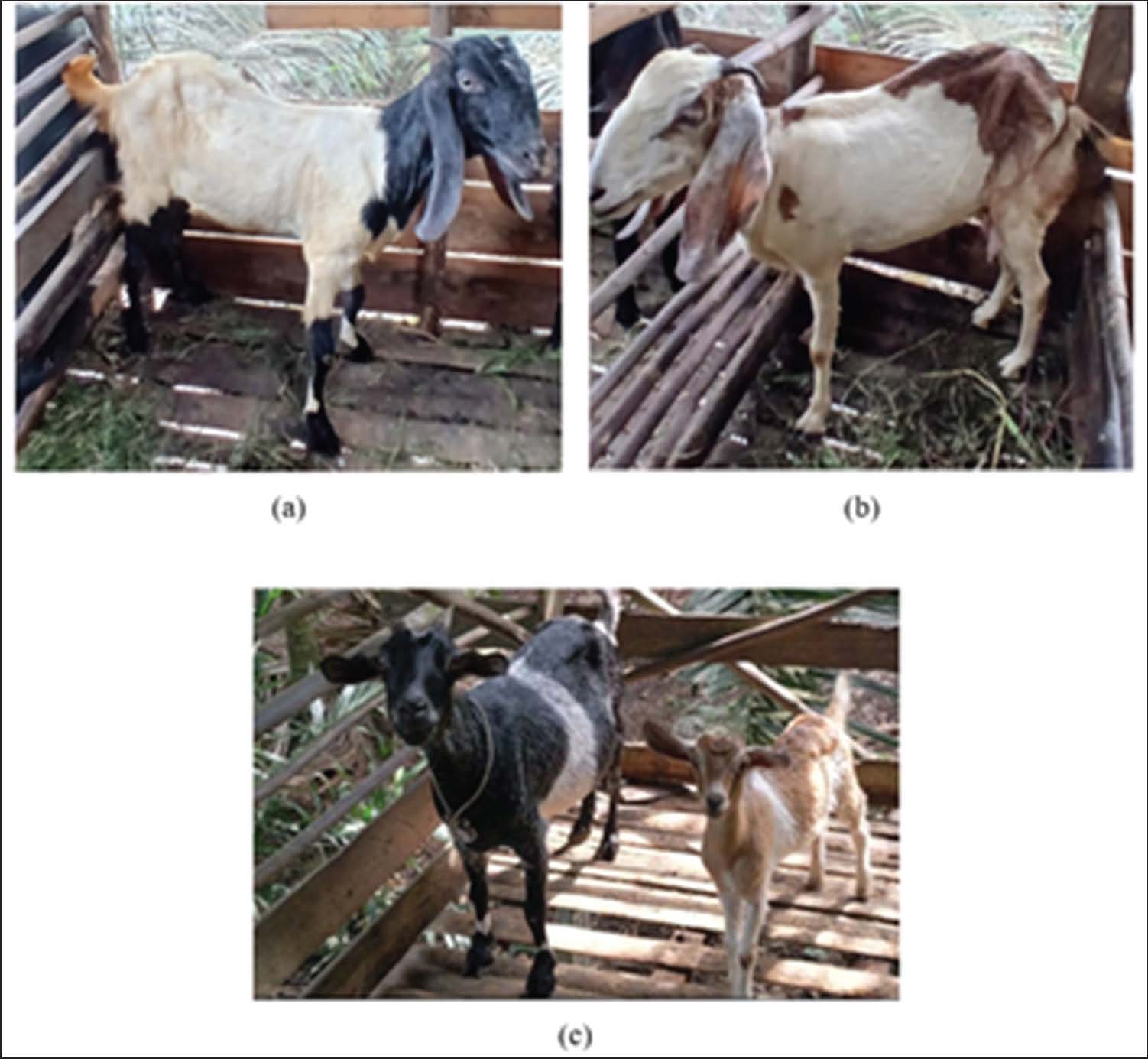
Fig. 1. Goat phenotypes for field collection samples. (a) PE, (b) Jawarandu, and (c) Kacang (source: personal documentation).
IGF1 gene polymorphism analysis using Sanger sequencing
Blood samples were subjected to genomic DNA extraction using the Zymo Quick-DNA Miniprep Plus Kit (Zymo Research, Irvine, CA; Catalog No. D4068) according to the manufacturer’s instructions. Primers specific for the insulin-like growth factor 1 (IGF1) gene were designed utilizing MEGA 8.0 software (Kumar et al., 2018) with reference sequences retrieved from the Ensembl genome database (Cunningham et al., 2022) to ensure specificity and optimal annealing conditions. The SNPs of the IGF1 gene were located in intron 4, in the position on chromosome: ARS1:5:64864621:64943129:-1. The SNPs located within intronic regions can modify splice-site recognition, resulting in alternative splicing events or the production of different protein isoforms. These primers consisted of the forward primer 5'-GCCTTAGCAGAGATGTGAC-3' and the reverse primer 5'- TCAGCCTCTTCCTACAACAG-3'. The total length of the primers is 764 base pairs (bp). Polymerase chain reaction (PCR) amplification was performed in a total volume of 30 µl containing 1 µl of template DNA, 0.4 µM of each primer, 12.5 µl of MyTaq HS Redmix, and 15.7 µl of nuclease-free water. The thermal cycling conditions included an initial denaturation at 95°C for 1 minute, followed by 35 cycles of denaturation at 95°C for 15 seconds, annealing at 60°C for 15 seconds, extension at 72°C for 30 seconds, and a final extension at 72°C for 1 minute (Harahap et al., 2024). PCR products were analyzed by agarose gel electrophoresis on a 1.5% agarose gel stained with ethidium bromide. Electrophoresis was conducted at 100 volts for 30 minutes using 1× TBE buffer. This step was performed to verify the presence, size, and integrity of the amplified DNA fragments, visualized as distinct bands under UV light, ensuring the PCR products matched the expected amplicon size. Subsequently, the optimal PCR products were sent for genetic polymorphism analysis by Sanger sequencing. The sequencing was performed by 1st Base, Selangor, Malaysia, through PT. Genetica Science Service, Jakarta. The sequence data were edited to remove PCR primer binding sites and manually corrected using MEGA 11 software (https://www.megasoftware.net/). Subsequently, the IGF1 gene sequences from Indonesian goats were compared against goat sequences available in public databases using the BLAST tool (http://www.ncbi.nlm.nih.gov/) (Depison et al., 2017).
Statistical analysis
Morphometric data were initially analyzed using descriptive statistics to obtain the mean and SD for each measured trait across the 3 goat breeds. To explore the underlying structure and variation among traits, PCA was performed using R software. All morphometric variables were standardized before PCA to eliminate scale differences among traits. PCA was performed based on the correlation matrix, and PCs were interpreted according to their eigenvalues and the explained proportion of total variance. A one-way analysis of variance (ANOVA) was conducted to assess the effect of breed differences in morphometric traits using SPSS software. Before performing ANOVA, the assumptions of normality and homogeneity of variances were evaluated. When significant differences were detected, Tukey’s honestly significant difference test was used. A significant difference post hoc test was applied to identify pairwise differences among groups. The genetic variation of the IGF1 gene was evaluated by calculating genotype and allele frequencies and by testing for HWE using a chi-square (χ²) test in XLSTAT software. A generalized linear model (GLM) was applied using SPSS software to examine the association between IGF1 gene polymorphisms and morphometric traits, with genotype and breed included as fixed effects. This approach allowed the evaluation of genotype effects while accounting for variation among breeds. All statistical tests were conducted at a significance level of p < 0.05.
Ethical approval
All animal handling procedures were approved by the Ethical Clearance Committee of the Faculty of Animal Science, Jambi University, Indonesia (Approval No. 03/UN21.7/ECC/2025).
Results
Goat morphometric characteristics
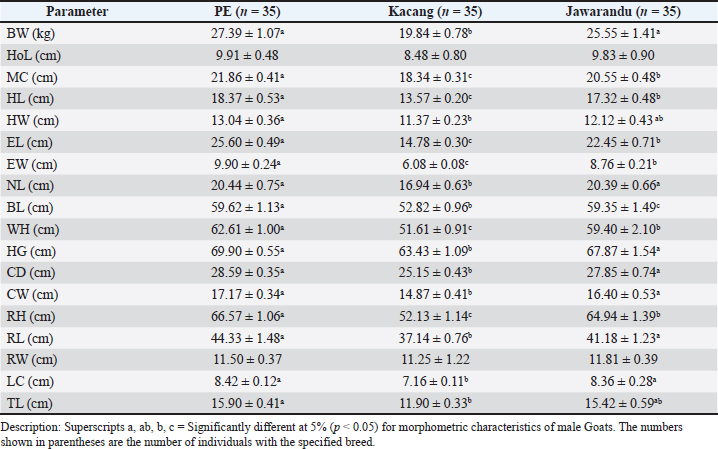
Goat breed significantly influenced morphometric traits (p < 0.05), including BW, BL, MC, HL, HW, EL, EW, NL, withers height (WH), heart girth (HG), CD, CW, RH, RL, LC, and TL. The average body weight of goats aged 12–24 months ranged from 16.95 to 23.87 kg in females and 19.84–27.39 kg in males. Peranakan Etawah (PE) goats exhibited the highest body weight among all breeds in both sexes, followed by Jawarandu and Kacang goats (Tables 1 and 2). Significant differences in head morphometric traits, particularly EL and width, were also observed. PE goats had markedly longer and wider ears than Kacang goats, which had shorter and narrower ears (Tables 1 and 2). Overall, PE goats exhibited superior body size and morphometric proportions in both males and females; Jawarandu goats showed intermediate values, and Kacang goats consistently presented the lowest measurements across almost all parameters.
Table 1. Morphometric characteristics of female goats.
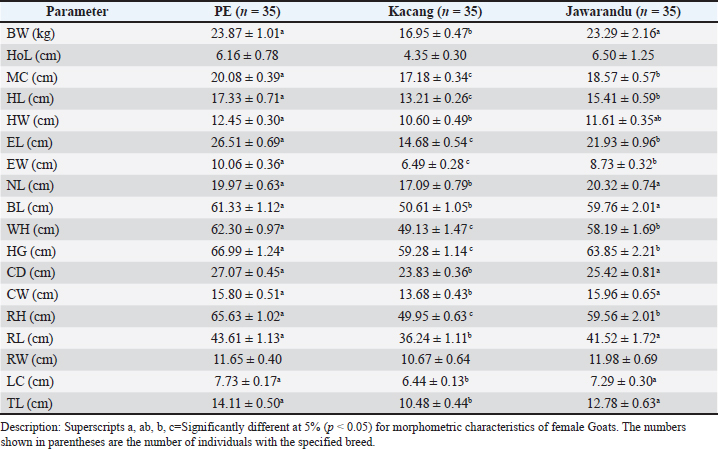
Table 2. Morphometric characteristics of male goats.
PCA of the goat morphometric characteristics
PCA was conducted to explore morphological variation patterns in three livestock groups: Jawarandu, Kacang, and PE. The two principal components obtained from the PCA successfully explained 63.4% of the total data variation, with Dimension 1 (PC1) contributing 54.1% and Dimension 2 (PC2) contributing 9.3% (Fig. 2). The PCA biplot showed a clear separation between livestock groups based on morphological characteristics. The first component (PC1) was the main dividing axis that differentiated PE from Kacang. The PE group was distributed on the negative side of PC1 and was associated with the variables EL and width (EL and EW) and neck length (PL). Meanwhile, the Kacang group was concentrated on the positive side of PC1, with hip width (RW) and chest circumference (HG) being the dominant characteristics. The Jawarandu group was positioned between PE and Kacang, indicating a mixture or transition between the two groups. Variables such as BW, HL, and chest circumference (HG) had significant contributions to PC1 and showed a positive relationship with the Jawarandu and Kacang groups.
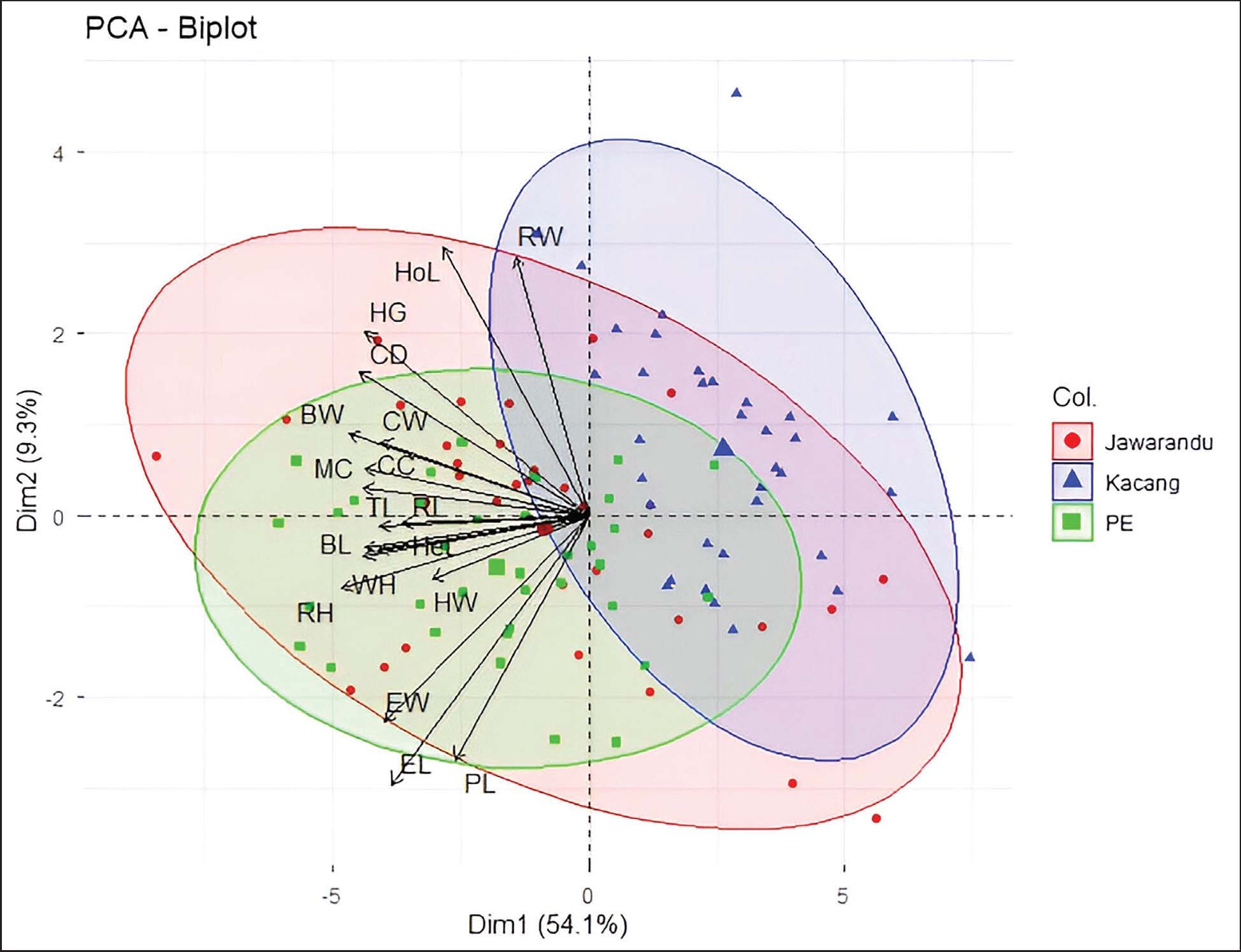
Fig. 2. PCA results: A two-dimensional plot showing the morphometric characteristics of each local Indonesian goat breed.
The second axis (PC2) provides additional variation information, although its contribution is relatively small. Several variables, such as leg circumference (TL) and back length (RL), influence PC2 variation but do not significantly separate the groups. PCA results indicate that morphological characteristics, such as hip width, chest circumference, EL and width, and NL, are the main discriminatory variables that can be used to distinguish the three livestock groups.
IGF1 gene polymorphism in Indonesian goats
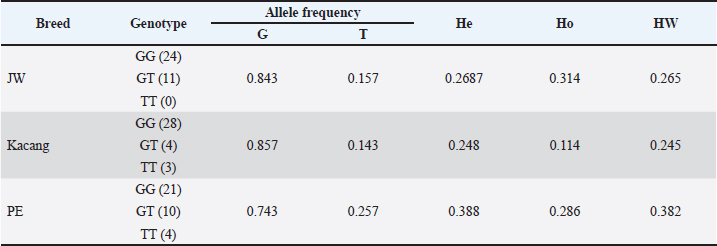
PCR amplification of the IGF1 gene produced a clear fragment of 764 bp at an annealing temperature of 60°C using specific primers (Fig. 3). Sanger sequencing analysis revealed nucleotide variation at a specific IGF1 gene locus. The chromatogram displayed a double peak of guanine (G) and thymine (T), indicating a heterozygous genotype (G/T) (Fig. 4). Three genotypes (GG, GT, and TT) were identified across the goat populations; however, the TT genotype was absent in the Jawarandu breed. The HWE analysis indicated that the Jawarandu and Kacang goat populations were in equilibrium (HW < 3.45), whereas the PE goat population showed deviation (HW > 3.45) (Table 3).
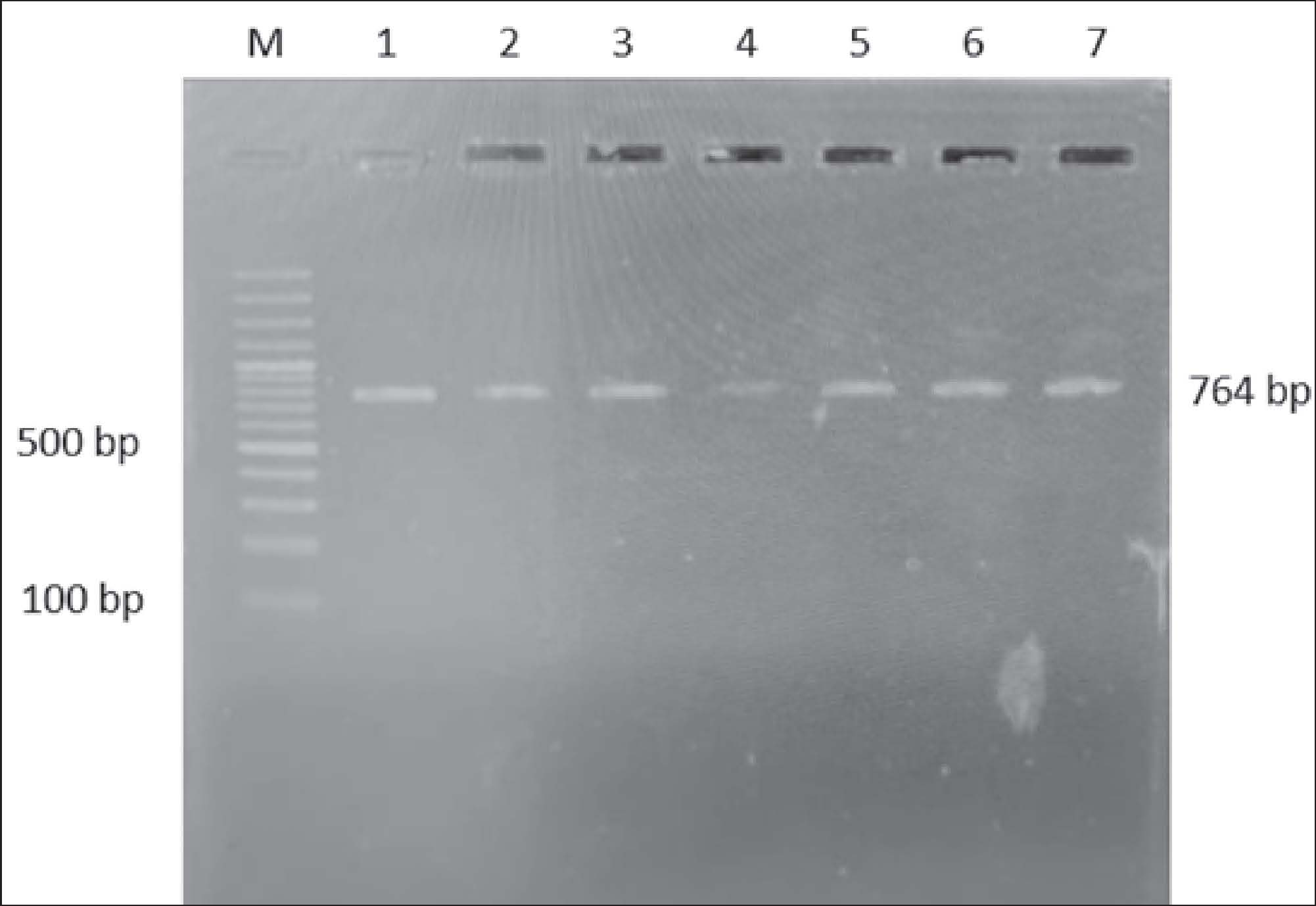
Fig. 3. Visualization of IGF1 gene amplification in PE, Jawarandu, and Kacang goat samples.
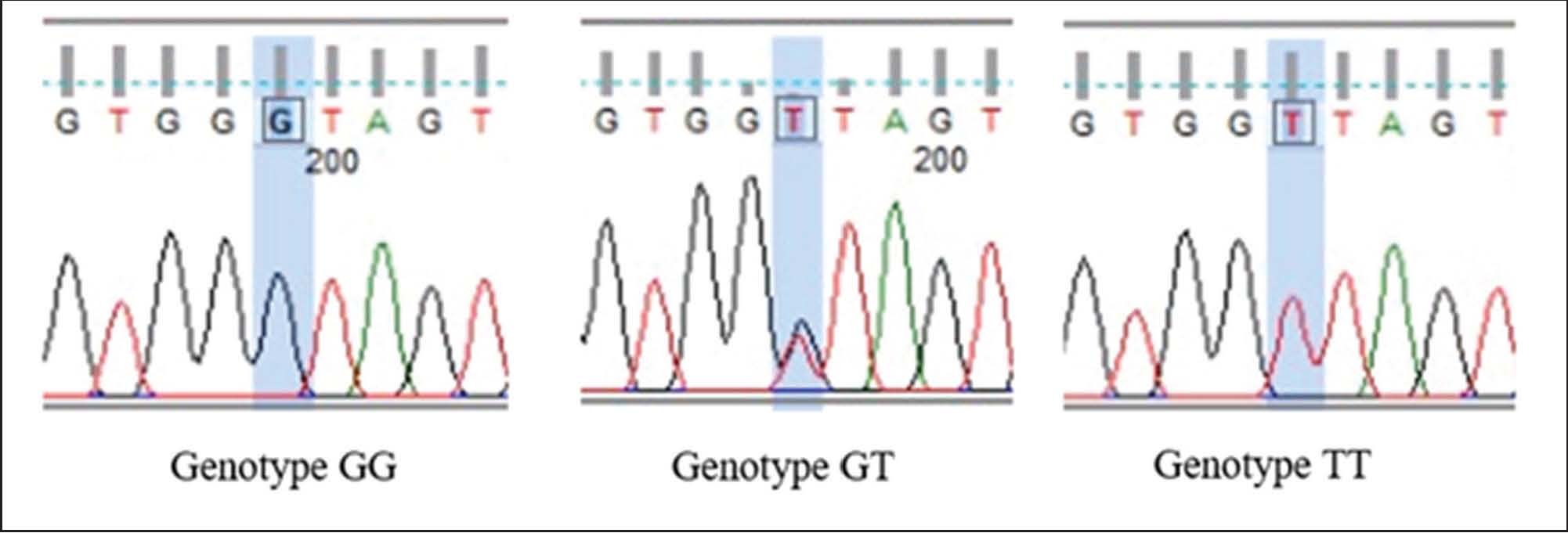
Fig. 4. PIC visualization of Sanger sequencing analysis results on Indonesian goat samples.
Table 3. Allele frequencies, genotypes, and Hardy–Weinberg equilibrium of the IGF gene.
Association between IGF1 polymorphism and goat morphometric characteristics
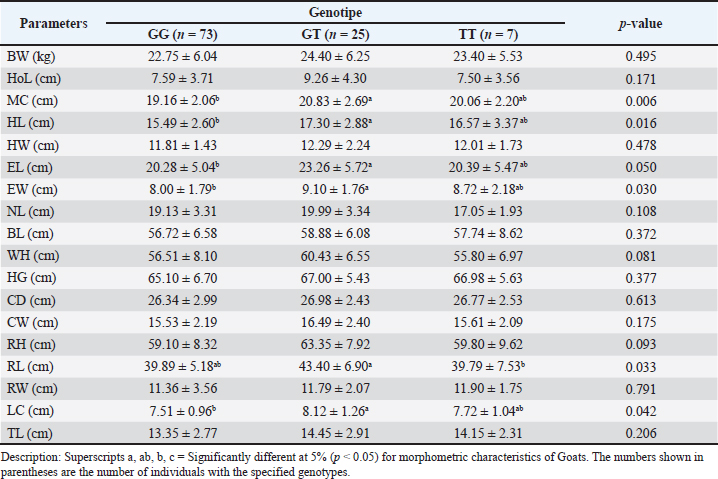
Polymorphisms of the IGF1 gene showed a significant association (p < 0.05) with various growth performance metrics, including MC, HL, EL, EW, RL, and LC. The GT genotype exhibited the highest growth performance relative to other genotypes, highlighting a distinct effect of the genotype on morphometric traits (Table 4).
Table 4. The association of IGF gene polymorphism with growth performances.
Discussion
Morphometric characteristics are used to distinguish livestock based on their breed. The superior body weight and morphometric performance of PE goats in this study indicate their greater growth potential compared with Jawarandu and Kacang goats. This finding aligns with their genetic background, as Jawarandu goats are a cross between PE and Kacang goats (Anggraeni and Rahmatullah, 2021). The body weight of Jawarandu goats in this study was lower than that reported by Anggraeni and Rahmatullah (2021) which was 36.10 kg at the same age. Furthermore, Ilham et al. (2023) reported that the average body weight of PE and Kacang goats was 44.72 kg and 29.87 kg, respectively, for goats aged 1–3 years. The body weight is an important parameter. Tırınk et al. (2022) suggested that knowing the body weight of livestock can help farmers calculate the optimal feed amount, determine accurate drug dosages, determine market prices, and determine the optimal time to slaughter animals.
BW is a critical production parameter because it influences feed management, drug dosage, market value, and slaughter timing (Tırınk et al., 2022). Body weight can be estimated using body measurements of livestock. Body size was positively correlated with body weight in livestock and was used as a direct and indirect selection criterion. The strong association between body weight and linear body measurements, such as BL, chest circumference, and shoulder height, supports earlier findings that morphometric traits can be used as reliable predictors of body weight in livestock (Eyduran et al., 2017). Our results showed that goat breeding also had a significant effect (p < 0.05) on the morphometric characteristics of both male and female goats (Tables 1 and 2). The same trend was also observed in the parameters of BL, RH, and CW, where PE goats recorded significantly larger sizes (p < 0.05) compared to Jawarandu and Kacang goats. In addition to body size, significant differences were observed in head morphometric parameters. One of the identical characteristics of PE, Jawarandu, and Kacang goats is the ears. PE goats have long and wide ears, far exceeding Kacang goats, which only have short and narrow ears (Tables 1 and 2). The EL of PE goats reported in this study is lower than that reported by Tiesnamurti et al. (2023) which was 32.94 cm at 12–24 months of age for Etawa goats. However, for Kacang goat EL, the results of this study are relatively similar to those reported by Murtika et al. (2022).
The consistent differences in morphometric values between Tables 1 and 2 reinforce the finding that PE goats have significantly superior body size and morphometric proportions. Jawarandu goats occupy the middle position, whereas Kacang goats are at the bottom in almost all parameters. These differences indicate strong genetic influences and possible environmental and management differences. This has important implications for local livestock development strategies, particularly in increasing productivity through selection programs or targeted crossbreeding.
The PCA results provide an overview of morphometric variation among goat breeds, highlighting that body size, ear dimensions, and RW substantially contribute to the observed variability. Similar applications of morphometric measurements for breed characterization and population differentiation have been widely reported in livestock studies (Depison et al., 2020; Sheriff et al., 2021; Akounda et al., 2023; Rohman et al., 2023; Hifzan et al., 2025). Body size and shape play a fundamental role in environmental adaptation and productivity (Berihulay et al., 2019; Deribe et al., 2021).
The diversity of the IGF1 gene showed a significant association (p < 0.05) with various growth performance metrics, including MC, HL, EL, EW, RL, and LC. The GT genotype exhibited relatively higher growth performance within the studied population than other genotypes, highlighting a distinct genotype effect on morphometric traits (Table 4). Goats with this genotype demonstrated greater body weights and a more compact body conformation than those with different genotypes. This finding is in line with previous reports stating that specific genotypes in the IGF1 gene are associated with increased body size and better growth efficiency in local goats (Machado et al., 2021; Malewa and Awaluddin, 2022; Rahim et al., 2024). Variations in IGF1 expression levels among different genotypes are linked to differences in muscle and skeletal tissue growth rates. The findings of this study further support earlier research indicating that IGF1 polymorphisms may contribute to phenotypic variation in morphometric traits associated with growth performance. Similarly, IGF1 gene polymorphisms have been reported to be significantly associated with other economically important traits in goats, such as milk production and litter size, highlighting the broader role of this gene in regulating productivity-related phenotypes (El-Shorbagy et al., 2022). Therefore, the IGF1 gene may serve as a potential candidate marker for marker-assisted selection. However, further validation in larger and more diverse populations is required before its practical application in breeding programs (Hosseinzadeh Shirzeyli et al., 2023; Suyasa et al., 2023).
The IGF1 gene is a key candidate gene that regulates the growth and development of livestock tissues by stimulating cell proliferation, tissue differentiation, and protein synthesis (Malewa and Awaluddin, 2022; Rahim et al., 2024). The biological activity of IGF1 has a direct impact on muscle and bone tissue formation, suggesting that genetic variations in this gene could result in differences in growth phenotypes assessed through morphometric measurements. Allelic variations in the IGF1 gene play a significant role in the expression of growth traits associated with body size and shape in goats, a trend that has also been observed in local goat populations and other ruminants (Rachman et al., 2017; Rahim et al., 2024).
Specific morphometric parameters, including craniofacial dimensions (MC and HL), auricular dimensions (EL/width), body/back length (axial skeleton), and metacarpal/canon circumference (appendicular skeleton), are essential biometric indicators for assessing growth status and somatic conformation in goats (Dossa et al., 2007; Heridianto Sibagariang et al., 2016). These measurements reflect the structural architecture of the skeleton and muscle mass and are closely correlated with physiological and adaptive capabilities. For example, craniofacial dimensions significantly influence feed ingestion capacity and masticatory efficiency, which intrinsically influence BWG (Yakubu et al., 2010). Meanwhile, larger auricular dimensions in tropical populations contribute to thermoregulatory mechanisms by increasing heat dissipation (Dossa et al., 2007; Yakubu et al., 2010).
Furthermore, back length is strongly positively correlated with live weight and projected carcass potential (Yakubu et al., 2010), making it a key predictive variable in growth performance. Furthermore, the metacarpal circumference reflects the structural integrity of the supporting bones, which is crucial for locomotor stability and adaptation to extensive rearing systems (Dossa et al., 2007). These morphometric parameters are widely used in phenotypic characterization because of their biological significance and their relationship with genetic and environmental factors. These data play a vital role as a discriminant variable in multivariate morphometric analysis, enabling the identification of phenotypic diversity, inference of genetic distance, and formulation of selection strategies for sustainable local goat breeding programs (Yakubu et al., 2010; Heridianto Sibagariang et al., 2016).
Despite these findings, this study has some limitations that should be acknowledged. The analysis was limited to a single candidate gene (IGF1) and a specific genomic region without incorporating broader genomic approaches. Functional validation at the transcript (RNA) and protein levels was not performed, which limits the understanding of the biological mechanisms underlying the observed genotype–phenotype associations. Therefore, future studies integrating multi-gene or genome-wide approaches, such as genome-wide association studies (GWAS), along with functional analyses, including transcriptomics and proteomics, are necessary to confirm the biological relevance of the identified polymorphisms, as widely suggested in recent livestock genomic studies (Yang et al., 2024; Han et al., 2026). The significant associations observed in this study suggest that IGF1 remains a promising candidate gene for MAS to improve growth performance in Indonesian goats.
Conclusion
Different goat breeds and genders displayed varying growth performances and physical characteristics. The PCA biplot illustrated a clear separation between the different livestock groups based on their morphological traits. The Jawarandu group was situated between the PE and Kacang breeds, suggesting that it possesses morphological characteristics that blend or transition between these breeds. The IGF1 gene showed several genotypes, specifically GG, GT, and TT, across all goat breeds. The TT genotype was absent in the Jawarandu breed. The polymorphism of the IGF1 gene was significantly correlated with various growth performance metrics, including MC, HL, EL, EW, RL, and LC. The GT genotype exhibited the highest growth performance, indicating that the IGF1 gene could serve as a useful marker for molecular-based selection in breeding programs.
Acknowledgments
The authors express their heartfelt gratitude to the Institute for Research and Community Service at Universitas Jambi for their financial and institutional support throughout this research. Special appreciation is also extended to the local goat farmers who graciously permitted access to their livestock and shared invaluable insights during the data collection process. The authors acknowledge the commitment and assistance of the student research team, whose field support was critical to the successful completion of this study.
Funding
This research was funded by the Ministry of Higher Education, Science, and Technology (Kemendikti Saintek) through Project BIMA under the Fundamental Research Scheme (contract number: 071/C3/DT.05.00/PL/2025 dated May 28, 2025).
Authors’ contributions
DD and RSH were responsible for the study conception, design, and data acquisition. The fieldwork and laboratory investigations were conducted by SEW and WLD. DD, RSH, and GG contributed to the literature review, data analysis, and results interpretation. DD and RSH drafted the manuscript, along with the preparation of figures and tables. GG, SEW, and WLD provided critical revisions to the manuscript. All authors have read and approved the final version of the manuscript.
Conflict of interest
The authors declare no conflicts of interest.
Data availability
All data supporting this study’s findings are available within the manuscript.
References
Akounda, B., Ouédraogo, D., Soudré, A., Burger, P.A., Rosen, B.D., Van Tassell, C.P. and Sölkner, J. 2023. Morphometric characterization of local goat breeds in two agroecological zones of Burkina Faso, West Africa. Animals 13, 1931; doi:10.3390/ani13121931
Angel, S.P., Bagath, M., Sejian, V., Krishnan, G. and Bhatta, R. 2018. Expression patterns of candidate genes reflecting the growth performance of goats subjected to heat stress. Mol. Biol. Rep. 45, 2847–2856; doi:10.1007/s11033-018-4440-0
Anggraeni, D. and Rahmatullah, S. 2021. Pendugaan bobot badan melalui analisis morfometrik dan status reproduksi kambing Jawarandu betina di Kecamatan Samarinda Utara. Jurnal Peternakan Lingkungan Tropis 4(1), 33; doi:10.30872/jpltrop.v4i1.5316
Badan Pusat Statistik, 2024. Peternakan dalam Angka 2024 [WWW Document]. Badan Pusat Statistik. URL https://web-api.bps.go.id/download.php?f=SYlzI77xsFPCDInyP2V5eTc4
WmJCcDhKZFBrZjhBUGdwaWhLSFZnQ1Ay
YXNpcnRhK0I0c2xkS0VKeXl5MnlBK1Q0Zyth
SzZ6d0I0Nmh4Y0IzaUJoMThyU2UyNm0v
TWd1bTNVS0dzSGtoNmtaZFV5TlpSWTZ
SK0s0RE43M3V6QXdRQmFRbGpHam
92cFZJa2NWekc5aHBWZGo5RkloQW
svMzNPSHdRNHpBTGVpQnQ0eXc0TlJOS0
VsTVR5YjQ0Y3daaDg4eEFoWE9Uc2V3U2RyR
ThaVDRDSDJ6U1BYalpqakZEMFJkaFEw
TkVPczlzL0NYR2hsRnkxTm9EazBRMEJndFBX
aGxBa081QTFWbzFIZjQ=&_gl=1*oalgyu*_ga*
NzM2NTM1OTU5LjE3MzY0MTQ3MzY.*_ga_XXTTVXWHDB*MTczNjQxNDczNS
4xLjEuMTczNjQxNTA0Ny4wLjAuMA
(accessed 3.17.25).
Batubara, A., Noor, R.R., Farajallah, A., Tiesnamurti, B., & Doloksaribu, M. (2011). Morphometric and phylogenic analysis of six population Indonesian local goats. Media Peternakan Fakultas Peternakan Institut Pertanian Bogor, 34, 165–174. https://doi.org/10.5398/medpet.2011.34.3.165
Berihulay, H., Li, Y., Liu, X., Gebreselassie, G., Islam, R., Liu, W., Jiang, L. and Ma, Y. 2019. Genetic diversity and population structure in multiple Chinese goat populations using a SNP panel. Anim. Genet. 50, 242–249; doi:10.1111/age.12776
Bila, L., Malatji, D.P. and Tyasi, T.L. 2024. Single nucleotide polymorphisms of growth hormone gene in cattle and their association with growth traits: a systematic review. Trop. Anim. Health Prod. 56, 141; doi:10.1007/s11250-024-03985-1
Buranakarl, C., Chamsuwan, S., Thammacharoen, S., Ratchakom, P. and Chuaypen, N. 2024. Single-nucleotide polymorphisms of growth hormone gene and its relationship with growth traits in black Bengal goats. Animals 14, 834; doi:10.3390/ani14060834
Cunningham, F., Allen, J.E., Allen, J., Alvarez-Jarreta, J., Amode, M.R., Armean, I.M., Austine-Orimoloye, O., Azov, A.G., Barnes, I., Bennett, R., Berry, A., Bhai, J., Bignell, A., Billis, K., Boddu, S., Brooks, L., Charkhchi, M., Cummins, C., Da Rin Fioretto, L., Davidson, C., Dodiya, K., Donaldson, S., El Houdaigui, B., El Naboulsi, T., Fatima, R., Giron, C.G., Genez, T., Martinez, J.G., Guijarro-Clarke, C., Gymer, A., Hardy, M., Hollis, Z., Hourlier, T., Hunt, T., Juettemann, T., Kaikala, V., Kay, M., Lavidas, I., Le, T., Lemos, D., Marugán, J.C., Mohanan, S., Mushtaq, A., Naven, M., Ogeh, D.N., Parker, A., Parton, A., Perry, M., Piližota, I., Prosovetskaia, I., Sakthivel, M.P., Salam, A.I.A., Schmitt, B.M., Schuilenburg, H., Sheppard, D., Pérez-Silva, J.G., Stark, W., Steed, E., Sutinen, K., Sukumaran, R., Sumathipala, D., Suner, M.M., Szpak, M., Thormann, A., Tricomi, F.F., Urbina-Gómez, D., Veidenberg, A., Walsh, T.A., Walts, B., Willhoft, N., Winterbottom, A., Wass, E., Chakiachvili, M., Flint, B., Frankish, A., Giorgetti, S., Haggerty, L., Hunt, S.E., Iisley, G.R., Loveland, J.E., Martin, F.J., Moore, B., Mudge, J.M., Muffato, M., Perry, E., Ruffier, M., Tate, J., Thybert, D., Trevanion, S.J., Dyer, S., Harrison, P.W., Howe, K.L., Yates, A.D., Zerbino, D.R. and Flicek, P. 2022. Ensembl 2022. Nucleic Acids Res. 50, D988–D995; doi:10.1093/nar/gkab1049
Depison, D., Putra, W., Gushairiyanto, G., Alwi, Y. and Suryani, H. 2020. Morphometric characterization of Kacang goats raised in lowland and highland areas of Jambi Province, Indonesia. J. Adv. Vet. Anim. Res. 7, 734–743; doi:10.5455/javar.2020.g475
Depison., Sarbaini, A., Jamsari., Arnim. and Yurnalis. 2017. Association of growth hormone gene polymorphism with quantitative characteristics of thin-tailed sheep using PCR-RFLP in Jambi province. Afr. J. Biotechnol. 16, 1159–1167; doi:10.5897/AJB2016.15783
Deribe, B., Beyene, D., Dagne, K., Getachew, T., Gizaw, S. and Abebe, A. 2021. Morphological diversity of northeastern fat-tailed and northwestern thin-tailed indigenous sheep breeds of Ethiopia. Heliyon 7, 7472; doi:10.1016/j.heliyon.2021.e07472
Dossa, L.H., Wollny, C. and Gauly, M. 2007. Spatial variation in goat populations from Benin as revealed by multivariate analysis of morphological traits. Small Ruminant Res. 73, 150–159; doi:10.1016/j.smallrumres.2007.01.003
El-Halawany, N., El-Werdany, A., El-Sayed, Y.A., Shawky, A.E.M.A., Al-Tohamy, A.F., Abdel-Shafy, H. and Abd-El-Razek, F.M. 2019. Characterization of growth hormone gene (GH) in three Egyptian goat breeds. Metagene 20, 100556; doi:10.1016/j.mgene.2019.100556
El-Shorbagy, H.M., Abdel-Aal, E.S., Mohamed, S.A. and El-Ghor, A.A. 2022. Association of PRLR, IGF1, and LEP genes polymorphism with milk production and litter size in Egyptian Zaraibi goat. Trop. Anim. Health. Prod. 54(5), 321; doi:10.1007/s11250-022-03316-2
Eyduran, E., Zaborski, D., Waheed, A., Celik, S., Karadas, K. and Grzesiak, W. 2017. Comparison of the predictive capabilities of several data mining algorithms and multiple linear regression in the prediction of body weight by means of body measurements in the indigenous betal goat of Pakistan. Pak. J. Zool. 49, 257–265; doi:10.17582/journal.pjz/2017.49.1.257.265
Ghassani, A.F., Depison, D. and Ediyanto, H. 2022. Association of quantitative characteristics with growth hormone gene (GH gene) in Kerinci duck using PCR-RFLP method. Buletin Peternakan 46, 248; doi:10.21059/buletinpeternak.v46i4.75810
Han, M., Rong, Y., Ma, B., Wang, X., Ao, X., Shang, F., Su, R., Wang, R. and Zhang, Y. 2026. Progress on genome-wide association studies and selection signature analysis for agronomic traits in Chinese sheep and goats: review. Anim. Biosci. 39, 250465; doi:10.5713/ab.25.0465
Harahap, R.S., Gunawan, A., Endrawati, Y.C., Darusman, H.S., Andersson, G. and Noor, R.R. 2024. A comprehensive study of CYP2E1 and its role in carcass characteristics and chemical lamb meat quality in different Indonesian sheep breeds. PLos One 19, 310336; doi:10.1371/journal.pone.0310336
Heridianto Sibagariang., Hasnudi. and Hamdan. 2016. Estimasi Jarak Genetik dan Faktor Peubah Pembeda Beberapa Bangsa Kambing di Sumatera Utara Melalui Analisis Morfometrik. Jurnal Peternakan Integratif 3(3), 268–280; doi:10.32734/jpi.v3i3.2762
Hifzan, R.M., Mamat-Hamidi, K., Bugiwati, S.R.A., Dagong, M.I.A., Nur Aida, M.T., Salisi, M.S., Hafiz, A.W.M., Izuan Bahtiar, A.J., Nurulhuda, M.O., Ainu Husna, M.S.S. and Muhammad, M.S. 2025. Principal component analysis of morphometric traits in Katjang, Boer, and their crosses goats. J. Indones. Trop. Anim. Agric. 50, 82–91; doi:10.14710/jitaa.50.2.82-91
Hosseinzadeh Shirzeyli, F., Joezy-Shekalgorabi, S., Aminafshar, M. and Razmkabir, M. 2023. The estimation of genetic parameters and genetic trends for growth traits in Markhoz goats. Small Ruminant Res. 218, 106886; doi:10.1016/j.smallrumres.2022.106886
Ilham, F., Ciptadi, G., Susilorini, T.E., Putra, W.P.B. and Suyadi, S. 2023. Morphology and morphometric diversity of three local goats in Gorontalo, Indonesia. Biodiversitas 24, 1366–1375; doi:10.13057/biodiv/d240305
Kumar, S., Stecher, G., Li, M., Knyaz, C. and Tamura, K. 2018. MEGA X: molecular evolutionary genetics analysis across computing platforms. Mol. Biol. Evol. 35, 1547–1549; doi:10.1093/molbev/msy096
Latifah, L., Maharani, D., Kustantinah, A. and Hartatik, T. 2018. Association of Melanocortin 4 Receptor gene polymorphism with growth traits in Bligon goat. J. Indonesic. Trop. Anim. Res. 43, 343–351; doi:10.14710/jitaa.43.4.343-351
Machado, A.L., Meira, A.N., Jucá, A.D.F., Azevedo, H.C., Muniz, E.N., Coutinho, L.L., Mourão, G.B., Pedrosa, V.B. and Pinto, L.F.B. 2021. Variants in GH, IGF1, and LEP genes associated with body traits in Santa Inês sheep. Sci. Agric. 78, doi:10.1590/1678-992x-2019-0216
Mahmood, H., Furqan, M., Meraj, G. and Shahid Hassan, M. 2024. The effects of COVID-19 on agriculture supply chain, food security, and environment: a review. PeerJ , 12; doi:10.7717/peerj.17281
Mahmud, M., Shaba, P., Abdulsalam, W., Yisa, H., Gana, J., Ndagi, S. and Ndagimba, R. 2014. Live body weight estimation using cannon bone length and other body linear measurements in Nigerian breeds of sheep. J. Adv. Vet. Anim. Res. 1, 169–176; doi:10.5455/javar.2014.a29
Malewa, A.D. and Awaluddin, A. 2022. Polymorphisms of Palu Sheep IGF-1 Gene and Their Relationship with Skeletal Growth. Trop. Anim. Sci. J. 45(1), 9–15; doi:10.5398/tasj.2022.45.1.9
Murtika, I.L., Wulandari, D., Wardani, F.E., Furqon, A., Septian, W.A., Susilorini, T.E. and Suyadi, S. 2022. Body and head morphometric of Kacang goat under semi intensive management at fishpond area in Sidoarjo Regency, Indonesia. Animal Production 24 (3), 127–132; doi:10.20884/1.jap.2022.24.3.174
Okolie, C.C. and Ogundeji, A.A. 2022. Effect of COVID-19 on agricultural production and food security: a scientometric analysis. Humanit. Soc. Sci. Commun. 9, 64; doi:10.1057/s41599-022-01080-0
Perwitasari, D., Ummah, R.I., Nurjannah, R.A. and Farajallah, A. 2019. Short communication: insulin-like growth factor 1 (IGF-1) gene polymorphisms in Madura karapan and beef cattle breed. Biodiversitas 20, doi:10.13057/biodiv/d201041
Rachman, A.B., Ilham, F., Dako, S., Dagong, M.I.A. and Rahim, L. 2017. Identifikasi Keragaman Gen Insulin Growth Factor-1 Pada Kambing Kacang Di Kabupaten Gorontalo Dengan Metode Polymerase Chain Reaction-Restriction Fragment Length Polymorphism (Pcr-Rflp).In Pengelolaan, Pengembangan Dan Pemanfaatan Sumber Daya Genetik (SDG) Pertanian Dan Peternakan Untuk Mendukung Ketersediaan Pangan Yang Berkelanjutan. Mufidah, H., Nisa, W. and Eds. Samarinda: Fakultas Pertanian, Universitas Mulawarman (Unmul), pp: 253–5.
Rahim, L., Dagong, M.I.A., Bugiwati, S.R.A. and Purnomo, N. 2024. Polymorphisms of IGF-1 Gene in Indonesian Local Goat Reared Under Smallholder Farmers in Sulawesi Region. Jurnal. Agripet. 24, 23–28.
Rahmat, M., Depison, D. and Wiyanto, E. 2022. Association of growth hormone gene polymorphism with body weight Kampung chicken. Livestock Anim. Res. 20(1), 1; doi:10.20961/lar.v20i1.53736
Rohman, A., Susilorini, T.E. and Kuswati, K. 2023. Morphometric traits of pote goats raised in lowland areas of Madura Island. Jurnal Ilmu-Ilmu Peternakan 33, 263–277; doi:10.21776/ub.jiip.2023.033.02.13
Seprian. Ht, R., Depison, D. and Wiyanto, E. 2024. Quantitative characteristics and growth hormone gene diversity of thin-tailed sheep in Sitinjau Laut, Kerinci Regency. Livestock. Anim. Res. 22(1), 1; doi:10.20961/lar.v22i1.73212
Sheriff, O., Alemayehu, K. and Haile, A. 2021. Morphological characterization of Arab and Oromo goats in northwestern Ethiopia. Agric. Food Secur. 10, 49; doi:10.1186/s40066-021-00322-9
Suyasa, I.N., Suardana, I.W., Putra, I.G.A.A. and Suryani, N.N. 2023. Phenotype and genotype of Boerka goats raised in Bali. Vet. World , 912–917; doi:10.14202/vetworld.2023.912-917
Teixeira Neto, M.R., Cruz, J.F.D., Malhado, C.H.M., Carneiro, P.L.S., Nunes, R.D.C.S., Souza, L.M. and Souza, L.E.B.D. 2012. Characterization of body biometrics during growth of elite Santa Ines sheep. Revista. Brasileira. De. Zootecnia. 41, 58–64; doi:10.1590/S1516-35982012000100009
Tesema, Z., Alemayehu, K., Kebede, D., Getachew, T., Deribe, B., Tilahun, M., Kefale, A., Lakew, M., Zegeye, A., Belayneh, N., Yizengaw, L., Shibeshi, M., Tiruneh, S., Worku, G., Kiros, S. and Bishaw, M. 2021. Evaluation of growth and efficiency-related traits of different levels of Boer x Central Highland crossbred goats. Heliyon 7, e08184; doi:10.1016/j.heliyon.2021.e08184
Tiesnamurti, B., Kostaman, T., Anggraeni, A. and Hapsari, A.A.R. 2023. Morphometric of Etawa Crossbred goat in breeding stock development area in Banjarnegara district. ICESAI 90–99; doi:10.2991/978-94-6463-116-6_13
Tırınk, C., Tosun, R., Saftan, M., Kaya, E. and Atalay, A.I. 2022. Prediction of Birth Weight from Body Measurements Using the CART Algorithm in Morkaraman Lambs. Large. Anim. Rev. (LAR). 28, 187–192.
Van Burgel, A.J., Oldham, C.M., Behrendt, R., Curnow, M., Gordon, D.J. and Thompson, A.N. 2011. The merit of condition score and fat score as alternatives to liveweight for managing the nutrition of ewes. Anim. Prod. Sci. 51, 834; doi:10.1071/AN09146
Yakubu, A., Salako, A.E. and Imumorin, I.G. 2010. Multivariate analysis of spatial patterns of morphological traits in West African dwarf goats in three agro-ecological zones of Nigeria. J. Appl. Anim. Res. 38, 257–260; doi:10.1080/09712119.2010.10539522
Yang, X., Li, Q., Wang, Y., Wang, J., Hu, J., Ji, Z. and Chao, T. 2024. Research progress on genomic regions and candidate genes related to milk composition traits of dairy goats based on functional genomics: a narrative review. Genes 15, 1341; doi:10.3390/genes15101341