




| Review Article | ||
Open Vet. J.. 2026; 16(7): 4305-4314 Open Veterinary Journal, (2026), Vol. 16(7): 4305-4314 Review Article Use of antibiotics in bovine mastitis: Considering drug resistance, safety issues with residue concerns, and exploring herbal remediesNamdeo G. Shinde and Swati C. Jagdale*School of Health Sciences and Technology, Dr. Vishwanath Karad MIT World Peace University, Pune, India *Corresponding Author: : Swati C. Jagdale. Professor, School of Health Sciences and Technology, Dr. Vishwanath Karad MIT World Peace University, Pune, India. Email: jagdaleswati [at] rediffmail.com Submitted: 04/02/2026 Revised: 01/06/2026 Accepted: 15/06/2026 Published: 11/07/2026 © 2026 Open Veterinary Journal
AbstractThe global dairy industry incurs economic losses due to bovine mastitis, which leads to reduced milk production, spoiled milk, and increased treatment costs. The frequent and often indiscriminate use of antibiotics in routine mastitis management has exerted selective pressure favoring the emergence of resistant pathogens, notably Staphylococcus aureus, while concurrently raising public health concerns regarding the presence of violative drug residues in marketed milk. This review examines the reasons why antibiotics are avoided and how natural remedies might be used instead to prevent mastitis. Turmeric (Curcuma longa), Rakta Chandan (Pterocarpus santalinus), and Neem (Azadirachta indica) have powerful antimicrobial, anti-inflammatory, and immunomodulatory effects. Curcumin from turmeric reduces pro-inflammatory cytokines (TNF-alpha and IL-6) as well as mastitis pathogens. Both neem and Rakta chandan have shown activity against several multidrug-resistant strais, showing that they are highly effective. The use of herbal supplements may decrease milk withdrawal periods, reduce the risk of AMR infections, and have positive environmental effects. Combining plant extracts with antibiotics may produce a synergistic effect, giving veterinarians a way to offer more effective treatment using smaller antibiotic doses. An important factor to take into account in oral herbal therapies in ruminants is bioavailability, which is extremely compromised by the rumen’s ability to degrade phytochemicals prior to absorption. In addition to mere excretion, studies have shown that herbs can also be used as bio-enhancers to regulate drug-metabolizing enzymes and efflux pumps to enhance antibiotic systemic exposure and mammary gland penetration. It is a pharmacokinetic interaction that provides a concrete approach to the pharmacological potentiation of smaller and more effective doses of antibiotics. By applying One Health principles, dairy farmers should pay attention to cleanliness, animal care, and herbal remedies to fight antimicrobial resistance and support the dairy sector’s ongoing sustainability. Keywords: Antibiotics residues, Antimicrobial resistance, Bovine mastitis, Herbal remedies, Phytotherapy. IntroductionBovine mastitis, an inflammation of the parenchyma of the mammary gland in dairy cattle, presents a significant economic and animal welfare challenge to the global dairy industry (Cheng and Han, 2020). Significant financial losses result from reduced milk production, high treatment costs, discarded milk, and premature culling redundancy (So et al., 2019; Danev et al., 2023). Mastitis is described in medical terms as either clinical or subclinical (Kabeta et al., 2017). Indications of clinical mastitis are inflammation in the udder that shows through swelling, redness, warmth, and pain, along with changes in milk such as clots, flakes, or discoloration (Ali et al., 2024). Animals with subclinical mastitis do not show the same apparent symptoms but are usually found to have elevated somatic cell counts and intramammary bacterial infection. The most critical aspect in the diagnosis of subclinical mastitis should be the somatic cell count, the main and most valid diagnostic sign of infections with no visible abnormalities in the milk or the udder. Subclinical mastitis, unlike clinical mastitis, has no apparent symptoms due to a severe inflammatory reaction of the mammary gland which is not visible on gross examination. The notable increase in the inflammatory response is characterized by the immense infiltration of blood-borne polymorphonuclear nutrophils into the milk to destroy the attacking bacterial infections (Paape et al., 2003). These leukocytes make up the majority of the Somatic Cell Count (SSC), and it thus serves as a direct surrogate of the extent of intramammary inflammation and how the immune system is responding to the infection. Therefore, the timely detection of SCC with the help of individual cow testing or composite tank samples can help to detect and address the problem in the affected quarters in time, preventing the onset of a clinical disease, preventing the loss of the economy due to poor milk quality and quantity, and avoiding the spread of the infection to other members of the herd. In this respect, SCC has been a backbone of mastitis surveillance and control programs at subclinical level. Many subclinical mastitis cases are not discovered, which lets the infection grow and allows illnesses to persist in livestock groups (Janevski et al., 2020). The presence of many different microorganisms in milk during lactation can have a significant effect on how mastitis develops (Hoque et al., 2020). Changes or disruptions in the microbes found in the mammary glands can cause both obvious and not-so-obvious infections (Rodríguez and Fernández, 2016). Bovine mastitis is a multifactorial disease process involving complex interactions of pathogens, host immune status, and management practices. The rising incidence of subclinical mastitis, as well as the rising rates of antimicrobial resistance (AMR) among mastitis-causing pathogens, have created a serious threat to dairy production and public health. The increasing prevalence of subclinical mastitis, coupled with the escalating threat of AMR among associated bacterial pathogens, presents a significant challenge to both global dairy productivity and public health. Improving hygiene while milking, using regular tests and monitoring udder health, while applying biosecurity, can help reduce the prevalence of cows with subclinical mastitis and stop the spread of pathogens in dairy farms (Komba and Kashoma, 2020). This means that, in addition to losses from lower milk yields, mastitis increases expenses for veterinary, diagnostic equipment, and staff, so farmers must take action to protect their farms and herds (Sinha et al., 2014). Therefore, this review aims to critically examine the escalating challenge of subclinical mastitis and AMR in dairy cattle, while evaluating the potential of phytotherapy as a sustainable alternative strategy to conventional antibiotics (Bennett et al., 2021). Inflammation of the mammary gland resulting from mastitis leads to a loss of income for the dairy industry by way of decreased milk volume, extra treatment, and wasted milk. Because antibiotics are widely used in conventional farming, this has led to antibiotic-resistant bacteria. This makes antibiotics less effective and also leaves traces of them in milk and dairy products. The overuse of antimicrobial agents as a means of control in livestock production has already been established as a cause of AMR, including the emergence of resistant bacterial strains such as Salmonella spp. However, the practice has resulted in increased awareness of the risks involved, particularly as far as human health is concerned. Thus, there has been a concerted effort worldwide to reduce the use of antimicrobial agents in animal production and seek alternative methods of disease control without compromising animal health (Economou and Gousia, 2015; Nair et al., 2018). According to the World Health Organization, AMR is a global danger, and they have put forward guidelines to cut back on using essential antimicrobials in livestock (Mcewen and Collignon, 2018; Urban-Chmiel et al., 2022). They recommend against using antimicrobials to make animals grow bigger and recommend using them only when needed to treat an active infection. Prevalence and economic impact of subclinical mastitisMastitis is generally classified into clinical mastitis, where visible signs of udder inflammation and abnormalities in milk are present, and subclinical mastitis, where no clinical signs are present, but high somatic cell counts and intramammary infections are found. Although clinical mastitis is given immediate attention because of its immediate economic consequences, subclinical mastitis remains unnoticed and acts as a reservoir for chronic infections in dairy animals (Ahmad Qadri et al., 2017; Nagarajan et al., 2020; Angelopoulou et al., 2024). The prevalence of subclinical mastitis varies considerably from one dairy herd to another, which supports the need for constant observations and quick action (Santman-Berends et al., 2012). In a study by Gianneechini and colleagues, approximately 52.4% of cows and 26.7% of their udder quarters had subclinical mastitis (Gianneechini et al., 2002). Subclinical mastitis occurs more often due to poor hygiene while milking, poor housing cleanliness, and failing to deal with subclinical infections in dry cows (Nagarajan et al., 2020). Mastitis before it shows signs often lowers milk output, decreases milk quality, contributes to more culling, and adds to the costs of medication. Calculating the economic impact of subclinical mastitis is complex since herds may be managed differently and the prices farmers get for milk are not the same everywhere. Having subclinical mastitis can lower the quality of milk, producing less cheese and cutting its shelf life, so dairy items are valued less in the market. Screening of milk samples for SSC and bacterial culture needs to be a consistent part of management to lower the economic effects of subclinical mastitis (Sumon et al., 2020). Infections detected and treated early are less likely to turn into mastitis, slow the spread of germs in the herd, and save the milk from being negatively affected. In areas with many smallholder dairy farms, mastitis is a major difficulty that reduces the sector’s potential, due to factors like diseases, poor farm management, and feeding strategies (Mdegela et al., 2009). Research in India has shown that subclinical mastitis causes many economic difficulties for dairy farmers, emphasizing the importance of interventions to support udder health and boost outcomes (Nagarajan et al., 2020) (Fig. 1).
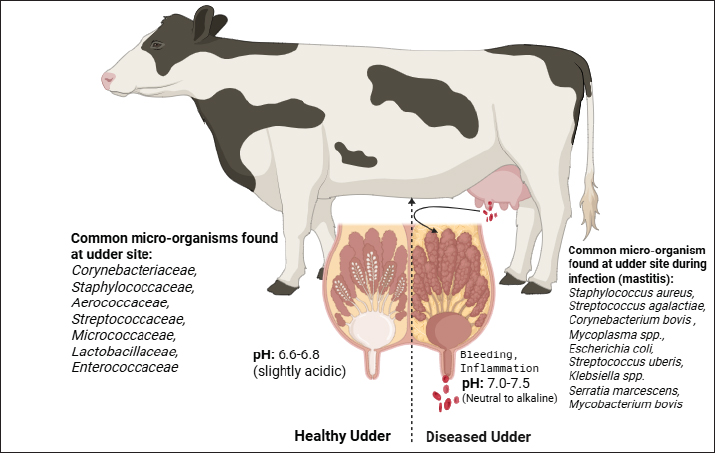
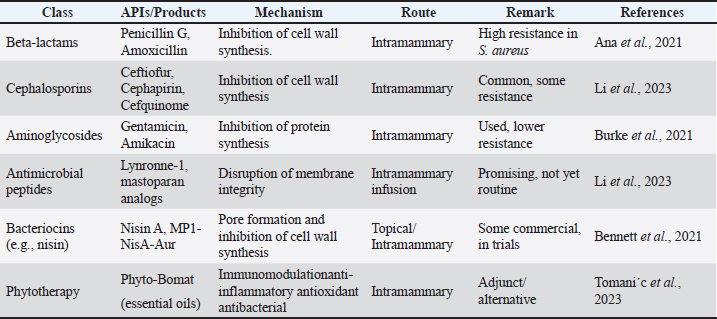
Fig. 1. Cross-sectional view of Cow’s udder (created with Biorender.com). Antibiotic usage in bovine mastitisAlthough antibiotics have traditionally been considered a cornerstone in mastitis treatment, their indiscriminate use on dairy farms has increased AMR in mastitis-causing pathogens, thus limiting treatment efficacy and posing a twofold threat to animal and human health (Tomazi et al., 2018). The inappropriate use of antibiotics makes it easier for antibiotic-resistant bacteria to develop and may disturb the normal flora in the mammary glands, allowing infections to keep coming back and leading to chronic inflammation. Many antibiotics such as beta-lactams, aminoglycosides, and tetracycline are commonly used to treat mastitis, and the one chosen depends on the pathogen and how sensitive it is. The difficulties associated with mastitis treatment have shifted interest toward hygiene, vaccination, and phage therapy as substitutes for antibiotics. Some of the widely used antibiotics are penicillin G, amoxicillin, ampicillin, cloxacillin, cephalosporins (ceftiofur, cephapirin), gentamicin, and oxytetracycline (Costa et al., 2021. They are generally delivered through an intramammary or intramuscular route, and the drug and product names include amoxicillin trihydrate (Amoxi-Mast®), ceftiofur hydrochloride (Spectramast™ LC), cloxacillin sodium (Dariclox®), pirlimycin hydrochloride (Pirsue®), cefquinome sulphate (BACTIVON), and cefquinome sulphate (C4ALL). Higher rates of multidrug-resistant bacteria in mastitis cases have encouraged vets to only use antibiotics that are effective and to make certain that the diagnosis is reliable. Although antibiotics are not supposed to be given to farm animals for weight gain in many areas, excessive use of antibiotics is exacerbating this issue. Besides, in modern food animal farms, antibiotics are commonly given to control diseases as part of farming management, and this can sometimes help spread AMR bacteria (Aarestrup, 2015). Antibiotics, especially beta-lactams and cephalosporins, continue to be the primary treatment of bovine mastitis, but AMR is becoming a significant problem. Newer preparations such as antimicrobial peptides, bacteriocins, and phytotherapy are actively being developed, and these methods may supplement and/or partially replace antibiotics in the future. Therapy should be selected based on the identification and susceptibility of pathogens to ensure maximum outcomes and reduce resistance (Maçi et al., 2025) (Table 1). Table 1. Current antimicrobials and alternative products.
Antibiotic resistance and residue concernsAs mastitis in dairy cattle is common and antibiotics are the main treatment given, there is a significant concern about antibiotic resistance and milk containing drugs after treatment (Cheng and Han, 2020; Makumi et al., 2021). Because of this, scientists have now explored other options, including natural antibacterials made from plants, as a replacement for antibiotics given by veterinarians (Subramani et al., 2017; Danev et al., 2023). People are becoming more aware of the negative effects of using antibiotics too much or in the wrong way, so researchers are paying more attention to the problem (Subramani et al., 2017). It is especially noteworthy that blending traditional herbal remedies such as turmeric (curcumin), Rakta Chandan, and Neem is getting attention for treating bovine mastitis and also decreasing the need for antibiotics (Almuzaini, 2023). Because antibiotics are being used so widely and sometimes inappropriately in humans and animals, AMR has become a major health issue across the globe (Ashraf et al., 2023). Using antibiotics more than needed has, over time, allowed human and animal pathogens to develop resistance (Rao et al., 2018). Since the 1950s, using antibiotics in livestock for various reasons such as treatment, prevention of diseases, and growth has been a permanent practice (et al., 2022). Using antibiotics in animals increases the rates of resistance in their bacteria, and this can cause human-related pathogens to develop resistance as well (Ajayi et al., 2024). Since human, animal, and environmental health are all interconnected, it helps to use a One Health approach when dealing with AMR (Mcewen and Collignon, 2018). Antimicrobial use, especially judicious use and avoidance of unnecessary use, is important in order to control AMR. High-risk practices include the use of antimicrobial agents that are critically important for human medicine to the entire animal population and the prolonged use of antimicrobial agents in feed for growth promotion (Collignon and Mcewen, 2019). As AMR increases in mastitis pathogens, it requires the dairy industry to respond in various ways, having effects on animal health, food safety, and the health of the community. Inappropriate use of antibiotics for dairy cows has been seen as an important reason why resistant bacteria are developing (Kazemzadeh et al., 2025). The rapid horizontal spread of AMR determinants between bacterial populations of the same and other animal species increases the rate of resistance spread, which further complicates the therapeutic problem (Chirstian et al., 2016). Antimicrobial-resistant infections can increase treatment costs considerably and may require the use of last-resort antimicrobials, which can be less effective and have a higher risk of adverse effects. Compounding the problem of antimicrobial residues in milk and dairy products is the public health concern for consumer safety and potential effects on the human gut microbiome and the risk of selecting antimicrobial-resistant bacteria (Rahman et al., 2021). If antibiotics are administered too close to milking time, some residues may be found in the milk. Consuming milk that has antibiotics can make a person resistant to antibiotics and sometimes can lead to allergic symptoms in some individuals (Marshall and Levy, 2011). It should be mentioned that the regulatory authorities set certain limits of maximum residue limits of veterinary medication in food products to guarantee consumer safety by outlining acceptable levels of residues in the law of veterinary drugs in the milk (Mcewen and Collignon, 2018; Molineri et al., 2021). Herbal remedies for mastitis controlSince antibiotic resistance and concerns about residues are rising, researchers are investigating new ways to address mastitis, and herbal remedies are being explored more regularly. In the past, herbal remedies were employed in veterinary medicine, such as using plant extracts, to treat problems like mastitis and ailments, and some of these preparations showed antimicrobial and anti-inflammatory qualities that could help with infections of mastitis (Makumi et al., 2021). Scholars and researchers are exploring herbal remedies more frequently as alternative treatments for mastitis re interested in plants as they may be sources of alternative medicines useful for fighting resistance to antibiotics (et al., 2023). Some chosen herbal extracts seem able to slow down bacteria and curb inflammation in the breast gland, which suggests they may replace antibiotics in treating mastitis. Several bioactive compounds found in plants, such as alkaloids, flavonoids, and terpenes, have antimicrobial properties and play a role in inhibiting bacterial pathogens. Because plant-derived antimicrobials are natural, they are thought to be safer than artificial chemical options (Almuzaini, 2023). Herbal drugs are often used together with antibiotics because they can destroy or inactivate special enzymes made by bacteria that remove antibiotics, weaken microbes, and reduce fevers (Bhardwaj et al., 2016). The adoption of herbal treatments in mastitis management may result in less risk of getting antibiotic resistance, less milk contamination, and wider acceptance among consumers. Herbal medicines are given a lot of consideration for providing lead chemical compounds and being environmentally safe (Babujanarthanam, 2017). Although plant products could be less effective against microorganisms than some antibiotics, they may be used with antibiotics to increase their ability to fight bacterial infections (Bhardwaj et al., 2016). Phytotherapeutic agents, such as Curcuma longa (curcumin, turmerone, ar-turmerone, curlone, atlantone, guaiacol, ethyl ferulate), Pterocarpus santalinus (santalin, isoflavone glucosides, savinin, calocedrin), and Azadirachta indica (azadirachtin, nimbin, salannin), have shown promising results in the management of bovine mastitis with reduced dependence on conventional antibiotics, addressing issues concerning AMR and residues in milk. The therapeutic value of these herbal agents can be attributed to their multifaceted bioactive compounds, which possess antimicrobial, anti-inflammatory, and tissue-regenerative activities (Silva and Fernandes Júnior, 2010). The recent interest in phytotherapeutic agents for veterinary medicine has encouraged scientific investigation into their safety and efficacy, with turmeric being investigated for its immunomodulatory activities and gut microbiota modulation (Allegra et al., 2022; Fan et al., 2025) TurmericCurcuma longa, the scientific name for turmeric, contains curcumin, which has strong anti-inflammatory and antioxidant properties. Antimicrobial tests have shown that curcumin can inhibit Staphylococcus aureus and Streptococcus agalactiae, which are more prevalent mastitis causes in several countries. The medication may soothe the udders and minimize the pain connected to mastitis. Research shows that curcumin can lower the amount of TNF-alpha and IL-6, which are linked to inflammation during mastitis. Various studies have looked at curcumin as a way to treat bovine mastitis (Li et al., 2023) Rakta ChandanAyurvedic medicine includes Rakta Chandan or red sandalwood (P. santalinus) mainly because of its anti-inflammatory and antimicrobial effects. It has santalol and santalbic acid as compounds, and these show antimicrobial properties against bacteria and fungi. Various pathogens, including antibiotic-resistant types, seem to be affected by the inhibition from Rakta Chandan. Because it reduces inflammation, it might lessen udder swelling and related problems in cows with mastitis (Biswas et al., 2021; Dahat et al., 2021). NeemMany benefits to human health are found in neem (Azadirachta indica), which is a widely used medicinal plant. Staphylococcus aureus has been effectively treated by Neem. Because of this, it may be useful in the management of mastitis-associated discomfort due to its anti-inflammatory and analgesic properties. It may have immune-enhancing properties in cows, thus protecting them from infections. Silva and Júnior state that knowledge is acquired through the understanding of the geographical reasons as well. Furthermore, changes in the microbiota of the mammary glands or mammary microbial dysbiosis may contribute to the development of mastitis (Silva and Fernandes Júnior, 2010). Traditional medicine research can point to many useful plants for finding new medicines (Lokesh Ravi et al., 2019; Perumal et al., 2023). Many medicinal plants are full of phytochemical compounds, and they have antioxidant and antimicrobial actions (Takaidza et al., 2015). Today’s drugs are often made from natural compounds, showing that traditional medicine plays a major role in the search for drugs (Lalam, 2020). A variety of secondary metabolites produced by plants help them fight off microbial pathogens (Mohsenipour and Hassanshahian, 2015). Whether you use plant extracts alone or in combination with usual antibiotics, this represents a well-rounded way to take care of mastitis. Although herbal interventions, particularly alternatives to antibiotics in bovine mastitis, are promising, there is a dire need to have standardized clinical studies, extended-effectiveness studies, detailed economic reports, as well as approaches to integrating these interventions in practice to reduce AMR and economic losses. Moreover, the beneficial environmental impact of phytotherapy is in accordance with the concept of one health that acknowledges the interdependence of human and animal health, as well as the environment (Sharun et al., 2021). The plant-based treatments are normally made up of natural, complex compounds, unlike most synthetic antibiotic metabolites, which tend to persist and accumulate within the ecosystem, leading to the selection of resistance over time and contamination of the ecosystem. These phytochemicals can be many times easily biodegraded and less environmentally harmful, and a possible approach to reduce the ecological impact of veterinary interventions by protecting animal and human health. (Burke and Adley, 2021) Combination therapies and reduced antibiotic dosageTaking different herbal extracts at the same time can result in them working better than alone, increasing their therapeutic benefits and decreasing the use of antibiotics (Selim et al., 2022). These mixes have the power to boost the action of antibiotics. The method can manage mastitis well and lowers the risk of developing antibiotic resistance or leaving residue behind in the milk (Silén et al., 2023). The most researched are Phytotherapy (remedies based on herbs), essential oils, bacteriophage therapy, probiotics, and nanotechnology-based therapies. Others, such as geraniol and Caesalpinia sappan, have good in vivo and in vitro outcomes, reduced risks of resistance and residues (Li et al., 2023). Phytotherapy was identified as the most studied method showing great efficiency against mastitis pathogens, such as multidrug-resistant S. aureus, coagulase-negative S. aureus (CoNS), Escherichia coli, and variability in the composition of natural products (Debruyn et al., 2025). Alternative methods of therapy, such as acupuncture and traditional herbal preparations have shown a positive prospect of improving therapy results and enhancing the milk quality parameters. Clinical data regarding the combination of traditional Chinese medicine and plant-based bioactive compounds into sustainable, holistic approaches to the management of mastitis have animal welfare, economic sustainability, and human health implications (Fan et al., 2025). The defined sources of antibacterials were plants having specific concentrations of phytochemicals. There should be standardization of the analytical techniques used. Plant species used were Allium sativum L., Azadirachta indica, and Eucalyptus globulus Labill which were analyzed primarily on Microbial species causing Mastitis, predominantly S. aureus and E. coli (Kaseke et al., 2025). The possibility of using herbal extracts and essential oils that have antimicrobial effects as an alternative to dealing with pathogens in the treatment of mastitis and possible treatment and management approaches, especially focusing on the development of herbal medications and natural cures in treating mastitis, which is a serious issue among the bovine community and dairy cattle, is studied (Sindhu et al., 2024). Medicinal plants with their well-established history are an excellent natural product resource used as an alternative therapy. Plants form an essential component of ethno-veterinary medicine used in the treatment of different diseases like bovine mastitis. (Allegra et al., 2022). As emphasized by many studies, a wide variety of plants such as Allium sativum, Azadirachta indica, Eucalyptus globulus, and many more are being researched along with improving techniques to utilize their active compounds. At the same time, studies on traditional forms of medicine such as Chinese medicine and ethno-veterinary practices are opening doors to a whole new area of mastitis management in a holistic manner. Thus, the entire world is coming together to develop standardized herbal formulations, which is a clear indication that phytotherapy is not just a theoretical approach, but a very vibrant area of research in the fight against AMR in dairy farming (Tomanić et al., 2023) (Fig. 2).
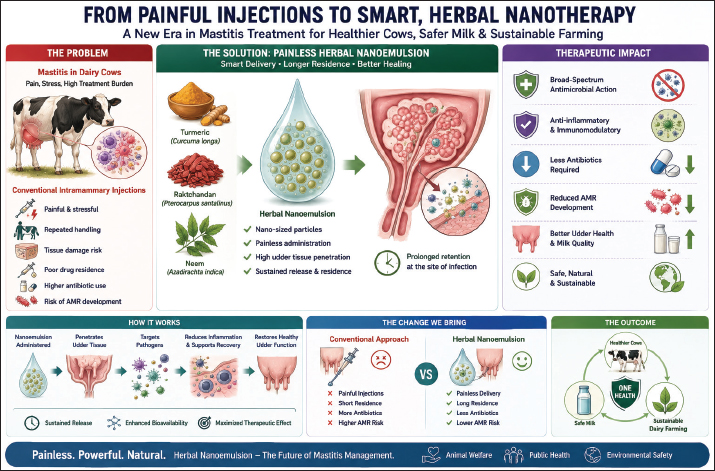
Fig. 2. Development of standardized herbal formulations, a very vibrant area of research in the fight against antimicrobial resistance in dairy farming. ConclusionMore studies are required to improve herbal formulations, assess their results in clinical trials, and check their effects on the health and quality of cows’ milk. More people are becoming interested in plant-based antimicrobials because they support natural and environmentally friendly methods for controlling diseases. The use of herbal medicines, either on their own or with smaller doses of antibiotics, can help fight bovine mastitis without causing so many antibiotic-resistant problems in cows. Herbal medicine is being used in more countries because it works well and is affordable. Scientists regard compounds from plants as potential agents for fighting various microbes. Traditional healers understand that some plants can be used to stop and cure infectious diseases. Plants have many different secondary metabolites that are useful in fighting off bacteria. When antibiotics are used a lot, bacteria often become resistant, so medicinal plants may be good sources for new antimicrobial drugs. Various actions of plant-derived compounds are possible based on their mechanisms. Drug-resistant bacteria and fungal infections have made it more complicated to treat infectious diseases. Using plant extracts and compounds known as phytochemicals to modify how living organisms react to stress is receiving greater attention from researchers. Because they act differently than conventional antibiotics, phytochemicals may be helpful in fighting resistant forms of bacteria. Combining antimicrobial agents with phytochemicals is a hopeful strategy being developed to fight resistance. It removes ways that microbes fight back, so drugs keep working on them. Using this method may result in the discovery of fresh treatments for infectious diseases. We need to try new strategies to fight the rise of multi-drug resistance in diseases. Due to antibiotic-resistant bacteria, scientists are now putting more effort into using plants to create new treatments. Hopes for fighting resistance are found in combining conventional antibiotics with essential oils. Such phyto-pharmaceuticals can help scientists find new ways to combat antibiotic resistance. Plants have been used to treat infectious illnesses for a long time, right from ancient times. Using plants for herbal medicine raises their popularity and is considered eco-friendlier. Phenolics, alkaloids, terpenoids, and lectins from plants may display antimicrobial functions. We clearly lack enough therapies, and there is an urgent call for new treatments to stop drug resistance from developing. These special chemicals from plants, known as secondary metabolites, play a role in stopping or killing bacteria. Using plant-based natural remedies is being explored to lower the use of antibiotics and fight resistance. A combination of phytochemicals and antibiotics might help improve the strength of treatment. Applying this approach may allow doctors to give fewer antibiotics to patients. People in developing countries can rely on medicinal plants, which are both cheaper and easier to obtain than manufactured antimicrobials. There are many bioactive compounds found in plant-based phytochemicals, and some have been proven to be antimicrobial. The novel researches should focus on standardization of phytotherapeutic formulas on the basis of measured active markers to guarantee reproducibility and consistency of the therapeutic effects. Examples of these calls include the demand to refine the formulas better, which requires a transition to chemically defined preparations that can be calibrated with respect to a set of bioactive compounds. As an example, in the case of Pterocarpus santalinus (Rakta chandan), it would be necessary to set minimum concentration limits on its main bioactive compound, santalol, to ensure that there is consistency in batches and that pharmacological activity is reproducible. This is in line with the current pharmacognostic principles, which hold that the efficacy and safety of a herbal preparation have a direct relationship with the exact concentration of known active principles. This is necessary to implement such quality control measures to prove that phytotherapy could be a valid adjunct or alternative to conventional antibiotics in veterinary medicine. AcknowledgmentsThe author sincerely thanks Dr. Suhit Gilda for his expert guidance during the drafting process, his thorough input on all aspects of the study, and his critical review of the work to ensure it met the required expectations. FundingThis work did not receive any specific grant from funding agencies in the public, commercial, or not-for-profit sectors. Authors' contributionsDr. Swati C. Jagdale (Corresponding Author): Provided overall guidance and study conception, established the manuscript framework and writing guidelines, performed critical revisions and updates during drafting, carried out proof-checking, and approved the final version for submission. Mr. Namdeo Shinde (Co-author): Prepared the initial and subsequent drafts of the manuscript as per the directives of the corresponding author, incorporated revisions as advised, and assisted in formatting and referencing Ethical approvalThis study did not involve human participants, animal subjects, or any confidential personal data. Therefore, no ethical approval or informed consent was required. Conflict of interestThe authors have no conflicts of interest regarding this investigation. Data availabilityAll data are available in the revised manuscript. ReferenceAarestrup, F.M. 2015. The livestock reservoir for antimicrobial resistance: a personal view on changing patterns of risks, effects of interventions and the way forward. Phil. Trans. Roy. Soc. B. Biol. Sci. 370(1670), 20140085; doi:10.1098/rstb.2014.0085 Ahmad Qadri, S.I., Shaheen, M., Baig, S.U., Malik, H., Bhat, Z.I., Bhat, I.A., Dar, P.A., Yousuf, R.W., Iqbal, R.M., Bhat, A.M., Haq, A.U., Ashraf, I., Parray, O.R., Shaikh, F.A., Mir, B.A. and Khaliq, T. 2017. Aetio-prevalence study on bovine subclinical mastitis in lactating Jersey cross-bred cows. Int. J. Curr. Microbiol. Appl. Sci. 6(10), 3354; doi:10.20546/ijcmas.2017.610.392 Ajayi, A.O., Odeyemi, A.T., Akinjogunla, O.J., Adeyeye, A.B. and Ayo-Ajayi, I. 2024. Review of antibiotic-resistant bacteria and antibiotic resistance genes within the One Health framework. InfectEcol. &. Epidemiology 14(1), 1–16; doi: 10.1080/20008686.2024.2312953 Ali, K.N., Sulaiman, R.R., Marif, H.F. and Ali, B.A. 2024. Mastitis in dairy cows: current knowledge. Basrah. J. Vet. Res. 23(2), 162–176; doi:10.23975/bjvr.2024.183975 Allegra, A., Mirabile, G., Ettari, R., Pioggia, G. and Gangemi, S. 2022. The impact of curcumin on immune response: an immunomodulatory strategy to treat sepsis. Int. J. Mol. Sci. 23, 14710; doi:10.3390/ijms232314710 Almuzaini, A.M. 2023. Phytochemicals: potential alternative strategy to fight Salmonella enterica serovar Typhimurium. Front. Vet. Sci. 10, 1–11; doi:10.3389/fvets.2023.1188752 Angelopoulou, A., Harris, H.M.B., Warda, A.K., O'Shea, C.A., Lavelle, A., Ryan, C.A., Dempsey, E., Stanton, C., Hill, C. and Ross, R.P. 2024. Somatic cell count as an indicator of subclinical mastitis and increased inflammatory response in asymptomatic lactating women. Microbiol. Spectr. 12(10), 1–15; doi: 10.1128/spectrum.04051-23 Ashraf, M.V., Pant, S., Khan, M.A.H., Shah, A.A., Siddiqui, S., Jeridi, M., Alhamdi, H.W.S. and Ahmad, S. 2023. Phytochemicals as antimicrobials: prospecting Himalayan medicinal plants as source of alternate medicine to combat antimicrobial resistance. Pharmaceuticals 16(6), 881; doi:10.3390/ph16060881 Babujanarthanam, R. 2017. Modification in extracellular polymeric substances of Staphylococcus aureus using Sesbania grandiflora. J. Nanomed. Res. 6(1), 1–5; doi:10.15406/jnmr.2017.06.00143 Bennett, S., Ben Said, L., Lacasse, P., Malouin, F. and Fliss, I. 2021. Susceptibility to nisin, bactofencin, pediocin and reuterin of multidrug resistant Staphylococcus aureus, Streptococcus dysgalactiae and Streptococcus uberis causing bovine mastitis. Antibiotics 10, 1418; doi:10.3390/antibiotics10111418 Bhardwaj, M., Singh, B.R., Sinha, D.K., Kumar, V., Prasanna Vadhana, O.R. et al. 2016. Potential of herbal drug and antibiotic combination therapy: a new approach to treat multidrug resistant bacteria. Pharm. Anal. Acta 7, 523.1–14; doi:10.4172/2153-2435.1000523 Biswas, T.K., Chakrabarti, S., Auddy, B., Mondal, T., Pandit, S. and Seal, T. 2021. Pterocarpus santalinus: a wonder gift of nature. In Evidence based validation of traditional medicines. Mandal R Chakraborty. and Sen Springer. Evidence Based Validation of Traditional Medicines. pp: 935–964; doi: 10.1007/978-981-15-8127-4_44 Burke, N. and Adley, C.C. 2021. Prevalence of intramammary antibiotic usage in dairy farming. J. Dairy. Res. 88, 176–178; doi:10.1017/S0022029921000431 Cheng, W.N. and Han, S.G. 2020. Bovine mastitis: risk factors, therapeutic strategies, and alternative treatments- A review. Asian-Australasian. J. Anim. Sci. 33(11), 1699; doi:10.5713/ajas.20.0156 Collignon, P.J. and Mcewen, S.A. 2019. One Health-Its importance in helping to better control antimicrobial resistance. Trop. Med. Infect. Dis. 4(1), 22; doi:10.3390/tropicalmed4010022 Costa, G.M.D., Ribeiro, N.A., Gonçalves, M.S., Silva, J.R.D., Custódio, D.A.D.C. and Mian, G.F. 2021. Antimicrobial susceptibility profile of Streptococcus agalactiae strains isolated from bovine mastitis. Braz. J. Vet. Res. Anim. Sci. 58, e178109; doi:10.11606/issn.1678-4456.bjvras.2021.178109 Dahat, Y., Saha, P., Mathew, J.T., Chaudhary, S.K., Srivastava, A.K. and Kumar, D. 2021. Traditional uses, phytochemistry and pharmacological attributes of Pterocarpus santalinus and future directions: a review. J. Ethnopharmacology 276, 114127; doi:10.1016/j.jep.2021.114127 Danev, N., Harman, R.M., Oliveira, L., Huntimer, L. and Van De Walle, G.R. 2023. Bovine milk-derived cells express transcriptome markers of pluripotency and secrete bioactive factors with regenerative and antimicrobial activity. Scientific. Rep. 13(1), 1–12; doi:10.1038/s41598-023-39833-9 Debruyn, E., Ghumman, N.Z., Peng, J., Tiwari, H.K. and Gogoi-Tiwari, J. 2025. Alternative approaches for bovine mastitis treatment: a critical review of emerging strategies, their effectiveness and limitations. Res. Vet. Sci. 185, 105557; doi:10.1016/j.rvsc.2025.105557 Economou, V. and Gousia, P. 2015. Agriculture and food animals as a source of antimicrobial-resistant bacteria. InfectDrug. Resist. 8, 49; doi:10.2147/idr.s55778 Fan, X., Qadeer, A., Asiri, M., Alzahrani, F.M., Alzahrani, K.J., Alsharif, K.F., Khan, M.Z. and Jiang, X. 2025. Traditional Chinese medicine and plant-derived bioactive compounds as sustainable alternatives to antibiotics in bovine mastitis: a review. Front. Vet. Sci. 12, 1642647; doi:10.3389/fvets.2025.1642647. Gianneechini, R., Concha, C., Rivero, R., Delucci, I. and López, J.M. 2002. Occurrence of clinical and sub-clinical mastitis in dairy herds in the west littoral region in Uruguay. Acta. Veterinaria. Scandinavica. 43(4), 221–230; doi:10.1186/1751-0147-43-221 Hoque, M. N., Istiaq, A., Rahman, M. S., Islam, M. R., Anwar, A., Siddiki, A. Z., Sultana, M., Crandall, K. A., and Hossain, M. A. 2020. Microbiome dynamics of bovine mastitis progression and genomic determinants. bioRxiv; doi: 10.1101/2020.07.13.200808. Janevsкi, A., Cvetkovikj, I., Kiprijanovska, S., Dimovski, A., Davalieva, K., Angelovski, L., Kjosevski, M. and Mitrov, D. 2020. Prevalence of subclinical mastitis pathogens in small dairy farms in Republic of North Macedonia. Macedonian Vet. Rev. 43(1), 23; doi: 10.2478/macvetrev-2020-0010 Kabeta, T., Tasow, K., Jaleta, H. and Bashew, A. 2017. Screening of bovine mastitis in lactating dairy cows in and around Debra Tsige Town, North Ethiopia. J. Med. Microbiol. &. Diagnosis 6(4), 1–5; doi:10.4172/2161-0703.1000262 Kaseke, T.B., Chikwambi, Z., Gomo, C., Mashingaidze, A.B. and Murungweni, C. 2023. Antibacterial activity of medicinal plants on the management of mastitis in dairy cows: a systematic review. Vet. Med. Sci. 9, 2800–2819; doi:10.1002/vms3.1268 Kazemzadeh, S., Korneeva, O., Shabunin, S. and Syromyatnikov, M. 2025. Antibiotic resistance in mastitis-causing bacteria: exploring antibiotic-resistance genes, underlying mechanisms, and their implications for dairy animal and public health. Open. Vet. J. 15(9), 3980–4006; doi:10.5455/OVJ.2025.v15.i9.5 Komba, E. and Kashoma, I. P. 2020. Prevalence and economic impacts of retained placenta and subclinical mastitis in Tanzanian dairy cows. Res. Square; doi: 10.21203/rs.2.20377/v1 Lalam, D.R. 2020. Antimicrobial and phytochemical analysis of methanolic leaf extracts of Terminalia catappa against some human pathogenic bacteria. J. Pharmacognosy Phytochem. 9(1), 1200; doi:10.22271/phyto.2020.v9.i1t.10621 Li, R., Fang, H., Shen, J., Jin, Y., Zhao, Y., Wang, R., Fu, Y., Tian, Y., Yu, H. and Zhang, J. 2021. Curcumin alleviates LPS-induced oxidative stress, inflammation and apoptosis in bovine mammary epithelial cells via the NFE2L2 signaling pathway. Toxins 13(3), 208; doi:10.3390/toxins13030208 Li, X., Xu, C., Liang, B., Kastelic, J.P., Han, B., Tong, X. and Gao, J. 2023. Alternatives to antibiotics for treatment of mastitis in dairy cows. Front. Vet. Sci. 10, 1160350; doi:10.3389/fvets.2023.1160350 Lokesh Ravi., Divya Jindam., Suganya Kumaresan., Venkatesh Selvaraj. and Jayarama Reddy. 2019. Anti-methicillin resistant Staphylococcus aureus potential of phytochemicals in Terminalia catappa and their proposed in silico mechanism of action. Asian J. Pharm. Clin. Res. 12(10), 133; doi:10.22159/ajpcr.2019.v12i10.34705 Maçi, R., Meçaj, R., Sulçe, M., Plaku, F., Xhafa, A., Sallaku, E., Koleci, X. and Tafaj, M. 2025. The relationship between the occurrence of subclinical mastitis and milk quality in medium-sized Holstein cow farms in Albania. Italian. J. Food. Saf. 14, 13748; doi:10.4081/ijfs.2025.13748 Makumi, A., Mhone, A.L., Odaba, J., Guantai, L. and Svitek, N. 2021. Phages for Africa: the potential benefit and challenges of phage therapy for the livestock sector in Sub-Saharan Africa. Antibiotics 10(9), 1085; doi:10.3390/antibiotics10091085 Marshall, B.M. and Levy, S.B. 2011. Food animals and antimicrobials: impacts on human health. Clin. Microbiol. Rev. 24(4), 718; doi:10.1128/cmr.00002-11 Mcewen, S.A. and Collignon, P.J. 2018. Antimicrobial resistance: a One Health perspective. Microbiol. Spectr. 6(2), 1–26; doi:10.1128/microbiolspec.arba-0009-2017 Mdegela, R.H., Ryoba, R., Karimuribo, E.D., Phiri, E.J., Loken, T., Reksen, O., Mtengeti, E. and Urio, N.A. 2009. Prevalence of clinical and subclinical mastitis and quality of milk on smallholder dairy farms in Tanzania. J. South. Afr. Vet. Assoc. 80(3), 163; doi:10.4102/jsava.v80i3.195 Mohsenipour, Z. and Hassanshahian, M. 2015. The inhibitory effect of Thymus vulgaris extracts on the planktonic form and biofilm structures of six human pathogenic bacteria. DOAJ 5(4), 309. Molineri, A.I., Camussone, C., Zbrun, M.V., Suárez Archilla, G., Cristiani, M., Neder, V., Calvinho, L. and Signorini, M. 2021. Antimicrobial resistance of Staphylococcus aureus isolated from bovine mastitis: systematic review and meta-analysis. Prev. Vet. Med. 188, 105261; doi:10.1016/j.prevetmed.2021.105261 Paape, M.J., Bannerman, D.D., Zhao, X. and Lee, J.W. 2003. The bovine neutrophil: structure and function in blood and milk. Vet. Res. 34, 597–627; doi:10.1051/vetres:2003024 Perumal, S., Radhakrishnan, R., Sathasivam, R., Arun, M., Song, J. and Park, S.U. 2023. Endophytes: a vital source of medicine- A review. Trop. J. Pharm. Res. 22(5), 1133; doi:10.4314/tjpr.v22i5.28 Rahman, M.S., Hassan, M.M. and Chowdhury, S. 2021. Determination of antibiotic residues in milk and assessment of human health risk in Bangladesh. Heliyon 7, 7739; doi:10.1016/j.heliyon.2021.e07739 Rao M, Padyana S, Dipin KM, Kumar S, Nayak B, Varela MF. Antimicrobial compounds of plant origin as efflux pump inhibitors: new avenues for controlling multidrug resistant pathogens. J. Antimicrob. Agents. 4(1),1–6; doi:10.4172/2472-1212.1000159 Rodríguez, J.M. and Fernández, L. 2016. Infectious mastitis during lactation: a mammary dysbiosis model, prebiotics and probiotics in human milk, Academic Press. Elsevier eBooks. Elsevier BV, pp: 401–428; doi: 10.1016/B978-0-12-802725-7.00015-4 Santman-Berends, I.M.G.A., Olde Riekerink, R.G.M., Sampimon, O.C., Van Schaik, G. and Lam, T.J.G.M. 2012. Incidence of subclinical mastitis in Dutch dairy heifers in the first 100 days in lactation and associated risk factors. J. Dairy Sci. 95(5), 2476; doi:10.3168/jds.2011-4766 Selim, S., Almuhayawi, M.S., Alharbi, M.T., Al Jaouni, S.K., Alharthi, A., Abdel-Wahab, B.A., Ibrahim, M.A.R., Alsuhaibani, A.M., Warrad, M. and Rashed, K. 2022. Insights into the antimicrobial, antioxidant, anti-SARS-CoV-2 and cytotoxic activities of Pistacia lentiscus bark and phytochemical profile; In silico and in vitro study. Antioxidants 11(5), 930; doi:10.3390/antiox11050930 Sharun, K., Dhama, K., Tiwari, R., Gugjoo, M.B., Iqbal Yatoo, M., Patel, S.K., Pathak, M., Karthik, K., Khurana, S.K., Singh, R., Puvvala, B., Amarpal., Singh, R., Singh, K.P. and Chaicumpa, W. 2021. Advances in therapeutic and managemental approaches of bovine mastitis: a comprehensive review. Vet. Quart. 41(1), 107–136; doi:10.1080/01652176.2021.1882713 Silén, H., Salih, E.Y.A., Mgbeahuruike, E.E. and Fyhrqvist, P. 2023. Ethnopharmacology, antimicrobial potency, and phytochemistry of African Combretum and Pteleopsis species (Combretaceae): a review. Antibiotics 12(2), 264; doi:10.3390/antibiotics12020264 Silva, N. and Fernandes Júnior, A. 2010. Biological properties of medicinal plants: a review of their antimicrobial activity. J. Venomous Animals Toxins Including Trop. Dis. 16(3), 402–413; doi: 10.1590/S1678-91992010000300006 Sindhu, S., Saini, T., Rawat, H.K., Chahar, M., Grover, A., Ahmad, S. and Mohan, H. 2024. Beyond conventional antibiotics approaches: global perspectives on alternative therapeutics including herbal prevention, and proactive management strategies in bovine mastitis. Microbial Pathogenesis 196, 106989; doi:10.1016/j.micpath.2024.106989 Sinha, M.K., Thombare, N.N. and Mondal, B. 2014. Subclinical mastitis in dairy animals: incidence, economics, and predisposing factors. Scientific. World. J. 2014, 1–4; doi:10.1155/2014/523984 So., Patil, S. and , S.J. 2019. Introductory chapter: bovine science - A key to sustainable development.In IntechOpen eBooks. IntechOpen, https://doi.org/10.5772/intechopen.83723 Sri Balaji, N., V. Sankar, P. Senthilkumar, P. Nalini, J. Muralidharan and Senthilkumar, A. 2020. Effect of subclinical mastitis on milk profile changes in jersey cross bred dairy cows. Int. J. Curr. Microbiol. App. Sci. 9(05), 2423–2426; doi: 10.20546/ijcmas.2020.905.276 Subramani, R., Narayanasamy, M. and Feussner, K.D. 2017. Plant-derived antimicrobials to fight against multi-drug-resistant human pathogens. 3 Biotech. 7(3), 1–15; doi:10.1007/s13205-017-0848-9 Sumon, S.M.M.R., Parvin, M.S., Ehsan, M.A. and Islam, M.T. 2020. Relationship between somatic cell counts and subclinical mastitis in lactating dairy cows. Vet. World 13(8), 1709–1713; doi:10.14202/vetworld.2020.1709-1713 Takaidza, S.2015. Biological activities of species in the genus Tulbaghia: a review. Afr. J. Biotechnol. 14(45), 3037; doi:10.5897/ajb2015.14970 Tomanić, D., Kladar, N., Radinović, M., Stančić, I., Erdeljan, M., Stanojević, J., Galić, I., Bijelić, K. and Kovačević, Z. 2023. Intramammary ethno-veterinary formulation in bovine mastitis treatment for optimization of antibiotic use. Pathogens 12, 259; doi:10.3390/pathogens12020259 Tomazi, T., Ferreira, G.C., Orsi, A.M., Gonçalves, J.L., Ospina, P.A., Nydam, D.V., Moroni, P. and Dos Santos, M.V. 2018. Association of herd-level risk factors and incidence rate of clinical mastitis in 20 Brazilian dairy herds. Prev. Vet. Med. 161(9), 9; doi:10.1016/j.prevetmed.2018.10.007 Urban-Chmiel, R., Marek, A., Stępień-Pyśniak, D., Wieczorek, K., Dec, M., Nowaczek, A. and Osek, J. 2022. Antibiotic resistance in bacteria-A review. Antibiotics 11(8), 1079; doi:10.3390/antibiotics11081079 V. T. Nair, D., Venkitanarayanan, K. and Kollanoor Johny, A. 2018. Antibiotic-resistant Salmonella in the food supply and the potential role of antibiotic alternatives for control. Foods 7(10), 167; doi:10.3390/foods7100167/ | ||
| How to Cite this Article |
| Pubmed Style Shinde NG, Jagdale SC. Use of antibiotics in bovine mastitis: Considering drug resistance, safety issues with residue concerns, and exploring herbal remedies. Open Vet. J.. 2026; 16(7): 4305-4314. doi:10.5455/OVJ.2026.v16.i7.18 Web Style Shinde NG, Jagdale SC. Use of antibiotics in bovine mastitis: Considering drug resistance, safety issues with residue concerns, and exploring herbal remedies. https://www.openveterinaryjournal.com/?mno=309268 [Access: July 10, 2026]. doi:10.5455/OVJ.2026.v16.i7.18 AMA (American Medical Association) Style Shinde NG, Jagdale SC. Use of antibiotics in bovine mastitis: Considering drug resistance, safety issues with residue concerns, and exploring herbal remedies. Open Vet. J.. 2026; 16(7): 4305-4314. doi:10.5455/OVJ.2026.v16.i7.18 Vancouver/ICMJE Style Shinde NG, Jagdale SC. Use of antibiotics in bovine mastitis: Considering drug resistance, safety issues with residue concerns, and exploring herbal remedies. Open Vet. J.. (2026), [cited July 10, 2026]; 16(7): 4305-4314. doi:10.5455/OVJ.2026.v16.i7.18 Harvard Style Shinde, N. G. & Jagdale, . S. C. (2026) Use of antibiotics in bovine mastitis: Considering drug resistance, safety issues with residue concerns, and exploring herbal remedies. Open Vet. J., 16 (7), 4305-4314. doi:10.5455/OVJ.2026.v16.i7.18 Turabian Style Shinde, Namdeo G., and Swati C. Jagdale. 2026. Use of antibiotics in bovine mastitis: Considering drug resistance, safety issues with residue concerns, and exploring herbal remedies. Open Veterinary Journal, 16 (7), 4305-4314. doi:10.5455/OVJ.2026.v16.i7.18 Chicago Style Shinde, Namdeo G., and Swati C. Jagdale. "Use of antibiotics in bovine mastitis: Considering drug resistance, safety issues with residue concerns, and exploring herbal remedies." Open Veterinary Journal 16 (2026), 4305-4314. doi:10.5455/OVJ.2026.v16.i7.18 MLA (The Modern Language Association) Style Shinde, Namdeo G., and Swati C. Jagdale. "Use of antibiotics in bovine mastitis: Considering drug resistance, safety issues with residue concerns, and exploring herbal remedies." Open Veterinary Journal 16.7 (2026), 4305-4314. Print. doi:10.5455/OVJ.2026.v16.i7.18 APA (American Psychological Association) Style Shinde, N. G. & Jagdale, . S. C. (2026) Use of antibiotics in bovine mastitis: Considering drug resistance, safety issues with residue concerns, and exploring herbal remedies. Open Veterinary Journal, 16 (7), 4305-4314. doi:10.5455/OVJ.2026.v16.i7.18 |


