





| Case Report | ||
Open Vet. J.. 2026; 16(7): 4970-4973
Open Veterinary Journal, (2026), Vol. 16(7): 4970-4973 Short Communication Breeding record of the Squacco Heron Ardeola ralloides (Scopoli, 1769) in LibyaAbdalati Elsowayeb 1,2, Khaled Alroteb1 and Khaled Salem Etayeb3,4*1Libyan Organization for Conservation of Nature (LOCN), Misrata, Libya 2Faculty of Science, Misurata University, Misrata, Libya 3Zoology Department, Faculty of Science, University of Tripoli, Tripoli, Libya 4Libyan Society for Birds (LSB), Tripoli, Libya *Corresponding Author: Khaled Salem Etayeb. Zoology Department, Faculty of Science, University of Tripoli, Tripoli, Libya. Email: Khaledetayeb [at] yahoo.com Submitted: 06/02/2026 Revised: 06/06/2026 Accepted: 15/06/2026 Published: XX/XX/XX © 2025 Open Veterinary Journal
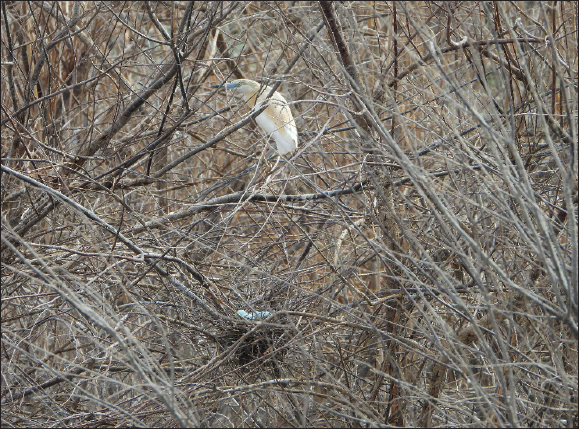
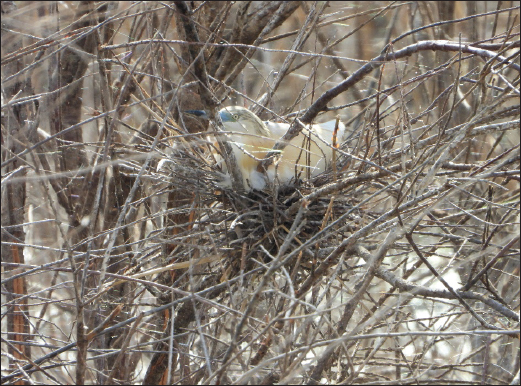
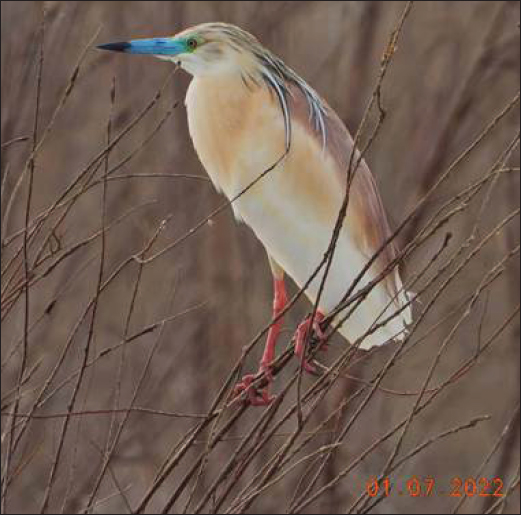
AbstractBackground: The Squacco Heron Ardeola ralloides is a Palearctic migrant widely recorded in Libya during passage, but breeding has remained unconfirmed. Case Description: We report the first documented breeding attempt of the species in Libya, recorded in July 2022 at treated wastewater ponds in Wadi Sasso, north-western Libya. A single breeding pair was observed incubating four eggs in a tree nest within the pond system. Conclusion: This observation represents the first confirmed breeding record for the country and highlights the potential importance of artificial wetlands for heron conservation in arid regions. Keywords: Squacco Heron, Breeding record, Ardeola ralloides, Artificial wetlands, Libya. IntroductionThe Squacco Heron Ardeola ralloides is a monotypic species that breeds mainly in southern and central Europe and western Asia and winters in sub-Saharan Africa. In North Africa, the species is primarily known as a passage migrant, frequenting freshwater wetlands during spring and autumn migration (Bundy, 1976; Isenmann et al., 2016). In Libya, A. ralloides has been reported regularly during migration periods from July to October and from March to May or June, with observations distributed across Tripolitania, Cyrenaica, and Fezzan (Snow and Manning, 1954; Erard and Larigauderie, 1972; Bundy, 1976; Isenmann et al., 2016). Despite several late spring and early summer records of possible breeding, no confirmed nesting records have been previously documented. In this short communication, we present the first confirmed breeding attempt of the Squacco Heron in Libya. Case DetailsThe breeding record was obtained from the treated wastewater ponds of Wadi Sasso (32°09′16.7′′N, 14°47′07.0′′E), north-western Libya. The site comprises a series of artificial ponds surrounded by sparse vegetation and scattered trees. Water levels fluctuate seasonally, creating temporary wetland conditions suitable for waterbirds. The visits were averaged twice a month. ResultsThe first observation of Squacco Heron in breeding plumage at Wadi Sasso was made on July 1, 2022 (Fig. 1). Individuals had been visiting the site regularly since April 2022, with up to eight birds recorded throughout July and August. On July 14, 2022, a single breeding pair incubated four eggs in a nest constructed from tree twigs (Fig. 2). The nest was located in the middle of a tree growing within one of the ponds, at a height of approximately 1.5 m above the water surface (Fig. 3). The tree had developed during a period when the pond was dry and subsequently partially dried after prolonged inundation.
Fig. 3. Squacco Heron’s nest in the middle of a tree (© Elsowayeb).
Fig. 2. Squacco Heron incubating the eggs (© Elsowayeb).
Fig. 1. Squacco Heron in breeding plumage at Wadi Sasso (© Elsowayeb). Only one nest was recorded during the study period. No hatching events or fledged juveniles were observed. It is likely that the nest was flooded because it became clear that treated water had been released onto it during the fourth visit to the site, filling the basin and flooding all the trees. By September, the species had disappeared from the site, coinciding with the onset of autumn migration. DiscussionThis observation represents the first confirmed breeding record of A. ralloides in Libya. Previous studies have reported the existence of this species, particularly in Tripolitania and Cyrenaica (Bundy, 1976; Isenmann et al., 2016), but no breeding has been documented. Therefore, the Wadi Sasso record fills an important gap in the known breeding distribution of the species in North Africa. The use of treated wastewater ponds as breeding sites highlights the growing importance of artificial wetlands for waterbirds in arid and semiarid regions (Smart et al., 2006). Similar habitats in North Africa and the Mediterranean support breeding populations of herons and other wetland birds (Bouzid et al., 2023) ConclusionFuture research should prioritize the development of standardized monitoring protocols for artificial wetlands to ensure their long-term ecological functionality and resilience. Regular assessment of water quality parameters (e.g., nutrient loads, dissolved oxygen, and pH), vegetation dynamics, and biodiversity indices is essential for evaluating system performance. In addition, adaptive management strategies, such as periodic sediment removal, vegetation harvesting, and hydrological adjustments, should be implemented to maintain treatment efficiency and habitat value. The integration of remote sensing technologies and automated sensors could further enhance monitoring accuracy and reduce operational costs. Ultimately, a combination of continuous monitoring and flexible management practices will be critical for optimizing the sustainability and effectiveness of artificial wetlands in diverse environmental contexts. AcknowledgmentsThe authors would like to thank the staff of the Sasso wastewater treatment plant for their cooperation during the visits. Conflict of interestThe authors have no conflicts of interest to declare. FundingNo grant was received for this study, and it has been self-funded. Author contributionsProf Khaled S. Etayeb is the corresponding author of this article. Elsowayeb, A. and Alroteb, K. are responsible for the study observations. All authors contributed equally to this work. Data availabilityAll data are provided in the revised manuscript. ReferencesBouzid, A., Chedad, A., Samraoui, F. and Samraoui, B. 2023. Range expansion of nesting Squacco Heron Ardeola ralloides and Black-crowned Night Heron Nycticorax nycticorax in the Sahara. Wetlands Ecol. Manage. 31, 467–478; doi:10.1007/s11273-023-09928-1 Bundy, G. 1976. The birds of Libya: supplement. London, UK: British Ornithologists’ Union. Erard, C. and Larigauderie, A. 1972. Observations ornithologiques en Libye. Alauda 40, 225–250. Isenmann, P., Hering, J., Brehme, S., Essghaier, M., Etayeb, K., Bourass, E. and Azafzaf, H. 2016. Oiseaux de Libye. Birds of Libya. Paris, France: SEOF/MNHN. p 302. Smart, M., Essghaier, M.F., Etayeb, K., Hamza, A., Azafzaf, H., Baccetti, N. and Defos Du Rau, P. 2006. Wetlands and wintering waterbirds in Libya, January 2005 and 2006. Wildfowl Wetlands Trust 56, 172–191. Snow, D.W. and Manning, A. 1954. The birds of the central Sahara. Ibis 96, 1–58. | ||
| How to Cite this Article |
| Pubmed Style Elsowayeb A, Alroteb K, Etayeb KS. Breeding record of the Squacco Heron Ardeola ralloides (Scopoli, 1769) in Libya. Open Vet. J.. 2026; 16(7): 4970-4973. doi:10.5455/OVJ.2026.v16.i7.74 Web Style Elsowayeb A, Alroteb K, Etayeb KS. Breeding record of the Squacco Heron Ardeola ralloides (Scopoli, 1769) in Libya. https://www.openveterinaryjournal.com/?mno=309609 [Access: July 27, 2026]. doi:10.5455/OVJ.2026.v16.i7.74 AMA (American Medical Association) Style Elsowayeb A, Alroteb K, Etayeb KS. Breeding record of the Squacco Heron Ardeola ralloides (Scopoli, 1769) in Libya. Open Vet. J.. 2026; 16(7): 4970-4973. doi:10.5455/OVJ.2026.v16.i7.74 Vancouver/ICMJE Style Elsowayeb A, Alroteb K, Etayeb KS. Breeding record of the Squacco Heron Ardeola ralloides (Scopoli, 1769) in Libya. Open Vet. J.. (2026), [cited July 27, 2026]; 16(7): 4970-4973. doi:10.5455/OVJ.2026.v16.i7.74 Harvard Style Elsowayeb, A., Alroteb, . K. & Etayeb, . K. S. (2026) Breeding record of the Squacco Heron Ardeola ralloides (Scopoli, 1769) in Libya. Open Vet. J., 16 (7), 4970-4973. doi:10.5455/OVJ.2026.v16.i7.74 Turabian Style Elsowayeb, Abdalati, Khaled Alroteb, and Khaled Salem Etayeb. 2026. Breeding record of the Squacco Heron Ardeola ralloides (Scopoli, 1769) in Libya. Open Veterinary Journal, 16 (7), 4970-4973. doi:10.5455/OVJ.2026.v16.i7.74 Chicago Style Elsowayeb, Abdalati, Khaled Alroteb, and Khaled Salem Etayeb. "Breeding record of the Squacco Heron Ardeola ralloides (Scopoli, 1769) in Libya." Open Veterinary Journal 16 (2026), 4970-4973. doi:10.5455/OVJ.2026.v16.i7.74 MLA (The Modern Language Association) Style Elsowayeb, Abdalati, Khaled Alroteb, and Khaled Salem Etayeb. "Breeding record of the Squacco Heron Ardeola ralloides (Scopoli, 1769) in Libya." Open Veterinary Journal 16.7 (2026), 4970-4973. Print. doi:10.5455/OVJ.2026.v16.i7.74 APA (American Psychological Association) Style Elsowayeb, A., Alroteb, . K. & Etayeb, . K. S. (2026) Breeding record of the Squacco Heron Ardeola ralloides (Scopoli, 1769) in Libya. Open Veterinary Journal, 16 (7), 4970-4973. doi:10.5455/OVJ.2026.v16.i7.74 |


