Open Veterinary Journal, (2026), Vol. 16(7): 4457-4465
Research Article
10.5455/OVJ.2026.v16.i7.30
Effects of N-acetyl-L-cysteine or Origanum vulgare oil on the semen quality, physiological responses, and blood biochemistry of heat-stressed goat bucks
Noura H. Gouda1, Hamzah R. Abdulhameed2, Amgad A. Abu El-Ella3, Nehal M. El-Hendawy3,
Sameh A. Abdelnour4* and Mahmoud S. Abd-Allah1
1Department of Animal and Poultry Production, Faculty of Technology & Development, Zagazig University, Zagazig, Egypt
2Department of Chemistry, College of Education, University of Samarra, Samarra, Iraq
3Sheep & Goats Research Department, Agricultural Research Center, Animal Production Research Institute, Dokki, Egypt
4Department of Animal Production, Faculty of Agriculture, Zagazig University, Zagazig, Egypt
*Corresponding Author: Sameh A. Abdelnour. Department of Animal Production, Faculty of Agriculture, Zagazig University, Zagazig, Egypt. Email: samehtimor86 [at] gmail.com
Submitted: 10/02/2026 Revised: 06/06/2026 Accepted: 15/06/2026 Published: 11/07/2026
© 2025 Open Veterinary Journal
This is an Open Access article distributed under the terms of the Creative Commons Attribution-Non Commercial-No Derivatives License (http://creativecommons.org/licenses/by-nc-nd/4.0/), which permits non-commercial re-use, distribution, and reproduction in any medium, provided the original work is properly cited, and is not altered, transformed, or built upon in any way.
ABSTRACT
Background: Heat stress (HS) is a major environmental challenge that significantly affects the reproductive health of livestock.
Aim: This study aimed to explore the efficacy of N-acetyl-L-cysteine (NAC) or Origanum vulgare oil (OV) on the physiological attributes, semen traits, and blood biochemistry of heat-stressed goat bucks.
Methods: A total of 24 goat bucks aged about 2–2.5 years and weighing 56.3 ± 1.34 kg were divided into 3 groups. The bucks were fed a basal diet or supplemented with NAC (0.3 g/animal/day) or OV (1 ml/animal/day) for 3 months during the summer season. The Temperature–Humidity Index was 88.44 ± 2.18, indicating severe HS.
Results: The treatments did not have statistically significant effects on rectal temperature, respiratory rate, skin temperature, and pulse rate (p > 0.05). Both OV and NAC treatments significantly improved total protein concentrations relative to controls (p < 0.05). Albumin levels were enhanced only in the NAC group compared with the other groups (p < 0.05). In addition, oral administration of OV or NAC significantly reduced cholesterol and triglyceride concentrations, blood urea levels, and liver enzymes (ALT and AST) in stressed goats (p < 0.05). Stressed bucks treated with NAC had lower cortisol levels compared to the control group (p < 0.01) and higher testosterone levels (p < 0.05). NAC supplementation also had superior effects on ejaculate volume (ml), wave motion (Score), sperm concentration (109/ml), sperm motility (%), and total sperm output (106/ml) compared with OV and other groups (p < 0.01). Dead spermatozoa (%) and abnormal spermatozoa (%) were significantly reduced in all treated groups, with the lowest values observed in the NAC group (p < 0.01).
Conclusion: N-acetylcysteine improved the metabolic profiles and testosterone levels of heat-stressed bucks, resulting in superior semen quality and demonstrating its potential as an antistress modulator.
Keywords: Blood biochemistry, Bucks, N-acetyl cysteine, Origanum vulgare oil, Semen.
Introduction
Goat farming is a cornerstone of economic activity for many rural and pastoral communities, providing essential financial security. Goats are a valuable source of milk, meat, hides, and fiber (Khowa et al., 2023). Their efficiency in valuing agricultural waste, combined with a short gestation period, high prolificacy, and robust disease resistance, further underscores their agricultural significance (Rhouma et al., 2022). Despite these advantages, heat stress (HS) remains a persistent challenge for goat production, particularly in tropical regions. Although approximately 600 goat breeds exist globally (Danso et al., 2024), current strategies focus on phenotypic expression-based identification of genetically thermotolerant traits to develop heat-resistant lineages (Worku et al., 2023).
HS disrupts physiological homeostasis primarily by inducing oxidative stress (El-Raghi et al., 2023). This occurs when elevated temperatures trigger the excessive generation of free radicals, which overwhelm endogenous antioxidant defense mechanisms (Abdelnour et al., 2020). In addition to oxidative damage, HS activates key systemic stress responses, specifically the sympathetic nervous system and the hypothalamic-pituitary-adrenal (HPA) axis (Abd El-Hack et al., 2023). This activation results in a cortisol surge, subsequently suppressing immune function. Furthermore, HS can provoke neuroinflammatory responses characterized by the overproduction of proinflammatory cytokines, triggering a harmful inflammatory cascade within brain tissue (El-Raghi et al., 2023).
N-acetyl-L-cysteine (NAC), an amino acid derivative, has gained significant research attention due to its potent antioxidant properties (Di Giacomo et al., 2023). As a glutathione precursor, the thiol (sulfur) group in the structure of NAC neutralizes free radicals, prevents DNA damage, and inhibits apoptosis (Ribas et al., 2014). NAC effectively mitigates oxidative stress induced by diverse stressors, including heavy metals and electrical stimulation (Li et al., 2022). Furthermore, NAC supplementation has been shown to restore antioxidant defense systems compromised by HS, thereby enhancing the activity of key antioxidant enzymes (Zhao et al., 2021; Cao et al., 2023; Zhang et al., 2024). While dietary NAC is known to improve thermotolerance in poultry, including hens, pullets, and broilers, it remains unclear whether NAC directly protects the hypothalamus or acts primarily via the Nrf2 and NF-κB pathways. The potential protective role of NAC during spermatogenesis in male goats under thermal stress has yet to be investigated.
Origanum vulgare is a fragrant plant in the Labiatae family that is commonly found in Mediterranean regions. It contains high levels of phenolic compounds, such as carvacrol and thymol, known for their potent antioxidant properties. Origanum vulgare oil (OV) has shown various biological activities, including anthelmintic activity in sheep (Štrbac et al., 2023). In addition, a daily dose of 1 ml of this oil, given in the diet to each animal, improved the antioxidant defenses and milk quality in goats (Paraskevakis, 2015). A mixture of oregano (O. vulgare) and garlic oils (0.75 ml/animal/day) significantly improved nutrient digestibility in sheep (Barreto-Cruz et al., 2023). In vitro supplementation improves sperm motility in different species (Ahlam et al., 2024).
Based on the biological activity of OV and NAC, this study suggests that dietary administration of O. vulgare or NAC could enhance physiological responses, blood biochemistry, and semen quality in goat bucks kept under hot climatic HS.
Materials and Methods
Experimental design and animal husbandry
The investigational phase of the current experiment was conducted at the El-Gemmaiza Experimental Station, Agriculture Research Center, Animal Production Research Institute, Egypt. The study was conducted from July to September 2023. Blood sample analyses were performed at a laboratory located in the Faculty of Technology and Development at Zagazig University, Egypt. Twenty-four healthy Damascus goat bucks, aged approximately 2–2.5 years and weighing 56.3 ± 1.34 kg, were used during the summer. The study was conducted over 3 months during the season of HS. The bucks were randomly divided into 3 groups of 8 bucks each. They were fed a basal ration consisting of 60% CFM, 20% clover hay, and 20% rice straw. The bucks (n=8 per group) were randomly assigned to 3 equal experimental groups for a 3-month study under HS conditions. All animals were housed in semi-open sheds to ensure exposure to natural light. The treatment groups were defined as follows:
Control group
Bucks were fed a basal diet developed to meet the nutritional requirements of the National Research Council (NRC, 1981).
OV group
Bucks were fed the basal diet supplemented with a daily oral administration of 1-ml O. vulgare essential oil per animal (Paraskevakis, 2015).
NAC group
Bucks were fed a basal diet supplemented with an oral dose of 0.3-g NAC per animal.
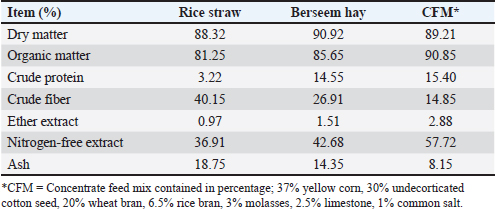
The experimental treatments were administered 3 days per week. Animals were provided with ad libitum access to fresh water and supplemental vitamin/mineral blocks throughout the duration of the study. Composite feedstuff samples were collected and stored according to the AOAC (2016) protocols for proximate analysis. The chemical composition of the basal diet ingredients is presented in Table 1. The basal ration was developed to meet the NRC’s (1981) nutrient requirements of goat bucks. Throughout the experimental period, the bucks were provided with ad libitum access to clean, fresh water and supplemental vitamin/mineral blocks. To ensure environmental consistency and mimic natural photoperiods, the animals were housed in semi-open sheds during the study.
Table 1. Chemical composition of the feed ingredients of the basal ration.
Environmental parameters, specifically ambient air temperature and relative humidity (RH), were monitored using a digital thermometer and a hair hygrometer. The Temperature–Humidity Index (THI) was derived from these measurements, applying the formula established by the NRC (1971) as follows: The THI values were estimated according to Al-Tamimi (2007) and Salama et al. (2014) formula:
THI=(1.8 × Tdb + 32) [(0.55–0.0055 × RH) × (1.8 × Tdb-26.8)]
where: RH=relative humidity/100, and Tdb=dry bulb temperature in Celsius (ᵒC).
The assessed THI values were categorized as HS (75.14–79.48), moderate HS (79.48–84.4), severe HS (84.40–85.94), and very severe HS (>85.94) (Srivastava et al., 2021).
Blood and semen sampling
Following a 12-hours fast, blood specimens were collected from the jugular vein of each buck into ethylenediaminetetraacetic acid-coated tubes. The samples were immediately transported to the laboratory for processing according to the procedures described by Ismail et al. (2025). To obtain plasma, the blood was centrifuged at 2,795 × g for 20 minutes. The resulting supernatant was aspirated using sterile syringes, transferred into sterile Eppendorf tubes, and stored at 4°C pending biochemical analysis.
Semen was collected using the artificial vagina (AV) method, with the AV internal temperature maintained between 40°C and 42°C. Female goats were used as teasers to facilitate mounting. Each buck underwent 5 successful collections, totaling 30 ejaculates per group (N=90 ejaculates for the entire study). These ejaculates were collected at the end of the 5-week experimental period. Semen samples were collected once a week. Immediately following collection, samples were transferred to the laboratory and maintained in a water bath at 37°C to preserve sperm viability.
Assessment of physiological responses
Individual skin temperature, respiration rate (RR), hair temperature, rectal temperature, and pulse rate (PR) were documented once weekly during the investigational cycle. The values of hair, skin, and rectal temperatures were determined using a digital thermometer according to the method of Jessen (1977). The rectal temperature (°C) was recorded directly using a clinical digital thermometer, keeping the bulb in contact with the rectal wall. Skin temperature was determined using a digital thermometer positioned 8 cm from the dorsal surface of the animals. A digital thermometer was used to record the temperature of the hair in the lumbar and head areas, providing a detailed thermal profile of the animals. The respiratory rate (number of breaths/minutes) was measured by placing a hand near the nose and counting breaths for 1 minutes using a stopwatch. PR was recorded by counting femoral artery pulsations for 1 minutes and expressed as beats/minutes. Measurements were performed in triplicate, and the mean value was calculated.
Blood metabolites
The plasma levels of total protein (TP, Code: TP2020), albumin (ALB, Code: AB1010), urea (Code: UR2110), creatinine (Code: CR1250), triglycerides (Code: TR2030), and cholesterol (Code: CH1220) were measured using commercial kits provided by Biodiagnostic Co., Giza, Egypt. Globulin values were determined as the difference between total protein and albumin. Plasma testosterone levels were determined via radioimmunoassay (RIA), following the method described by Ekins (1990). Plasma cortisol hormone levels were assessed using the RIA procedure with coated tube kits purchased from Diagnostic Products Corporation, Los Angeles, CA, following the manufacturer’s outlined procedure. The activities of liver enzymes, such as aspartate (AST, Code: AS1061) and alanine (ALT, Code: AL1031) transaminases, were assessed using commercial kits through calorimetric determination of their levels in plasma (Reitman and Frankel, 1957).
Evaluation of semen traits
Semen samples were maintained in a water bath at 37°C for evaluation. Ejaculate volume (ml) was measured using graduated tubes. Following the protocols described by Khalil et al. (2025) we assessed sperm wave motion, progressive linear motility (%), and dead spermatozoa (%). Sperm concentration (´109/ml) and total sperm output (106) were determined according to the methods of Evans and Maxwell (1987) and El Gaafary and North (1987). Figure 1 schematic showing the experimental groups, evaluated variables, and experimental outcomes.
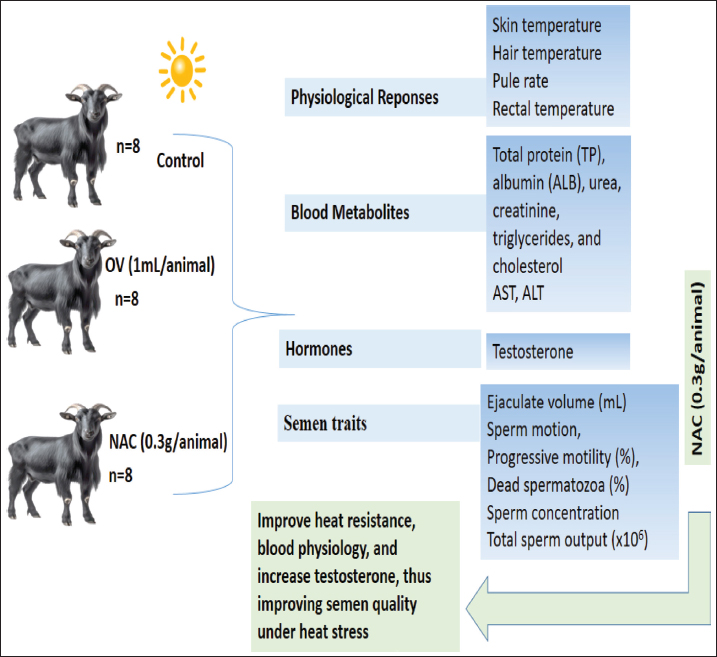
Fig. 1. Schematic showing the experimental groups, evaluated variables, and experimental outcomes.
Statistical analysis
Data were checked for normality, and the records were evaluated using one-way analysis of variance (SPSS, Statistics Users Guide, Version 21). The distinctions between least-squares means (LSM) were explored by Duncan’s new multiple range test. The following formula was used as a model for this statistical analysis:
Yij=µ + Ti + eijk
where: Yij is any observation, µ is the overall mean of observation, Ti is the effect of treatment, and eijk is the random error.
Ethical approval
The Institutional Animal Care and Use Committee (IACUC) of Zagazig University approved the experimental protocol (ZU-IACUC/2/F/25/2023). All procedures adhered to the “Guide for the Care and Use of Laboratory Animals (2nd Edition, 2022)”. Throughout the study, every effort was made to minimize animal distress and optimize welfare. This study was conducted in accordance with the Animal Research: Reporting of in vivo Experiments guidelines.
Results
THI values
Table 2 presents that the ambient air temperature (°C), relative humidity (%), and THI data collected from July to September indicated that the animals experienced severe HS conditions during the experimental periods. The temperature was 37.048 ± 1.07, the relative humidity was 55.33 ± 0.33, and the THI value was 88.44 ± 2.18 throughout the study period.
Table 2. Ambient temperature (°C), relative humidity (RH %), and THI during the experimental period.

Physiological responses
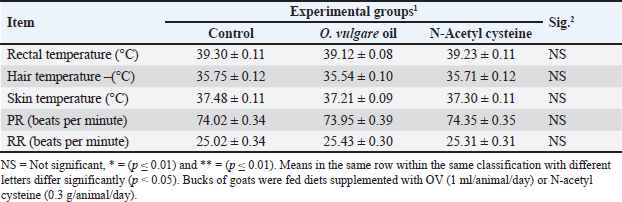
Table 3 summarizes the influence of OV and NAC supplementation on the physiological parameters of Damascus goat bucks during the summer. Dietary administration of either OV or NAC did not significantly affect rectal temperature, skin temperature, PR, or RR (p > 0.05).
Table 3. The impact of OV and N-acetyl cysteine supplementation on the physiological parameters of Damascus goat buck in summer.
Biochemical parameters of blood
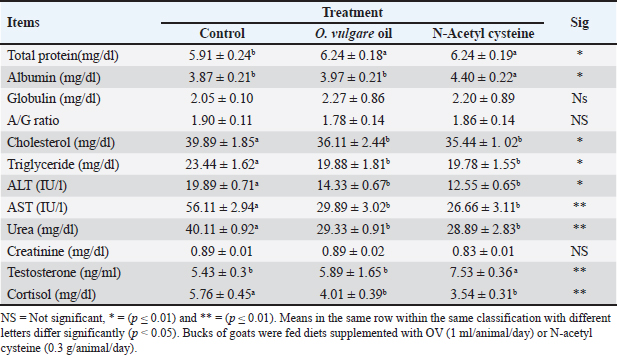
Supplementation with OV or NAC led to significantly higher total protein levels than those observed in the control group (p < 0.05; Table 4). Albumin levels were enhanced only in the NAC group compared with the other groups (p < 0.05), whereas no significant effects were observed in the control and OV groups (p > 0.05). No significant differences were observed in globulin concentrations or the albumin-to-globulin (A/G) ratio across all experimental groups (p > 0.05). Oral administration of either OV or NAC significantly reduced the concentrations of cholesterol and TG in stressed goats. In addition, liver enzymes, such as ALT (p < 0.05) and AST (p < 0.01), were significantly reduced in goats treated with either OV or NAC compared with the control group. Creatinine levels did not differ significantly among all groups (p > 0.05). However, the addition of OV or NAC significantly reduced blood urea levels (p < 0.01). Stressed bucks receiving treatments had lower cortisol levels than the control groups (p < 0.01). Conversely, testosterone levels were significantly increased in NAC-treated goats. However, the addition of OV did not produce a significant effect on testosterone levels compared with the control (p > 0.05).
Table 4. Impact of O. vulgare oil and N-acetyl cysteine supplementation on blood metabolite parameters of Damascus goat buck in summer conditions.
Semen quality
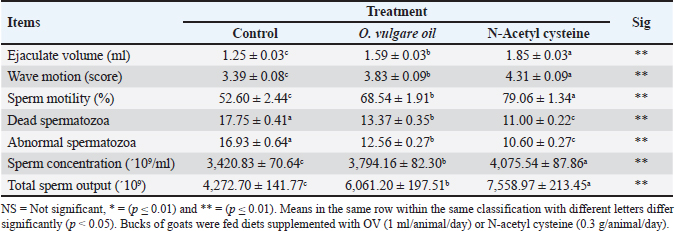
The effects of physical semen features, including wave motion (Score), dead spermatozoa (%), sperm motility (%), ejaculate volume (ml), abnormal spermatozoa (%), sperm concentration (´109/ml), and total sperm output (´109), in Damascus goat bucks treated with OV and NAC are detailed in Table 5. NAC supplementation had superior effects on ejaculate volume (ml), wave motion (Score), sperm motility (%), sperm concentration (´109/ml), and total sperm output (´109) compared with the OV and other groups (p < 0.01). Dead spermatozoa (%) and abnormal spermatozoa (%) were significantly reduced in all treated groups, with the lowest values observed in the NAC group (p < 0.01). Interestingly, the addition of OV improved ejaculate volume (ml), wave motion (Score), sperm motility (%), sperm concentration (´109/ml), and total sperm output (´109) compared with the control group (p < 0.01).
Table 5. Physical semen characteristics of Damascus goat bucks treated with OV and N-acetyl cysteine during the summer.
Discussion
Environmental HS is a significant factor contributing to reduced productivity and reproductive efficiency in animals, particularly during the summer in tropical regions. Improving reproductive efficiency is crucial for enhancing the sustainability and productivity of animal-derived products, such as milk, meat, and other goods. Although goats are generally well-adapted to various environmental challenges, HS can negatively impact reproductive efficiency. Therefore, incorporating natural compounds to enhance heat resistance, promote overall health, and increase reproductive capacity is essential. Male reproductive efficiency accounts for half of the flock, making it vital to investigate the beneficial effects of NAC or OV on semen characteristics, physiological responses, and blood metabolite parameters in DGBs.
THI is a tool used to assess the severity of HS in goats. It is calculated based on the ambient temperature (AT) and relative humidity (RH). A THI value of 88.44 was recorded, indicating a severe stress level in the goats. According to Srivastava et al. (2021) the threshold for HS in goats falls between 84.40 and 85.94. These findings agree with previous studies in goats, which have shown that a THI above 84.40 results in severe HS (Al-Tamimi, 2007; Salama et al., 2014). Multiple studies have confirmed the effectiveness of this method in measuring HS under adverse environmental conditions.
The addition of OV or NAC had no significant effects on rectal temperature, skin temperature, PR, or RR (beats/minutes) in goat bucks. The use of OV improves nutrient digestibility and reduces methane emissions in goats (Paraskevakis, 2018). OV and its constituents, carvacrol and thymol, are potent antioxidants. Studies have shown that oregano supplementation can lead to a significant increase in the total antioxidant capacity of the blood serum (Cui et al., 2024). The antimicrobial and antioxidant properties of OV contribute to its immunomodulatory effects. Although the influence of OV on the rumen microbiota could theoretically affect energy and protein metabolism, the changes are not always reflected in serum biochemistry (Alfaraj et al., 2025). Some studies have reported a decrease in urea, indicating more efficient nitrogen usage in the rumen and a reduction in protein degradation.
This study indicated that both treatments improved the total protein levels in stressed bucks. Similar to these findings, Barreto-Cruz et al. (2023) found that goats given O. vulgare essential oil had greater levels of blood proteins, which was attributed to its ability to enhance nutrient digestibility. This could be related to improved nutrient utilization, improved liver function, and a stronger immune response. In particular, the increase in globulins may reflect enhanced immune status. Feeding Origanum leaves (4%) to growing kids significantly enhanced total protein and reduced liver enzymes (Vahabzadeh et al., 2020). This is often linked to the oil’s ability to modulate lipid metabolism and inhibit certain enzymes.
HS exposure may result in increased lipid accumulation in the body, making cells more sensitive to oxidative stress (Alfaraj et al., 2025). In this study, HS increased cholesterol and triglyceride levels, while NAC or essential oils significantly attenuated these elevations in stressed bucks (Zhao et al., 2021). This reduction in lipid accumulation could be attributed to the ability of NAC to enhance lipid oxidation and promote mitochondrial function (Zhao et al., 2021). The addition of O. vulgare oil significantly improved the blood proteins in goats by supporting rumen fermentation (Rabee et al., 2024). Origanum vulgare essential oil exhibits antimicrobial and antioxidant properties (Zhao et al., 2021). These attributes contribute to immunomodulatory effects that enhance heat resistance and semen quality in goats, as demonstrated in this study.
The reduction of liver enzymes by NAC could be attributed to its antioxidant capacity, as has been shown in goats (Yang et al., 2022b), due to the increase in SOD and GSH levels. NAC supplementation significantly reduces oxidative stress, boosts antioxidant capacity and metabolic activity, and improves both oocyte maturation and quality (Wang et al, 2025b). In addition, the hepatorenal protective effects of NAC may be attributed to its ability to increase levels of antioxidant markers while simultaneously reducing malondialdehyde levels in goats. NAC can sustain renal and hepatic function by stabilizing the levels of their health indicators in the serum of bucks (Yang et al., 2022b; Zhang et al., 2024; Wang et al., 2025a). NAC treatment planned the expression of peroxiredoxin 3 (PRDX3), GSH, SOD, and heme oxygenase-1 (HO-1) by regulating the activity of nuclear factor erythroid 2-related factor 2 (Nrf2) at different time points to fight oxidative stress instigated by heat exposure (Zhao et al., 2021). Dietary NAC can enhance the biosynthesis of steroid hormones and amino acids in goats (Yang et al. 2022b), contributing to the improvement of hormonal levels and sexual behavior during HS. Similarly, Adel et al. (2024) found that NAC dietary administration enhanced testosterone and nitric oxide levels in stressed bucks. The dietary inclusion of moringa oil in rams also improved testosterone levels (Ismail et al., 2025).
Cortisol, which is often referred to as the stress hormone, is released by the HPA axis in response to stress or perceived threats. In our study, we observed that both treatments significantly reduced cortisol levels in the serum of bucks, indicating a successful reduction of stress markers within the cells. HS can induce inflammation, leading to increased cortisol levels (Lallo et al., 2018; Danso et al., 2024). However, the addition of NAC diminished the activity of the NF-κB pathway stimulated by HS and reduced the expression of proinflammatory cytokines such as IL-18, TNF-α, IL-6, IKK, and IFN-γ (Zhao et al., 2021).
Dead and abnormal sperm were significantly reduced by the treatments, whereas NAC or phytochemicals significantly improved ejaculate volume, sperm motility, wave motion, total sperm count, and sperm concentration. High environmental temperatures stimulate oxidative stress (OS) synthesis, which in turn reduces antioxidant defenses, leading to impaired sperm function and spermatogenesis. In this study, we found that the oral administration of NAC improved the sperm quality of bucks under HS conditions. Similarly, adding 0.07% NAC to goat diets improved the serum levels of SOD and NO (Yang et al., 2022b). Increasing nitric oxide could help improve heat loss from the body and reduce the heat load. NAC appears to improve sperm movement in 2 key ways. First, it may enhance the glycosylation of microtubule proteins, leading to a reduction in the number of sperm with only local motility (Wang et al., 2025a). Second, NAC appears to promote a normal, healthy beating pattern of the sperm flagella, which in turn decreases the proportion of completely immotile sperm (Wang et al., 2025b). Moreover, NAC supplementation could be used to improve reproductive performance, supported by its remarkable ability to enhance testicular hemodynamics, testosterone levels, and semen quality parameters (Adel et al., 2024). Many studies have suggested that the improvement in sperm cell concentration is a result of spermatogenesis (El-Raghi et al., 2025), a process enhanced by NAC. NAC can increase the expression of cell cycle and proliferation-related factors such as CyclinA1, CyclinE, and PCNA mRNA (Yang et al, 2022a). Owing to the properties of O. vulgare essential oil, Ahlam et al. (2024) reported that its addition significantly improved total motility in various animal species. In addition, the use of L siceraria seed oil improved sperm quality in bucks by regulating mitochondrial function (Sindi et al., 2025). Moringa oil administration also improved sperm function in rams by enhancing antioxidant genes and reducing apoptotic genes (Ismail et al., 2025).
Conclusion
This study focuses on the potential role of administering NAC or OV in enhancing the heat resistance of goat bucks by regulating blood metabolites and improving semen quality. This study suggests that adding NAC is superior in improving the health status and reproductive traits of stressed bucks compared to OV. Further research is needed to explore the effects of NAC and oil administration on gene expression, as well as other antioxidants or immune function responses in bucks.
Acknowledgments
Not applicable.
Funding
Not applicable.
Authors’ contributions
Noura H. Gouda, Hamzah R. Abdulhameed, Neha M. El-Hendawy, and Mahmoud S. Abd-Allah performed the experiments, performed the laboratory analysis, managed the animals, designed the experiment, analyzed the data, and wrote and reviewed the manuscript. Sameh A. Abdelnour, A. A. Abu El-Ella, and Nehal M. El-Hendawy designed the experiment, analyzed the data, and wrote and reviewed the manuscript. All authors have approved this manuscript for publication.
Conflict of interest
The authors have no conflicts of interest to declare.
Data availability
The data supporting the findings of this study will be made available by the corresponding author upon reasonable request.
References
Abd El-hack, M.E., Abdelnour, S.A., Kamal, M., Khafaga, A.F., Shakoori, A.M., Bagadood, R.M., Naffadi, H.M., Alyahyawi, A.Y., Khojah, H., Alghamdi, S., Jaremko, M. and Świątkiewicz, S. 2023. Lactoferrin: antimicrobial impacts, genomic guardian, therapeutic uses, and clinical significance for humans and animals. Biomed. Pharmacotherapy 164, 114967.
Abdelnour, S.A., El-Saadony, M.T., Saghir, S.A.M., Abd El-hack, M.E., Al-Shargi, O.Y.A., Al-Gabri, N. and Salama, A. 2020. Mitigating the negative impacts of heat stress in growing rabbits via supplementation with dietary prodigiosin. Livestock Sci. 240, 104220.
Adel, O., El-Sherbiny, H.R., M. Shahat, A. and Ismail, S.T. 2024. N-acetylcysteine supplementation improves testicular haemodynamics, testosterone levels, seminal antioxidant capacity, and semen quality in heat-stressed goat bucks. Reprod. Domestic. Animals. 59, e14709.
Ahlam, Z., Souraya, S., Bouchra, E.K., Moudou, M.M., Uxia, Y.R., Luis Angel, Q.A., Juan, J.B.G., Pedro, G.H. and Abdelaziz, S. 2024. Impact of Origanum vulgare essential oil supplementation on bull, dog, and rabbit sperm motility and subpopulation alterations. Res. Vet. Sci. 170, 105200.
Alfaraj, A.I.M., Mahmoud, H.K., Reda, F.M., Monem, U.M.A., Almutairi, L.A., Alsulami, R.N. and Abdelnour, S.A. 2025. Nanozymes or Spirulina platensis: enhancing sheep thermo-tolerance through physio-metabolic, immune, and antioxidant pathways. 203, 6503–6517; doi:10.1007/s12011-025-04656-4
Al-Tamimi, H.J. 2007. Thermoregulatory response of goats exposed to heat stress. Small. Ruminant. Res. 71, 280–285.
AOAC. 2016. Guidelines for Standard Method Performance Requirements.
Barreto-Cruz, O.T., Zambrano, J.C., Castañeda-Serrano, R.D. and Peñuela Sierra, L.M. 2023. Assessing the in vitro and in vivo effect of garlic (Allium sativum) and Oregano (Origanum vulgare) essential oil mixture supplementation on digestibility in West African Sheep. Vet. Sci. 10, 695.
Cao, X., Guo, L., Zhou, C., Huang, C., Li, G., Zhuang, Y., Yang, F., Liu, P., Hu, G., Gao, X. and Guo, X. 2023. Effects of N-acetyl-l-cysteine on long-term heat stress-induced oxidative stress and inflammation in the ovaries of growing pullets. Poultry. Sci. 102, 102274.
Cui, H., Zhang, C., Su, K., Fan, T., Chen, L., Yang, Z., Zhang, M., Li, J., Zhang, Y. and Liu, J. 2024. Oregano essential oil in livestock and veterinary medicine. Animals 14(11), 1532; doi: 10.3390/ani14111532
Danso, F., Iddrisu, L., Lungu, S.E., Zhou, G. and Ju, X. 2024. Effects of heat stress on goat production and mitigation strategies: a review. Animals 14, 1793.
Di Giacomo, C., Malfa, G.A., Tomasello, B., Bianchi, S. and Acquaviva, R. 2023. Natural compounds and
Glutathione levels: beyond the Mere antioxidants. Antioxidants 12(7), 1445; doi: 10.3390/antiox12071445.
Ekins. 1990. Measurement of free hormones in the blood. Endocrine Rev. 11(5), 5–46.
El Gaafary, M.N. 1987. Characteristics of semen from Welsh mountain and Cambridge rams Ph. D. Thesis, University College of Wales, Bangor.
El-Raghi, A.A., Essawi, W.M., Hassan MA East., Hashem, N.M. and Abdelnour, S.A. 2025. Interactions among factors affecting stillbirths in Egyptian buffaloes. Trop. Anim. Health. Prod. 57, 183.
El-Raghi, A.A., Hassan, M.A., Hashem, E. and Abdelnour, S.A. 2023. Impacts of struggling thermal stress on the growth performance and health status of newly weaned rabbits using Origanum majorana Nanoemulsion considering the economic efficiency of supplementation. Animals 13, 1772.
Evans, G. and Maxwell, W. C. 1987. Artificial insemination of sheep and goats. 2, 194.
Ismail, R.F.S.A., Khalil, W.A., Grawish, S.I., Mahmoud, K.G.M., Abdelnour, S.A. and Gad, A.M.A. 2025. Putative effects of moringa oil or its nanoemulsion on ram growth, physiological responses, blood health, semen quality, and sperm antioxidant–related genes. BMC. Vet. Res. 21(11), 11.
Jessen, C. 1977. Interaction of air temperature and core temperatures in thermoregulation of the goat. J. Physiol. 264, 585–606.
Khalil, W.A., Elkhamy, S.A., Hegazy, M.M., Hassan, M.A.E., Abdelnour, S.A. and El-Harairy, M.A. 2025. Cryoprotective effects of Celastrol nanoemulsion on post-thawed attributes and fertilizing ability of buffalo semen cryopreserved. Vet. Res. Commun. 49, 214.
Khowa, A.A., Tsvuura, Z., Slotow, R. and Kraai, M. 2023. Use of domestic goats in rural and peri-urban areas of KwaZulu-Natal, South Africa. Trop. Anim. Health. Prod. 55, 204.
Lallo, C.H.O., Cohen, J., Rankine, D., Taylor, M., Cambell, J. and Stephenson, T. 2018. Characterizing heat stress on livestock using the THI prospects for a warmer Caribbean. Regional Environ. Change 18, 2329–2340.
Li, Z., Zhao, Y., Zhuang, Y., Xu, Z., Wu, C., Liu, P., Hu, G., Li, G., Chen, W., Gao, X. and Guo, X. 2022. Effects of N-Acetyl-L-Cysteine on serum indices and hypothalamic AMPK-related gene expression under chronic heat stress. Frontier. Vet. Sci. 9, 936250; doi: 10.3389/fvets.2022.936250
NRC. 1971. A guide to animal environmental research. National Academy of Sciences. Washington, DC.
NRC. 1981. Effect of Environment on Nutrient Requirements of Domestic Animals. National Academy of Sciences, Washington, DC.
Paraskevakis, N. 2018. Effects of dietary Greek oregano (Origanum vulgare ssp. hirtum) supplementation on rumen fermentation, enzyme profile and microbial communities in goats. J. Anim. Physiol. Anim. Nutr. 102, 701–705.
Paraskevakis, N. 2015. Effects of dried Greek oregano (Origanum vulgare ssp. hirtum) supplementation on blood and milk enzymatic antioxidant indices, milk total antioxidant capacity, and productivity in goats. Anim. Feed. Sci. Technol. 209, 90–97.
Rabee, A.E., Mohamed M Ghandour., Sallam, A., Elwakeel, E.A., Mohammed, R.S., Sabra, E.A., Abdel-Wahed, A.M., Mourad, D.M., Hamed, A.A. and Hafez, O.R. 2024. Rumen fermentation and microbiota in shami goats fed condensed tannins or herbal mixtures. BMC. Vet. Res. 20, 35.
Reitman, S. and Frankel, S. 1957. A colorimetric method for the determination of serum glutamic oxalacetic and glutamic pyruvic transaminases. Am. J. Clin. Pathol. 28, 56–63.
Rhouma, M., Soufi, L., Cenatus, S., Archambault, M. and Butaye, P. 2022. Current insights regarding the role of farm animals in the spread of AMR from a One Health perspective. Vet. Sci. 9, 480.
Ribas, V., García-Ruiz, C. and Fernández-Checa, J.C. 2014. Glutathione and mitochondria. Front. Pharmacol. 5, 151; doi: 10.3389/fphar.2014.00151
Salama, A.A.K., Caja, G., Hamzaoui, S., Badaoui, B., Castro-Costa, A., Façanha, D.A.E., Guilhermino, M.M. and Bozzi, R. 2014. Different levels of heat stress response in dairy goats. Small Ruminant Res. 121, 73–79.
Sindi, R.A., Abdelnour, S.A., El-Haroun, E., Alfattah, M.A., Saber, Y.H.A. and Sheiha, A.M. 2025. Does Lagenaria siceraria seed oil–enriched extender regulate sperm quality, oxidant/antioxidant markers, and mitochondrial enzymes in chilled diluted rabbit semen?. BMC Vet. Res. 21, 345.
Srivastava, A., Yadav, P., Mahajan, A., Anand, M., Yadav, S., Madan, A.K. and Yadav, B. 2021. Appropriate THI model and its threshold for goats in India’s semiarid regions. J. Thermal Biol. 96, 102845.
Štrbac, F., Krnjajić, S., Maurelli, M.P., Stojanović, D., Simin, N., Orčić, D., Ratajac, R., Petrović, K., Knežević, G., Cringoli G Rinaldi. and Bosco, L. 2023. A potential anthelmintic phytopharmacological source of Origanum vulgare (L) essential oil against sheep gastrointestinal nematodes. Animals 13, 45.
Vahabzadeh, M., Chamani, M., Dayani, O., Sadeghi, A.A. and Mohammadabadi, M.R. 2020. Effect of feeding with Origanum majorana leaf (Sweet marjoram) on lamb growth, carcass characteristics, and blood biochemical parameters. Small Ruminant Res. 192, 106233.
Wang, X., Luo, J., Cao, M., Ju, Y., Long, Q., Yang, R., Ji, Q., Zhou, G., Zhang, J., Li, R. and Chen, X. 2025a. Effects of different concentrations of N-acetylcysteine on sperm quality, antioxidant enzyme activity, and antioxidant gene expression in cryopreserved goat semen. Theriogenology 234, 101–109.
Wang, Y., Wang, Q., Ji, Q., An, P., Wang, X., Ju, Y., Li, R., Ruan, Y., Zhao, J., Cao, M. and Chen, X. 2025b. N-Acetyl-L-cysteine supplementation during in vitro maturation improves goat oocyte developmental competence by regulating oxidative stress. Theriogenology 235, 22123; doi: 10.1016/j.theriogenology.2025.01.016
Worku, D., Hussen, J., De Matteis, G., Schusser, B. and Alhussien, M.N. 2023. Candidate genes associated with heat stress and breeding strategies to relieve its effects in dairy cattle: a deeper insight into the genetic architecture and immune response to heat stress. Front. Vet. Sci. 10, 1151241; doi:10.3389/fvets.2023.1151241
Yang, P., Chen, X., Tian, X., Zhou, Z., Zhang, Y., Tang, W., Fu, K., Zhao, J., and Ruan, Y. 2022b. A Proteomic Study of the Effect of N-acetylcysteine on the Regulation of Early Pregnancy in Goats. Animals 12(18), 2439; doi: 10.3390/ani12182439
Yang, P.F., Chen, X., Zhou, Z., Tang, W., Zhang, Y. and Hui, M. 2022a. Effect of N-acetylcysteine on the proliferation and expression of related genes in goat endometrial stromal cells in vitro. Acta Vet. Et Zootechn. Sin. 53, 141–150.
Zhang, H., Pertiwi, H., Michiels, J., Gaublomme, D., Majdeddin, M., Hou, Y., Boone, M., Elewaut, D., Josipovic, I. and Degroote, J. 2024. Dietary N-acetyl cysteine supplementation improves antioxidant capability and alleviates bone loss induced by long-term heat stress in finisher broilers. J. Anim. Sci. Biotechnol. 15, 158.
Zhao, Y., Zhuang, Y., Shi, Y., Xu, Z., Zhou, C., Guo, L., Liu, P., Wu, C., Hu, R., Hu, G., Guo, X. and Xu, L. 2021. Effects of N-acetyl-l-cysteine on heat stress-induced oxidative stress and inflammation in hen hypothalamus. J. Thermal Biol. 98, 102927.