




| Research Article | ||
Open Vet. J.. 2026; 16(7): 4577-4589
Open Veterinary Journal, (2026), Vol. 16(7): 4577-4589 Research Article Adoption of biosecurity measures and one health approach to prevent zoonotic diseases: A cross-sectional study among veterinary students of Kashmir,IndiaSami Jan1, Inaamul Haq1, Shahzada Mohammad Saleem Khan1, Shamim Ahmad Bhat2, Majid Shafi3 and Showkat Ahmad Shah3*1Department of Community Medicine, Govt. Medical College Srinagar, Srinagar, India 2Department of Orthopedics, Govt. Medical College Srinagar, India 3Division of Veterinary Pathology, FVSc & AH, Shuhama, SKUAST-Kashmir, India *Corresponding Author: Dr. Showkat Ahmad Shah. Division of Veterinary Pathology, FVSc & AH, SKUAST-Kashmir, India. Email: vetshowkat [at] skuastkashmir.ac.in Submitted: 11/02/2026 Revised: 11/06/2026 Accepted: 23/06/2026 Published: 17/07/2026 © 2025 Open Veterinary Journal
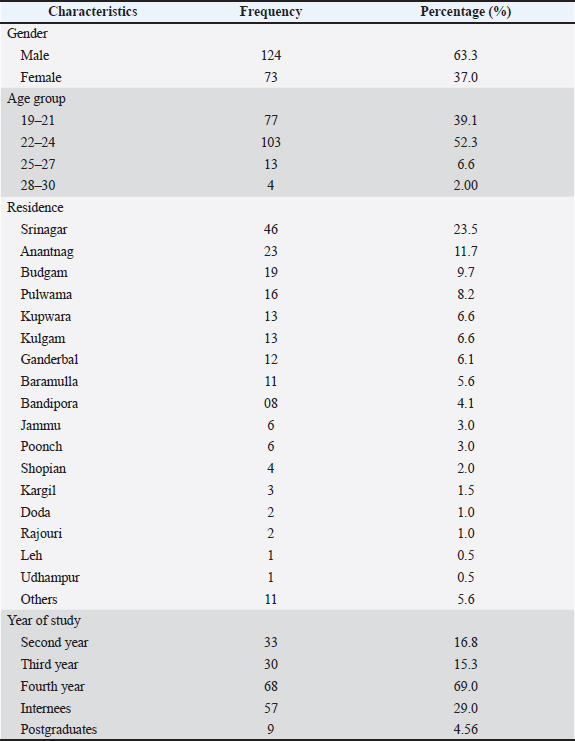
AbstractBackground: Zoonotic diseases pose significant threats to humans, animals, and environmental health, necessitating multidisciplinary preventive strategies under the One Health (OH) framework. As future frontline professionals, veterinary students must be adequately trained in biosecurity and infection control practices (ICPs). Aim: This study aimed to assess the knowledge, attitudes, and practices of veterinary students in Kashmir, India, regarding zoonotic disease risks, biosecurity measures, and the adoption of the OH approach. Methods: A cross-sectional survey was conducted among 197 undergraduate and postgraduate veterinary students from the Faculty of Veterinary Sciences, SKUAST-Kashmir. A pretested, structured questionnaire was distributed electronically from November to December 2024. The questionnaire included 38 items covering demographics, knowledge of zoonoses, adoption of ICPs, perceptions of OH, and use of biosecurity practices. Findings are summarized as frequencies and percentages. Results: Most participants (63.3% male; mean age, 22–24 years) demonstrated good general knowledge of zoonotic disease risks and the importance of intersectoral collaboration. Over 80% recognized the role of ecosystem health and animal population surveillance in preventing human infections. However, significant gaps were noted in the practical implementation of ICPs: only 34.5% reported rabies vaccination, 46.2% carried medical waste containers, and fewer than half routinely disinfected protective equipment or cleaned boots between farm visits. Students acknowledged the OH concept, with 84.8% recognizing its importance, but only 46.2% reported applying it in their own projects or training. Conclusion: Veterinary students in Kashmir exhibit strong theoretical knowledge of zoonoses and OH; however, practical adherence to biosecurity and ICPs remains inadequate. Curriculum reforms emphasizing experiential learning, vaccination, and the systematic integration of OH training are recommended to strengthen global health security and enhance preparedness for emerging zoonotic threats. Keywords: Biosecurity, Infection control practices, One health, Veterinary students, Zoonosis. IntroductionThe concept of "One Health" can be traced back to the 1800s, when Rudolf Virchow, the founder of modern medicine, introduced the term "zoonosis" to emphasize the connection between human and veterinary medicine (Cipolla et al., 2015). Although human and animal health shared the same foundational concept, they had evolved separately in both academic and practical realms by the end of the last century. This idea was revived by a series of zoonotic disease outbreaks, including acquired immunodeficiency syndrome, Ebola, avian influenza, severe acute respiratory syndrome, Middle East respiratory syndrome, and the ongoing coronavirus disease 2019 (COVID-19) pandemic (Poudel et al., 2020). These outbreaks highlighted the emergence of highly pathogenic microorganisms at the human–animal interface and served as a warning of potential future outbreaks (Gongal, 2013). It is estimated that six out of ten known infectious diseases are of animal origin, and three out of four newly emerging infectious diseases are transmitted from animals (CDC, 2017). The significant impact of infectious disease outbreaks has underscored the need for a transdisciplinary and holistic approach to preventing and controlling emerging and reemerging zoonotic diseases. The One Health (OH) concept embodies this approach and is increasingly gaining acceptance and popularity (Acharya et al., 2020). Biosecurity is also a critical factor in managing and mitigating zoonotic diseases. In veterinary medicine, biosecurity refers to a set of preventive measures aimed at minimizing the risk of infectious disease transmission. Studies on veterinarians’ biosecurity practices reveal that 45% of them have reported contracting a zoonotic disease during their careers, and the reported use of personal protective equipment (PPE) has been notably inadequate (Dowd et al., 2013). Neglected zoonoses, such as Q fever, are associated with fragmented surveillance systems, limited awareness, and delayed diagnosis. The OH framework provides an effective strategy for improving disease prevention and control through integrated human and animal health surveillance, enhanced data sharing between the veterinary and public health sectors, and strengthened laboratory and diagnostic capacities. Coordinated interventions such as environmental monitoring, vaccination programs, and improved communication among stakeholders are also essential components of this approach. Collectively, these strategies enable early detection, timely response, and reduced transmission of zoonotic pathogens, thereby mitigating the risk of outbreaks and improving overall public health outcomes (Meurer, 2025). Veterinarians play a vital role in global public health by contributing to the prevention and control of animal diseases, surveillance of emerging infectious and zoonotic diseases, food safety and security, environmental health, global health security, and basic and applied medical research (Pappaioanou, 2003). Universities and veterinary colleges train veterinarians and animal health professionals to develop a strong foundation in clinical knowledge and the diagnostic and surgical skills needed to address a wide range of health issues worldwide, including, but not limited to, those affecting animals (Shivley, 2018). Historically, veterinarians have played a crucial role in the prevention and control of epidemics such as bovine spongiform encephalopathy and foot-and-mouth disease in the United Kingdom, West Nile virus in the United States, and Rift Valley fever in East Africa. These epidemics significantly affected human and animal health, the economy, and societal well-being, and their containment was achieved largely through the invaluable contributions of veterinarians (Hassan et al., 2017). During their routine training, veterinary students may be exposed to zoonotic diseases such as brucellosis, bovine tuberculosis, rabies, Hendra virus, and Q fever. These exposures may occur through ingestion, inhalation, conjunctival exposure, or physical contact with infected or deceased animals (Klous et al., 2016). Previous studies have highlighted varying levels of knowledge regarding zoonotic diseases among students and future health professionals. For instance, a study reported that students’ understanding of zoonotic diseases, such as COVID-19, plays a crucial role in promoting preventive behaviors, including hygiene practices and disease awareness within communities (Kholik et al., 2020). Similarly, other studies among veterinary students have shown that while general awareness of zoonoses is often adequate, significant gaps remain in the understanding of transmission routes and preventive measures (Nyokabi et al., 2024). Understanding the perceptions of veterinary students at various stages of their education is crucial for shaping future health and biosecurity training. It also helps identify the reasons behind the inappropriate use of antimicrobials by recent graduates and informs the development of education on biosecurity practices. While substantial literature exists on the knowledge and perceptions of medical students regarding health, biosecurity, and Antimicrobial stewardship, limited studies have been conducted on veterinary students in this area. Veterinary students play a crucial role in the current and future implementation of OH principles for disease prevention and control in Kashmir. This study represents the first survey aimed at assessing veterinary students’ knowledge of OH and zoonotic diseases while exploring their perceptions of the benefits of OH. Materials and MethodsStudy population and designThe study population comprised undergraduate (second year to internship) and postgraduate veterinary students enrolled at the Faculty of Veterinary Sciences, Sher-e-Kashmir University of Agricultural Sciences and Technology (SKUAST-Kashmir). This institution is the only veterinary teaching university in the Kashmir Valley; therefore, the study population is broadly representative of veterinary students in the region. A nonprobability convenience sampling method was employed. All eligible students present during the study period (November–December 2024) were invited to participate through WhatsApp groups. Participation was voluntary, and only students who provided informed consent and completed all questionnaire sections were included in the final analysis. No formal a priori calculation was performed regarding sample size because the study aimed to include the maximum number of available students within the study period. One hundred and ninety-seven veterinary students in different years of study, including both undergraduate and postgraduate students, participated in this cross-sectional study. A 38-point structured questionnaire was pretested and sent via email and the WhatsApp mobile app. Since this study aimed to impartially examine veterinary student instruction, it did not include other veterinary professionals, such as professors and practicing veterinarians. The survey asked about the students’ backgrounds, expertise, perspectives, and methods regarding OH approach, biosecurity, zoonotic diseases, and antibiotic resistance during November and December 2024. Participation was voluntary, and responses were anonymous. All undergraduate veterinary students (second year to internship) and postgraduate students enrolled at the Faculty of Veterinary Sciences, SKUAST-Kashmir, during the study period (November–December 2024) were considered eligible to participate. The final analysis included students who voluntarily provided informed consent and completed all sections of the questionnaire. Students (n=4) who submitted incomplete questionnaires were excluded from the study. This study used a pretested questionnaire adopted from Nyokabi et al. (2024) comprising 38 questions divided into 4 sections. The first section requested the participants’ demographic information and their basic information regarding zoonotic diseases and their transmission. Questionnaire Section 2 required participants to provide information about various biosecurity measures they adopt and know of and their vaccination status. Section 3 required respondents to indicate their understanding and promotion of the one-health approach, inter-professional collaboration, and the problem and mitigation of antimicrobial resistance and zoonotic diseases. The final section required participants to indicate various sources of information. For respondents to be included in the analysis, they had to complete every section of the survey. Descriptive statistics were computed, with percentages reported for the total number of participants answering a particular question. Data management and analysisThe collected data were entered into Microsoft Excel and analyzed using the R statistical software. Univariate descriptive analysis was performed to summarize the demographic characteristics and key study variables related to knowledge, attitudes, and practices regarding zoonotic diseases, biosecurity measures, and the OH approach. Results are presented as frequencies and percentages. Results are presented as frequencies and percentages. An Excel document with the survey data was downloaded. Descriptive statistics were used to summarize participant responses, and results were expressed as frequencies and percentages. Informed consent statementParticipation was entirely voluntary, and all participants provided informed consent prior to data collection. Ethical approvalEthical considerations for this study were addressed in accordance with institutional and regional guidelines for human participants’ research. The study involved an anonymous, voluntary, questionnaire-based survey with no collection of personally identifiable or sensitive information and posed minimal risk to participants. Therefore, it was deemed exempt from full ethical review in line with standard practices for such studies. Participation was entirely voluntary, and all participants provided informed consent prior to data collection. Participants were informed about the purpose of the study, and the confidentiality and anonymity of their responses were strictly maintained throughout the study. ResultsDemographic characteristics of the participantsThe veterinary students under study represent the entire Kashmir Valley, as there is only one university that imparts veterinary education in Kashmir. Of the 197 students who participated in the poll, 124 (63.3%) were male, and 73 (37%) were female. Most of the participants were in the age group of 22–24 (103, 52.3%). The participants belonged to almost all districts of Jammu and Kashmir, with the maximum participation from the Srinagar district (23.5%). The participants were at various stages of their degree program, with maximum participation from students in the fourth year of their course (68, 69%). The demographic details of the participants are displayed in Table 1. The majority of students were in the fourth year or internship and were already working. Among all participants, only 18 (9.1%) were enrolled in specialized health courses. Table 1. Demographic characteristics of undergraduate and postgraduate veterinary students in Kashmir (n=197).
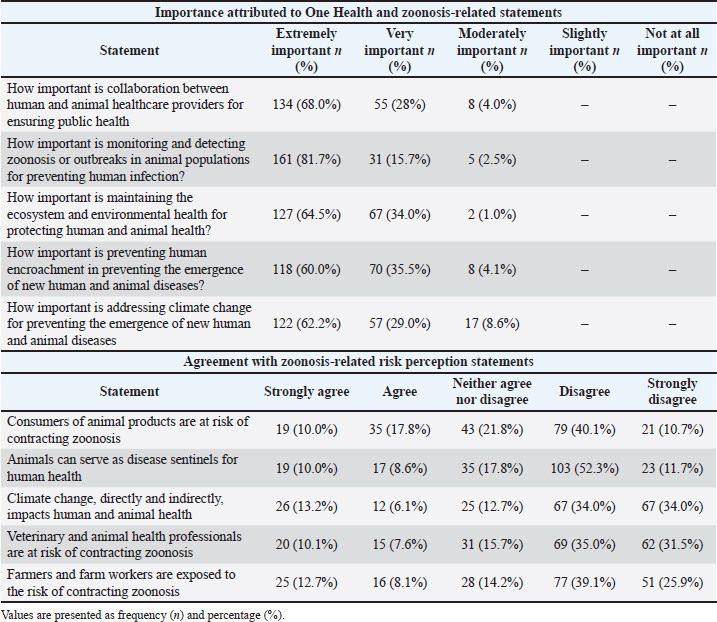
Knowledge, perception, and use of infection control practices (ICPs) and biosecurity measuresThe opinions of veterinary students regarding the dangers of zoonosis and the significance of cooperation between the animal and human health sectors to maintain public health are shown in Table 2. Participants demonstrated satisfactory theoretical knowledge regarding zoonotic diseases, surveillance, ecosystem health, and the importance of human–animal health collaboration. However, this knowledge did not consistently translate into accurate occupational risk perception, as a substantial proportion of students underestimated the zoonotic risks faced by veterinarians, farmers, and animal product consumers. The importance of monitoring and detecting zoonoses, maintaining a healthy ecosystem for preventing animal-borne human infections, and preventing human encroachments in preventing the emergence of new animal and human diseases was known to the students. Lastly, they believed that climate change would increase the risk of zoonotic diseases and promote the spread of novel zoonotic diseases. The majority of students disagree that consumers of animal products are at risk of contracting zoonosis and that animals serve as disease sentinels for humans. The majority of students also disagree that climate change has an effect on human and animal health, and veterinary professionals and farmers are at higher risk of contracting zoonotic diseases. Table 2. Veterinary students’ perceptions regarding zoonotic diseases and one health-related risks (n=197).
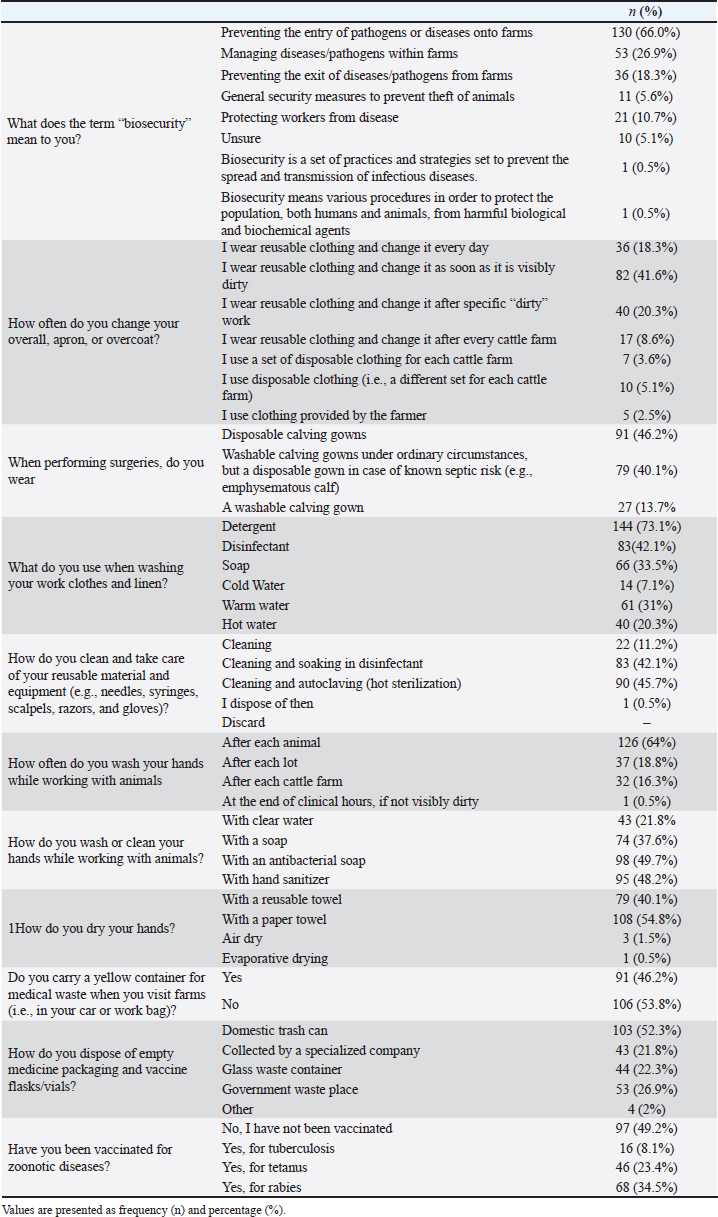
Table 3 shows a summary of veterinary students’ acceptance and understanding of ICPs and biosecurity protocols for illness prevention. The dangers of medical waste were known to the students. After handling animal fluids and tissue, they washed their hands and appropriately disposed of veterinary waste, such as needles and razors. Despite their vaccinations, most of the students’ immunizations were routine childhood immunizations. Vaccination uptake for illnesses such as rabies that are linked to occupational risks was low. Additionally, the use of PPE, such as surgical gowns, overcoats, and gloves, was minimal. The PPE was primarily cleaned with common laundry chemicals and not thoroughly disinfected. Table 3. Adoption of biosecurity and infection control practices among veterinary students in Kashmir (n=197).
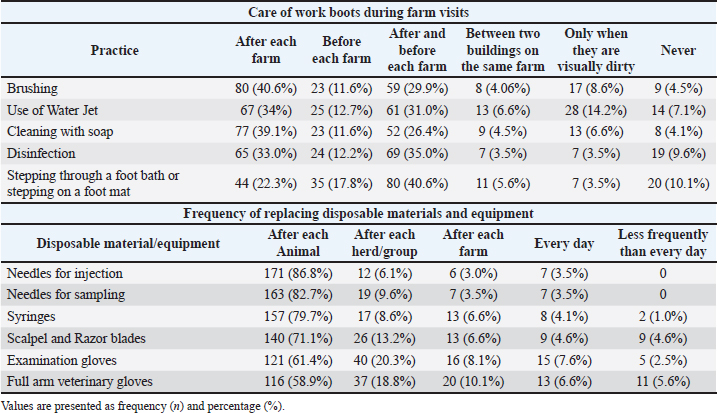
Table 4 shows a description of the biosecurity protocols used by veterinary students to reduce and eliminate the risk of introduction and transmission of diseases while visiting farms and observing livestock. Table 4 demonstrates that students used clean medical equipment and protective clothes and equipment PPE infrequently during practical instruction, farm visits, and internships to avoid the spread of diseases linked to contact with animals, fluids, and tissues. Important ICPs, such as cleaning work boots to stop livestock infections from spreading from farm to farm and between herds, were not widely adopted by the students. Table 4. Biosecurity precautions adopted by veterinary students during farm visits and livestock handling (n=197).
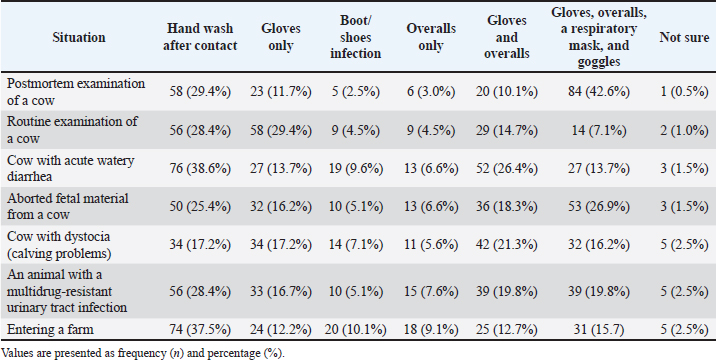
Table 5 provides a description of the implementation of ICPs and biosecurity precautions that students (n=197) are taught to follow, just like veterinarians, to reduce occupational exposure to zoonosis throughout their employment. Students believed that PPE was essential to protect themselves from zoonosis. Table 5. Infection control practices and personal protective measures adopted by veterinary students during farm and clinical activities (n=197).
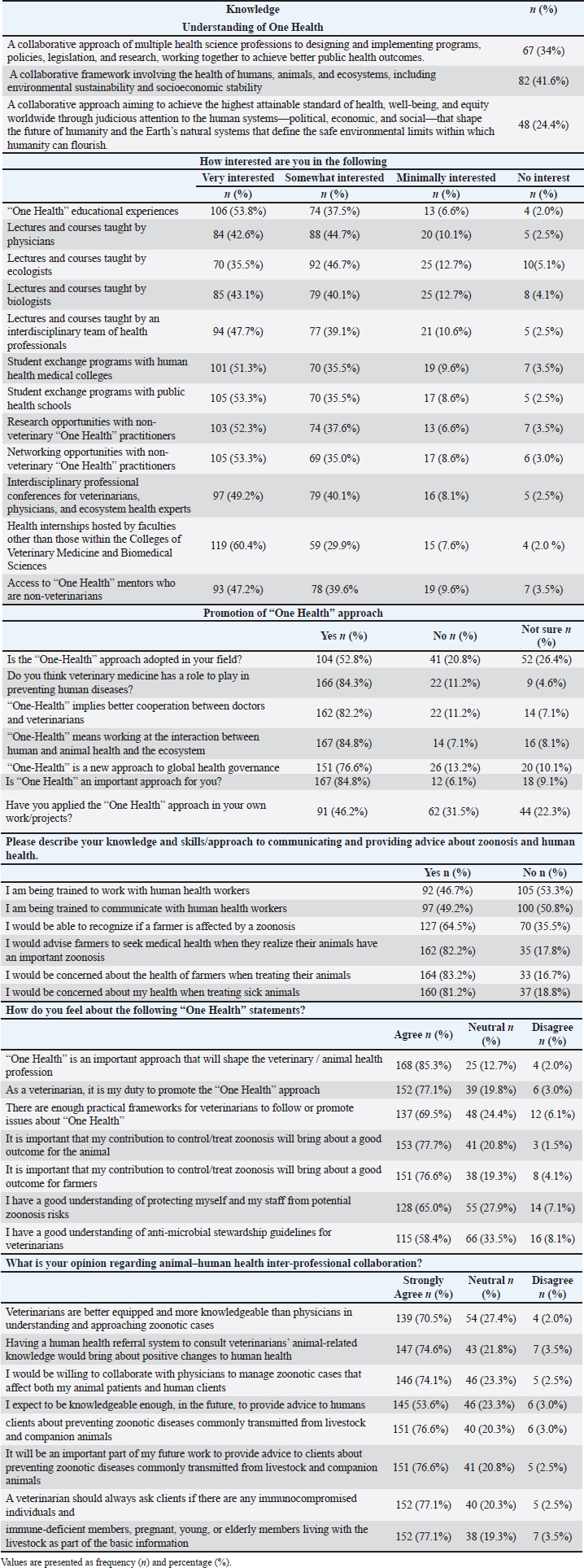
Knowledge and perception of One Health among veterinary studentsTable 6 presents the knowledge and perceptions of OH among participants in this survey. The majority of participants, 82 (41.62%), were aware that the OH concept is a collaborative framework involving the health of humans, animals, and ecosystems, including environmental sustainability and socioeconomic stability. The majority of students were also interested in various health approaches, such as lectures taught by interdisciplinary professionals, student exchange programs, and research collaborations with various stakeholders. Table 6. Knowledge, perceptions, and attitudes of veterinary students regarding the one health approach (n=197).
DiscussionThe OH approach, originating from historical foundations, has become increasingly relevant due to recurring zoonotic disease outbreaks that emphasize the deep interdependence of human, animal, and environmental health (Mackenzie et al., 2019). This research is important in gaining insights into veterinary students and their knowledge and attitudes in Kashmir, emphasizing their important role in driving OH initiatives in the future. Although participants demonstrated adequate theoretical awareness of zoonotic diseases and recognized the importance of intersectoral coordination under the OH framework, important deficiencies were observed in occupational risk perception and practical application of biosecurity measures. Notably, many students underestimated the zoonotic risks faced by veterinarians, farmers, and consumers of animal products, indicating that theoretical knowledge did not consistently translate into accurate risk assessment or safe ICPs. (Steele et al., 2019). These findings indicate the need for specific educational intervention and learning through experience to bridge the gap between theoretical knowledge and practical application. The consideration of the frontline work of veterinarians in preventing zoonotic infections and maintaining the global health architecture, enhancing their preparedness via integrated OH training, which is extremely important to protect human and animal health (Horefti, 2023). A notable finding of this study is the discrepancy between the general knowledge of students about zoonotic diseases and their perception of occupational risk. Although most participants acknowledged the importance of zoonoses and intersectoral collaboration, a substantial proportion (50.8%–68%) disagreed that key high-risk groups, including veterinarians, farmers, and consumers, are vulnerable to zoonotic infections. This suggests a gap between theoretical understanding and practical risk perception. Previous studies have reported similar inconsistencies, where adequate knowledge did not necessarily translate into accurate risk perception or safe practices among veterinary professionals and students (Dowd et al., 2013; Steele et al., 2019). Such underestimation may be attributed to limited clinical exposure, insufficient emphasis on occupational health risks during training, or cognitive biases that prevent individuals from recognizing their own susceptibility to hazards (Hassan et al., 2017). This finding highlights the need for targeted educational interventions that not only enhance knowledge but also improve risk perception and promote behavioral change toward effective ICPs. The profile of veterinary undergraduates and postgraduates in the Kashmir Valley follows a male-dominated trend, indicating that 63.3% are males and 36.7% are females (Lofstedt 2003). Most students belong to the 22–24 age group (52.3%), followed by 19–21 years (39.1%). The students are drawn from a wide variety of districts, with the largest number coming from Srinagar (23.5%), Anantnag (11.7%), and Budgam (9.7%), while districts such as Leh and Udhampur have very little representation (0.5% each). In terms of academic status, most students are in their 4th year (69.0%), followed by internees (29.0%), with a minority pursuing postgraduate studies (4.08%). Most participants consider intersectoral collaboration and proactive health measures to be very important, with 68% considering collaboration between human and animal healthcare as extremely important and 81.7% giving the same level of importance to surveillance of zoonosis in animals for preventing human infection (Sharan et al., 2023). Similarly, 64.5%, 60%, and 62.2% of the participants rated ecosystem health maintenance, human encroachment prevention, and climate change response as very important, respectively (Sarah et al., 2019). However, opinions were divided on the perceived risks, with a large percentage strongly disagreeing that consumers of animal products, veterinarians, sentinel animals, or farmers face significant zoonotic risks. The percentage of disagreement varied between 50.8% and 68%, suggesting a potential underestimation of these risks or a gap in awareness. The survey indicates that the majority of participants consider biosecurity to primarily be stopping pathogens from entering farms (66.0%), followed by managing disease within farms (26.9%) and stopping their exodus (18.3%), with little focus placed on areas such as animal theft or protecting workers (Youssef et al., 2021). Regarding clothing hygiene, 41.6% of respondents replaced reusable clothes after becoming visibly dirty, whereas only a few replaced them after visiting every cattle farm or used disposable replacements. For operations, 46.2% of the patients used disposable calving gowns, and 40.1% converted to disposables in cases of septic risk. For washing work attire (73.1%), the main method used is detergent with additional disinfectants and soap, and the cleaning of equipment is divided equally between autoclaving (45.7%) and soaking in disinfectant (42.1%). The hand hygiene routines are robust, with 64% of the animals being washed after every animal, and almost half using antibacterial soap or hand sanitizer and drying primarily with paper towels. This study also reveals that less than half of the population has a yellow container for medical waste, and disposal of empty medicine packets is most frequently done through domestic trash cans (52.3%). The vaccination against zoonotic diseases has mixed coverage, with 49.2% being unvaccinated and others vaccinated against TB, tetanus, or rabies at varying levels (Carpenter et al., 2022). The study findings revealed that most participants wanted to clean their boots after every farm visit, although practices differ by cleaning method (Makovska et al., 2024). For instance, brushing is performed after every farm by 40.6% and before and after every farm by 29.9%, and the same pattern exists with water jets, soap, and disinfection. Walking through a foot bath is most frequently performed before and after every farm visit (40.6%). In the area of disposable items, a majority replace needles for injection (86.8%) and sampling (82.7%) after every animal, with syringes (79.7%), scalpel and razor blades (71.1%), examination gloves (61.4%), and full-arm veterinary gloves (58.9%) also frequently replaced after every animal instead of after a herd, farm, or on a daily basis. The infrequent use of PPE and disinfection practices observed in this study is likely due to a combination of structural and behavioral factors. Limited availability, inconsistent supply, and the cost of PPE and disinfectants may restrict routine use in training settings (Youssef et al., 2021). At the same time, behavioral aspects such as low risk perception and the tendency of students to follow senior clinicians’ practices may contribute to poor compliance (Dowd et al., 2013). Inadequate supervision and the lack of strict institutional enforcement of infection control protocols further widen the gap between knowledge and practice (Nyokabi et al., 2024). The results show that veterinary personnel have diverse personal protective practices based on the situation. In post-mortem examinations, the majority of participants (42.6%) wear complete protective equipment, such as gloves, overalls, shoes, respiratory masks, and goggles, whereas 29.4% use only hand washing after coming into contact with the patient (Dowd et al., 2023). In regular examinations, gloves alone (29.4%) and hand washing (28.4%) are the most commonly practiced measures. Hand washing is commonly practiced by 38.6% and 25.4% of participants in case of some conditions, such as cows with acute watery diarrhea and fetal material from abortions, and a similar proportion also employs gloves in addition to overalls. In conditions regarded as higher risk, such as dystocia and multidrug-resistant infections, the practices are more diverse but with a comparable combination of hand washing and combined protective methods. Although entering farms, although 37.5% perform hand washing, 15.7% prefer complete protective gear. Thus, this study emphasizes the need to include the OH approach in veterinary education and practice, especially within the context of Kashmir. Although veterinary students have a good understanding of zoonotic diseases and intersectoral coordination, there are large gaps in their practical implementation of biosecurity actions and risk awareness. The veterinary program (B.V.Sc. and A.H.) follows the curriculum prescribed by the Veterinary Council of India (VCI), which includes core subjects such as veterinary public health, epidemiology, microbiology, and preventive medicine, where concepts related to zoonoses and OH are introduced. However, OH is currently integrated in a fragmented and implicit manner within these subjects rather than being offered as a dedicated, structured course or competency-based module. Although the university has initiated efforts such as workshops, interdisciplinary collaborations, and proposals for establishing a “School of One Health,” these remain supplementary rather than being formally embedded within the core curriculum. The low uptake of rabies vaccination (34.5%) among veterinary students is a concerning finding of this study, despite their high occupational risk of exposure. This gap may be attributed to multiple practical barriers rather than a lack of awareness alone. The inconsistent availability of vaccines at institutional or nearby health care facilities may further hinder vaccine uptake. The absence of formal institutional requirements mandating rabies vaccination before participation in clinical training, farm visits, or internships is another critical factor that reduces the perceived urgency among students. Addressing these barriers requires targeted institutional interventions, including the provision of subsidized or free vaccination programs, the organization of periodic on-campus vaccination drives in collaboration with public health authorities, and the incorporation of mandatory vaccination policies as part of pre-clinical training requirements. Strengthening these measures would not only improve vaccination coverage but also enhance occupational safety and align student practices with biosecurity and OH principles. Previous studies have similarly highlighted that the lack of institutional enforcement and logistical barriers significantly influence vaccine acceptance among health care and veterinary trainees (Carpenter et al., 2022; Nyokabi et al., 2024). These gaps indicate the need for specific educational interventions that close the gap between theoretical knowledge and practical application. The role of veterinarians in preventing zoonotic infections and ensuring global health security by enhancing their preparedness through a strong OH approach. The demographic profile of veterinary students in Kashmir also indicates a male-dominated profession, with a high representation from certain districts, primarily at the undergraduate level. The results also show the students’ varying practices on biosecurity, infection control, and personal protective measures. To boost the competency of veterinary professionals in the area, more emphasis should be placed on enhancing vaccine takeup, regular hygiene practices, and thorough biosecurity protocols. Zoonotic diseases impose a substantial and growing economic burden on global public health systems, particularly in low- and middle-income countries, where surveillance and control measures are often limited. Emerging zoonoses can result in billions of dollars in losses due to health care costs, livestock mortality, trade disruptions, and productivity declines (World Bank, 2022). In this context, it is essential to strengthen the practical competencies of veterinary students in biosecurity and infection control, as early detection and prevention at the animal–human interface can significantly reduce outbreak-related costs. The findings of the present study, which highlight gaps between knowledge and practice, underscore the need for improved experiential training. Enhancing such preparedness among future veterinarians can serve as a cost-effective strategy to mitigate the broader economic and public health impacts of zoonotic diseases. This study has several limitations that should be considered when interpreting the findings. First, the cross-sectional design limits the ability to establish causal relationships between knowledge and practices. Second, the data were based on self-reported responses, which may be subject to recall bias and social desirability bias. Third, the study was conducted within a single veterinary institution in Kashmir, which may limit the generalizability of the results to other regions or educational settings. Additionally, the use of an online questionnaire may have excluded students with limited internet access or lower engagement, potentially introducing selection bias. Despite these limitations, the study provides valuable baseline insights into the knowledge and practices of veterinary students related to zoonoses and biosecurity, highlighting key areas for educational improvement. ConclusionThe findings of this study reveal important gaps in the training of veterinary students in Kashmir, India, particularly in ICPs and biosecurity measures, highlighting the need to strengthen traditional veterinary curricula to better address emerging and re-emerging zoonotic diseases. Standardizing curricula and enhancing capacity building in line with the OH approach could improve students’ knowledge, access to information, and preparedness, thereby reducing future occupational exposure to zoonoses. Improved availability of PPE, such as gloves, may further support hands-on learning and practical skill development. Overall, this study provides valuable evidence on the awareness and preparedness of veterinary students regarding zoonotic diseases of public health importance in the Global South, emphasizing the critical role of academic institutions in equipping future veterinarians to safeguard animal, human, and environmental health. AcknowledgmentThe authors sincerely acknowledge and thank all undergraduate and postgraduate veterinary students of the Faculty of Veterinary Sciences, SKUAST-Kashmir, who voluntarily participated in this study. Their time, cooperation, and honest responses were invaluable and greatly contributed to the successful completion of this research. Conflict of interestThe authors have no conflicts of interest to declare. FundingThis research did not receive any specific grant from public, commercial, or not-for-profit funding agencies. Author’s contributionConceptualization, S.J., I.H., S.M.S.K; methodology, S.J., I.H.; supervision, I.H., S.M.S.K., S.A.S.; formal analysis, S.A.B., M.S.; writing-original draft preparation, S.J., S.A.B., SAS. Writing-Review and Editing: S.J., S.A.S., and S.A.B. Data availabilityThe data supporting the findings of this study are available upon reasonable request from the corresponding author. ReferencesAcharya, K.P., Acharya, N., Phuyal, S., Upadhyaya, M. and Lasee, S. 2020. One-health approach: a best possible way to control rabies. One Health 10, 100161; doi:10.1016/j.onehealth.2020.100161 Carpenter, A., Waltenburg, A. and McQuiston, H. 2022. The vaccine preventable zoonotic disease working group. Vaccines (Basel). 10(7), 993. Centers for Disease Control and Prevention (CDC). 2017. Zoonotic Diseases. Atlanta, Georgia: Centers for Disease Control and Prevention. Cipolla, M., Bonizzi, L. and Zecconi, A. 2015. From “one health” to “one communication”: The contribution of communication in veterinary medicine to public health. Vet. Sci. 2(3), 135–149. Dowd, K., Taylor, M., Toribio, J.A., Hooker, C. and Dhand, N.K. 2013. Australian veterinarians’ zoonotic disease risk perceptions and infection control practices: call for change in work culture. Prev. Vet. Med. 111(1–2), 17–24. Gongal, G. 2013. One Health Approach in the Southeast Asia Region: opportunities and Challenges. Curr. Top. Microbiol. Immunol. 366, 113–122. Hassan, O.A., Affognon, H., Rocklöv, J., Mburu, P., Sang, R., Ahlm, C. and Evander, M. 2017. The One Health approach to identify knowledge, attitudes and practices that affect community involvement in the control of Rift Valley fever outbreaks. PLos Negl. Trop. Dis. 11, 5383. Horefti, E. 2023. The importance of the One Health Concept in Combating Zoonoses. Pathogens 12(8), 977. Kholik, K., Suarti, N.K.A., Garnika, E. and Hidayatullah, M.T. 2020. The Relationship of Student’s Knowledge Level with Anxiety and Precautions the Spread Covid19 in West Nusa Tenggara. J. Kesehat. Lingkung. 12(1), 45–50. Klous, G., Huss, A., Heederik, D.J.J. and Coutinho, R.A. 2016. Human–livestock contacts and their relationship to transmission of zoonotic pathogens, a systematic review of literature. One. Health. 2, 65–76; doi:10.1016/j.onehlt.2016.03.001 Lofstedt. 2003. Gender in veterinary medicine. Can. Vet. J. 44(7), 5335. Mackenzie, S. and Jeggo, M. 2019. The importance of One Health approach. Trop. Med. Infect. Dis. 4(2), 88–92. Makovska, I., Chantziaras, I., Caekebeke, N., Dhaka, P. and Dewulf, J. 2024. Assessment of cleaning and disinfection practices on pig farms across ten European countries. Animals 14(5), 593–597; doi:10.1016/j.animal.2024.04.009 Meurer, I.R. 2025. The Importance of Medical Knowledge About Q Fever in the Context of Timely Diagnosis and Treatment and the Use of the One Health Approach in Combating This and Other Neglected Zoonotic Diseases. Infect. Drug. Resist. 18, 5007–5008. Nyokabi, N.S., Phelan, L., Lindahl, J.F., Berg, S., Muunda, E., Mihret, A., Wood, J.L.N. and Moore, H.L. 2024. Exploring veterinary students' awareness and perception of zoonoses risks, infection control practices, and biosecurity measures in Ethiopia. Front. Vet. Sci. 11, 1385849. Pappaioanou, M. 2003. Veterinarians in global public health. J. Vet. Med. Educ. 30(2), 105–109. Poudel, U., Subedi, D., Pantha, S. and Dhakal, S. 2020. Animal coronaviruses and coronavirus disease 2019: lesson for One Health approach. Open. Vet. J. 10(3), 239–251. Sharan, M., Vijay, D., Yadav, J.P., Bedi, J.S. and Dhaka, P. 2023. Surveillance and response strategies for zoonotic diseases: a comprehensive review. Sci. One. Health. 2, 1050–1053. Shivley, J.M., Brookshire, W.C., Bushby, P.A. and Woodruff, K.A. 2018. Clinically prepared veterinary students: enhancing veterinary student hands-on experiences and supporting hospital caseload using shelter medicine program. Front. Vet. Sci. 5, 95. Steele, S.G., Toribio, J.A., Booy, R. and Mor, S.M. 2019. What makes an effective One Health clinical practitioner: opinions of Australian One Health experts. One Health 8, 101–108. World Bank. 2022. Putting pandemics behind us: Investing in One Health to reduce risks of emerging infectious diseases. Washington, DC: World Bank. Youssef, D.M., Wieland, B., Knight, G.M., Lines, J. and Naylor, N.R. 2021. The effectiveness of biosecurity interventions in reducing the transmission of bacteria from livestock to humans at the farm level: a systematic literature review. Zoonoses. Public. Health. 68(6), 549–562. | ||
| How to Cite this Article |
| Pubmed Style Jan S, Haq I, Khan SMS, Bhat SA, Shafi M, Shah SA. Adoption of biosecurity measures and one health approach to prevent zoonotic diseases: A cross-sectional study among veterinary students of Kashmir, India. Open Vet. J.. 2026; 16(7): 4577-4589. doi:10.5455/OVJ.2026.v16.i7.41 Web Style Jan S, Haq I, Khan SMS, Bhat SA, Shafi M, Shah SA. Adoption of biosecurity measures and one health approach to prevent zoonotic diseases: A cross-sectional study among veterinary students of Kashmir, India. https://www.openveterinaryjournal.com/?mno=310078 [Access: July 15, 2026]. doi:10.5455/OVJ.2026.v16.i7.41 AMA (American Medical Association) Style Jan S, Haq I, Khan SMS, Bhat SA, Shafi M, Shah SA. Adoption of biosecurity measures and one health approach to prevent zoonotic diseases: A cross-sectional study among veterinary students of Kashmir, India. Open Vet. J.. 2026; 16(7): 4577-4589. doi:10.5455/OVJ.2026.v16.i7.41 Vancouver/ICMJE Style Jan S, Haq I, Khan SMS, Bhat SA, Shafi M, Shah SA. Adoption of biosecurity measures and one health approach to prevent zoonotic diseases: A cross-sectional study among veterinary students of Kashmir, India. Open Vet. J.. (2026), [cited July 15, 2026]; 16(7): 4577-4589. doi:10.5455/OVJ.2026.v16.i7.41 Harvard Style Jan, S., Haq, . I., Khan, . S. M. S., Bhat, . S. A., Shafi, . M. & Shah, . S. A. (2026) Adoption of biosecurity measures and one health approach to prevent zoonotic diseases: A cross-sectional study among veterinary students of Kashmir, India. Open Vet. J., 16 (7), 4577-4589. doi:10.5455/OVJ.2026.v16.i7.41 Turabian Style Jan, Sami, Inaamul Haq, Shahzada Mohammad Saleem Khan, Shamim Ahmad Bhat, Majid Shafi, and Showkat Ahmad Shah. 2026. Adoption of biosecurity measures and one health approach to prevent zoonotic diseases: A cross-sectional study among veterinary students of Kashmir, India. Open Veterinary Journal, 16 (7), 4577-4589. doi:10.5455/OVJ.2026.v16.i7.41 Chicago Style Jan, Sami, Inaamul Haq, Shahzada Mohammad Saleem Khan, Shamim Ahmad Bhat, Majid Shafi, and Showkat Ahmad Shah. "Adoption of biosecurity measures and one health approach to prevent zoonotic diseases: A cross-sectional study among veterinary students of Kashmir, India." Open Veterinary Journal 16 (2026), 4577-4589. doi:10.5455/OVJ.2026.v16.i7.41 MLA (The Modern Language Association) Style Jan, Sami, Inaamul Haq, Shahzada Mohammad Saleem Khan, Shamim Ahmad Bhat, Majid Shafi, and Showkat Ahmad Shah. "Adoption of biosecurity measures and one health approach to prevent zoonotic diseases: A cross-sectional study among veterinary students of Kashmir, India." Open Veterinary Journal 16.7 (2026), 4577-4589. Print. doi:10.5455/OVJ.2026.v16.i7.41 APA (American Psychological Association) Style Jan, S., Haq, . I., Khan, . S. M. S., Bhat, . S. A., Shafi, . M. & Shah, . S. A. (2026) Adoption of biosecurity measures and one health approach to prevent zoonotic diseases: A cross-sectional study among veterinary students of Kashmir, India. Open Veterinary Journal, 16 (7), 4577-4589. doi:10.5455/OVJ.2026.v16.i7.41 |


