




| Research Article | ||
Open Vet. J.. 2026; 16(7): 4410-4426 Open Veterinary Journal, (2026), Vol. 16(7): 4410-4426 Research Article Economic and livelihood impacts of African swine fever in the Cordillera Administrative Region, PhilippinesShielden Grail Domilies 1,2* and Mico S. Loncio31Department of Mathematics and Statistics, De La Salle University, Manila, Philippines 2Mathematics Department, College of Mathematics and Computing Sciences, Abra State Institute of Sciences and Technology, Abra, Philippines 3College of Business Administration, University of the Cordilleras, Baguio, Philippines *Corresponding Author: Shielden Grail Domilies. Mathematics Department, Abra State Institute of Sciences and Technology; Department of Mathematics and Statistics, De La Salle University, Manila, Philippines. Submitted: 20/02/2026 Revised: 15/05/2026 Accepted: 23/05/2026 Published: 11/07/2026 © 2025 Open Veterinary Journal
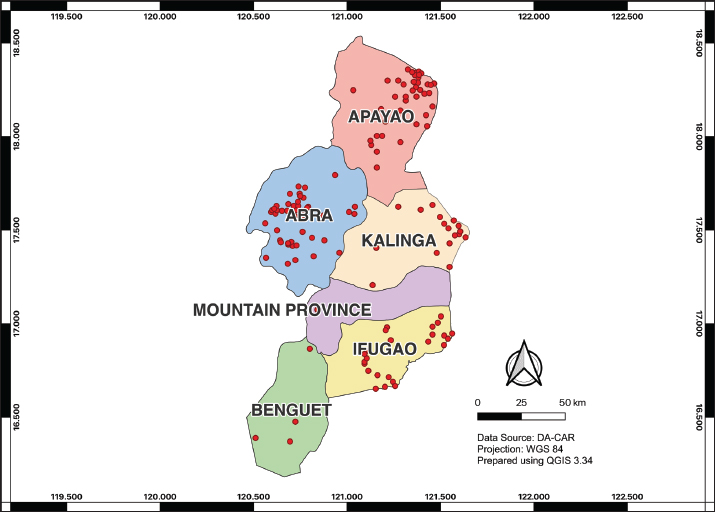
ABSTRACTBackground: African swine fever (ASF) has disrupted the swine industry in the Cordillera Administrative Region of the Philippines. Aim: This study quantitatively simulated the economic impact of different ASF control approaches. The impact of the outbreak on regional livelihoods was also assessed qualitatively. Methods: A mixed-methods research design was used to combine the quantitative analysis and the results of the qualitative study. For the quantitative study, swine population, economic losses, and pork supply-demand gaps were projected using a Monte Carlo simulation from 2025 to 2030. A PAWN global sensitivity analysis with Latin hypercube sampling was conducted to determine which model parameters had the greatest influence on the output. Additionally, 10 stakeholders (one official from the Department of Agriculture, four backyard swine raisers, one butcher, one meat vendor, one eatery owner, one feed supplier, and one transporter/driver) from one highly affected locality were interviewed using a semi-structured questionnaire. Results: Under the baseline scenario, the total number of pigs in the region was projected to reach 183,782 (95% CI: 153,049–203,286) heads by 2030. The cumulative economic losses were projected to amount to 0.29 billion Philippine pesos (US$4.67 million), and the region was projected to face a pork shortage of 17,836 metric tons. The sensitivity analysis revealed that projected cumulative economic losses were most strongly influenced by biosecurity effectiveness. In terms of the 2030 pork supply-demand gap, the average weight of pigs was the most influential factor. The qualitative results also showed that the impact of ASF extends beyond economic losses. Respondents adapted by discovering new ways to earn a living and improving their biosecurity measures. Conclusion: The success of ASF control and recovery may depend on coordinated institutional support and household-level adaptation. Keywords: African swine fever (ASF), Cordillera Administrative Region, Sensitivity analysis, Stochastic modeling. IntroductionThe swine industry is a major agricultural industry that sustains millions of lives across the world. African swine fever (ASF) poses a major threat to the industry. It is a contagious viral disease that can cause high mortality among domestic and wild pigs and may result in serious socioeconomic consequences (Jean-Pierre et al., 2022). Since 2018, ASF has disrupted global pork production and raised concerns about food security (Gongal et al., 2022; FAO, 2024). Surveillance showed that 68 countries and territories reported ASF between January 2022 and January 2025. At this time, over 1.07 million domestic pigs had been infected, and more than 2.25 million animals had died or been culled (World Organisation for Animal Health, 2025). In Sweden, the ancillary sectors incurred costs amounting to approximately 40% of the total ASF costs (Gren et al., 2024). These figures demonstrate the extent of disease spread and how it can affect communities reliant on livestock as a source of livelihood. Between 2019 and 2020, ASF spread rapidly in Asia. This continent is home to more than 60% of the world’s domestic swine. Consequently, outbreaks caused unprecedented losses and massive culling (You et al., 2021). In China, the world’s leading pork producer, ASF outbreaks killed as much as 55% of the country’s herd. Economic losses ranged from US$55 billion to US$130 billion (Weaver and Habib, 2020). The disease caused Vietnam’s gross domestic product to drop by 1.8% and cost more than 1.2 million jobs (Nguyen-Thi et al., 2021). In many communities, the sudden loss of income may have heightened social tension and revealed the fragility of livelihoods that relied on one sector of agriculture. The Philippines has faced similar issues since the first detection of ASF in Rizal Province in 2019 (Fernandez-Colorado et al., 2024). The national swine inventory also declined by 23% from 12.7 million in 2019 to 9.86 million by September 2023 (Hsu et al., 2024). The industry’s losses in the country in 2023 were over US$3.27 billion (Cariaso, 2023). The low supply of domestic pork caused a 54% increase in farmgate pork prices; prices at the retail level rose to approximately 400 Philippine pesos (₱), approximately US$6.53 per kilogram (Department of Agriculture, 2024). An application, Outbreak Costing Tool (OutCosT), estimated the direct cost of the 2019 ASF outbreak in the Philippines at over US$58 million, with 96%–98% of the cost occurred in the affected farms (Casal et al., 2022). Within this national context, the Cordillera Administrative Region (CAR) is a unique case of vulnerability and cultural significance. Swine farming in the area is primarily backyard-based. Most raisers rear fewer than 10 pigs (Department of Agriculture, 2022; Agoot, 2022). The small-scale nature of the production structure increases the risk of disease transmission. Additionally, veterinary manpower and financial resources are lacking, making it challenging to implement biosecurity measures regularly. Moreover, the swine industry’s existence is based on economic necessity and cultural tradition in the region. Swine have a symbolic meaning in the life of the Cordillerans. It is an indispensable part of indigenous rituals like cañao and pedit, which reflect the unity and respect of the community for ancestors (Bengwayan, 2022; Yeoh, 2024). As a result, ASF outbreaks are also threatening cultural continuity in the region. Recent data highlight the persistence of this threat. The Department of Agriculture-Cordillera Administrative Region (DA-CAR) recorded 283 cases in 2024. The spatial distribution of these cases is shown in Figure 1.
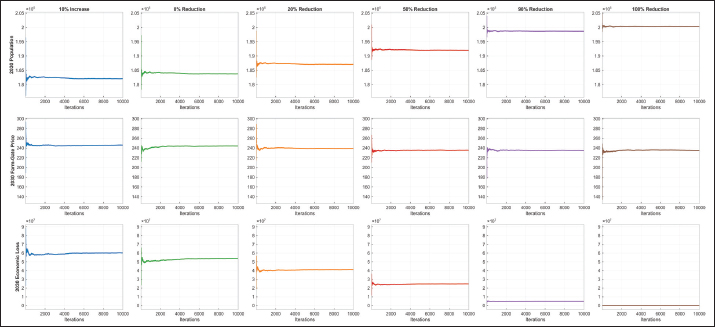
Fig. 1. Spatial distribution of ASF cases in the CAR in 2024. The red points indicate confirmed ASF cases reported by the DA–CAR from January to December 2024. Data Source: Department of Agriculture—Cordillera Administrative Region. Studies on the impacts of ASF in the region are relatively scarce. While the use of forecasting models is essential in determining any patterns or potential future trends concerning the incidence of the disease, it is inadequate in describing the real-life experiences of the people whose livelihoods have been affected by the disease. Therefore, a qualitative element would be crucial in gaining insight into how the community perceives and reacts to these changes. Combining these 2 approaches likely provides a stronger basis for designing culturally sensitive recovery programs. Guided by this premise, this study quantitatively estimated the economic impacts of ASF and qualitatively examined its effects on livelihoods in the region. This research aims to (1) generate forecasts regarding swine population, possible cumulative economic losses, and pork supply-demand gaps under different scenarios associated with ASF from 2025 to 2030; (2) implement a sensitivity analysis for the quantitative results; (3) conduct qualitative analysis of livelihood impacts of ASF among different stakeholders of the swine value chain; and (4) provide policy recommendations to increase economic sustainability, livelihood security, and culturally sensitive recovery programs. Materials and MethodsStudy areaThe study was conducted in CAR, which is located in Northern Luzon in the Philippines. It is a landlocked region with heterogeneous natives and agriculturally reliant societies. It has 6 provinces: Abra, Apayao, Benguet, Ifugao, Kalinga, and Mountain Province. The population of the region exceeds 1.8 million people (Mapa, 2025). The population is unevenly distributed across provinces, which differ in their level of urbanization and access to infrastructure. Research designThe research design used was a mixed-methods study that included a quantitative phase to predict the economic effects of ASF and a qualitative phase to analyze the livelihood impacts. The quantitative component used stochastic modeling to estimate the ASF’s economic impacts. Meanwhile, the socio-economic background and qualitative component complemented these findings by adding a deeper context on how ASF affected livelihoods. Monte Carlo simulationThe model simulated the swine population and economic losses from 2025 to 2030 using 10,000 simulations with Python Monte Carlo. A fixed random seed of 123 was set before generating the stochastic input distributions to standardize the simulation runs. Convergence of the 10,000 simulations was performed by analyzing the cumulative replication numbers between 1,000 and 10,000 using running mean trajectories and Monte Carlo errors in line with the methodology described by Koehler et al. (2009). The running mean of the Monte Carlo estimates across ASF control scenarios in Figure 2 showed increasing stability as the number of iterations increased, whereas the relative Monte Carlo errors declined with additional replications. Regarding the 10% increase in economic losses in 2030, the relative Monte Carlo error rate decreased from 2.98% to 0.95% as the number of Monte Carlo replications increased from 1,000 to 10,000. In the ASF management strategies considered in this study, the relative Monte Carlo error rate was less than 1% at 10,000 Monte Carlo replications.
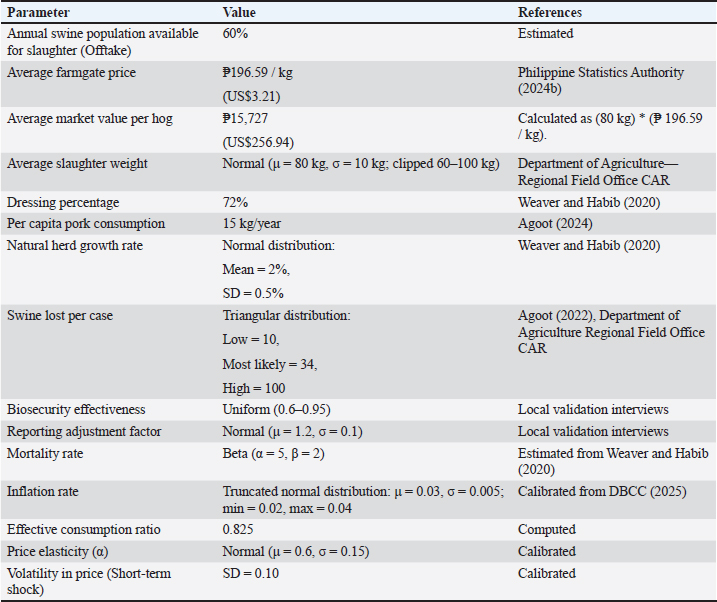
Fig. 2. Running mean of the Monte Carlo estimates for the 2030 population, farm-gate price, and economic loss in 2030 across the 6 ASF control scenarios. The simulations explored six ASF control scenarios in Python. The mean annual results and 95% confidence intervals were obtained from the simulated distributions, with the lower and upper limits defined as the 2.5th and 97.5th percentiles, respectively. The ASF case counts in 2024 were used as the fixed baseline for scaling the control scenarios, as they represented the most recent observed data available when the projections were developed. This baseline was maintained constant throughout the projection period. Baseline ASF case counts and swine population data for CAR and its provinces were obtained from DA-CAR, while human population forecasts were obtained from the Philippine Statistics Authority (Philippine Statistics Authority, 2024a). Stochastic biological and economic parameters were used in the model to reflect herd growth. The stochastic variables included the herd growth rate, number of swine lost per ASF case, biosecurity effectiveness, reporting adjustment factor, mortality proportion, inflation rate, price elasticity, short-term price volatility, and average liveweight. These variables were sampled from the probability distributions shown in Table 1. Table 1. Parameter values used in the Monte Carlo model under multiple ASF control scenarios in the region.
The study used a stock-flow model in which the swine population varied annually due to natural herd growth and ASF-related losses. The number of ASF cases in 2024 was used as the constant base and was modified at the projection to include other levels of ASF control. The change in the swine population at the end of each iteration i and year t was obtained as follows: Pt,i=max (0, Pt-1,i (1 + gi) – C2024 (1 – s) Di (1 – Bi) Li mi) where Pt,i is the projected population, gi is the random herd growth rate, C2024 represents the total number of ASF cases in 2024, s is the ASF control intensity applied under each scenario (s ∈ {–0.10,0,0.20,0.50,0.90,1.00}), Di is the reporting adjustment factor, Bi is biosecurity effectiveness, Li is the number of swine lost per case, and mi is the mortality proportion. Scenario control scales the 2024 case burden by (1–s), and biosecurity further reduces effective cases through (1–Bi). The model was also applied at the provincial level using province-specific herd sizes and ASF case counts. Scenario designTo compare the outcomes at various levels of control, 6 ASF control scenarios were modeled, ranging from increased transmission to complete elimination. The 10% scenario in the model refers to a 10% increase in ASF cases relative to the 2024 baseline. The 0% scenario referred to a situation where no changes in ASF cases were observed from the 2024 baseline. The 20% scenario referred to a 20% reduction in the number of ASF cases, which amounted to partial control. Meanwhile, the 50% scenario referred to a 50% reduction in the number of ASF cases and was considered moderate control. A reduction of 90% in the number of ASF cases, which was equivalent to near eradication, was also noted. The 100% reduction scenario assumed complete ASF case reduction. To isolate intraregional processes, swine importation outside the region was excluded. Economic loss and supply calculationsFor each scenario, the model computed annual economic loss using the following formula: Li,p,s,t=Di,p,s,t × Wi × Pi,p,s,t where Li,p,s,t represents the economic loss for iteration i, province p, scenario s, and year t, Wi represents the sampled average liveweight, Di,p,s,t represents the estimated ASF-related swine loss, and Pi,p,s,t represents the simulated farmgate price. The model then calculated cumulative economic loss by summing annual losses from 2025 to 2030. The study reported the mean cumulative loss for each province and scenario across the 10,000 Monte Carlo iterations. Philippine peso values were converted to US dollars using an exchange rate of ₱61.21=US$1. To assess potential production deficits or surpluses, the regional pork supply–demand balance was estimated for each ASF control scenario. The pork supply was calculated from the projected swine population, given by the following formula:
where Pt represents the projected swine population in heads. Pork demand was determined by multiplying the projected human population by the adjusted per capita consumption level, expressed as follows:
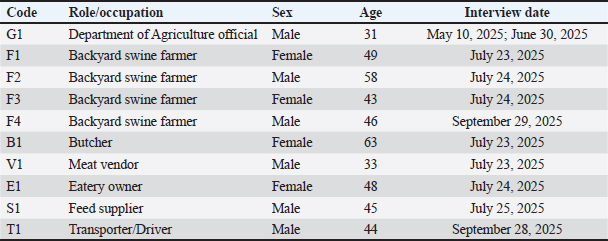
where Ht denotes the projected human population, Effective Consumption Ratio (ECR) is the effective consumption ratio, and 15 kg per person per year is the average pork consumption in CAR, which is the highest in the country (Agoot, 2024). The ECR was adopted to tune the pork demand to meet the age-related variation in meat consumption. According to the age structure in the region in 2020 (Brinkhoff, 2025), 65.8% of the population is in the working-age group, 28.2% is in the age group younger than working age, and 6.0% is aged 65 and above. Children had a consumption weight of 0.4, and older adults had 0.9, in line with the FAO or WHO adult-equivalent dietary needs scaling (Food and Agriculture Organization and World Health Organization, 2004). The ECR that was obtained was ECR=(0.658 × 1.0) + (0.282 × 0.4) + (0.060 × 0.9)=0.825. This adjustment indicates that effective pork demand was equivalent to 82.5% of the nominal per capita consumption rate. Sensitivity analysisPAWN global sensitivity analysis was performed to measure the robustness of the models. In the PAWN method, the distance-based measures are used to compare the unconditional and conditional distributions of outputs (Pianosi and Wagener, 2015; Puy et al., 2020). To implement it, the analysis was done in Python with the help of SALib. For stability of iterations, a fixed random seed of 123 was used for Latin hypercube sampling (LHS), while a bootstrap resampling seed of 42 was used. As mentioned by Mckay et al. (2000), in some cases, LHS offers better results than conventional sampling techniques, such as simple random sampling and stratified sampling, and thus can be considered a useful tool to select the value of input variables in computer simulations. The sampling method can be considered suitable for PAWN global sensitivity analysis because it offers well-distributed parameter value combinations. Then, the PAWN indices of cumulative economic loss (2025–2030) and the 2030 pork supply-demand gap were computed. Other variables, such as the swine population and farm-gate price, were omitted because they are intermediate outputs. The parameters were then ranked from highest to lowest based on their mean PAWN sensitivity indices to identify the most influential inputs. Provincial-level PAWN was not performed because of the relatively small provincial case counts. Moreover, province-specific parameters and bounds could not be specified due to limited data. Rather, the aggregation of provinces stabilized the indices. Qualitative data collection and analysisA sample of 10 key stakeholders (six men and four women) representing various positions in the local swine value chain within a single municipality was interviewed. The location was chosen because it was a place most affected by ASF. The emphasis on a locality made it possible to consider socio-economic effects in a smallholder environment. Table 2 presents the participants’ characteristics. Although this sample size was limited (n=10), thematic saturation is usually attained after 9–17 interviews in homogeneous populations (Hennink and Kaiser, 2021). Table 2. Demographic and occupational profile of the 10 interview participants representing key roles across the local swine value chain.
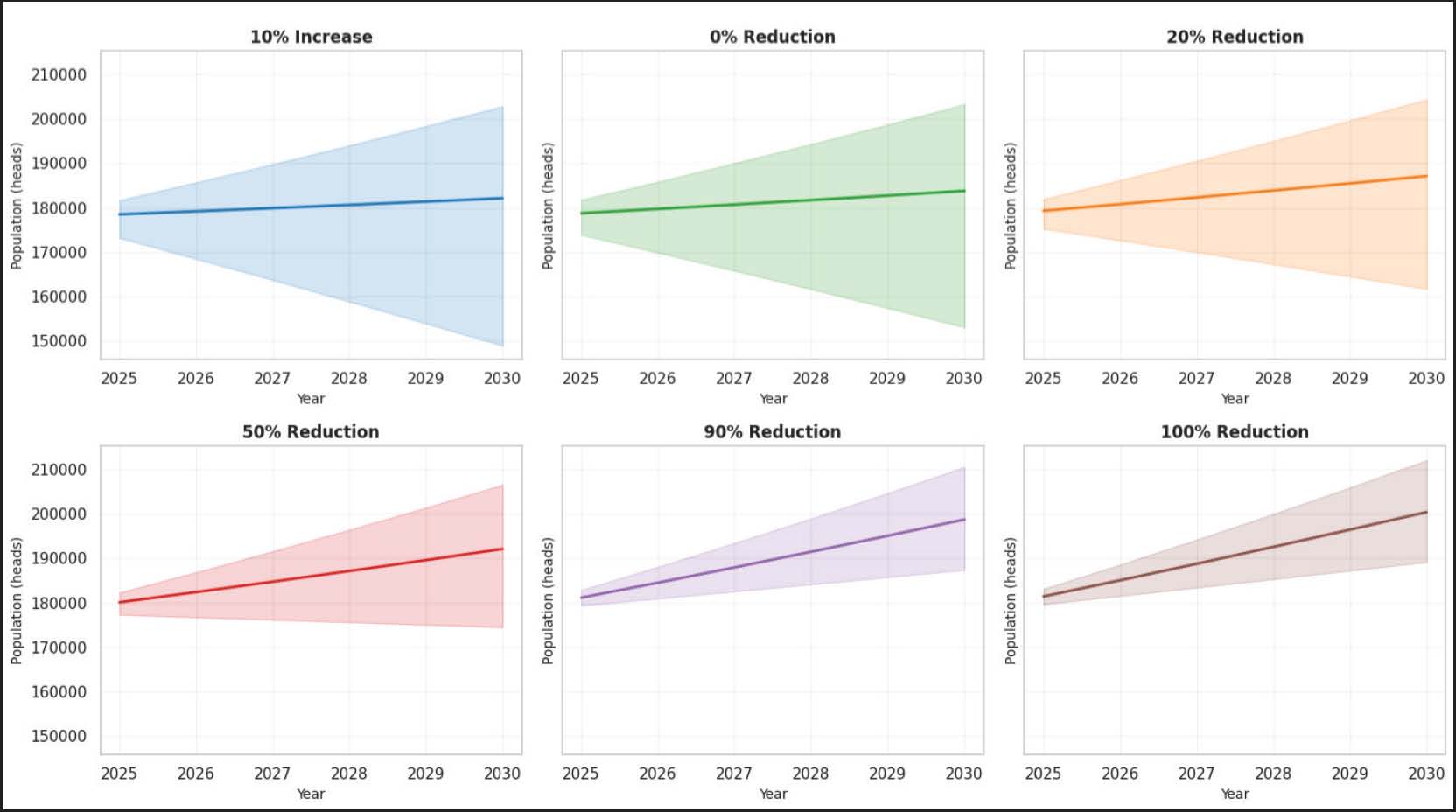
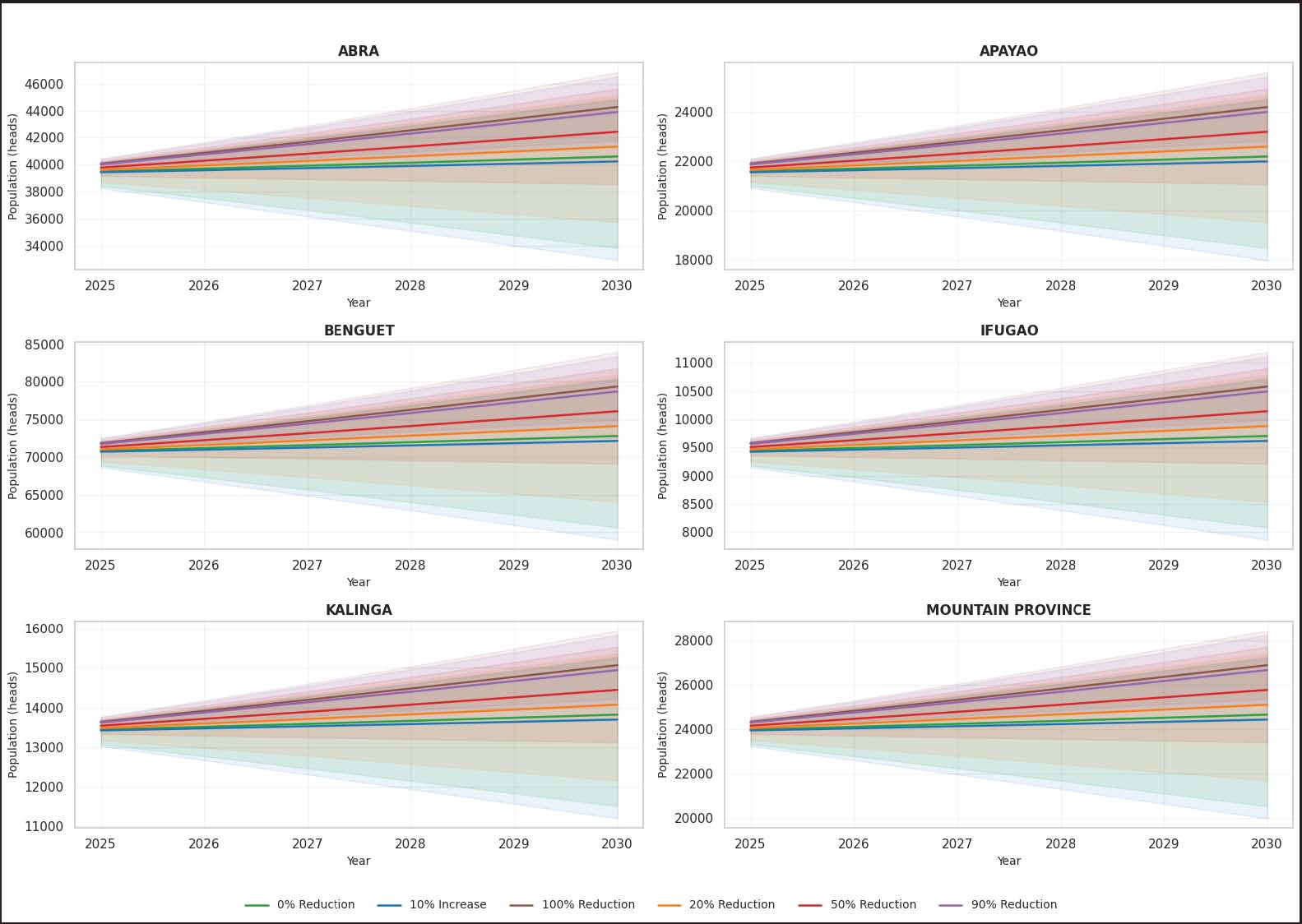
Face-to-face semi-structured interviews were conducted either in Filipino or Ilocano. The responses of all interviewees were recorded. Verbatim transcripts were made, and their accuracy was verified. In turn, 2 language instructors reviewed the English translations, which was necessary to ensure that the translations were aligned to the participants’ intended meanings. Data were analyzed with the help of thematic analysis in accordance with Braun and Clarke (2006). The researchers coded the transcripts on their own. Moreover, the study used triangulation by comparing the quantitative results with the Monte Carlo simulation results and interview findings. Supplementary Material A provides the interview guide. Ethical approvalNo experimentation with living animals was performed because the data were obtained from DA - CAR. Additionally, before the conduct of the study, ethical clearance for the interviews was obtained from the University of the Cordilleras under REC No. 191-2026, April 21, 2026. Ethical standards were observed during the interviews. Participation was voluntary, and informed consent was obtained from all participants. No personally identifiable information was included in the dataset or reported in the study to protect privacy and confidentiality. All data were handled in accordance with the Data Privacy Act of 2012 in the Philippines. ResultsProjected swine populationFigure 3 illustrates the regional swine population in 2030 for different ASF control scenarios. The mean swine population for a 10% increase in ASF incidence cases is 182,123 (95% CI: 148,910–202,837). The mean swine population increased to 183,782 (95% CI: 153,049–203,286) for 0% reduction, 187,102 heads (95% CI: 161,679–204,394) for 20% reduction, 192,081 heads (95% CI: 174,458–206,551) for 50% reduction, 198,720 heads (95% CI: 187,372–210,569) for 90% reduction, and 200,380 heads (95% CI: 189,149–212,071) for 100% reduction. Figure 4 illustrates the provincial swine population for different ASF control scenarios. The provincial swine population for a 10% increase in ASF incidence cases is 40,235 heads (95% CI: 32,898–44,812) for Abra, 21,987 heads (95% CI: 17,977–24,488) for Apayao, 72,144 heads (95% CI: 58,987–80,349) for Benguet, 9,617 heads (95% CI: 7,863–10,711) for Ifugao, 13,696 heads (95% CI: 11,198–15,254) for Kalinga, and 24,444 heads (95% CI: 19,986–27,224) for Mountain Province.
Fig. 3. Projected swine population in CAR (heads), 2025–2030, under 6 ASF scenarios. The lines show the Monte Carlo mean, and the shaded bands show the 95% CI.
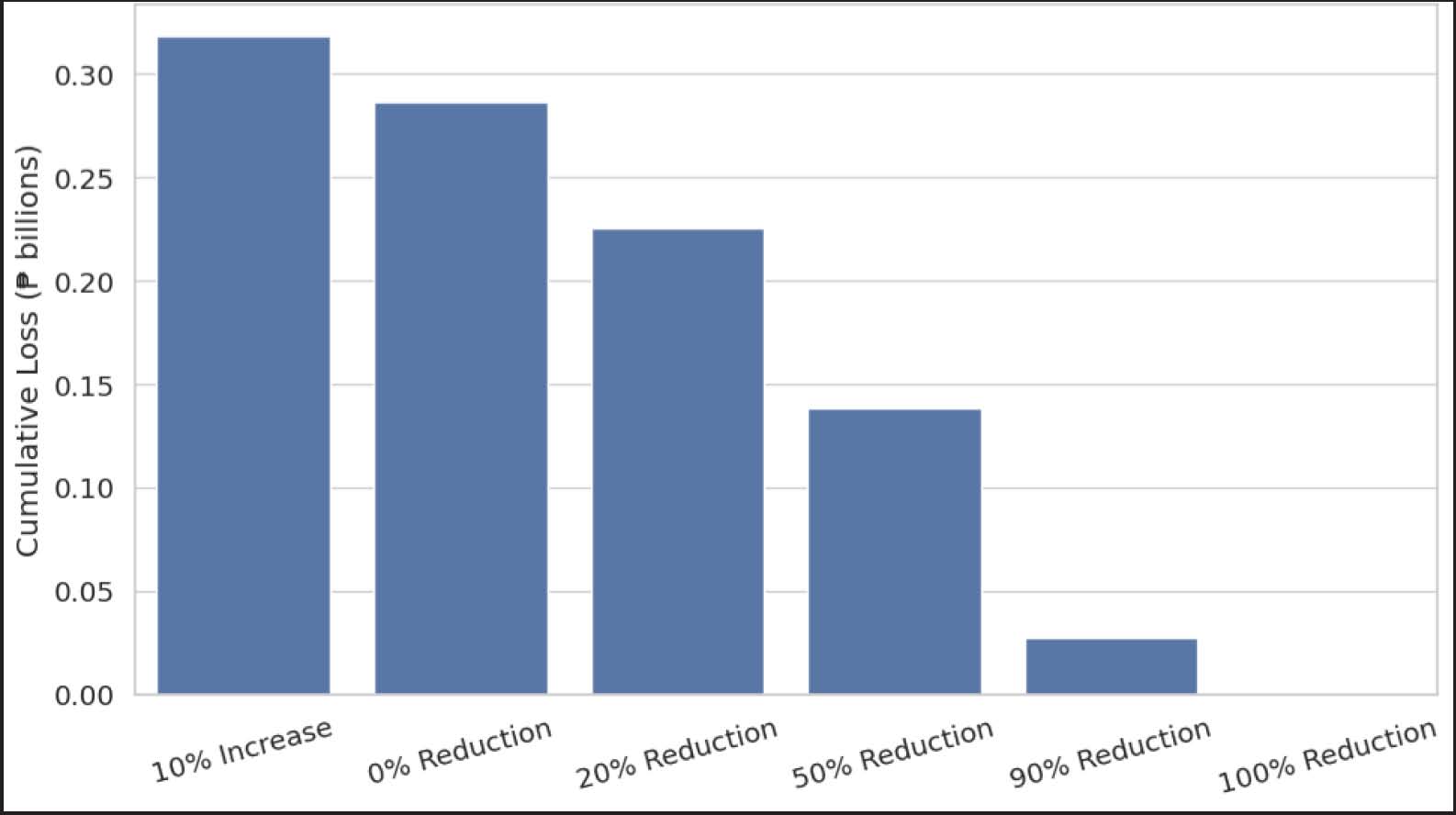
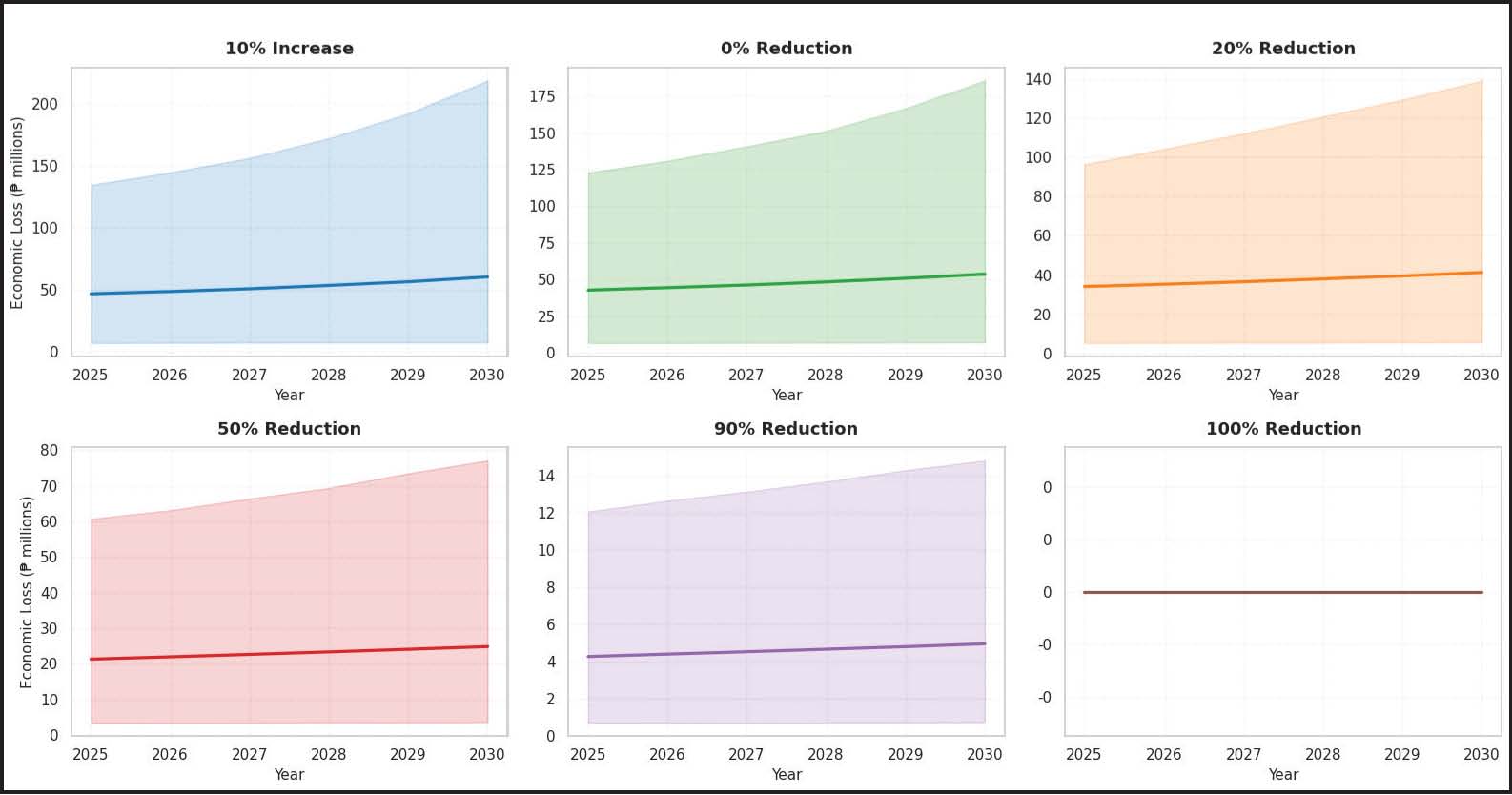
Fig. 4. Projected provincial swine population (heads), 2025–2030, under 6 ASF scenarios. Lines show the Monte Carlo mean; shaded bands show the 95% CI. Projected monetary lossesFigure 5 presents the cumulative monetary losses due to different ASF transmission control scenarios. The cumulative monetary losses were estimated at ₱317,762,802 (US$5.19 million) in the case of a 10% increase in ASF transmission and approximately ₱286,091,623 (US$4.67 million) for the baseline scenario. For the other scenarios, the cumulative monetary losses decreased to ₱225,081,783 (US$3.68 million) for the 20% reduction, ₱138,007,170 (US$2.25 million) for the 50% reduction, and ₱27,533,886 (US$0.45 million) for the 90% reduction scenario, respectively. Figure 6 presents the projected economic loss in CAR under 6 ASF scenarios from 2025 to 2030. For the province-level projections, Benguet recorded the highest cumulative economic losses among provinces in all scenarios with ₱113,409,533 (US$1.85 million). At the regional level, the monetary losses in 2030 decreased from ₱60,306,708 (US$0.99 million) for the 10% increase scenario to ₱4,943,370 (US$80,760.82) for the 90% reduction scenario. Based on the initial price assumptions, the projected losses for households raising 3–10 pigs ranged from ₱47,181 (US$770.81) to ₱157,270 (US$2,569.35) in the event of an ASF outbreak.
Fig. 5. Total cumulative monetary loss in CAR (2025–2030) by scenario. The bar chart illustrates the total estimated cumulative loss in billions of Philippine Pesos (₱).
Fig. 6. Projected economic loss in CAR under 6 African swine fever (ASF) scenarios (2025–2030). The shaded areas represent the confidence interval (95% CI) around the mean projection (solid line). Table 3 shows the estimated economic losses in the region in 2030 in relation to the different ASF control strategies. On a regional scale, the highest losses were recorded in the scenario with a 10% increase, with ₱60.31 million (US$0.99 million), while losses in the 0% reduction scenario were estimated to be ₱53.70 million (US$0.88 million). Relative to the 10% increase scenario, the baseline scenario showed an estimated reduction of about 11.0%. As ASF control improved, projected losses declined further, with reductions of approximately 31.4%, 58.8%, and 91.8% under the 20%, 50%, and 90% reduction scenarios, respectively. The largest improvement was observed under the 90% reduction scenario. On the provincial level, Benguet showed the highest economic losses in all the scenarios, followed by Abra and Mountain Province. Considering the 10% scenario, Benguet contributed ₱23.89 million (US$0.39 million), or almost 39.6% of the regional loss. The second province that incurred the most significant losses for the 10% scenario was Abra, which contributed ₱13.29 million (US$0.22 million). The third province was Mountain Province, which had ₱8.13 million (US$0.13 million) in estimated losses. Table 3. Provincial economic loss in 2030 (base year 2024).
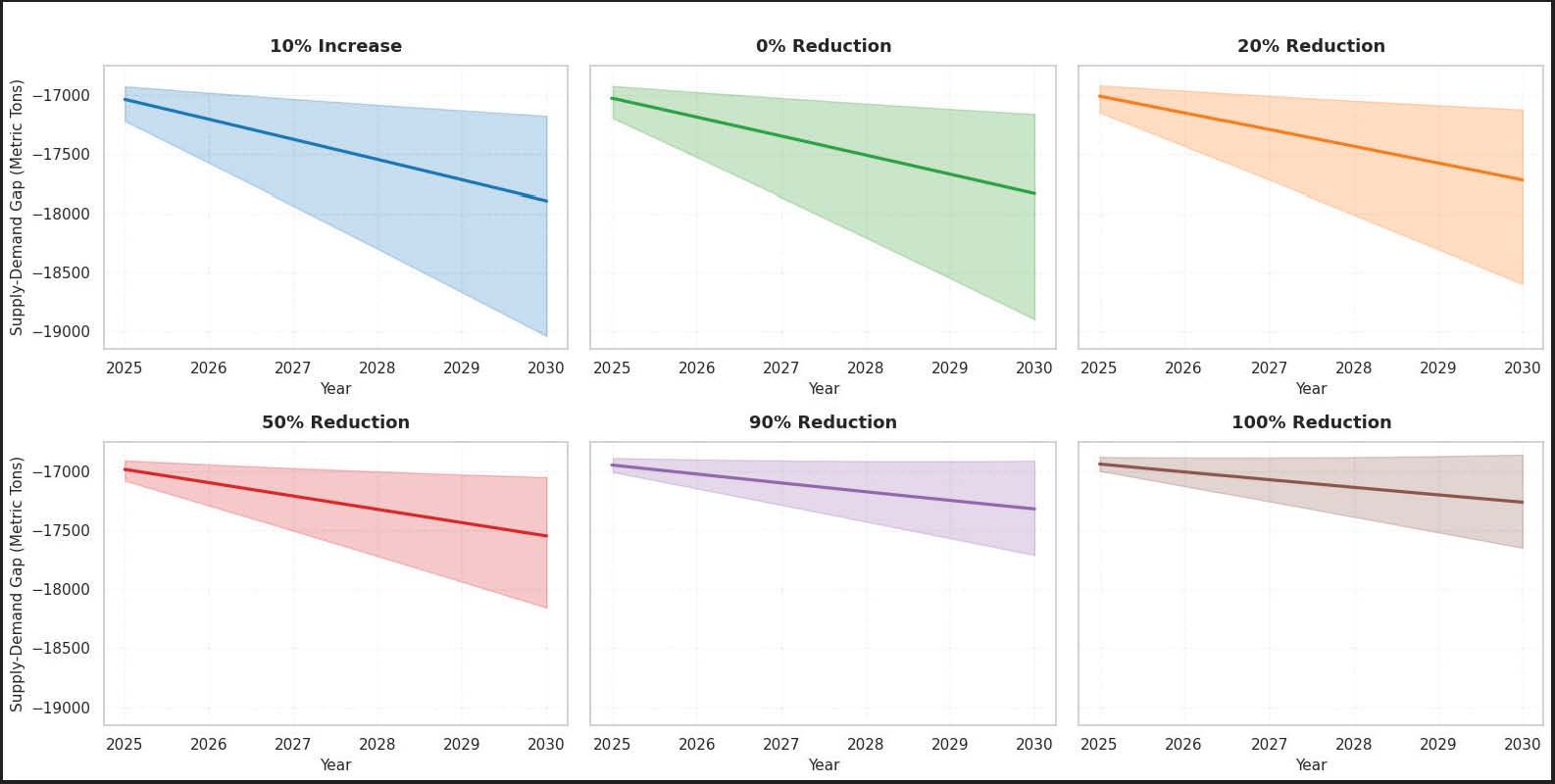
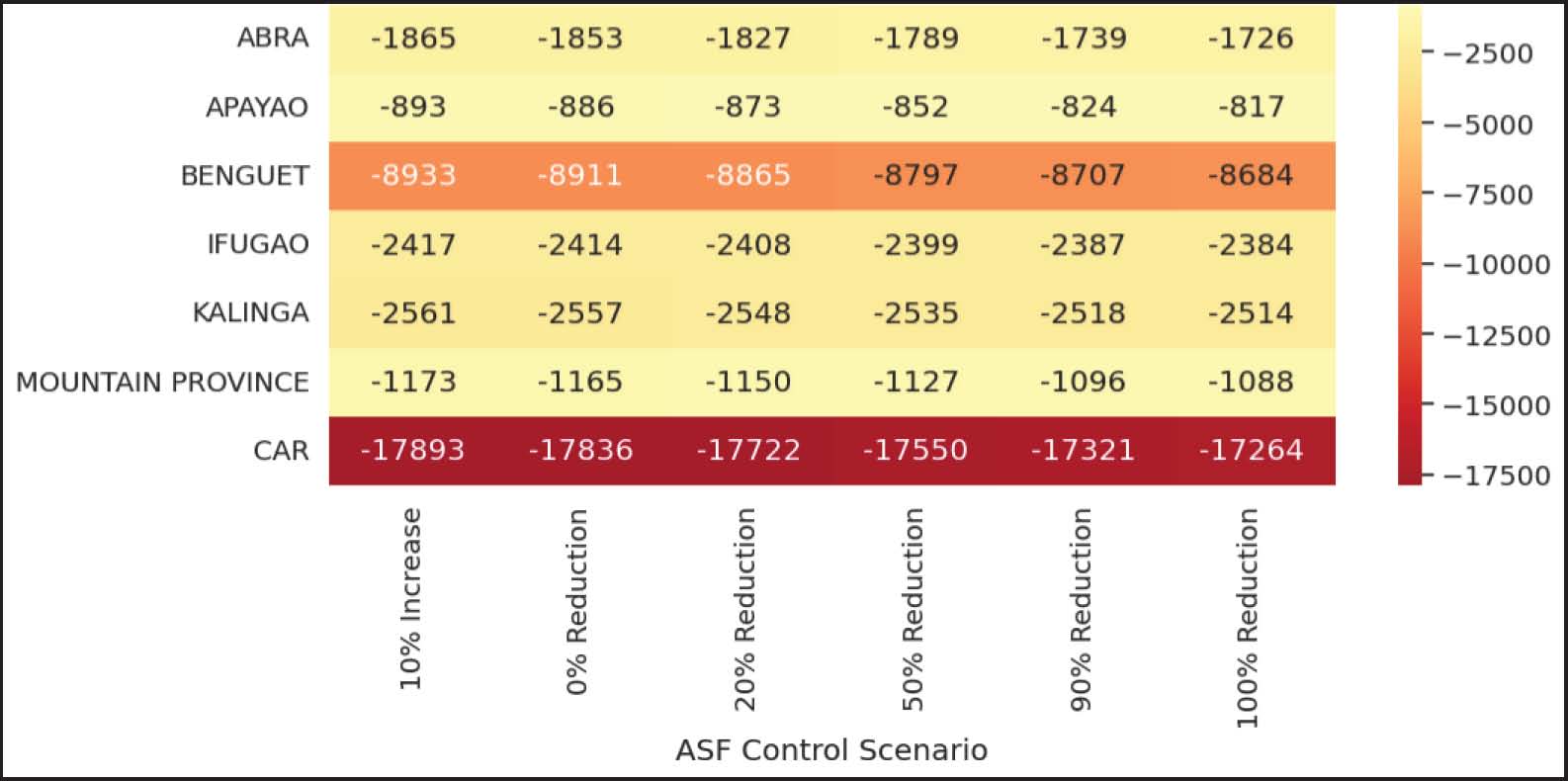
Pork supply-demand gapFigure 7 displays the projected supply-demand deficit in the region under different ASF control scenarios. As illustrated in the figure, the projected deficit remained high at about 17,900 metric tons under the 10% increase and baseline scenarios. Under the 20%–50% reduction scenarios, the deficit decreased by approximately 0.6%–1.6%. Under the 90%–100% reduction scenarios, the deficit improved by approximately 2.9%–3.2%. The supply-demand deficit situation in the provinces was also determined. All provinces remained in a pork supply deficit by 2030, as shown in Figure 8. The greatest deficit was recorded in Benguet at approximately 8,684–8,933 metric tons in all scenarios. Deficits in the provinces of Abra, Mountain Province, Ifugao, and Kalinga ranged from 1,088 to 2,561 metric tons in all scenarios. Moreover, Apayao recorded less than 900 metric tons in all scenarios.
Fig. 7. Projected pork supply–demand gap in CAR (2025–2030) expressed in metric tons under 6 ASF control scenarios. The shaded bands show 95% CIs.
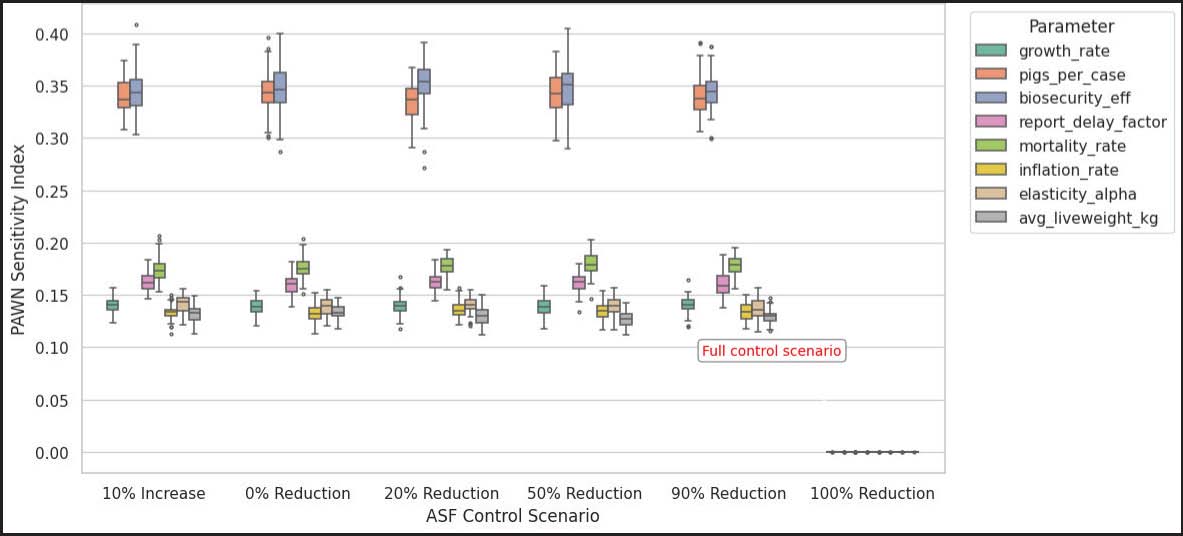
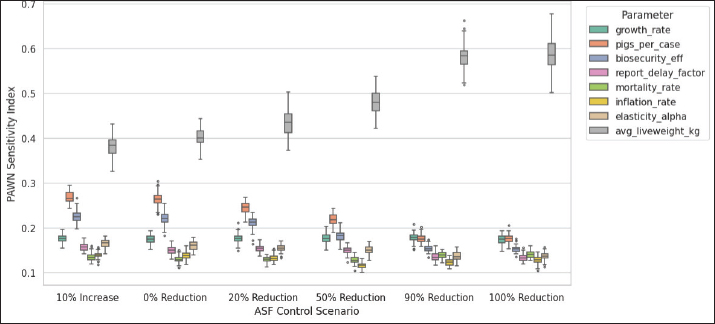
Fig. 8. Projected pork supply–demand gap (metric tons) by province under ASF control scenarios for 2030. Sensitivity analysisFigure 9 illustrates the PAWN sensitivity analysis for the cumulative economic losses from 2025 to 2030. In the 10% scenario, the biosecurity effectiveness had the largest sensitivity index, with a value of 0.35. The number of pigs lost per case was the second largest sensitivity index, with a value of 0.34. The sensitivity indices for other variables were lower, with PAWN values ranging from 0.13 to 0.18. The PAWN sensitivity analysis for the 2030 pork supply-demand gap is demonstrated in Figure 10. The mean liveweight per pig had the highest sensitivity index across all scenarios, with PAWN values ranging from approximately 0.38 under a 10% increase in ASF incidence to nearly 0.59 under full control (100% reduction). Other variables had lower sensitivity indices, with the PAWN values ranging from 0.13 to 0.27.
Fig. 9. PAWN sensitivity across ASF control scenarios for cumulative monetary loss in Philippine pesos from 2025 to 2030. Each box represents the distribution of PAWN indices for 8 parameters across 6 ASF control levels.
Fig. 10. PAWN sensitivity across ASF control scenarios for the 2030 pork supply–demand gap measured in metric tons. Boxes indicate the relative influence of each parameter on the 2030 pork supply–demand gap across 6 control scenarios. Livelihood impacts of ASF: qualitative findingsSix major themes emerged regarding the effects of ASF on the livelihoods of the people according to the information gathered from the various stakeholders through the interview process. Theme 1: impact and role of preemptive actionInterviewed farmers reported varied experiences during the ASF outbreak. Some farmers were able to act before the ASF outbreak incident reached their farms. Farmer F1 noted that “The news covered that ASF was coming our way. Therefore, although we were not prepared, we sold all our pigs. We simply wanted to get our capital, even though the price might be less than we wanted. We were not going to lose it all.” However, the other farmers identified ASF only when symptoms appeared. Farmer F2 explained: “Our pigs got ASF, and we realized they had the disease when their diarrhea became liquid, and their mouths were foaming. We panicked. We attempted to segregate the ill, but it was too late. More than 10 of our pigs died.” Farmer F3 experienced the heaviest loss. Swine raising was their principal source of income, and they had more than 40 pigs, earning an average of ₱60,000 (US$980.23) to ₱80,000 (US$1,306.97) annually. However, most of their pigs died when they encountered the outbreak. Farmer F3 explained, “As we discovered our pigs had ASF, their mouths were foaming, and we separated them. A total of 36 pigs died because of ASF.” The loss was estimated to be around ₱130,000 (US$2,123.84) to ₱150,000 (US$2,450.57). Another farmer, F4, also encountered an ASF outbreak on their farm, although their pigs were not infected. However, they felt that they were also affected because their neighbors had encountered an outbreak of ASF: “We were fortunate that our swine did not fall ill, and the farms that surrounded us did. Although we were not in danger, we still felt that we were being affected.” Theme 2: local food system transformationThe farmers also discussed the local food system, particularly swine. Owing to the outbreak, a 50% increase in the price of pork was noted at the outbreak’s height. F1 recalled that “the number of local suppliers decreased during the ASF outbreak.” The prices increased nearly twice as much per kilo. What was initially ₱200 (US$3.27) went up to nearly ₱400 (US$6.53). Many of them resorted to chicken, beef, and fish. “All prices went up.” The participants explained the challenges in maintaining the supply and the prices in terms of the difficulties encountered in the supply chain. Meat vendor V1 explained: “Few people were buying them because they were afraid. Fish became an alternative. Even if supplier prices increased, we had to raise our prices to avoid losses. Currently, it has become challenging because there are very few producers selling hogs, which has resulted in a shortage of hogs.” Regarding the restrictions encountered in the supply chain, the participants explained the restrictions on transportation. Trader T1 explained: “The ASF outbreak required careful handling on our part. The border controls were strict. The officers inspected each truck and properly checked our cargo. If we had a missing document, we were instructed to go back. At times, we waited long hours. ” The participants also explained the restrictions on the movement of live swine and pork products coming from other areas as the local fresh meat supply decreased. F1 observed that “Previously, fresh meat was sold in the market. However, when supplies were quickly depleted, frozen meat [reportedly illegally imported from other areas through informal channels] began to appear.” Theme 3: value chain instability and role shiftingThe participants were able to describe the changes in roles, income patterns, and market practices in the pork value chain during the outbreak. Some could sell pigs in large quantities, but consumers were not sure about the product’s pricing and availability. However, butcher B1 recalled the following during the peak of the outbreak: “It was challenging at the outbreak’s height. All my suppliers were affected. Prices dropped because the owners wanted to sell quickly before the ASF struck. We, in turn, were forced to butcher three times a week, not just on Sundays anymore.” Despite the increased workload, earnings did not improve. B1 explains that operating costs rose while profit margins declined: “Butchering costs rose. It used to be cheaper, but now they want everything fast, so we had to adjust. Our earnings really dropped.” Feed suppliers were not spared, and their income was reduced. Feed supplier S1 mentioned that “Our revenue declined drastically as the ASF was transmitted because there were only a few consumers left. Many of our frequent customers who raised hogs discontinued their purchases. Did they manage to repay their past debts? Not all of them. Others went bankrupt and never returned. Our revenue was reduced to nearly 50%. However, we did not stop, and we continued operating for the few who continued to raise pigs.” The food retail establishments were not exempted from the outbreak’s effects. E1 explained why they removed pork from their menu: “At that particular time, it was a difficult moment, as nearly all the pigs fell ill, and we did not know how to check the pigs that had not yet been hit by ASF; hence, we just ceased selling it temporarily.” Theme 4: emotional trauma and social trust lossParticipants experienced fear, loss of income, and altered consumer behaviors during and after the outbreak. For instance, E1 mentioned the following: “We have completely stopped selling pork. We were afraid that our frequent customers would accuse us if something went wrong. Adobo, sinigang, and everything with pork—we took them off the menu.” For B1, the outbreak threatened a livelihood that had supported her family for many years. The impact was described as follows: “It had a massive impact on us because this business is our main source of income. This is where my husband and I have begun to send our children to school even in the past. With the advent of ASF, we lost a massive portion of our revenue.” E1 added: “Some also ceased to eat pork. Some are still fearful even today. They have resumed eating pork, but their consumption has not returned to the previous levels.” The emotional impact was particularly severe among farmers. Farmers F2 and F3 became emotional during the interviews. They described how the loss of their herds affected their ability to support their children’s education and future needs. For them, losing swine meant losing a primary source of income and a long-standing livelihood. Theme 5: adaptation, learning, and the new normal after the crisisParticipants reported various changes in livelihood management and pig raising during the recovery from the crisis. These included a decrease in production volume and diversification of livelihood sources. Farmer F1 said: “Those who return to swine rearing are now more cautious. Some have biosecurity, such as the use of PPEs. Before, there was none of that.” Farmer F2 also shared the following about returning to swine rearing but on a smaller scale: “We only raise a few now. It will be a waste of feed to be hit by ASF once again. But we have to try again. The greatest difficulty of this time is learning from mistakes. It is no longer the time to be complacent. We always need to be ready.” Theme 6: requirement for inclusive supportThe government faces several challenges in providing support to the participants during the outbreak. A DA-CAR official shared the following: “Lack of knowledge and observance of biosecurity practices, limited budget and human resources of the municipality, and high-risk cultural practices, such as the distribution of watwat (boiled meat), are some of the challenges faced by the government during the outbreak.” Farmers also shared their challenges in accessing government support. Some farmers shared that only those who were registered could access support. Farmer F2 stated, “We did not receive any assistance and had no connection with the government.” “Yes, some received assistance, but only those who are registered,” Farmer F1 stated. Meanwhile, Farmer F3 shared, “Nothing was given to us because we are far from the jar.” In this context, “far from the jar” implies limited access to government agencies that could provide assistance. DiscussionThe results indicated that the impact of ASF in the area was dependent on how families, markets, and institutions coped with risk and uncertainty. As shown in Table 1, the uncertainty in significant biological and economic variables in the area was evident in the model. A decrease in the proportion of infected swine resulted in a significant recovery of the herd and a substantial reduction in total losses. Figure 3 shows the improvement in the swine population recovery in the region due to ASF control measures. Figure 4 presents the same trend in its provinces. This is because preventing infection can break several infection chains in the future. A similar pattern has been observed in other systems infected with ASF (Fasina et al., 2011; Matsumoto et al., 2021). This also indicated that the benefits of ASF control in the area are not limited to disease control and can lead to a better recovery of the herd in the region. In addition, an advantage associated with prevention rather than delayed response was observed, as emphasized by Ceruti et al. (2025). This phenomenon was evident from Theme 1, which indicated that early adaptation to biosecurity interventions reduced the amount of losses and facilitated recovery, whereas late identification led to high losses. Figure 9 illustrates that biosecurity and swine loss per case had high sensitivity indices to cumulative economic losses. The findings emphasize the importance of adopting biosecurity as a first-priority intervention strategy. A similar trend has also been noted in the literature, which highlighted that biosecurity was an effective preventive and control intervention strategy where vaccines are absent (Aliro et al., 2022). As shown in Figures 5 and 6 and Table 3, projected monetary losses declined as ASF control improved, while regional production increased under more effective disease control scenarios. Nevertheless, Figures 7 and 8 reveal a gap in the supply of pork products even after implementing better controls. Thus, increased control measures in the region were insufficient to entirely solve the issue of the lack of pork product supply. As seen in the case of Benguet, there was still a shortage in the supply of pork products despite the advancements in production. The problem could be attributed to the province’s heightened population. Herald Express News Team (2022) reported that Benguet has the highest population in the Cordillera region. Some swine and pork products from within the region may also be directed to Baguio City. This city has higher pork consumption rates due to urbanization and high population density. Therefore, shortages may continue to drive demand for pork products from outside the region. Imports or transported products that comply with the required standards will be required. Furthermore, another strategy adopted to address ASF will revolve around controlling the disease locally. Efforts should be made to ensure that animals and pork products imported to the markets are from healthy sources. For example, pigs and pork products entering the market must be inspected. Authorities must also ensure that strict movement control and supply chain monitoring are in place. Apart from high demand, pork production may also fall short due to the time required for industry reconstruction. Hence, efforts should not only be geared toward ensuring disease control but also toward strengthening the recovery process by providing the necessary resources, including healthy breeding stock. However, it is imperative that the concerned agencies conduct monitoring and encourage prompt reporting of suspected disease outbreaks. Furthermore, the finding was substantiated by the PAWN sensitivity analysis shown in Fig. 10. The mean liveweight of a pig has the largest sensitivity index in all cases considered for the ASF management problem. Therefore, apart from disease control, the productivity level and pig weight will affect the projected pork supply-demand balance. This implies that efforts should be exerted to facilitate proper nutrition and effective breeding practices apart from herd rebuilding. Cooper et al. (2022) further stated that the impacts of ASF went beyond farm gates and differed depending on the actors. This implied that a supply shortage would have significant implications for suppliers, traders, vendors, and other market stakeholders. It was also in line with the argument of Sánchez-Vizcaíno et al. (2021) and Berends et al. (2021) on how ASF has considerably transformed pig markets and disrupted supply chains in ASF-affected countries. Collectively, these results indicate that the impacts of ASF extend beyond production to encompass the entire pork value chain. The findings were related to Themes 2 and 3, which revealed that the issue concerned both the supply chain and the entire pork value chain. The impacts also extended to those who were not directly affected by the disease. The findings of Themes 4 and 5 illustrate the impact of ASF on recovery and reinvestment decisions. Through their narratives, the study participants revealed how ASF compromised household economic security because backyard raisers viewed swine as a means of savings, a safety net, and capital investment. In Theme 4, it was evident that ASF caused emotional effects due to the loss of animals, which some farmers considered an extension of the family and pets. Similarly, Cooper et al. (2022) reported that ASF affected farmers beyond financial loss in the Philippines, as many lost pigs they regarded as pets or as part of the family. They noted the need for effective communication of the process of depopulation and for more humane methods of depopulation. Theme 5 pointed out that some farmers were still interested in restocking their pigs in a much more cautious manner. The findings indicated that despite previous losses, the farmers were open to restocking their pigs, while also taking precautions to avoid incurring additional losses in the event of another ASF outbreak. Similar results were found in other places, such as the study conducted by Berends et al. (2021), where the farmers in Timor-Leste were concerned about future outbreaks and distrusted the restocking of pigs. Likewise, Delfin-Bumatay and Madrid (2024) stated that raisers in the Philippines’ Aurora province felt emotionally distressed and, in some instances, stopped swine raising due to the outbreak. Other stakeholders showed resilience in that they did not discontinue their activities but tried to adapt to the new situations. For example, farmers lessened herd sizes to reduce feeding costs and avoid losing more money. Some of them resorted to other industries to keep earning enough to feed themselves until the conditions became favorable for restocking. The vendor managed to survive by adapting to reduced stock, weak market demand, and transport problems, while the owner of the eatery adapted to the scarcity of meat by offering new menu options according to consumer preferences. From these activities, although the ASF had disrupted their normal activities, the people found ways of coping and surviving economically. However, it also became obvious that resilience depended on factors such as savings, access to information, and social support. Therefore, the community must strengthen its resilience to cope with the effects of ASF. The experiences reported under Theme 6 showed that access to recovery pathways was not uniform across participants. Because many backyard raisers were not eligible for these programs, the lack of formal registration was identified as a barrier to accessing programs for indemnification and repopulation. This was also observed in Vietnam and China, where backyard raisers were unable to access support programs due to administrative issues (Nguyen-Thi et al., 2021; You et al., 2021). This situation may be viewed as an unintended consequence of institutional requirements, where measures intended to enhance accountability were barriers to other raisers’ support programs. The local term “far from the jar” further revealed the distance felt by some raisers from government support. In general, this instance may have occurred because some hog raisers were not well-informed about the requirements, procedures to follow, and proper offices to seek support from during an ASF outbreak. To address these issues, there is a need to strengthen community awareness programs so that raisers are well-informed of the procedures and support programs available during the ASF outbreak. Government programs could assist in controlling and recovering from ASF through institutional means that will aid the affected hog raisers. An example of a government program is the INSPIRE Program offered by the Department of Agriculture, wherein breeder pigs are given to hog raisers to improve their hog farms and increase local animal production (Department of Agriculture, 2023). Nevertheless, for the unregistered backyard raisers to adapt to this program, simpler procedures, community validation, and closer collaboration with the local government units and barangay officials are required. Cultural practices in the community also shaped the ASF outbreak control. Ritual practices emphasized the value of communal eating in strengthening family relationships, which the community considered essential in the area. This indicated that ASF control measures should consider local cultural practices and promote prevention strategies that the community can accept, particularly in the safe handling of pork. Overall, ASF had major economic and livelihood impacts across the pork value chain. Changes in the availability of swine led to a change in consumption patterns within the community, resulting in a change in the local food system. Hence, disease control, repopulation and recovery support, inclusive institutional action, and the active participation of all actors in the value chain are required to address ASF. Limitations of the studyThis research paper recognizes several limitations. In the quantitative part, the results depend on the precision of the input parameters in the Monte Carlo model. As reported by the official of the DA-CAR, underreporting ASF cases causes uncertainty. The use of expert opinion and published materials for some parameters may have introduced uncertainty or potential bias. Simplified assumptions, such as one regional farm-gate price and price volatility, are also used in the model. Future studies should use dynamic price series and province-specific consumption models. For the qualitative component, the main limitations were the small purposive sample from one province and the reliance on respondents’ recollection of past experiences, which may have introduced recall bias. Future studies should cover a wider geographic area through regionwide surveys and comparative studies in other culturally distinct parts of the Philippines. ConclusionThe ASF has affected livelihood and market structures in the region, but recovery is still possible with the help of both institutional and household efforts. The results show that income diversification and institutional responsiveness enhance recovery, highlighting the importance of effective institutional support in the recovery process after the outbreak. In general, a holistic approach to policies is needed to address the problem’s economic and livelihood impacts. In this regard, the following recommendations are made to assist in the recovery process. Indemnification should be prompt and available, especially for small-scale producers. Biosecurity measures should be enforced consistently but should be adapted to small-scale production settings. Hence, hog raisers should be mobilized to take an active role in the recovery process and in preventing future outbreaks. Repopulation programs should focus on small-scale raisers and provide them with reputable sources of ASF-free piglets. Institutional frameworks should also consider the sociocultural significance of swine raising, which supports both livelihood and cultural practices. Overall, the success of ASF control and recovery may depend on the combined efforts of institutions and households. AcknowledgmentsThe authors extend their sincerest gratitude to Atty. Jennilyn M. Dawayan, Dr. Henry Gwyn Jonathan O. Salasa, and the Animal Health Unit of the Department of Agriculture-Cordillera Administrative Region (DA-CAR) for allowing them to have access to the official outbreak information and for being accommodating in answering questions regarding the data and the conditions in the field. The authors would also like to thank the community stakeholders and interviewees who willingly shared their experiences and insights with the authors. Conflict of interestThe authors declare no conflict of interest. FundingThis study received no specific grant. Authors’ contributionsShielden Grail Domilies: Conceptualization, Methodology, Software, Data curation, Formal analysis, Visualization, Writing—original draft, Supervision. Mico Loncio: Data curation, Validation, Resources, Investigation, Writing—review & editing. Data availabilityThe authors have the data that support this study, but they are not publicly available. However, data are available from the authors upon reasonable request and with permission from the Department of Agriculture-CAR. ReferencesAgoot, L. 2022. Poor communities in CAR tapped for swine repopulation. Baguio City, Philippines: Philippine News Agency. Available via https://www.pna.gov.ph/articles/1176358 (Accessed 19 June 2025). Agoot, L. 2024. DA invests P300M to improve hog industry in Cordillera. Baguio City, Philippines: Philippine News Agency. Available via https://www.pna.gov.ph/articles/1225401 (Accessed 12 June 2025). Aliro, T., Chenais, E., Odongo, W., Okello, D.M., Masembe, C. and Ståhl, K. 2022. Prevention and Control of African Swine Fever in the Smallholder Pig Value Chain in Northern Uganda: thematic Analysis of Stakeholders’ Perceptions. Front. Vet. Sci. 8, 707819. Bengwayan, B. 2022. Cordillera native pigs share common roots. Baguio Herald Express. Available via https://baguioheraldexpressonline.com/cordillera-native-pigs-share-common-roots/ (Accessed 12 June 2025). Berends, J., Bendita Da Costa Jong, J., Cooper, T.L., Dizyee, K., Morais, O., Pereira, A., Smith, D. and Rich, K.M. 2021. Investigating the socio-economic and livelihoods impacts of African swine fever in Timor-Leste: an application of Spatial Group Model building. Front. Vet. Sci. 8, 687708. Braun, V. and Clarke, V. 2006. Using thematic analysis in psychology. Qualitative Res. Psychol. 3(3), 77–101. Brinkhoff, T. 2025. City population dataset. Oldenburg, Germany: Thomas Brinkhoff. Available via https://citypopulation.de/en/philippines/admin/14__cordillera/ (Accessed 24 June 2025). Cariaso, B. 2023. Hog industry losses due to ASF hit P200 billion. Taguig City, Philippines: The Philippine Star / Philstar Global Corp. Available via https://www.philstar.com/nation/2023/07/21/2282555/hog-industry-losses-due-asf-hit-p200-billion (Accessed 22 September 2025). Casal, J., Tago, D., Pineda, P., Tabakovski, B., Santos, I., Benigno, C., Huynh, T., Ciaravino, G. and Beltran-Alcrudo, D. 2022. Evaluation of the economic impact of classical and African swine fever epidemics using OutCosT, a new spreadsheet-based tool. Transbound. Emerg. Dis. 69(5), e2474–e2484. Ceruti, A., Kobialka, R.M., Abd El Wahed, A. and Truyen, U. 2025. African swine fever: a One Health perspective and global challenges. Animals 15(7), 928. Cooper, T.L., Smith, D., Gonzales, M.J.C., Maghanay, M.T., Sanderson, S., Cornejo, M.R.J.C., Pineda, L.L., Sagun, R.A.A. and Salvacion, O.P. 2022. Beyond Numbers: determining the Socioeconomic and Livelihood impacts of African swine fever and its control in the Philippines. Front. Vet. Sci. 8, 734236. DBCC. 2025. Review of the Medium-Term Macroeconomic Assumptions and Fiscal Program for Fiscal Year 2025 to 2028. Manila, Philippines: 191st DBCC Joint Statement, Department of Finance. Available via https://www.dof.gov.ph/191st-dbcc-joint-statement/ Delfin-Bumatay, V. and Madrid, R. 2024. Impact of African swine fever outbreak on the socioeconomic status of backyard raisers in Aurora Province. J. Interdiscipl. Perspect. 2(6), 43–54. Department of Agriculture. 2022. Poor communities in CAR tapped for swine repopulation. Quezon City, Philippines: Department of Agriculture. Available via https://www.da.gov.ph/from-pna-poor-communities-in-car-tapped-for-swine-repopulation/ (Accessed 19 June 2025). Department of Agriculture. 2023. DA’s INSPIRE Program grants 120 pigs to Lipa hog raisers. Quezon City, Philippines: Department of Agriculture. Available via https://www.da.gov.ph/das-inspire-program-grants-120-pigs-to-lipa-hog-raisers/ (Accessed 19 June 2025). Department of Agriculture. 2024. DA, BAI start controlled vaccine administration to combat African Swine Fever spread. Quezon City, Philippines: Department of Agriculture. Available via https://www.da.gov.ph/da-bai-start-controlled-vaccine-administration-to-combat-african-swine-fever-spread/ (Accessed 19 June 2025). FAO. 2024. Global consultation on African swine fever. FAO Animal Production and Health Report No. 23. Rome, Italy: FAO. Fasina, F.O., Lazarus, D.D., Spencer, B.T., Makinde, A.A. and Bastos, A.D.S. 2011. Cost implications of African swine fever in smallholder farrow-to-finish units: economic benefits of disease prevention through biosecurity. Transbound. Emerg. Dis. 59(3), 244–255. Fernandez-Colorado, C.P., Kim, W.H., Flores, R.A. and Min, W. 2024. African swine fever in the Philippines: a review on surveillance, prevention, and control strategies. Animals 14(12), 1816. Food and Agriculture Organization and World Health Organization. 2004. Human energy requirements. FAO Food and Nutrition Technical Report Series No. 1. Rome, Italy: FAO. Gongal, G., Rahman, H., Thakuri, K.C. and Vijayalakshmy, K. 2022. An overview of transboundary animal diseases of viral origin in South Asia: what needs to be done?. Vet. Sci. 9(11), 586. Gren, I., Andersson, H. and Jonasson, L. 2024. Benefits and costs of measures to tackle African swine fever in Sweden. Prev. Vet. Med. 233, 106353. Hennink, M. and Kaiser, B.N. 2021. Sample sizes for saturation in qualitative research: a systematic review of empirical tests. Social. Sci. Med. 292, 114523. Herald Express News Team. 2022. Cordillera population is 1,797,660 as of May 1, 2020. Herald Express, CAR/Region. Baguio City, Philippines: Herald Express. Available via https://baguioheraldexpressonline.com/cordillera-population-is-1797660-as-of-may-1-2020/ (Accessed 30 March 2026). Hsu, C.H., Montenegro, M., Miclat-Sonaco, R., Torremorell, M. and Perez, A.M. 2024. Validation of the effectiveness of pig farm repopulation protocol following African swine fever outbreaks in the Philippines. Front. Vet. Sci. 11, 1468906. Jean-Pierre, R.P., Hagerman, A.D. and Rich, K.M. 2022. An analysis of African swine fever consequences on rural economies and smallholder swine producers in Haiti. Front. Vet. Sci. 9, 960344. Koehler, E., Brown, E. and Haneuse, S.J.P.A. 2009. On the assessment of Monte Carlo error in simulation-based statistical analyses. Am. Stat. 63(2), 155–162. Mapa, C.D. 2025. Highlights of Cordillera Administrative Region Population 2024 Census of Population (2024 POPCEN). Quezon City, Philippines: Philippine Statistics Authority. Available via https://psa.gov.ph/content/highlights-cordillera-administrative-region-population-2024-census-population-2024-popcen (Accessed 12 September 2025). Matsumoto, N., Siengsanan-Lamont, J., Halasa, T., Young, J.R., Ward, M.P., Douangngeun, B., Theppangna, W., Khounsy, S., Toribio, J.A.L.M.L., Bush, R.D. and Blacksell, S.D. 2021. The impact of African swine fever virus on smallholder village pig production: an outbreak investigation in Lao PDR. Transbound. Emerg. Dis. 68(5), 2897–2908. Mckay, M.D., Beckman, R.J. and Conover, W.J. 2000. A comparison of three methods for selecting values of input variables in the analysis of output from a computer code. Technometrics 42(1), 55–61. Nguyen-Thi, T., Pham-Thi-Ngoc, L., Nguyen-Ngoc, Q., Dang-Xuan, S., Lee, H.S., Nguyen-Viet, H., Padungtod, P., Nguyen-Thu, T., Nguyen-Thi, T., Tran-Cong, T. and Rich, K.M. 2021. An assessment of the economic impacts of the 2019 African swine fever outbreaks in Vietnam. Front. Vet. Sci. 8, 686038. Philippine Statistics Authority (PSA). 2024a. Population projections by region, province, and year [dataset]. OpenSTAT Database. Quezon City, Philippines: Philippine Statistics Authority. Available via https://openstat.psa.gov.ph Philippine Statistics Authority (PSA). 2024b. Swine situation report (Jan to Dec 2022–2023). Quezon City, Philippines: Philippine Statistics Authority. Available via https://rssocar.psa.gov.ph/content/swine-situation-report-jan-dec-2022-2023 (Accessed 26 June 2025). Pianosi, F. and Wagener, T. 2015. A simple and efficient method for global sensitivity analysis based on cumulative distribution functions. Environ. Model. Softw. 67, 1–11. Puy, A., Lo Piano, S. and Saltelli, A. 2020. A sensitivity analysis of the PAWN sensitivity index. Environ. Model. Softw. 127, 104679. Sánchez-Vizcaíno, J.M., Laddomada, A. and Martínez Avilés, M. 2021. Editorial: african Swine Fever. Front. Vet. Sci. 7, 632292. Weaver, T.R.D. and Habib, N. 2020. Evaluating losses associated with African swine fever in the People’s Republic of China and neighboring countries. ADB East Asia Working Paper Series No. 27. Manila, Philippines: Asian Development Bank. World Organisation for Animal Health. 2025. African swine fever situation report 69. Paris, France: World Organisation for Animal Health. Available via https://www.woah.org/app/uploads/2025/10/asf-report-69.pdf (Accessed 6 October 2025). Yeoh, S. 2024. Indigenous taste. Gastronomica 24 (3), 85–98. You, S., Liu, T., Zhang, M., Zhao, X., Dong, Y., Wu, B., Wang, Y., Li, J., Wei, X. and Shi, B. 2021. African swine fever outbreaks in China led to gross domestic product and economic losses. Nature. Food. 2(10), 802–808. Supplementary Material ASemi-structured interview guideA. Hog farmers directly affected by ASF Before ASF 1. How many pigs were you raising before ASF affected your area? 2. How long have you been involved in hog raising? Was it your main source of income? 3. What was your average annual hog production income before ASF? During the ASF outbreak 4. How did you first detect ASF in your herd? 5. How many pigs died or were culled because of ASF? 6. What was the estimated total loss value? 7. Did you receive indemnification from the Department of Agriculture? Was it sufficient? 8. How did ASF affect your household financially and emotionally? Recovery and the current situation 9. Have you resumed hog raising? What changes have you implemented? 10. If not, what prevents you from restocking? 11. What are the main challenges faced by hog raisers in your area today? 12. What support would help you recover? B. Driver/Transporter 1. What types of goods did you usually transport before ASF? 2. Did ASF affect the volume or frequency of hog or pork transport? 3. Were there any movement restrictions or checkpoints that affected your work? 4. Did your income change during the ASF outbreak? 5. Did ASF change transport routes or destinations? 6. Have transport activities returned to normal? C. Butcher 1. Where did you source live hogs before the ASF? 2. How difficult was sourcing hogs during the outbreak? 3. Did live hog prices change? 4. Was the slaughter volume affected? 5. Did vendors express concerns about the safety of meat? D. Pork vendor 1. How much pork did you sell daily before the ASF? 2. How did customer demand change during the outbreak? 3. How did the buying and selling prices change? 4. Did you experience supply shortages? 5. Has pork demand recovered? E. Eatery owner 1. How important were the pork dishes on your menu before ASF? 2. How did rising pork prices affect your menu and pricing? 3. Did the customer volume change? 4. Was it difficult to source pork? 5. Have pork dishes been returned to your menu? F. Feed supplier 1. What percentage of your sales came from hog feeds before ASF? 2. How did ASF affect feed demand? 3. Did customers stop buying or delay payments? 4. How did this affect your income? 5. Have feed sales begun to recover? | ||



| How to Cite this Article |
| Pubmed Style Domilies SG, Loncio MS. Economic and livelihood impacts of African swine fever in the Cordillera Administrative Region, Philippines. doi:10.5455/OVJ.2026.v16.i7.27 Web Style Domilies SG, Loncio MS. Economic and livelihood impacts of African swine fever in the Cordillera Administrative Region, Philippines. https://www.openveterinaryjournal.com/?mno=311128 [Access: July 10, 2026]. doi:10.5455/OVJ.2026.v16.i7.27 AMA (American Medical Association) Style Domilies SG, Loncio MS. Economic and livelihood impacts of African swine fever in the Cordillera Administrative Region, Philippines. doi:10.5455/OVJ.2026.v16.i7.27 Vancouver/ICMJE Style Domilies SG, Loncio MS. Economic and livelihood impacts of African swine fever in the Cordillera Administrative Region, Philippines. doi:10.5455/OVJ.2026.v16.i7.27 Harvard Style Domilies, S. G. & Loncio, . M. S. (2026) Economic and livelihood impacts of African swine fever in the Cordillera Administrative Region, Philippines. doi:10.5455/OVJ.2026.v16.i7.27 Turabian Style Domilies, Shielden Grail, and Mico S. Loncio. 2026. Economic and livelihood impacts of African swine fever in the Cordillera Administrative Region, Philippines. doi:10.5455/OVJ.2026.v16.i7.27 Chicago Style Domilies, Shielden Grail, and Mico S. Loncio. "Economic and livelihood impacts of African swine fever in the Cordillera Administrative Region, Philippines." doi:10.5455/OVJ.2026.v16.i7.27 MLA (The Modern Language Association) Style Domilies, Shielden Grail, and Mico S. Loncio. "Economic and livelihood impacts of African swine fever in the Cordillera Administrative Region, Philippines." doi:10.5455/OVJ.2026.v16.i7.27 APA (American Psychological Association) Style Domilies, S. G. & Loncio, . M. S. (2026) Economic and livelihood impacts of African swine fever in the Cordillera Administrative Region, Philippines. doi:10.5455/OVJ.2026.v16.i7.27 |


