




| Research Article | ||
Open Vet. J.. 2026; 16(7): 4558-4565
Open Veterinary Journal, (2026), Vol. 16(7): 4558-4565 Research Article Effect of betel leaf water extract in drinking water on pathogenic bacteria and blood lipid profile of broilersDesak Putu Mas Ari Candrawati*, I Gusti Nyoman Gde Bidura, Ni Wayan Siti and Eny PuspaniFaculty of Animal Husbandry, Udayana University, Badung, Indonesia *Corresponding Author: Desak Putu Mas Ari Candrawati. Faculty of Animal Husbandry, Udayana University, Badung, Indonesia. Email: dsk_candrawati [at] unud.ac.id Submitted: 02/03/2026 Revised: 06/06/2026 Accepted: 19/06/2026 Published: 17/07/2026 © 2025 Open Veterinary Journal
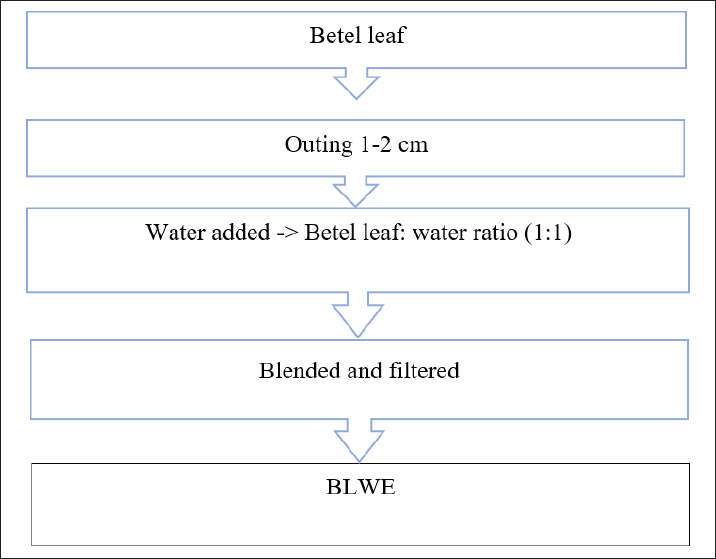
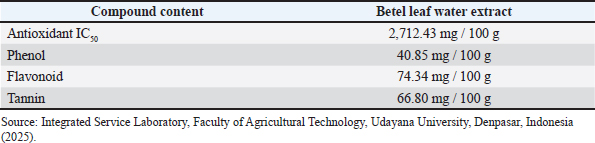
AbstractBackground: Broilers have certain disadvantages, such as high levels of fat and cholesterol in their meat and susceptibility to disease infection. Furthermore, the ban on the use of Antibiotic growth promoters, which can cause side effects, presents a challenge. Safe natural feed additives are sought, one of which uses betel leaf water extract (BLWE). Aim: This study aimed to evaluate the effect of BLWE administration via drinking water on pathogenic bacterial populations and blood lipid profiles in broilers. Methods: A completely randomized design was used with 4 treatments, 5 replications, and each unit consisted of 6-day-old chicks. Treatments: A (control group, without BLWE), B (drinking water with 2% BLWE), C (drinking water with 4% BLWE), and D (drinking water with 6% BLWE). Blood lipid profiles and pathogenic bacteria were observed in the broiler intestine. Results: Triglycerides and low-density lipoprotein (LDL) significantly decreased (p < 0.05) with BLWE administration, up to 6%. Meanwhile, high-density lipoprotein significantly increased (p < 0.05) at the 6% BLWE level compared with the control treatment (A). The total cholesterol significantly (p < 0.05) decreased with 6% BLWE administration. Total pathogenic Escherichia coli bacteria decreased significantly (p < 0.05) with 6% BLWE administration, and Coliform bacteria decreased significantly (p < 0.05) at BLWE levels of 4% and 6%. Conclusion: This study indicates that administering BLWE at up to 6% can improve blood lipid profiles and reduce pathogenic E. coli and Coliform bacteria. Keywords: Broiler performance, Gut health, Natural feed additives, Piper betle, Phytogenic feed additives. IntroductionOptimal broiler performance can be achieved through good feed quality and maintenance management. However, digestive health challenges, such as susceptibility to infections caused by pathogenic bacteria such as Escherichia coli, can reduce feed efficiency and inhibit broiler growth (Candrawati et al., 2024). Kulnanan et al. (2021) reported that E. coli is a pathogenic bacterium that can cause economic losses in poultry worldwide. However, high levels of fat and cholesterol in broiler meat can reduce meat quality and potentially harm consumers. Attia et al. (2017) stated that broilers have a disadvantage in that their meat has high fat and cholesterol content. In addition, Regar et al. (2019) found that broiler meat contains 200 mg/dl of cholesterol. Antibiotic growth promoters (AGP) were banned in the European Union in 2006 under Regulation (EC) No. 1831/2003, and in Indonesia under Law No. 18/2009 in conjunction with Law No. 41/2014 and Minister of Agriculture Regulation No. 14/2017, owing to concerns over antimicrobial resistance and residues in animal products. AGP have traditionally been used to suppress pathogenic bacteria such as E. coli and Coliform; however, their use has been banned due to their adverse effects. Mir et al. (2017) stated that the use of antibiotics in feed can cause antibiotic residues in livestock products and increase the resistance of pathogenic bacteria to antibiotics. The ban on the use of AGP demands innovation in the use of natural feed additives that are harmless to livestock and function not only as antibacterials but also to improve the blood lipid profiles of broilers. One subject of interest for this study is betel leaf water extract (BLWE). The mechanism of action of betel leaf decoction is the same as that of commercial antibiotics (Hermanto et al., 2023). Several phytochemical compounds and nutritional components in betel leaves are known as bioactive compounds with pharmacological properties, including antimicrobial, anti-inflammatory, antimutagenic, and antioxidant effects (Gupta et al., 2023). The essential oil and flavonoid content in betel leaves can be used as antibiotics and antioxidants, and saponins can function as immunostimulants to increase immunity (Rokhmana et al., 2013). Furthermore, Taukoorah et al. (2016) stated that essential oils from betel leaves have significant antimicrobial activity against a broad spectrum of microorganisms, including E. coli, P. aeruginosa, S. aureus, and Acinetobacter. Antibacterial and antioxidant compounds in betel leaves can naturally lower blood fat levels. Betel leaves contain flavonoids, which are natural phenolic compounds (Singh et al., 2023; Singh et al., 2024). Flavonoids can lower cholesterol levels by increasing bile acid excretion, thereby reducing fat deposition in blood vessels (Carvajal-Zarrabal et al., 2005). Moreover, betel leaves can lower cholesterol levels by inhibiting cholesterol biosynthesis in the liver and reducing intestinal fat absorption (Gramza and Korczak, 2005). The oral administration of betel leaves can reduce total cholesterol levels in rats (Thirumalai et al., 2014). In addition, betel leaf meal at 1% in feed can reduce cholesterol levels, and administration at 0.7% provided the lowest cholesterol levels in broiler meat (Hardiyansya et al., 2017). Although the use of betel leaf meal in feed has been explored, research on the efficacy of its water extract, particularly when administered via drinking water, on the combined outcomes of gut health and lipid metabolism in broilers is limited. A water-based extract was selected in preference to dietary betel leaf meal for several practical and physiological reasons. First, aqueous extraction is simple, inexpensive, and avoids the use of organic solvents, yielding a safe product for direct livestock consumption. Second, extraction concentrates the water-soluble bioactive compounds (such as flavonoids, tannins, and phenols) into a more readily available form than intact leaf meal, in which these compounds remain bound within the plant matrix. Third, administration through drinking water offers distinct advantages over feed incorporation: it ensures more uniform intake, allows rapid dosage adjustment without reformulating the feed, and maintains delivery of the additive even when feed consumption declines, as commonly occurs during heat or disease challenge. Therefore, the use of BLWE in drinking water is expected to be a practical strategy to support digestive health, suppress pathogenic bacteria, and improve blood lipid profiles, thereby supporting healthier, lower cholesterol, and safer broiler meat consumption. Therefore, this study was conducted to evaluate the effect of BLWE on pathogenic bacterial populations and blood lipid profiles in broilers. It was hypothesized that the administration of BLWE via drinking water would reduce intestinal pathogenic bacterial populations (Escherichia coli and Coliform) and improve blood lipid profiles [lower total cholesterol, triglycerides, and low-density lipoprotei (LDL), and higher high-density lipoprotein (HDL)] in broilers in a concentration-dependent manner, with the most pronounced effects expected at the highest inclusion level. Materials and MethodsStudy designThe research was conducted for 5 weeks at the Sesetan Farm, Faculty of Animal Husbandry, Udayana University, Denpasar, Bali, Indonesia. Blood lipid profile analysis and observation of pathogenic bacteria were performed at the Animal Product Technology Laboratory, Faculty of Animal Husbandry, Udayana University, Denpasar, Bali, Indonesia. Battery colony cages equipped with feed and water troughs were used in this study. The materials used were 120 one-day-old chicks (DOC) with a homogenous body weight of 49.52 ± 2.46 g. The betel leaves used were fresh, green betel leaves. The 4 treatments were administered to the CP 511B ration from PT. Charoen Pokphand Indonesia Rations and drinking water were provided ad libitum. Observations of blood lipid profiles included total cholesterol, triglycerides, HDL, and LDL, while observations of pathogenic bacteria included E. coli and Coliform. Eosine methylene blue agar medium was used to identify E. coli and Coliforms. Distilled water (Aquades), RI reagent (Monoreagent), and a cholesterol standard of 200 mg/dl were used for the observation of blood lipid profile. The equipment used included analytical scales, syringes, centrifuges, micropipettes, test tubes, spectrophotometers, Petri dishes, colony counters, Bunsen burners, blue tips, and yellow tips. The study used a completely randomized design (CRD) using 4 treatments and 5 replications, with each treatment unit consisting of 6 DOCs. Treatments given were as follows: A (control group, without BLWE), B (drinking water with 2% BLWE), C (drinking water with 4% BLWE), and D (drinking water with 6% BLWE). Blood lipid profiles and pathogenic bacteria were observed when the broilers were 35 days old. Making and administering betel leaf water extractFresh, green betel leaves were used, which were then cleaned. The betel leaf to water ratio was 1:1 (w/v); the mixture was homogenized and then filtered. The obtained BLWE was ready for treatment administration. The manufacture of the BLWE is shown in Figure 1. The phytochemical composition of the resulting extract was determined at the Integrated Service Laboratory, Faculty of Agricultural Technology, Udayana University (Table 1). The concentrations of the major bioactive compounds and antioxidant activity of the BLWE used in this study are shown in Table 1. The extract contained flavonoids (74.34 mg/100 g), tannins (66.80 mg/100 g), and phenols (40.85 mg/100 g), with an IC50 of 2712.43 mg/100 g, confirming the presence of the bioactive compounds discussed in relation to the lipid-lowering and antibacterial effects observed in this study.
Fig. 1. BLWE manufacturing method. Table 1. Phytochemical content of betel leaf water extract.
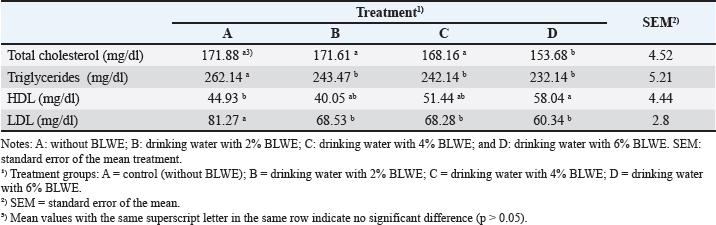
The administration of 2% BLWE (B) consisted of 20-ml BLWE in 980 ml of drinking water, 4% BLWE (C) was 40 ml in 960 ml of water, and 6% BLWE (D) was 60 ml in 940 ml of water. Observation of the blood lipid profileBlood lipid profile was observed using the method described by Shintawati et al. (2011). Blood sampling was performed on the broiler’s brachial vein (wing section). Blood was collected in a tube, incubated for 15 minutes, and then centrifuged for 20 minutes at approximately 3,000 rpm. Finally, the serum was ready for cholesterol analysis. The absorbance was measured at 500 nm using a spectrophotometer calibrated with distilled water. Total cholesterol, triglycerides, and high-density lipoprotein levels were calculated directly from relative absorbance values relative to the standard. Meanwhile, LDL levels were determined indirectly using the Friedewald formula: LDL=Total Cholesterol—HDL—(Triglycerides/5) (Friedewald et al., 1972). Observation of pathogenic bacteriaThe pathogenic bacteria E. coli and Coliform were observed using the standard plate count method on eosin methylene blue agar medium. Incubated samples were observed after 24 hours at 37°C in the incubator. Colony counting was performed using a Quebec colony counter (Devenish et al., 1984). Statistical analysisData were analyzed using the Statistical Package for the Social Sciences software version 25. Data were arranged according to a CRD with 4 treatments and 5 replicates, with the replicate (cage) serving as the experimental unit. Before analysis, the assumptions of normality and homogeneity of variance were tested using the Shapiro–Wilk and Levene’s tests, respectively. All variables satisfied these assumptions (p > 0.05) and were, therefore, analyzed using one-way analysis of variance, where a significant treatment effect was detected (p < 0.05); means were separated using Tukey’s honestly significant difference test (Boulgouris et al., 2009). Ethical approvalThe broilers used in this study were maintained in accordance with animal care standards, and the Animal Ethics Commission of the Faculty of Veterinary Medicine, Udayana University, Indonesia, approved the study (approval number B/156/UN 14.2.9/PT.01.04/2025; 21 September 2025). ResultsBlood lipid profileTotal cholesterolTotal cholesterol levels in broilers receiving 2% (B) and 4% (C) BLWE in drinking water were 0.16% and 2.16% lower than the control treatment (A), respectively; however, these reductions were not statistically significant (p > 0.05). On the contrary, administration of 6% BLWE (D) resulted in a 10.59% reduction compared with the control, which was statistically significant (p < 0.05) (Table 2). Table 2. Effect of betel leaf water extract in drinking water on the blood lipid profile of 5-week-old broilers.
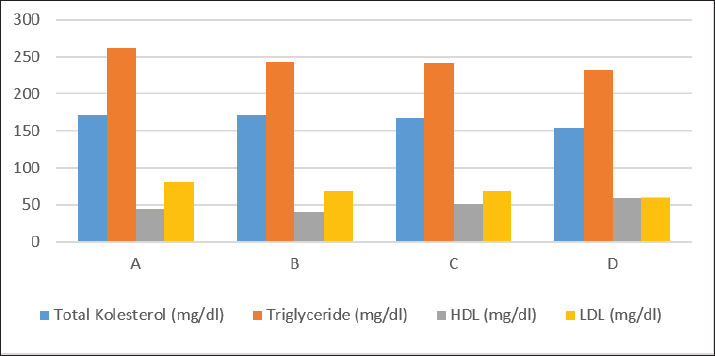
TriglyceridesTriglyceride levels in the control group (A) were 262.14 mg/dl. Broilers receiving 2%, 4%, and 6% BLWE showed reductions of 7.12%, 7.63%, and 11.44%, respectively, compared to the control. All BLWE treatments significantly reduced triglycerides (TG) levels (p < 0.05) relative to the control (Table 2). A progressive decrease in TG levels was observed with increasing BLWE concentration (Fig. 2).
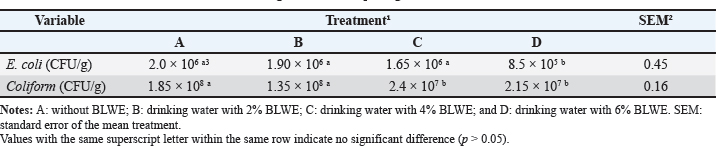
Fig. 2. Effect of betel leaf water extract (BLWE) in drinking water on the blood lipid profile of 5-week-old broilers. A=control (without BLWE); B=2% BLWE; C=4% BLWE; D=6% BLWE. High-density lipoproteinHDL levels ranged from 40.05 to 58.04 mg/dl. Administration of 2% BLWE (B) resulted in HDL levels 10.86% lower than the control (A); however, this difference was not statistically significant. Treatment with 4% BLWE (C) increased HDL levels by 14.49% compared with the control, although not significantly. The 6% BLWE treatment (D) increased HDL levels by 29.18% relative to the control, and this increase was statistically significant (p < 0.05) (Table 2). Low-density lipoproteinLDL levels in the control group (A) were 81.27 mg/dl. Administration of 2%, 4%, and 6% BLWE reduced LDL levels by 15.68%, 15.98%, and 25.75%, respectively. All BLWE treatments significantly lowered LDL levels (p < 0.05) compared with the control (Table 2). Intestinal pathogenic bacteriaEscherichia coliThe E. coli count in the control treatment (A) was 2.0 × 10⁶ CFU/g. Treatments with 2% (B) and 4% (C) BLWE resulted in lower counts than the control; however, these reductions were not statistically significant (p > 0.05). The 6% BLWE treatment (D) significantly reduced E. coli counts compared with the control (p < 0.05) (Table 3). Table 3. Effect of betel leaf eater extract in drinking water on total pathogenic bacteria in the small intestine of 5-week-old broilers.
ColiformThe Coliform count in the control treatment (A) was 1.85 × 10⁸ CFU/g. Treatment with 2% BLWE (B) showed a nonsignificant reduction compared with the control (p > 0.05). However, 4% (C) and 6% (D) BLWE significantly reduced Coliform counts compared with the control (p < 0.05) (Table 3). DiscussionEffect of BLWE on lipid metabolismThe significant reduction in total cholesterol at 6% BLWE suggests a dose-dependent hypolipidemic effect. Higher BLWE concentrations likely increase the availability of bioactive compounds, such as flavonoids, tannins, polyphenols, essential oils, vitamin C, and saponins, which are known to influence lipid metabolism. Flavonoids inhibit 3-hydroxy-3-methylglutaryl coenzyme A (HMG-CoA) reductase, a key enzyme in cholesterol biosynthesis (Mazroatul et al., 2016; Klau and Mufaddilah, 2023). Inhibition of this enzyme reduces the production of endogenous cholesterol. In addition, flavonoids may suppress ACAT activity, thereby reducing cholesterol esterification and intestinal cholesterol absorption (Hai and Smith, 2021). Essential oils present in betel leaves may stimulate bile secretion and pancreatic lipase activity, thereby enhancing lipid digestion and excretion (Elbaz et al., 2022). Increased bile acid excretion forces the liver to convert more cholesterol into new bile acids, further reducing circulating cholesterol levels (Patra et al., 2022; Sakinah et al., 2020). The observed decrease in TG levels may be attributed to flavonoid-induced enhancement of lipoprotein lipase activity, which promotes TG hydrolysis (Hayudanti, 2018). Furthermore, antioxidant compounds such as flavonoids, tannins, and polyphenols may reduce oxidative stress and inhibit hepatic TG synthesis. The significant increase in HDL levels at 6% BLWE indicates improved reverse cholesterol transport. HDL facilitates cholesterol transport from peripheral tissues to the liver, thereby reducing the risk of atherosclerosis (Vergeer et al., 2010). Flavonoids may enhance lecithin-cholesterol acyltransferase activity, promoting free cholesterol conversion into esterified cholesterol and contributing to HDL formation (Faadlilah and Ardiaria, 2017). The reduction in LDL levels across all BLWE treatments suggests that lipid transport is modulated. Flavonoids may exert statin-like effects by inhibiting HMG-CoA reductase (Oktavelia and Kusuma, 2022; Zaelani et al., 2024). In addition, saponins can form insoluble complexes with cholesterol, thereby reducing its absorption and circulating LDL levels (Zaelani et al., 2024). Effect of BLWE on intestinal pathogenic bacteriaThe significant reduction of E. coli and Coliform populations at higher BLWE concentrations demonstrates the antimicrobial potential of BLWE. Although these bacteria are part of the normal intestinal flora, excessive proliferation may lead to pathogenic conditions. Betel leaves contain approximately 4.2% essential oils (Dewi et al., 2023), as well as phenylpropanoids, tannins, and flavonoids, which exhibit strong antimicrobial activity (Neelam et al., 2020; Neumann et al., 2022). Water and ethanol extracts of green betel leaves have demonstrated antibacterial effects against E. coli (Tilarso et al., 2022). Phenolic-rich essential oils can disrupt microbial cell walls, cause protein denaturation, increase membrane permeability, and ultimately lead to cell damage (Hernandi et al., 2019). Chavicol, found in betel leaves, reportedly exhibits bactericidal activity 5 times stronger than phenol. These mechanisms likely explain the dose-dependent reduction in intestinal pathogenic bacteria observed in broilers receiving 4% and 6% BLWE. Study limitationsThis study has several limitations that should be acknowledged. First, we did not measure growth performance parameters such as body weight gain, feed conversion ratio (FCR), and mortality rate; their inclusion would strengthen the practical relevance of the findings for commercial broiler production. Second, we did not record feed and water intake, which is particularly relevant because high concentrations of BLWE may reduce water palatability due to bitterness, potentially affecting consumption and the interpretation of physiological responses. Third, the mechanistic explanations proposed in this study (for example, inhibition of HMG-CoA reductase and enhanced bile acid excretion) are based on the existing literature and were not directly verified through measurement of liver enzyme activity, oxidative stress markers, or gene expression. Fourth, the experiment used a negative control only, without a positive (antibiotic) control group, which limits the ability to directly compare the extract’s efficacy against commercial AGP. Fifth, the small number of birds per replicate may limit the statistical power for detecting smaller treatment effects, as reflected in the nonsignificant differences observed for some parameters at lower inclusion levels. Finally, the water-based extraction method, while practical and safe for direct administration, may yield lower concentrations of lipophilic bioactive compounds compared with solvent-based extraction, and the stability of volatile compounds in drinking water was not quantified. Future studies should address these limitations to confirm and extend the present findings. ConclusionThe administration of BLWE in drinking water exerted concentration-dependent effects on broilers, with significant improvements in blood lipid profiles, and significant reductions in pathogenic E. coli and Coliform populations observed primarily at the 6% inclusion level. These findings indicate that BLWE delivered through drinking water may serve as a promising plant-based feed additive to support gut health and produce lower cholesterol, safer broiler meat, offering a potential natural alternative to synthetic additives in poultry production. These results reinforce the role of betel leaf bioactive compounds (flavonoids, tannins, and phenols) in modulating lipid metabolism and inhibiting pathogenic bacteria. However, these conclusions should be interpreted with appropriate caution because significant effects were largely confined to the highest concentration and were not accompanied by production performance or direct mechanistic data. Future research should incorporate growth performance indicators (body weight gain, FCR, and mortality), feed and water intake measurements, a positive antibiotic control group, standardized and quantified extract preparation, direct mechanistic markers (liver enzyme activity, oxidative stress markers, and gene expression), and molecular microbiological techniques to confirm efficacy and determine the optimal and economically viable BLWE inclusion level for commercial broiler production. AcknowledgmentsNone. Conflict of interestThe author(s) declare(s) that there are no conflicts of interest. FundingThis study received no specific grant. Authors' contributionsDPMAC: Conceptualization, Methodology, Investigation, Data Curation, Formal Analysis, Writing–Original Draft, Visualization, Project Administration. IGNGB: Conceptualization; Methodology; Supervision; Validation; Writing–Review and Editing; Funding Acquisition. NWS: Investigation, Laboratory Analysis, Data Curation, Resources, Writing, Review, and Editing. EP: Formal analysis, validation, supervision, writing, review, and editing. All authors have read and approved the final version of the manuscript. Data availabilityThe datasets generated and analyzed during the current study are available upon reasonable request from the corresponding author. ReferencesAttia, Y.A., Al-Harthi, M.A., Korish, M.A. and Shiboob, M.M. 2017. Fatty acid and cholesterol profiles, hypocholesterolemic, atherogenic, and thrombogenic indices of broiler meat in the retail market. Lipids. Health. Dis. 16(40), 40; doi:10.1186/s12944-017-0423-8 Boulgouris, N.V., Plataniotis, K.N. and Micheli-Tzanakou, E. 2009. Biometrics: theory, methods, and applications. New York, NY: John Wiley & Sons. Candrawati, D.P.M.A., Mahardika. I.G., Bidura, I.G.N.G. and Siti, N.W. 2024. Effect of prebiotics-probiotics synbiotic supplementation in feed on performance, serum cholesterol, and pathogenic bacteria in broilers intestines. Adv. Anim. Vet. Sci. 12(9), 1752–1758; doi: 10.17582/journal.aavs/2024/12.9.1752.1758 Carvajal-Zarrabal, O., Waliszewski, S.M., Barradas-Dermitz, D.M., Orta-Flores, Z., Hayward-Jones, P.M., Nolasco-Hipólito, C., Angulo-Guerrero, O., Sánchez-Ricaño, R., Infanzón, R.M. and Trujillo, P.R.L. 2005. The consumption of Hibiscus sabdariffa dried calyx ethanolic extract reduced lipid profile in rats. Plant Foods For Hum. Nutr. 60(4), 153–159; doi:10.1007/s11130-005-9023-x Devenish, J.A., Ciebin, B.W. and Brodsky, M.H. 1984. Automated counting of bacterial colonies on spread agar plates and non-gridded membrane filters. J. Food Prot. 47(4), 284–287. Dewi, V.K., Barkinah, T., Kirana, R., Setiawati, E., Suhrawardi., Laili, F.J., Zakiah. and Mallongi, A. 2023. Green betel leaves extract and red betel leaves extract South Kalimantan and Central Kalimantan Indonesia are the best combination to inhibit Escherichia coli and Staphylococcus aureus. J. Law Sustain. Develop. 11(11), e1371; doi:10.55908/sdgs.v11i11.1371 Elbaz, A.M., Ashmawy, E.S., Salama, A.A., Abdel-Moneim, A.M.E., Badri, F.B. and Thabet, H.A. 2022. Effects of garlic and lemon essential oils on performance, digestibility, plasma metabolite, and intestinal health in broilers under environmental heat stress. BMC. Vet. Res. 18(1), 430; doi:10.1186/s12917-022-03530-y Faadlilah, N. and Ardiaria, M. 2017. The effect of red dragon fruit (Hylocereus polyhizus) peel infusion on HDL levels in dyslipidemic Sprague Dawley rats dislipidemia, kulit buah naga merah, kadar kolesterol HDL. J. Nutr. Coll. 5(4), 9; doi:10.14710/jnc.v5i4.16422 Friedewald, W.T., Levy, R.I. and Fredrickson, D.S. 1972. Estimation of the concentration of low-density lipoprotein cholesterol in plasma, without use of the preparative ultracentrifuge. Clin. Chem. 18(6), 499–502. Gramza, A. and Korczak, J. 2005. Tea constituents (Camellia sinensis L.) as antioxidants in lipid systems. Trends Food Sci. Technol. 16(8), 351–358; doi:10.1016/j.tifs.2005.02.004 Gupta, R.K., Guha, P. and Srivastav, P.P. 2023. Phytochemical and biological studies of betel leaf (Piper betle L.): review on paradigm and its potential benefits in human health. Acta. Ecologica. Sinica. 43(5), 721–732; doi:10.1016/j.chnaes.2022.09.006 Hai, Q. and Smith, J.D. 2021. Acyl-Coenzyme A: cholesterol Acyltransferase (ACAT) in Cholesterol Metabolism: From Its Discovery to Clinical Trials and the Genomics Era. Metabolites 11(8), 543; doi:10.3390/metabo11080543 Hardiyansya, Hidayat, H. and Kiramang, K. 2017. The effect of giving betel leaf flour (Piper betel Linn.) as a feed additive on cholesterol in broiler chicken meat. J. Anim. Sci. Ind. 3(1), 122–134; doi: 10.24252/jiip Hermanto, L.O., Nibea, J., Sharon, K. and Rosa, D. 2023. Article review: utilization of the betel plant (Piper betle L.) as a traditional medicine. Pharm. Sci. J. 3(1), 33–42. Hayudanti, D. 2018. Water clover extract in lipoprotein lipase enzyme activity of the rats with high cholesterol diet. Jurnal Ilmiah Kedokteran Wijaya Kusuma 7(2), 118; doi:10.30742/jikw.v7i2.429 Hernandi, S., Samsu, R., Sari, P. and Jasmansyah, J. 2019. Antibacterial activity of the essential oil from betel leaf (Piper betle L.) against Streptococcus pyogenes and Staphylococcus aureus. Jurnal. Kartika. Kimia. 2(1), 30–36; doi:10.26874/jkk.v2i1.27 Hardiyansya, Hidayat, H. and Kiramang, K. 2017. The effect of giving betel leaf flour (Piper betel Linn.) as a feed additive on cholesterol in broiler chicken meat. J. Anim. Sci. Ind. 3(1), 122–134; doi: 10.24252/jiip Klau, I.C.S. and Mufaddilah, R.M. 2023. Activity test of Chinese betel leaf extract (Peperomia pellucida L.) on HDL levels in male white rats of the Wistar strain. MEDFARM. J. Pharm. Health. 12(2), 133–143; doi:10.48191/medfarm.v12i2.225 Kulnanan, P., Chuprom, J., Thomrongsuwannakij, T., Romyasamit, C., Sangkanu, S., Manin, N., Nissapatorn, V., Pereira, M., Wilairatana, P. and Mitsuwan, W. 2021. Antibacterial, antibiofilm and anti-adhesion activities of Piper betle leaf extract against avian pathogenic Escherichia coli. Arch. Microbiol. 204(1), 49; doi:10.1007/s00203-021-02701-z Mazroatul, C., Deni, G., Ahmad Habibi, N. and Saputri, G. 2016. Antihypercholesterolemia activity of ethanol extract Peperomia pellucid. Alchemy 12(1), 90; doi:10.20961/alchemy.v12i1.948 Mir, N.A., Rafiq, A., Kumar, F., Singh, V. and Shukla, V. 2017. Determinants of broiler chicken meat quality and factors affecting them: a review. J. Food. Sci. Technol. 54(10), 2997–3009; doi:10.1007/s13197-017-2789-z Neelam, Khatkar, A. and Sharma K.K. 2020. Phenylpropanoids and its derivatives: biological activities and its role in food, pharmaceutical and cosmetic industries. Crit. Rev. Food Sci. Nutr. 60(16), 2655–2675; doi: 10.1080/10408398.2019.1653822 Neumann, N., Honke, M., Povydysh, M., Guenther, S. and Schulze, C. 2022. Evaluating tannins and flavonoids from traditionally used medicinal plants with biofilm inhibitory effects against mrgn E. Coli. MDPI: Molecules 27(7), 2284; doi: 10.3390/molecules27072284 Oktavelia, W. and Kusuma, S.A.F. 2022. Therapy for dyslipidemia: plant inhibitors of HMG-CoA reductase. Indonesian J. Biol. Pharm. 2(3), 159–170; doi:10.24198/ijbp.v2i3.41376.g19006 Patra, B., Deep, S., Rosalin, R. and Pradhan, S. 2022. Flavored food additives on the leaves of Piper betle L.: a human health perspective. Appl. Biochem. Biotechnol. 194(34), 4439–4461; doi:10.1007/s12010-022-03912-w Regar, M.N., Tulung, B., Londok, J.J.M.R., Moningkey, S.A.E. and Tulung, Y.R.L. 2019. Blood lipid profile of broiler chicken as affected by a combination of feed restriction and different crude fiber sources. In IOP Conference Series: Earth and Environ. Sci. 2019 387(1), 012053; doi: 10.1088/1755-1315/387/1/012053 Rokhmana, L.D., Estiningdriati, I. and Murningsih, W. 2013. The effect of adding Bangle (Zingiber cassumunar) to the ration on the absolute weight of bursa fabricius and the lymphocyte heterophile ratio of broiler chickens. Anim. Agric. J. 2(1), 362–369. Sakinah, D., Rusdi, S. and Misfadhila, S. 2020. Review of traditional use, phytochemical and pharmacological activity of Piper betle L. Galore Int. J. Health Sci. Res. 5(3), 59–66. Shintawati, R., Hernawati. and Indraswati, D. 2011. Blood lipid levels of middle-aged female Swiss Webster mice after administration of bitter melon juice (Momordica charantia L.). Bandung. Med. J. 43(2), 93–97; doi:10.15395/mkb.v43n2.50 Singh, T., Pandey, V.K., Singh, R., Dash, K.K., Kovács, B. and Mukarram, S.A. 2024. Ultrasound assisted extraction of phytochemicals from Piper betel L. Ultrason. Sonochemistry 106, 106894; doi:10.1016/j.ultsonch.2024.106894 Singh, T., Singh, P., Pandey, V.K., Singh, R. and Dar, A.H. 2023. A literature review on bioactive properties of betel leaf (Piper betel L.) and its applications in food industry. Food. Chem. Adv. 3, 100536; doi:10.1016/j.focha.2023.100536 Taukoorah, U., Lall, N. and Mahomoodally, F. 2016. Piper betle L. (betel quid) shows bacteriostatic, additive, and synergistic antimicrobial action when combined with conventional antibiotics. South. Afr. J. Botany. 105, 133–140; doi:10.1016/j.sajb.2016.01.006 Thirumalai, T., Tamilselvan, N. and David, E. 2014. Hypolipidemic activity of Piper betel in high fat diet induced hyperlipidemic rat. J. Acute. Dis. 3(2), 131–135; doi:10.1016/s2221-6189(14)60029-9 Tilarso, D.P., Muadifah, A., Handaru, W., Pratiwi, P.I., Khusna, M. and LasmanaTarigan, I. 2022. Antibacterial activity of combination of betel leaf extract and star fruit using hydroextraction method. Chem. Publishing J. 6(4), 168–176. Vergeer, M., Holleboom, A.G., Kastelein, J.J.P. and Kuivenhoven, J.A. 2010. The HDL hypothesis: does high-density lipoprotein protect from atherosclerosis?. J. Lipid Res. 51(8), 2058–2073. Zaelani, B., Safithri, M. and Andrianto, D. 2024. In vitro study of piper crocatum Ruiz & pav potency as HMG-CoA reductase and malondialdehyde formation inhibitor. Indonesian. J. Appl. Res. (IJAR). 5(3), 185–195; doi:10.30997/ijar.v5i3.504 | ||
| How to Cite this Article |
| Pubmed Style Candrawati DPMA, Bidura IGNG, Siti NW, Puspani E. Effect of betel leaf water extract in drinking water on pathogenic bacteria and blood lipid profile of broilers. Open Vet. J.. 2026; 16(7): 4558-4565. doi:10.5455/OVJ.2026.v16.i7.39 Web Style Candrawati DPMA, Bidura IGNG, Siti NW, Puspani E. Effect of betel leaf water extract in drinking water on pathogenic bacteria and blood lipid profile of broilers. https://www.openveterinaryjournal.com/?mno=312372 [Access: July 15, 2026]. doi:10.5455/OVJ.2026.v16.i7.39 AMA (American Medical Association) Style Candrawati DPMA, Bidura IGNG, Siti NW, Puspani E. Effect of betel leaf water extract in drinking water on pathogenic bacteria and blood lipid profile of broilers. Open Vet. J.. 2026; 16(7): 4558-4565. doi:10.5455/OVJ.2026.v16.i7.39 Vancouver/ICMJE Style Candrawati DPMA, Bidura IGNG, Siti NW, Puspani E. Effect of betel leaf water extract in drinking water on pathogenic bacteria and blood lipid profile of broilers. Open Vet. J.. (2026), [cited July 15, 2026]; 16(7): 4558-4565. doi:10.5455/OVJ.2026.v16.i7.39 Harvard Style Candrawati, D. P. M. A., Bidura, . I. G. N. G., Siti, . N. W. & Puspani, . E. (2026) Effect of betel leaf water extract in drinking water on pathogenic bacteria and blood lipid profile of broilers. Open Vet. J., 16 (7), 4558-4565. doi:10.5455/OVJ.2026.v16.i7.39 Turabian Style Candrawati, Desak Putu Mas Ari, I Gusti Nyoman Gde Bidura, Ni Wayan Siti, and Eny Puspani. 2026. Effect of betel leaf water extract in drinking water on pathogenic bacteria and blood lipid profile of broilers. Open Veterinary Journal, 16 (7), 4558-4565. doi:10.5455/OVJ.2026.v16.i7.39 Chicago Style Candrawati, Desak Putu Mas Ari, I Gusti Nyoman Gde Bidura, Ni Wayan Siti, and Eny Puspani. "Effect of betel leaf water extract in drinking water on pathogenic bacteria and blood lipid profile of broilers." Open Veterinary Journal 16 (2026), 4558-4565. doi:10.5455/OVJ.2026.v16.i7.39 MLA (The Modern Language Association) Style Candrawati, Desak Putu Mas Ari, I Gusti Nyoman Gde Bidura, Ni Wayan Siti, and Eny Puspani. "Effect of betel leaf water extract in drinking water on pathogenic bacteria and blood lipid profile of broilers." Open Veterinary Journal 16.7 (2026), 4558-4565. Print. doi:10.5455/OVJ.2026.v16.i7.39 APA (American Psychological Association) Style Candrawati, D. P. M. A., Bidura, . I. G. N. G., Siti, . N. W. & Puspani, . E. (2026) Effect of betel leaf water extract in drinking water on pathogenic bacteria and blood lipid profile of broilers. Open Veterinary Journal, 16 (7), 4558-4565. doi:10.5455/OVJ.2026.v16.i7.39 |


