




| Research Article | ||
Open Vet. J.. 2026; 16(7): 4388-4396 Open Veterinary Journal, (2026), Vol. 16(7): 4388-4396 Research Article Therapeutic effects of Clitoria ternatea extract alone and combined with Nifedipine in an L-NAME-induced preeclampsia rat modelAjeng Maharani Pratiwi1,2, Soetrisno Soetrisno1,3*, Bambang Purwanto1,4 and Brian Wasita1,51Doctoral Program in Medical Science, Faculty of Medicine, Universitas Sebelas Maret, Surakarta, Indonesia 2Undergraduate and Professional Midwifery Program, Universitas Kusuma Husada, Surakarta, Indonesia 3Department of Obstetrics and Gynecology, Faculty of Medicine, Universitas Sebelas Maret, Surakarta, Indonesia 4Department of Internal Medicine, Faculty of Medicine, Universitas Sebelas Maret, Surakarta, Indonesia 5Department of Anatomical Pathology, Universitas Sebelas Maret, Surakarta, Indonesia *Corresponding Author: Soetrisno Soetrisno. Doctoral Program in Medical Science, Faculty of Medicine, Universitas Sebelas Maret, Surakarta, Indonesia. Email: sssoetrisno [at] gmail.com Submitted: 12/03/2026 Revised: 06/06/2026 Accepted: 19/06/2026 Published: 11/07/2026 © 2025 Open Veterinary Journal
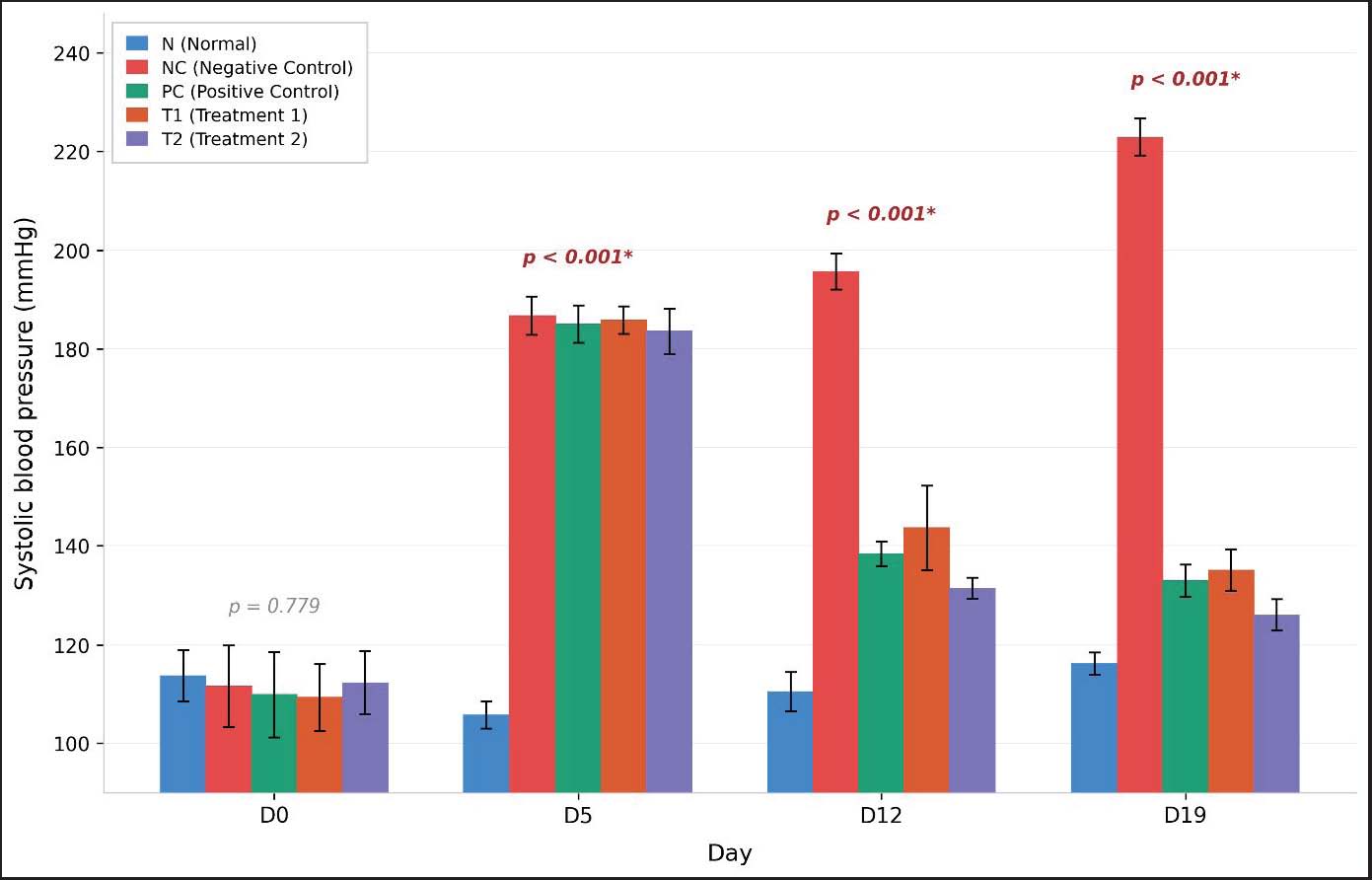
ABSTRACTBackground: Preeclampsia (PE) syndrome remains a leading cause of maternal and neonatal mortality worldwide. Several studies have shown that PE is characterized by hypertensive disorders, which affect 5%–10% of pregnancies. Despite the high mortality rate, there are currently limited alternative treatments for PE. Aim: This study aimed to evaluate the therapeutic efficacy of butterfly pea flower (Clitoria ternatea) and nifedipine, at both single and combination doses, in Wistar rats with PE. Methods: Animals were induced using Nω-Nitro-L-Arginine Methyl Ester Hydrochloride (L-NAME) for 5 days. Nifedipine (0.54 mg/kg body weight) and butterfly pea flower extract (300 mg/kg) were administered for 14 days. On days 0, 5, 12, and 19 of pregnancy, the rats were examined for blood pressure and albuminuria levels, followed by sacrifice on day 19. The levels of interleukin-6 (IL-6), malondialdehyde (MDA), cysteine-aspartic proteases–3 (caspase-3), blood pressure, albuminuria, and spiral artery histology were examined. ANOVA was used to identify differences between groups, followed by a post hoc test to pinpoint the variables that differed the most significantly. Results: The combination of butterfly pea flower extract and nifedipine significantly reduced IL-6, MDA, caspase-3, blood pressure, and albuminuria; however, placental histological analysis revealed no significant differences in SAD. Conclusion: Based on these findings, the administration of butterfly pea flower ethanol extract can serve as a complementary therapy to improve the prognosis of PE. Keywords: Ethanol extract of butterfly pea flower, Nifedipine, Preeclampsia, Rat model, L-NAME. IntroductionPreeclampsia (PE) is a multifactorial condition characterized by elevated blood pressure accompanied by proteinuria or albuminuria. Epidemiological estimates indicate that hypertension during pregnancy accounts for 14% of all maternal deaths globally, and the global prevalence of PE is 4.6% (Teka et al., 2023). Approximately 4 million women are diagnosed with the condition each year, resulting in the deaths of 70,000 women and 500,000 infants (Zhang et al., 2024). During pregnancy, hypertensive disorders are associated with adverse maternal and neonatal outcomes, including stillbirth, preterm delivery, low birth weight, and neonatal intensive care unit admission (Bromfield et al., 2023). Although the exact etiology of PE remains unclear, it is widely recognized as a disorder arising from ischemia–reperfusion injury involving placental abnormalities and systemic endothelial dysfunction. This injury induces placental hypoxia and triggers the release of anti-angiogenic and pro-inflammatory factors into the maternal circulation (de Alwis et al., 2022; Torres-Torres et al., 2025). Complex molecular and cellular mechanisms involving hormones, complement, and cytokines further contribute to its pathophysiology (Chiang et al., 2024). Butterfly pea flower (Clitoria ternatea), a plant species in the family Fabaceae, contains phytochemicals such as tannins, anthocyanins, flavonoid glycosides, triterpenoids, saponins, and phenols (Maneesai et al., 2021). Maneesai et al. (2021) reported that butterfly pea flower extract partially prevented hypertension induced by L-arginine methyl ester hydrochloride (L-NAME) in rats. Nifedipine is a calcium channel blocker commonly used as a first-line antihypertensive in the management of PE (Shah et al., 2025), with peak plasma concentrations occurring within 10–20 minutes of oral administration (Nimbark et al., 2024). In animal models, L-NAME administration during pregnancy increases blood pressure, disrupts fetal and placental growth, and elevates circulating levels of endothelin-1, soluble fms-like tyrosine kinase-1, and CRP (de Alwis et al., 2022). Flavonoids in butterfly pea flower exhibit antioxidant activity by reducing ROS generation, which is associated with decreased malondialdehyde (MDA) levels, a marker of lipid peroxidation (Putri et al., 2023). Inflammation is also closely linked to PE, with significantly elevated levels of interleukin-6 (IL-6) in L-NAME-induced models (Wang et al., 2022). The pathophysiological mechanisms of PE involve oxidative stress, inflammation, apoptosis, and vascular disorders, and the limitations of conventional pharmacological therapies have prompted interest in herbal-based therapies for maternal health (Anggraini et al., 2024). Therefore, this study aimed to evaluate the effects of butterfly pea flower ethanol extract on MDA, IL-6, and caspase-3 levels, blood pressure, albuminuria, and placental histopathology in L-NAME-induced PE model Wistar rats. Materials and MethodsStudy designThis was an experimental study using a posttest-only design with Wistar rats as the experimental animals. Blood pressure and albuminuria were evaluated using a pretest–posttest design because serial measurements were obtained on days 0, 5, 12, and 19 of gestation. On the contrary, IL-6, MDA, and caspase-3 were assessed using a posttest-only design because blood samples for these biomarkers were collected only at the time of sacrifice on day 19, as repeated blood sampling via orbital collection was not feasible without compromising animal welfare. The research was conducted at several facilities, including the Animal Laboratory of the Center for Food and Nutrition Studies, Universitas Gadjah Mada (UGM), Yogyakarta, the Integrated Research and Testing Laboratory (LPPT), Universitas Gadjah Mada, Yogyakarta, the Molecular Biology Laboratory, Universitas Sebelas Maret, and the Traditional Health Services Unit, Dr. Sardjito General Hospital (RSUP Dr. Sardjito). The study was conducted from December 2025 to February 2026. The inclusion criteria for this study were healthy pregnant Wistar rats aged 2–3 months, with a body weight of 200–250 g, in good general health, and subjected to a 1-week acclimatization period before the experiment. Exclusion criteria included experimental animals that refused to eat, showed signs of illness, or died during the study. PE induction in ratsFor this study, 12-week-old female Wistar rats (Rattus norvegicus) weighing 200–250 g were kept. Rats were maintained at room temperature (25°C) with a 12-hours light-dark cycle during the experiment. After a week of acclimatization, female Wistar rats were mated with healthy male Wistar rats at a 2:1 ratio. Successful pregnancies were determined by the presence of vaginal sperm blocking. Preparation of pea flower extractThe preparation of butterfly pea flower extract began with the preparation of fresh butterfly pea flowers (obtained from the Traditional Health Services Unit of Dr Sardjito General Hospital). The flowers were then dried using a cabinet dryer at 40°C for 36 hours. The drying process was considered complete when the material was easily broken when pressed by hand. After drying, the butterfly pea flowers were ground using a blender and then sieved through a 60-mesh sieve to obtain a powdered form. The obtained simplicia were extracted using the maceration method. Butterfly pea flower simplicia (500 g) was weighed and mixed with 500 ml of 70% ethanol in an Erlenmeyer flask. The mixture was stirred for approximately 30 minutes until it was thoroughly homogenized and then macerated for 2 × 24 hours until sediment formed. After the maceration process was completed, the solution was filtered using Whatman filter paper to obtain a mixture of solvent and active compounds. The obtained macerate was then subjected to evaporation using a rotary vacuum evaporator to remove the solvent that had mixed with the material during the extraction process. The water bath was filled with water and set to a temperature of 40°C, after which the entire apparatus was assembled and connected to an electrical power source. The ethanol solution was then separated from the active compounds in the evaporation flask. The process continued until the ethanol solution stopped dripping into the receiving flask, which usually took approximately 1.5–2 hours. The resulting extract was then weighed and stored in labeled plastic bottles in a freezer. Treatment allocationA total of 35 pregnant Wistar rats were divided into 5 groups. The normal group (n=7) consisted of rats without PE who received no treatment (n=7). The negative control group (NC) consisted of rats with a PE model that received no treatment (n=7). The positive control group (PC) comprised rats with a PE model given standard nifedipine therapy of 0.54 mg/200 g body weight (n=7). Treatment group I (T1) was a group of PE model rats that were only given therapy with 300 mg/kg bw butterfly pea flower extract (n=7), while group II (T2) comprised PE model rats that received standard therapy with 0.54 mg/kg body weight nifedipine and 300 mg/kg bw butterfly pea flower extract (n=7). The butterfly pea flower ethanol extract dose of 300 mg/kg body weight was selected based on the study by Maneesai et al. (2021) which demonstrated that this dose effectively ameliorated cardiovascular dysfunction and oxidative stress in L-NAME-induced hypertensive rats. The group of rats used as a PE model was orally administered L-NAME at 50 mg/kg body weight on the first day of gestation for 5 days. Meanwhile, the treatment group received 0.54 mg/kg body weight nifedipine and 300 mg/kg body weight ethanol extract of butterfly pea flower from days 6 to 19 of gestation. On day 19, rats were euthanized under intraperitoneal ketamine anesthesia at 100 mg/kg body weight. Biomarkers selected based on pathophysiology were approved by the association and designated as clinical markers of PE. The variables used as antioxidant markers were MDA, inflammatory markers were IL-6, apoptosis markers were caspase-3, and blood pressure and albuminuria were clinical symptom markers of PE. Blood pressure and albuminuria measurementBlood pressure and albuminuria measurements were performed on days 0, 5, 12, and 19 of pregnancy before the mice were euthanized. Hypertensive rats had a systolic blood pressure of 125 mmHg. Blood pressure was measured using a tail cuff device with a noninvasive blood pressure monitor. A Coomassie brilliant blue kit (Jiancheng Institute of Biotechnology, Nanjing, China) was used to detect albuminuria. Assessment of MDA, caspase-3, and IL-6MDA, caspase-3, and IL-6 levels were measured using commercial enzyme-linked immunosorbent assay kits (Abcam, Cambridge, MA, USA). All procedures for MDA, caspase-3, and IL-6 were conducted according to the manufacturer’s instructions. Histopathological examination of the spiral arteryPlacental tissue was collected for spiral artery histopathological examination using hematoxylin and eosin staining at the Anatomical Pathology Laboratory, Sebelas Maret University, Indonesia. Statistical analysisThe data were processed using SPSS (Statistical Package for the Social Sciences) 22.0 for Windows. A Kolmogorov-Smirnov Test was used to test for normality. One-way analysis of variance was used to determine differences between groups. A post hoc test was conducted to determine which variable had the most significant difference. Ethical approvalAll experimental protocols were approved by the Study Ethics Committee of the Faculty of Veterinary Medicine, Gadjah Mada University, Indonesia, under license number 127/ec-FKH/int./2025. ResultsComparison of blood pressure and albuminuriaNo significant differences in blood pressure were observed among the groups at baseline, indicating comparable initial conditions before induction and treatment. Following the induction of the PE model, the NC group demonstrated a progressive increase in both systolic pressures from D5 to D19, reflecting the successful establishment of the hypertensive PE model. On the contrary, the N group, which consisted of rats without PE and without treatment, maintained relatively stable BP values throughout the observation period. Treatment with nifedipine in the PC group resulted in a reduction in blood pressure compared with that in the NC group, indicating the expected antihypertensive effect of standard therapy. Similarly, the administration of butterfly pea flower extract in T1 also tended to lower blood pressure compared with the untreated PE group. Notably, the T2 group, which received both nifedipine and butterfly pea flower extract, showed the greatest improvement in blood pressure parameters, approaching values observed in the normal group by D19 (Fig. 1).
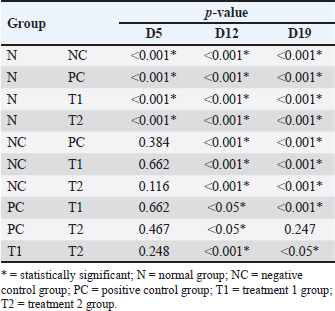
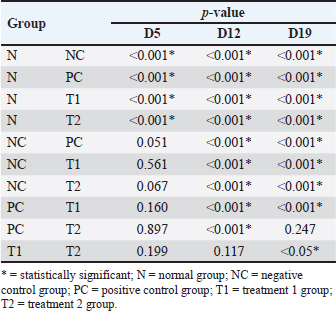
Fig. 1. Comparison of systolic blood pressure between groups. The post hoc analysis of systolic blood pressure on day 5 showed a significant difference among the N, NC, PC, T1, and T2 groups. However, no significant differences were observed between the NC group and the PC, T1, and T2 groups, indicating that systolic blood pressure was comparable among these groups on day 5. On day 12, post hoc analysis revealed significant differences in SBP among the N, NC, PC, T1, and T2 groups (p < 0.001). Further analysis showed significant differences between the NC and PC, T1, and T2 groups (p < 0.001), between the PC and T1 and T2 groups (p < 0.05), and between the T1 and T2 groups. Similarly, post hoc analysis on day 19 demonstrated significant differences in SBP among the N, NC, PC, T1, and T2 groups (p < 0.001). Significant differences were also observed between the NC and PC, T1, and T2 groups (p < 0.001). However, no significant differences were found between the PC and T1 and T2 groups (p=0.247). On the contrary, a significant difference was identified between the T1 and T2 groups (p < 0.001) (Table 1). Table 1. Post-hoc test for blood pressure comparison.
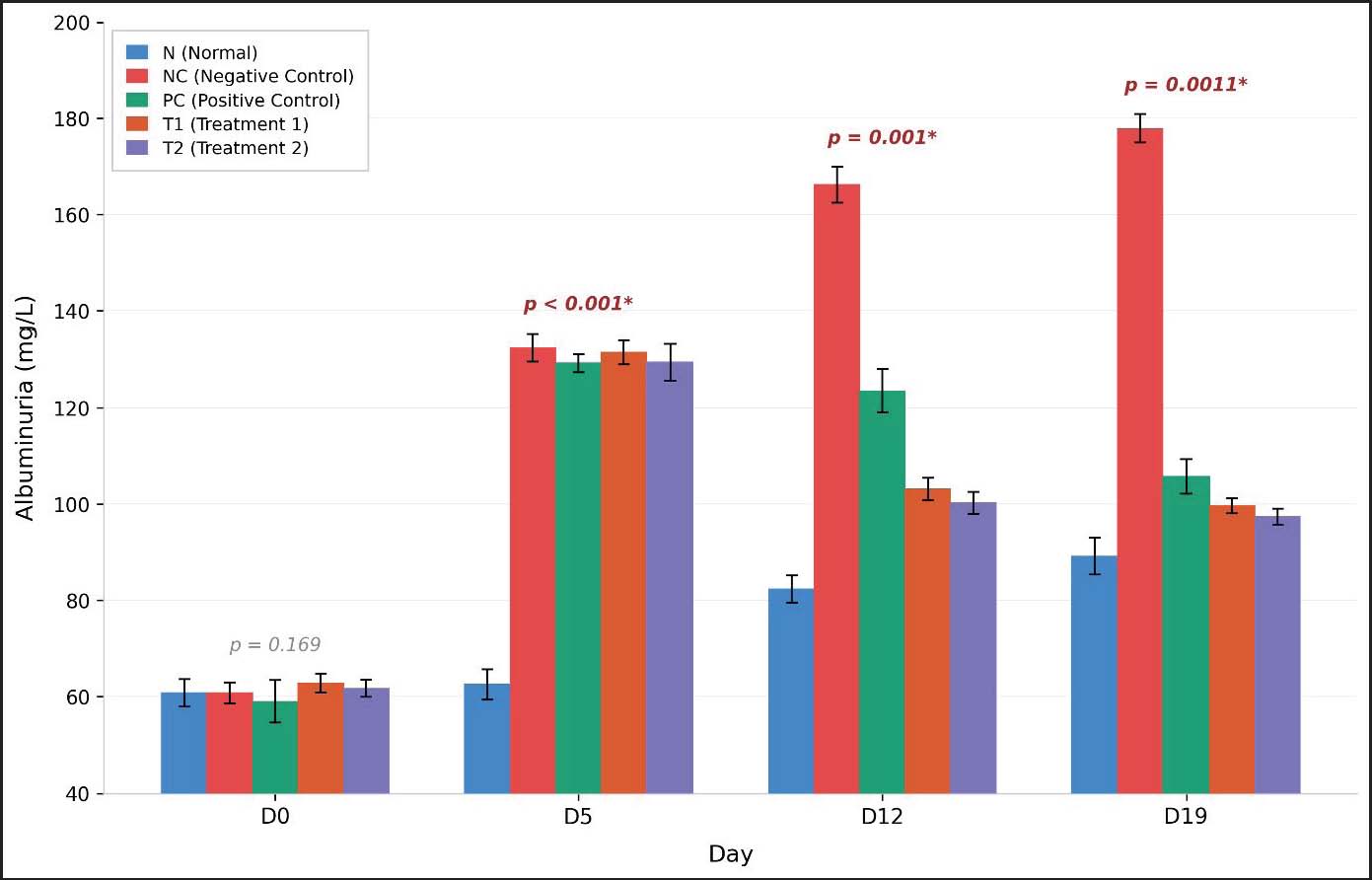
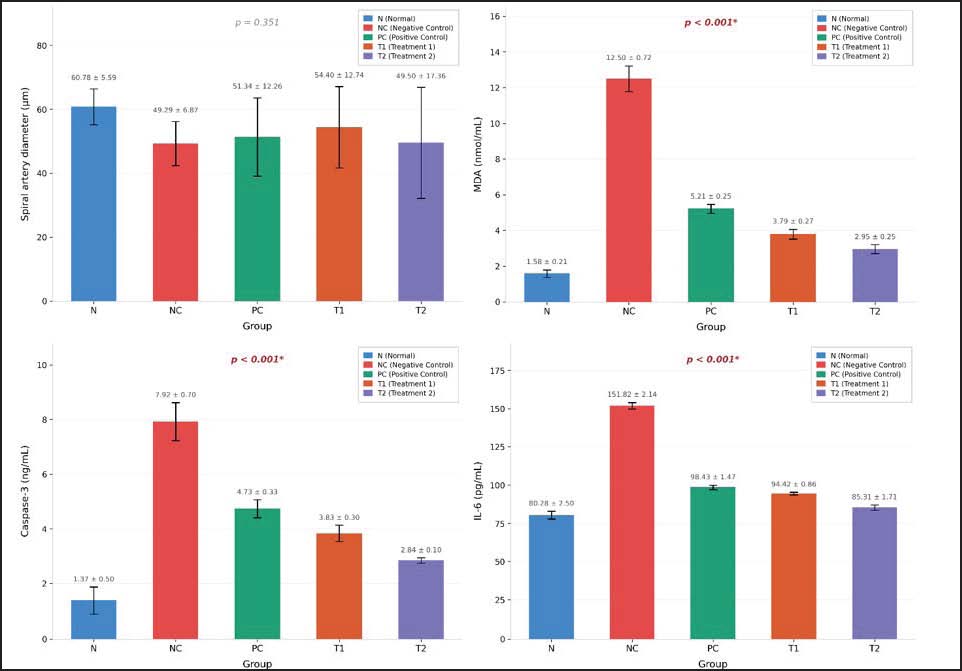
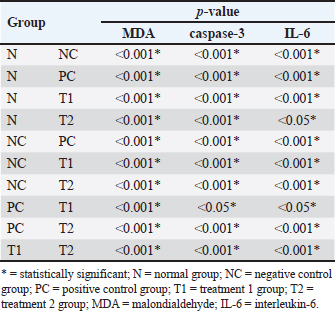
A significant difference in albuminuria was observed among the 5 groups on day 19 (p < 0.001) (Fig. 2). The mean values were 89.12 ± 3.84 in N, 177.93 ± 2.97 in NC, 105.72 ± 3.59 in PC, 99.64 ± 1.56 in T1, and 97.73 ± 1.64 in T2. Because significant differences in albuminuria were detected on days 5, 12, and 19, post hoc analyses were subsequently performed. The results showed that albuminuria levels increased with each measurement in normal pregnant rats. Significant differences in albuminuria levels were observed among the N, NC, PC, T1, and T2 groups (Table 2).
Fig. 2. Comparison of albuminuria between groups. Table 2. Post-hoc test for comparison of albuminuria.
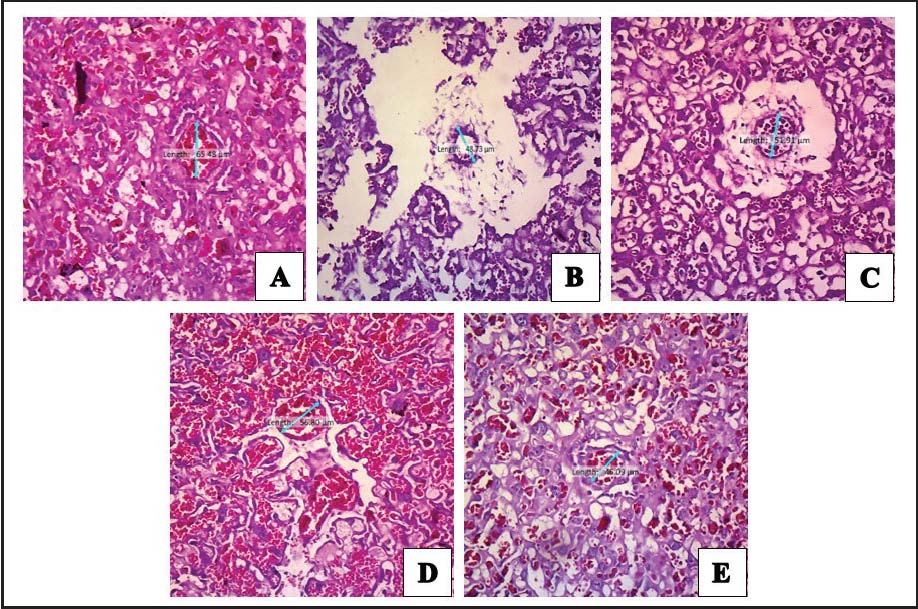
Comparison of the spiral arteryThe mean values of N were 60.78 ± 5.59, NC had a mean value of 49.29 ± 6.87, PC was 51.34 ± 12.26, T1 was 54.40 ± 12.74, and T2 was 49.50 ± 17.36, with a p value of 0.351 (>0.05). Although the diameter of the spiral artery did not differ significantly among the groups, descriptive histological observation suggested a relatively more preserved vascular architecture in the T1 group. However, this trend did not reach statistical significance and should be interpreted with caution (Figs. 3 and 4).
Fig. 3. Comparison of spiral artery diameter, MDA, caspase-3, and IL-6 between groups.
Fig. 4. Representative histopathological images of hematoxylin and eosin-stained placental spiral arteries. (A) Normal group (N): spiral artery with preserved lumen and normal wall structure. (B) Negative control group (NC): spiral artery with a narrowed lumen, consistent with impaired vascular remodeling. (C) Positive control group (PC): spiral artery showing partial lumen diameter improvement following nifedipine treatment. (D) Treatment group 1 (T1): spiral artery following treatment with butterfly pea flower extract, showing relatively preserved vascular architecture. (E) Treatment group 2 (T2): spiral artery following combination therapy. The arrows indicate spiral artery lumens. No statistically significant differences in SAD were observed among the groups. Magnification: ×200. Comparison of MDA, caspase-3, and IL-6Based on the analysis, significant differences were observed in the levels of MDA, IL-6, and caspase-3 among the N, NC, PC, T1, and T2 groups (Fig. 3). Therefore, post hoc analysis was subsequently performed to identify the specific differences between the groups. Post hoc analysis revealed significant differences in MDA, caspase-3, and IL-6 levels among the N, NC, PC, T1, and T2 groups. The NC group significantly differed from the PC, T1, and T2 groups, while the PC group also significantly differed from T1 and T2. Among the treatment groups, T2 demonstrated the lowest mean levels of MDA, caspase-3, and IL-6, indicating the most pronounced therapeutic effect (Table 3). Table 3. Post-hoc test for MDA, caspase-3, and IL-6 levels.
DiscussionA significant difference in systolic blood pressure was observed on day 19 among the experimental groups, with the T2 group showing the greatest reduction. These findings are consistent with those of Maneesai et al. (2021) who reported that butterfly pea flower extract partially prevented L-NAME-induced hypertension in rats. In addition, polyphenol intake has been associated with reduced blood pressure in animal models of PE (Sakowicz et al., 2023). Nifedipine, in addition to its antihypertensive effects, has been reported to possess anti-inflammatory properties and is associated with fewer adverse effects than intravenous labetalol (Shah et al., 2025). The superior efficacy of the combination therapy in reducing blood pressure suggests that the antioxidant and vasorelaxant properties of butterfly pea flower polyphenols may complement the calcium channel-blocking mechanism of nifedipine. Albuminuria levels progressively increased in all groups, including normal pregnant rats, which may be attributed to the immunological response to male rat sperm antigens (Wang et al., 2025). Significant differences in albuminuria were observed among the groups, with the most pronounced reductions observed in T1 and T2. These findings are consistent with reports that polyphenol consumption reduces proteinuria in pregnant animal models (Sakowicz et al., 2023). Furthermore, phytochemical analysis confirmed the presence of alkaloids, flavonoids, polyphenols, tannins, and terpenoids in butterfly pea flower extract. No statistically significant differences in spiral artery diameter were observed among the 5 groups (p=0.351). This finding is an important limitation that warrants discussion. Spiral artery remodeling failure occurs during early placentation in PE, when trophoblast invasion is impaired, and vascular structural changes become established before the onset of clinical symptoms (de Alwis et al., 2022). Interventions initiated after the induction of PE, from day 6 of gestation in this study, may be insufficient to reverse the structural arterial changes that have already occurred. Furthermore, persistent high vascular resistance and continued release of antiangiogenic factors, such as sFlt-1 and endoglin, from ischemic placental tissue may maintain spiral artery constriction despite reductions in systemic blood pressure (Torres-Torres et al., 2025). However, it is noteworthy that the T1 group demonstrated the most favorable placental histological features despite the lack of statistical significance in diameter measurements. This observation may be related to the potential interactions between butterfly pea flower compounds and nifedipine metabolism. The ADMET analysis indicated that several compounds present in butterfly pea flower, including hexadecanoic acid, methyl 9-cis,11-trans-octadecadienoate, 9,12,15-octadecatrienoic acid, 3-O-methyl-D-glucose, and quercetin, may inhibit CYP3A4, the primary enzyme responsible for nifedipine metabolism (Daina et al., 2017). If these compounds slow nifedipine metabolism in the T2 group, the resulting higher systemic nifedipine levels could alter the local hemodynamic environment in ways that do not favor spiral artery remodeling, despite improving systemic blood pressure. This pharmacokinetic interaction deserves further investigation using liquid chromatography–mass spectrometry (LC–MS)-based pharmacokinetic profiling. This study also evaluated 3 biomarkers associated with the pathophysiology of PE. The T2 group demonstrated the lowest levels of MDA, caspase-3, and IL-6 among the treatment groups, indicating the greatest reduction in oxidative stress, apoptosis, and inflammation, respectively. The reduction in MDA levels is consistent with the findings of and Chusak et al. (2018) who reported that butterfly pea flower polyphenols increase antioxidant capacity and reduce plasma MDA concentrations. The significant reduction in caspase-3 levels in the treatment groups suggests attenuation of placental apoptosis, consistent with reports that quercetin, a bioactive compound in butterfly pea flower, suppresses caspase activation (Frent et al., 2024). Previous studies have confirmed that butterfly pea flower extract contains flavonoids, such as kaempferol-3-glucoside, rutin, and quercetin-3-glucoside (Jeyaraj et al., 2021), which may collectively contribute to the observed anti-apoptotic effects. IL-6 levels also differed significantly among the groups, consistent with findings that butterfly pea flower phytochemicals exert anti-inflammatory effects (Jeyaraj et al., 2021; Książkiewicz et al., 2025). Nifedipine has also been shown to reduce IL-6 and TNF-α expression independently (Shah et al., 2025), which may partly explain the greater IL-6 reduction observed in the T2 group receiving both agents. The role of oxidative stress, inflammation, and apoptosis in ischemia-reperfusion injury has also been documented in other experimental rat models, including ovarian torsion–detorsion studies, where similar reductions in MDA, inflammatory cytokines, and caspase-3 were observed following antioxidant interventions (Bulutlar et al., 2024; Bulutlar, 2025). Taken together, these findings suggest that butterfly pea flower extract, particularly when combined with nifedipine, may improve PE-associated parameters through antioxidant, anti-inflammatory, and antiapoptotic mechanisms. The combination therapy was superior for systemic markers, while the extract alone showed more favorable placental histology despite its lack of significance in statistical analysis, a discrepancy that may be partly explained by pharmacokinetic interactions between the extract components and nifedipine. LimitationsThis study has several limitations that should be considered when interpreting the results. First, a preliminary dose-finding study for butterfly pea flower ethanol extract was not conducted; therefore, the optimal therapeutic dose for the PE rat model could not be determined. Second, the study did not perform a detailed analysis of the active compounds contained in the butterfly pea flower extract using techniques such as LC–MS, which could have provided deeper insight into the specific bioactive constituents responsible for the observed effects. Third, the sample size of each group was relatively small, which limited the statistical power. Future studies with larger sample sizes are recommended. Finally, the histopathological examination was limited to placental tissue, and other organs commonly affected in PE, such as the kidneys, were not evaluated. Therefore, future studies are needed to determine the optimal dosage, characterize the active compounds in the extract, and investigate the effects of the treatment on additional organs involved in the pathophysiology of PE. ConclusionIn conclusion, this study demonstrated that the administration of ethanol extract of butterfly pea flower (C. ternatea) at a dose of 300 mg/kg body weight combined with nifedipine at 0.54 mg/kg body weight significantly improved several biological and clinical parameters in a Wistar rat model of PE compared with nifedipine treatment alone. The combination therapy significantly reduced systolic blood pressure, albuminuria, MDA, IL-6, and caspase-3 levels, indicating improvements in oxidative stress, inflammation, apoptosis, and renal involvement associated with PE. Although no statistically significant differences were observed in spiral artery diameter among the groups, qualitative histological examination suggested that the T1 group exhibited relatively more favorable placental vascular features. However, this observation requires confirmation with larger sample sizes and more sensitive vascular assessment methods. These findings suggest that the combination of butterfly pea flower ethanol extract with conventional antihypertensive therapy is associated with improvements in inflammatory and oxidative stress markers and clinical parameters in this model of PE. AcknowledgmentsNone. FundingNone. Authors’ contributionsAMP made the greatest contribution to this study, including conceptualizing the research, conducting the experiments, collecting and analyzing data, and drafting the initial manuscript. SS contributed to the study design, provided overall supervision of the research process, critically reviewed the manuscript, and guided the interpretation of the results. BP participated in the methodological development, assisted in data analysis and interpretation, and contributed to the manuscript’s critical revision. BW contributed to the validation of the methodology, supported data interpretation, edited the manuscript, and finally approved the version to be published. All authors have read and approved the final version of the manuscript. Conflict of interestWe declare that there are no conflicts of interest in this study. Data availabilityAll data supporting this study’s findings are available within the manuscript. ReferencesAnggraini, Y., Soetrisno, S., Wasita, B. and Cilmiaty, R. 2024. Effects of olive leaf extract and nifedipine, alone and in combination, on blood pressure, neutrophil gelatinase-associated lipocalin, malondialdehyde and creatinine levels in an Nω-nitro-L-arginine methyl ester-induced rat model of preeclampsia. Pharmacia 71(1), 1–11. Bromfield, S.G., Ma, Q., Devries, A., Inglis, T. and Gordon, A.S. 2023. The association between hypertensive disorders during pregnancy and maternal and neonatal outcomes: a retrospective claims analysis. BMC. Pregnancy. Childbirth. 23, 514. Bulutlar, E. 2025. Healing effect of genistein on detorsioned rats after experimental ovarian torsion. South Clin. Ist. Euras. 36, 155–159. Bulutlar, E., Yilmaz, A., Uluutku Bulutlar, G.B., Aslan, Y., Bozdağ, H.N. and Küçükodaci, Z. 2024. Effect of hyperbaric oxygen treatment on ischemia-reperfusion injury in rats detorsioned after experimental ovarian torsion. Diving Hyperb. Med. 54, 16–22. Chiang, Y.T., Seow, K.M. and Chen, K.H. 2024. The pathophysiological, genetic and hormonal changes in preeclampsia: a systematic review of the molecular mechanisms. Int. J. Mol. Sci. 25, 4532. Chusak, C., Thilavech, T., Henry, C.J. and Adisakwattana, S. 2018. Acute effect of Clitoria ternatea flower beverage on glycemic response and antioxidant capacity in healthy subjects: a randomized crossover trial. BMC Complement. Altern. Med. 18(1), 1–11. Daina, A., Michielin, O. and Zoete, V. 2017. SwissADME: a free web tool to evaluate pharmacokinetics, drug-likeness and medicinal chemistry friendliness of small molecules. Sci. Rep. 7, 42717. de Alwis, N., Binder, N.K., Beard, S., Mangwiro, Y.T., Kadife, E., Cuffe, J.S., Keenan, E., Fato, B.R., Kaitu’u-Lino, T.J., Brownfoot, F.C., Marshall, S.A. and Hannan, N.J. 2022. The L-NAME mouse model of preeclampsia and impact to long-term maternal cardiovascular health. Life Sci. Alliance 5(12), e202201517. Frenț, O.D., Stefan, L., Morgovan, C.M., Duteanu, N., Dejeu, I.L., Marian, E., Vicaș, L. and Manole, F. 2024. A systematic review: quercetin—secondary metabolite of the flavonol class with multiple health benefits and low bioavailability. Int. J. Mol. Sci. 25, 12091. Jeyaraj, E.J., Lim, Y.Y. and Choo, W.S. 2021. Extraction methods of butterfly pea (Clitoria ternatea) flower and biological activities of its phytochemicals. J. Food. Sci. Technol. 58, 2054–2067. Książkiewicz, M., Karczewska, M., Nawrot, F., Korybalska, K. and Studzińska-Sroka, E. 2025. Traditionally used edible flowers as a source of neuroactive, antioxidant and anti-inflammatory extracts and bioactive compounds: a narrative review. Molecules 30, 677. Maneesai, P., Iampanichakul, M., Chaihongsa, N., Poasakate, A., Potue, P., Rattanakanokchai, S., Bunbupha, S., Chiangsaen, P. and Pakdeechote, P. 2021. Butterfly pea Flower (Clitoria ternatea Linn.) extract ameliorates cardiovascular dysfunction and oxidative stress in nitric oxide-deficient hypertensive rats. Antioxidants (Basel, Switzerland), 10(4), 523. Nimbark, N., Sharma, R. and Jain, S. 2024. Comparison of the efficacy of labetalol and nifedipine in preeclampsia: a prospective interventional study. J. Clin. Diagn. Res. 18(14), 14–17. Putri, T.F., Wasita, B. and Indarto, D. 2023. Administration of butterfly pea flower (Clitoria ternatea L.) extract reduces oxidative stress and increases body weight in male Wistar diabetic rats. Amert. Nutr. 7, 400–405. Sakowicz, A., Bralewska, M., Rybak-Krzyszkowska, M., Grzesiak, M. and Pietrucha, T. 2023. New ideas for the prevention and treatment of preeclampsia and their molecular inspirations. Int. J. Mol. Sci. 24, 12100. Shah, M.S., Verma, M., Kumar, S. and Jivani, H. 2025. Effectiveness of oral nifedipine versus intravenous labetalol in controlling hypertension in severe preeclampsia: a comparative study. Cureus 17, e85899. Teka, H., Yemane, A., Abraha, H.E., Berhe, E., Tadesse, H., Gebru, F., Yahya, M., Tadesse, Y., Gebre, D., Abrha, M., Tesfay, B., Tekle, A., Gebremariam, T., Amare, B., Ebrahim, M.M., Zelelow, Y.B. and Mulugeta, A. 2023. Clinical presentation, maternal-fetal, and neonatal outcomes of early-onset versus late onset preeclampsia-eclampsia syndrome in a teaching hospital in a low-resource setting: a retrospective cohort study. PLoS One 18(2), e0281952; doi: 10.1371/journal.pone.0281952 Torres-Torres, J., Basurto-Serrano, J.A., Camacho-Martinez, Z.A., Guadarrama-Sanchez, F.R., Monroy-Muñoz, I.E., Perez-Duran, J., Solis-Paredes, J.M., Martinez-Portilla, R., Espino-Y-Sosa, S., Ramirez-Gonzalez, A., Guadarrama-Mora, R. and Rojas-Zepeda, L. 2025. Microbiota dysbiosis: a key modulator in preeclampsia pathogenesis and its therapeutic potential. Microorganisms 13(2), 245; doi: 10.3390/microorganisms13020245 Wang, H., Ge, L., Chen, S., Sun, L., Sun, W. and Gao, Y. 2025. Proteome analysis of daily urine samples of pregnant rats unveils developmental processes of fetus as well as physiological changes in mother rats. Biology 14(1), 1–14. Wang, H., Li, M., Chen, P. and Shi, X. 2022. Anti-inflammatory and antioxidant effects of pyrroloquinoline quinone in L-NAME-induced preeclampsia-like rat model. Reprod. Sci. 29, 578–585. Zhang, H., Lin, J. and Zhao, H. 2024. Impacts of maternal preeclampsia exposure on offspring neuronal development: recent insights and interventional approaches. Int. J. Mol. Sci. 25, 11062. | ||
| How to Cite this Article |
| Pubmed Style Pratiwi AM, Soetrisno S, Purwanto B, Wasita B. Therapeutic effects of Clitoria ternatea extract alone and combined with Nifedipine in an L-NAME-induced preeclampsia rat model. doi:10.5455/OVJ.2026.v16.i7.25 Web Style Pratiwi AM, Soetrisno S, Purwanto B, Wasita B. Therapeutic effects of Clitoria ternatea extract alone and combined with Nifedipine in an L-NAME-induced preeclampsia rat model. https://www.openveterinaryjournal.com/?mno=313687 [Access: July 10, 2026]. doi:10.5455/OVJ.2026.v16.i7.25 AMA (American Medical Association) Style Pratiwi AM, Soetrisno S, Purwanto B, Wasita B. Therapeutic effects of Clitoria ternatea extract alone and combined with Nifedipine in an L-NAME-induced preeclampsia rat model. doi:10.5455/OVJ.2026.v16.i7.25 Vancouver/ICMJE Style Pratiwi AM, Soetrisno S, Purwanto B, Wasita B. Therapeutic effects of Clitoria ternatea extract alone and combined with Nifedipine in an L-NAME-induced preeclampsia rat model. doi:10.5455/OVJ.2026.v16.i7.25 Harvard Style Pratiwi, A. M., Soetrisno, . S., Purwanto, . B. & Wasita, . B. (2026) Therapeutic effects of Clitoria ternatea extract alone and combined with Nifedipine in an L-NAME-induced preeclampsia rat model. doi:10.5455/OVJ.2026.v16.i7.25 Turabian Style Pratiwi, Ajeng Maharani, Soetrisno Soetrisno, Bambang Purwanto, and Brian Wasita. 2026. Therapeutic effects of Clitoria ternatea extract alone and combined with Nifedipine in an L-NAME-induced preeclampsia rat model. doi:10.5455/OVJ.2026.v16.i7.25 Chicago Style Pratiwi, Ajeng Maharani, Soetrisno Soetrisno, Bambang Purwanto, and Brian Wasita. "Therapeutic effects of Clitoria ternatea extract alone and combined with Nifedipine in an L-NAME-induced preeclampsia rat model." doi:10.5455/OVJ.2026.v16.i7.25 MLA (The Modern Language Association) Style Pratiwi, Ajeng Maharani, Soetrisno Soetrisno, Bambang Purwanto, and Brian Wasita. "Therapeutic effects of Clitoria ternatea extract alone and combined with Nifedipine in an L-NAME-induced preeclampsia rat model." doi:10.5455/OVJ.2026.v16.i7.25 APA (American Psychological Association) Style Pratiwi, A. M., Soetrisno, . S., Purwanto, . B. & Wasita, . B. (2026) Therapeutic effects of Clitoria ternatea extract alone and combined with Nifedipine in an L-NAME-induced preeclampsia rat model. doi:10.5455/OVJ.2026.v16.i7.25 |


