





| Review Article | ||
Open Vet. J.. 2026; 16(7): 4315-4329 Open Veterinary Journal, (2026), Vol. 16(7): 4315-4329 Review Article Severe fever with thrombocytopenia syndrome virus: An emerging threat and potentialHarimurti Nuradji1*, Aswin Rafif Khairullah1, Ni Luh Putu Indi Dharmayanti1, Rahmat Setya Adji1, Agus Wiyono1, Syahputra Wibowo2, Susan Maphilindawati Noor1, Fitrine Ekawasti1, Diana Nurjanah1, Muharam Saepulloh1, Sri Suryatmiati Prihandani1, Eny Martindah1, Indrawati Sendow1, Andi Wijanarko3, Ima Fauziah1 and Muhammad Khaliim Jati Kusala11Research Center for Veterinary Science, Research Organization for Health, National Research and Innovation Agency (BRIN), Bogor, Indonesia 2Eijkman Research Center for Molecular Biology, Research Organization for Health, National Research and Innovation Agency (BRIN), Bogor, Indonesia 3Indonesian Veterinary Medical Association, Jakarta, Indonesia *Corresponding Author: Harimurti Nuradji. Research Center for Veterinary Science, Research Organization for Health, National Research and Innovation Agency (BRIN), Bogor, Indonesia. Email: hari056 [at] brin.go.id Submitted: 20/04/2026 Revised: 06/06/2026 Accepted: 16/06/2026 Published: 11/07/2026 © 2026 Open Veterinary Journal
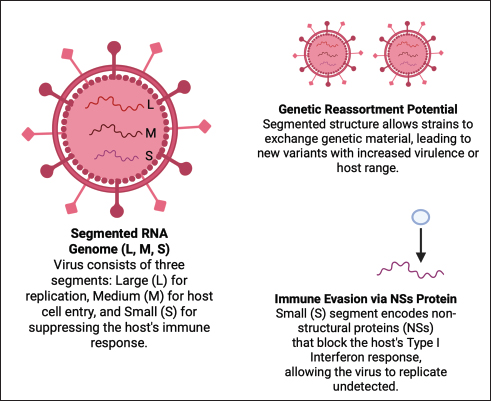
ABSTRACTSevere fever with thrombocytopenia syndrome virus (SFTSV) is an emerging tick-borne zoonotic pathogen that has become an important public health concern in East and Southeast Asia. Since its identification in China in 2009, the virus has been reported in several neighboring countries, with evidence suggesting a potential risk of further geographic expansion. SFTSV belongs to the genus Bandavirus within the family Phenuiviridae and possesses a three-segmented, negative-sense RNA genome that contributes to viral evolution, reassortment, and host adaptation. Transmission primarily occurs through ticks, particularly Haemaphysalis longicornis, although rare human-to-human transmission associated with close contact or nosocomial exposure has also been documented. A wide range of domestic and wild animals may act as reservoir or amplifying hosts, supporting viral maintenance in nature and facilitating zoonotic spillover. Ecological and anthropogenic factors, including climate variability, land-use change, agricultural intensification, and animal movement, may further contribute to vector expansion and disease emergence. Clinically, SFTSV infection is characterized by acute fever, thrombocytopenia, leukopenia, gastrointestinal symptoms, and, in severe cases, multiorgan failure with relatively high case-fatality rates. This review summarizes current knowledge regarding the virology, epidemiology, transmission dynamics, host range, vector ecology, and environmental drivers associated with SFTSV. The review also critically discusses current limitations in surveillance, diagnostic capacity, and epidemiological evidence related to global spread risk. Furthermore, the review highlights the importance of a One Health approach integrating human, animal, and environmental health sectors to strengthen surveillance, prevention, and future outbreak preparedness. Keywords: Asia, Haemaphysalis longicornis, One Health, SFTSV, Virus. IntroductionSevere fever with thrombocytopenia syndrome virus (SFTSV) is an emerging tick-borne zoonotic virus of growing public health concern because of its association with severe disease and relatively high case-fatality rates (Casel et al., 2021). First identified in China in 2009, SFTSV has subsequently been reported in several East and Southeast Asian countries, indicating continued geographic expansion and growing epidemiological importance (Huang et al., 2020; Yu et al., 2025). SFTSV is a segmented RNA virus that is mainly spread by tick bites. It is a member of the genus Bandavirus within the family Phenuiviridae (Peng et al., 2025). The segmented nature of the genome facilitates viral evolution through reassortment and contributes to the virus’s adaptability across multiple host species (Lei et al., 2015; Chen et al., 2025a). This characteristic, together with the broad host range of SFTSV, complicates disease ecology and control efforts (Sun et al., 2022). The epidemiology of SFTSV has become increasingly important due to the rising number of reported human infections in endemic regions (Zhan et al., 2017; Chen et al., 2025b). Environmental changes, expansion of tick habitats, and increased interactions among humans, animals, and vectors are considered important drivers of transmission dynamics (Fukushima et al., 2025; Ouh, 2026). Furthermore, the detection of SFTSV-related antibodies outside historically endemic areas has raised concerns regarding its wider dissemination potential (Park and Kim, 2026). SFTSV presents a serious threat to public health because of its numerous routes of transmission. In addition to being bitten by the main vector tick, Haemaphysalis longicornis, illness can also be contracted by direct contact with infected animals, especially dogs and cats, which have high viremia levels (Tufts et al., 2021; Zhang et al., 2024). These multiple transmission routes highlight the importance of integrated surveillance and prevention strategies involving human, animal, and environmental health sectors (Robles et al., 2018). Because SFTSV circulates among vectors, wildlife, domestic animals, and humans, the disease represents a significant One Health challenge (Oh et al., 2016). Asymptomatic infections in reservoir animals further complicate surveillance and control measures, emphasizing the need for interdisciplinary approaches to better understand viral ecology and transmission patterns (Han et al., 2022; Wang et al., 2024). This review aims to summarize current knowledge regarding the virology, epidemiology, ecology, and transmission dynamics of SFTSV, while highlighting factors associated with its geographic spread and public health significance. In addition, this review discusses the importance of integrated One Health-based surveillance and identifies key challenges for future prevention and control strategies. Virology and molecular characteristicsSFTSV is a tick-borne RNA virus that is a member of the Bunyavirales order, Bandavirus genus, and Phenuiviridae family (Mwakibete et al., 2020; Peng et al., 2025). This genus also includes other zoonotic arboviruses such as Heartland virus (HRTV), which shares close phylogenetic relatedness with SFTSV and provides insight into the evolutionary emergence of tick-borne phleboviruses (Yun et al., 2015; Sang et al., 2024). The three negative-polarity, single-stranded RNA segments that make up the SFTSV genome—the L (large), M (medium), and S (small) segments—have a combined length of roughly 12.8 kb (Perez-Sautu et al., 2020). As introduced previously, the segmented genome structure contributes to viral genetic plasticity and adaptation (Yun et al., 2017). Figure 1 illustrates the virology and molecular structure of SFTSV.
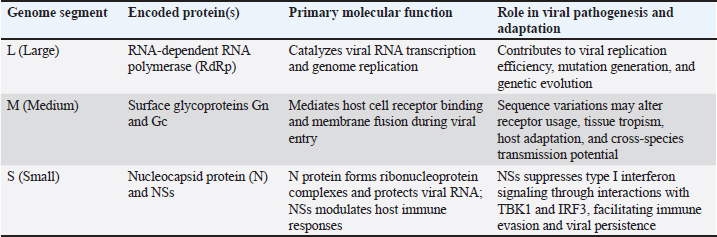
Fig. 1. Schematic of SFTSV genome organization and protein functions. RNA-dependent RNA polymerase (RdRp), which is encoded by the L segment, is essential for transcription and viral genome replication (Yin et al., 2022). The surface glycoproteins Gn and Gc, which are important in host cell receptor binding and membrane fusion during infection, are encoded by the M segment (Yu et al., 2025). Meanwhile, the S segment encodes the nucleocapsid (N) protein and nonstructural protein (NSs), both of which are important for viral replication and immune evasion (Liu et al., 2023). The NSs protein has been identified as a major virulence determinant because it suppresses type I interferon signaling through interactions with host immune pathways such as TBK1 and IRF3 (Zheng et al., 2025). Table 1 illustrates the genome structure and primary functions of each RNA segment in SFTSV. Table 1. Genome structure, encoded proteins, and molecular functions of SFTSV.
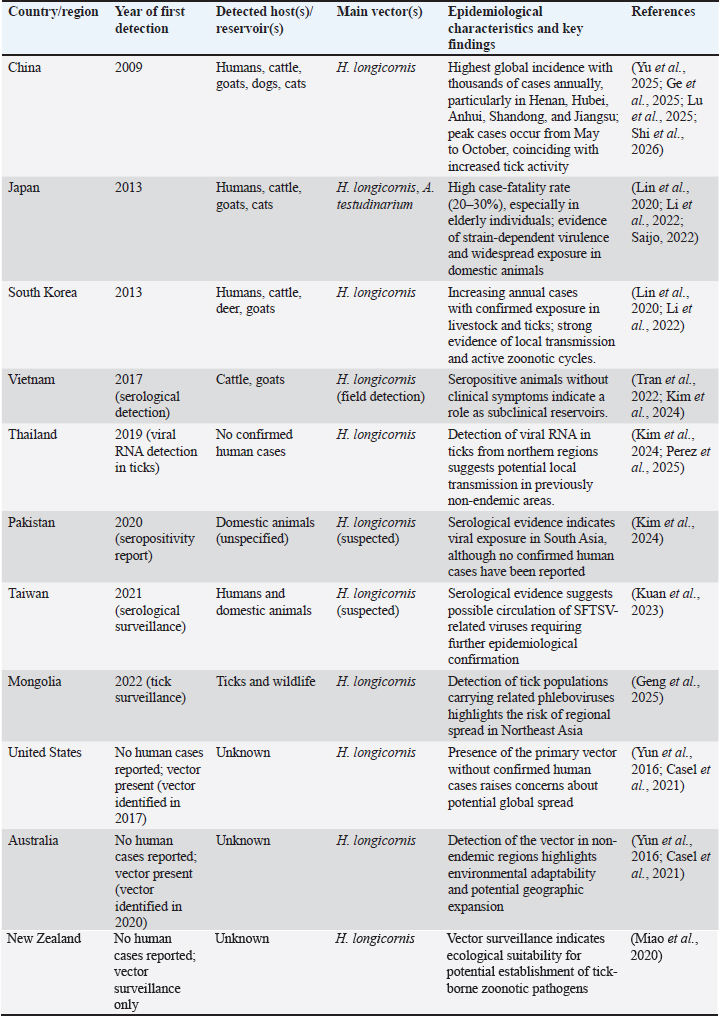
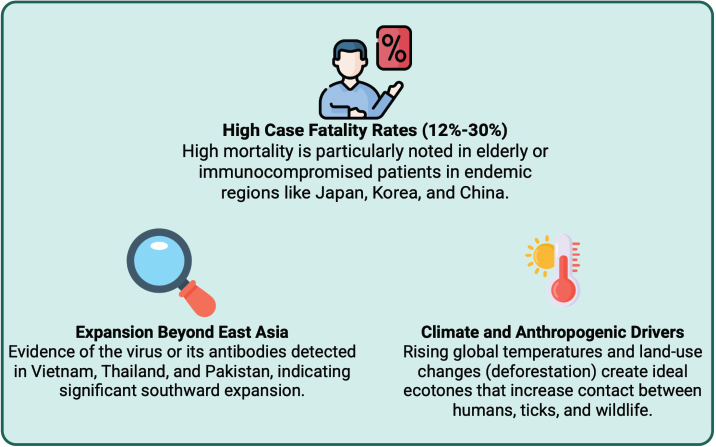
The segmented genome also enables reassortment between viral strains during coinfection, generating genetic diversity that may influence virulence, host adaptation, and transmission efficiency (Ren et al., 2023; Zhang et al., 2026). Variations in the M and S segments have been associated with altered tissue tropism and enhanced cross-species transmission potential (Park and Kim, 2026). SFTSV spillover is facilitated by several molecular and ecological factors (Lee and Shin, 2021). In particular, NSs-mediated immune suppression allows efficient viral replication within the host, while sequence diversity in viral glycoproteins may broaden receptor usage across multiple animal species (Chen et al., 2026). The virus is further maintained through complex interactions among tick vectors, vertebrate hosts, and environmental conditions (Wang et al., 2015; Yuan et al., 2023). Haemaphysalis longicornis, the principal vector, supports both horizontal and transstadial transmission, thereby sustaining the natural transmission cycle and increasing the risk of zoonotic spread (Esteves et al., 2025). Epidemiology and geographic distributionSFTSV has demonstrated a broad dispersion pattern in East and Southeast Asia since its initial discovery in Henan Province, China, in 2009 (Yu et al., 2025). As discussed previously, the epidemiology of SFTSV is closely associated with the distribution of tick vectors, animal reservoirs, and environmental conditions that support viral maintenance and transmission (Robles et al., 2018; Yao et al., 2026). Thousands of human cases are reported each year in China, which has the greatest incidence rate, especially in rural areas with extensive agricultural activity (Ge et al., 2025). Cases are dispersed throughout eastern and central provinces, including Jiangsu, Henan, Hubei, Anhui, and Shandong (Shi et al., 2026). These cases frequently coincide with the H. longicornis tick peak activity season, which runs from May to October. During this time, ambient temperatures and humidity encourage an increase in vector populations (Lu et al., 2025). After being first identified in China, SFTSV was also found in South Korea and Japan, both of which reported their first human cases in 2013 (Lin et al., 2020). Subsequent investigations detected seropositive livestock and companion animals, supporting evidence of widespread circulation beyond human populations (Li et al., 2022). Japan has reported relatively high case-fatality rates, particularly among elderly or immunocompromised patients, suggesting possible contributions from host susceptibility and viral strain differences (Saijo, 2022). In addition, serological data show that SFTSV has spread into Southeast and South Asia, with seropositive animals and vectors found in Vietnam, Thailand, and Pakistan (Kim et al., 2024). In Vietnam, antibodies have been identified in asymptomatic cattle and goats, whereas viral RNA detection in ticks from northern Thailand suggests possible local transmission in previously non-endemic areas (Tran et al., 2022). Beyond Asia, the detection of H. longicornis ticks in countries such as the United States and Australia has raised concerns regarding the future geographic expansion of SFTSV and related pathogens, although confirmed human cases have not yet been reported in these regions (Yun et al., 2016; Casel et al., 2021). Recent surveillance studies have also identified the presence of competent tick vectors or serological evidence related to SFTSV-like viruses in additional regions, emphasizing the importance of global epidemiological monitoring and preparedness (Miao et al., 2020; Kuan et al., 2023; Geng et al., 2025). Table 2 illustrates the geographic distribution of SFTSV in various Asian countries and its potential expansion into non-endemic areas. Table 2. Global geographic distribution, reported cases, vectors, and epidemiological characteristics of SFTSV and related surveillance findings (2009–2026).
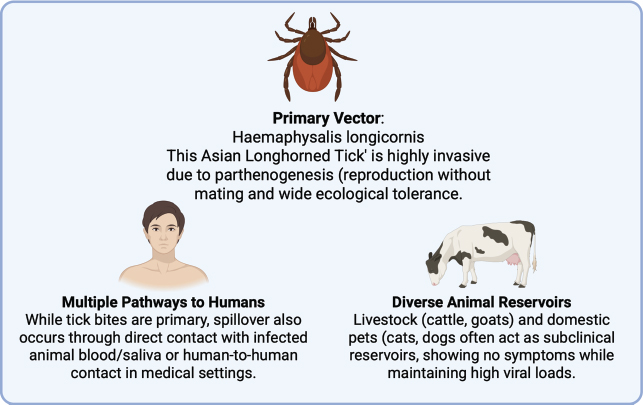
The epidemiological trend of SFTSV shows that its proliferation follows the ecological distribution of its vector and natural reservoir rather than being restricted to a particular geographic area (Robles et al., 2018). Factors such as climate change, agricultural intensification, animal movement, and rural landscape modification may further facilitate endemic expansion (Mo et al., 2025). Therefore, integrated One Health-based surveillance involving medical, veterinary, and environmental sectors remains essential for early outbreak detection and monitoring of cross-species transmission dynamics (Oshiro et al., 2026). Host range and animal involvementSFTSV is a zoonotic virus capable of infecting a broad range of domestic and wild animals. Serological studies have identified exposure in cattle, goats, dogs, and cats, particularly in rural and livestock-associated environments where H. longicornis ticks are prevalent (Anggita et al., 2025). Reported seroprevalence rates vary considerably between regions, although these findings should be interpreted cautiously because differences in assay sensitivity, specificity, and potential cross-reactivity with related phleboviruses may influence antibody detection results (Hashimoto et al., 2022). Figure 2 illustrates transmission dynamics and the “One Health” cycle of SFTSV.
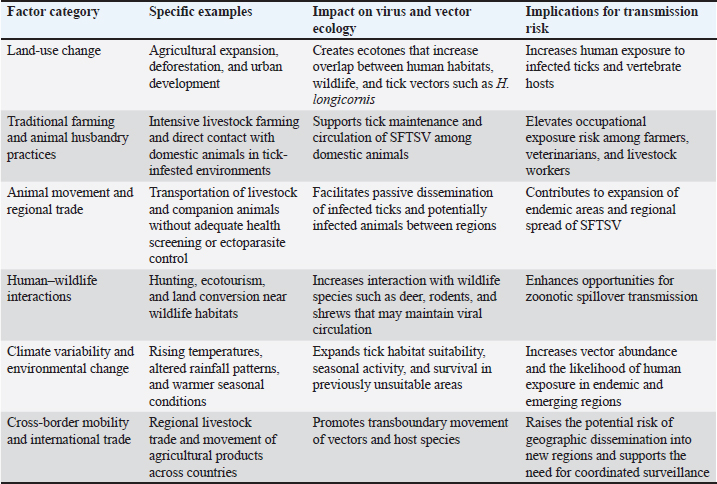
Fig. 2. Transmission dynamics and the “One Health” cycle of SFTSV. Apart from domestic animals, wildlife such as shrews, rodents, and deer are known to be significant natural sources of infection (Liu et al., 2014). Because these animals frequently inhabit tick-endemic environments, they may contribute to long-term viral persistence in nature and support the ecological cycle between vectors and vertebrate hosts (Zhao et al., 2022; Kaneko et al., 2023). Animals infected with SFTSV typically have subclinical infections, which are marked by brief viremia without overt clinical signs (Quan et al., 2023). However, cats and dogs may develop relatively high viral loads, increasing the possibility of direct animal-to-human transmission through exposure to blood, saliva, or other body fluids (Matsuu et al., 2023). Several reports from China, South Korea, and Japan have documented such transmission events, particularly among veterinarians, animal handlers, and farm workers with close animal contact (Kim et al., 2023a,b; Charoensakulchai et al., 2025). The potential contribution of migratory animals to the geographic spread of SFTSV remains under investigation. Current evidence mainly supports their role in transporting infected ticks rather than directly transmitting the virus itself (Ogden et al., 2008; Li et al., 2016; Lu et al., 2025). Nevertheless, genetic similarities among SFTSV isolates from geographically separated coastal regions suggest that migratory, vector-carrying animals may contribute to regional dissemination patterns (Yun et al., 2015; Yun et al., 2020; Pérez et al., 2024). Competence and vector ecologyThe main vector of SFTSV has been found to be H. longicornis, which is essential to the virus’s upkeep and natural dissemination (Hu et al., 2020). This tick species possesses strong ecological adaptability and the ability for parthenogenetic reproduction, allowing rapid population expansion across diverse environmental conditions (Luo et al., 2015). Because each stage of this tick’s three-host life cycle—larval, nymphal, and adult—requires blood from a distinct host, there is a greater chance of interspecies virus transmission (Trout Fryxell et al., 2021). In terms of ecology, H. longicornis demonstrates a broad range of ecological adaptations, enabling it to thrive in grasslands, agricultural regions, and bushland, among other settings with fluctuating humidity and temperature (Okely et al., 2025). The tick frequently parasitizes livestock and wildlife species, thereby increasing opportunities for zoonotic exposure in rural and agricultural settings (Heath, 2016; Tufts et al., 2021). Apart from H. longicornis, a number of other tick species, including Amblyomma testudinarium, Ixodes nipponensis, and Rhipicephalus microplus, have also been documented to carry or transmit SFTSV, albeit with lesser efficacy (Jang et al., 2024). These findings suggest that multiple tick species may contribute to maintaining the viral cycle in specific ecological settings (Oh et al., 2016). Environmental factors such as climate variability and land-use change may further facilitate tick population expansion and increase contact between vectors, animals, and humans (Yao et al., 2026). Tick habitats have spread into new areas, including temperate climates, as a result of global climate change, which has raised temperatures and changed rainfall patterns (Alasmari et al., 2025). Changes in land use, such as turning forests into agricultural regions, also produce the perfect conditions for tick and vertebrate host growth (Gilbert, 2021). Unexpectedly, the discovery of H. longicornis in non-endemic areas such as Australia and the United States has sparked grave worries about the possibility of this vector spreading around the world (Livengood et al., 2025). According to a phylogenetic study, tick populations in these new areas are genetically identical to isolates from East Asia, suggesting a transcontinental introduction—possibly due to human activities, wildlife migration, or the pet trade (Zhao et al., 2020). The ecological adaptability and broad host range of H. longicornis highlight the importance of continuous vector surveillance and integrated tick control strategies within a One Health framework (Zhuang et al., 2018). Mechanisms of virus transmission and spilloverThe intricate interactions between the tick vector, the host animal, and humans are part of the SFTSV transmission mechanism, which reflects the usual dynamics of zoonotic illnesses spread by arthropods (Sun et al., 2025). The principal vector, H. longicornis, maintains the virus through a tick–animal transmission cycle in nature (Luo et al., 2015). In the larval or nymphal stages, ticks pick up the virus by feeding on the blood of infected animals. As they mature into later stages, they spread it to new victims (Gong et al., 2025). The ability of the virus to persist through transstadial and transovarial transmission contributes to long-term maintenance within tick populations (Phillips et al., 2025). Humans are typically affected through tick bites, especially those who work or participate in activities in rural and agricultural areas (Tufts et al., 2021). The risk of infection generally increases during seasons with elevated tick activity (Piedmonte et al., 2021). SFTSV can be directly transmitted through contact with infected animals, especially cats and dogs, in addition to vector transmission (Woo et al., 2025). These animals may have high viremia and may have the virus in their blood, saliva, or other body fluids (Chen et al., 2025a). Animal-to-human transmission cases have been documented in South Korea and Japan, mainly involving veterinarians and pet owners who come into contact with bodily fluids while caring for sick animals (Kim et al., 2023a,b). Epidemiological data point to the potential for human-to-human transmission in addition to zoonotic transmission under specific circumstances (Zheng et al., 2026). Most reported cases are associated with close contact with infected blood or bodily fluids in healthcare or household settings, indicating that nosocomial transmission remains a secondary but important epidemiological concern (Zhang et al., 2024; Woo et al., 2025). Therefore, to reduce the possibility of secondary transmission, healthcare facilities must employ biosafety and infection prevention policies (Xu et al., 2024). Environmental and anthropogenic factors may further influence spillover events by increasing contact among vectors, animals, and humans (Casel et al., 2021). Agricultural expansion, changing land use, pet ownership, and climate-related habitat shifts can facilitate closer interaction between humans and tick-infested environments, thereby supporting viral transmission dynamics (Wang et al., 2021; Ouh, 2026). Virus evolution, reassortment, and phylogenetic insightsSFTSV isolates from East and Southeast Asia show a high degree of genetic diversity, which reflects active evolutionary dynamics and adaptability to a variety of hosts and conditions (Park et al., 2024). As a member of the genus Bandavirus within the family Phenuiviridae, SFTSV possesses a three-segmented RNA genome (L, M, and S segments) that facilitates genetic reassortment between co-circulating strains (Lokupathirage et al., 2021). This reassortment process can generate novel viral variants with altered biological characteristics, including changes in virulence, host adaptation, and transmission efficiency (Kim and Park, 2023). Several major clades are identified by phylogenetic studies of SFTSV isolates from different regions, and genetic dispersion is frequently correlated with geographic origin (Zhang et al., 2022). Interregional movement of vectors and animal hosts is believed to contribute to viral genetic exchange and the emergence of reassortant strains (Ren et al., 2023). This event has the potential to change the virus’s virulence and transmission efficiency, as well as boost its capacity to adapt to new hosts and broaden its geographic range (Wu et al., 2021). The genetic variability of SFTSV is also influenced by point mutations in addition to reassortment. Mutations in the M segment, which codes for the glycoprotein, might impact the virus's affinity for host cell receptors, while alterations in the S segment may contribute to the virus's ability to evade the host immune system, according to several molecular studies (Lokupathirage et al., 2025; Ren et al., 2026). Such genetic changes are important because they may affect pathogenicity, molecular diagnostic performance, and the development of sequence-based vaccines or antiviral strategies (Tani et al., 2016). Comparative phylogenetic studies further demonstrate evolutionary relationships between SFTSV and other tick-borne bandaviruses, including HRTV identified in the United States (Bellman et al., 2025). Despite coming from separate continents, both show parallels in human clinical symptoms, potential vectors, and genome structure (Shen et al., 2018). This resemblance raises the possibility of a common evolutionary ancestor as well as the possibility of similar viruses spreading to other areas via ecological convergence and vector expansion (Mantlo and Haley, 2023). Environmental and anthropogenic factors that drive the spreadIn addition to the biology of the virus and its vector, anthropogenic activities and environmental changes that modify the ecological balance between humans, animals, and vectors have a significant impact on the transmission of SFTSV (Chen et al., 2025b). Land-use change associated with agricultural expansion, deforestation, and urban development may increase contact between humans and tick-infested environments by creating ecotones favorable for H. longicornis and vertebrate hosts (Morand and Lajaunie, 2021; Nam et al., 2023). Figure 3 illustrates the global epidemiology and environmental drivers of SFTSV spread.
Fig. 3. Global epidemiology and environmental drivers. In rural East and Southeast Asia, intensive farming methods and traditional animal husbandry frequently involve direct contact between humans, domestic animals, and tick-infested open spaces (Sharifah et al., 2020). These conditions may increase occupational exposure risk among farmers, veterinarians, and livestock workers (Livengood et al., 2025). In addition, the pet trade and the movement of cattle across areas are potential pathways for the spread of SFTSV, both through passively carried vectors and sick animals (Lu et al., 2025). According to seroepidemiological research, transporting animals without rigorous health inspections and ectoparasite treatment can unintentionally increase the endemic range of the virus (Mekata et al., 2024). The virus is also maintained and spread in nature through interactions with wildlife. Rats, deer, and shrews are examples of wild animals that frequently act as natural reservoirs for the virus without exhibiting any symptoms (Wang et al., 2021). Human encroachment into wildlife habitats through hunting, ecotourism, or land conversion can increase opportunities for spillover transmission between wildlife, vectors, and humans (Nam et al., 2023). Climate variability further influences vector survival, seasonal activity, and habitat expansion. Rising temperatures and altered rainfall patterns may enable ticks to persist in previously unsuitable regions, potentially increasing human exposure risk (Gilbert, 2021; Cui et al., 2024). Several studies from South Korea and Japan have reported associations between warmer seasonal conditions, increased tick abundance, and higher numbers of human infections (Pérez et al., 2024). Table 3 describes the various environmental and anthropogenic factors contributing to the spread of SFTSV. Table 3. Environmental and anthropogenic factors contributing to the spread of SFTSV.
The danger of SFTSV spread is also greatly influenced by cross-border mobility and regional trade dynamics (Peng et al., 2025). Therefore, international collaboration, vector surveillance, and coordinated cross-border monitoring programs remain important components of prevention and outbreak preparedness strategies (Wang et al., 2021; Oshiro et al., 2026). Public health implications and the One Health approachBecause SFTSV is zoonotic and can spread from animals to humans through tick vectors or direct contact with infected animals, it presents a serious risk to public health (Zu et al., 2024). Severe disease is more commonly observed in elderly individuals, immunocompromised patients, and people with occupational exposure to livestock or tick-infested environments (Park et al., 2014a; Liu et al., 2025). Early diagnosis and underreporting of cases are the two of the biggest obstacles to SFTSV management. Clinically, SFTSV infection commonly presents with acute high fever, thrombocytopenia, leukopenia, fatigue, myalgia, gastrointestinal symptoms, and, in severe cases, may progress to multiorgan failure, hemorrhagic manifestations, and neurological complications (Seo et al., 2021). Because these clinical features overlap with other endemic febrile illnesses such as dengue, leptospirosis, and rickettsiosis, accurate diagnosis often requires laboratory confirmation using molecular or serological methods (Huang et al., 2019; Zu et al., 2024). Limited access to reverse transcription polymerase chain reaction (RT-PCR) and enzyme-linked immunosorbent assay (ELISA) testing in endemic rural areas may contribute to substantial underestimation of the true disease burden (Perez et al., 2025). Effective surveillance of SFTSV requires integration of medical, veterinary, and ecological data within a One Health framework (Robles et al., 2018). Monitoring vector distribution, animal exposure, and human infection trends can support earlier detection of emerging transmission hotspots and improve outbreak preparedness (Oshiro et al., 2026). Collaboration between the health, livestock, environmental, and research sectors is necessary to implement a One Health plan (Nyokabi et al., 2023). Priority measures include strengthening zoonotic surveillance systems, promoting public education on tick avoidance, improving infection prevention practices, and supporting collaborative international research on viral evolution and environmental drivers of transmission (Li et al., 2022; Zhang et al., 2026). Prospects and research prioritiesThe necessity for more thorough study and monitoring efforts to comprehend the dynamics of this virus internationally is highlighted by the growing spread of SFTSV in East Asia and its potential to move into other areas (Sun et al., 2025). Monitoring programs in Southeast Asia, the Pacific, and Australasia should prioritize surveillance of vectors, wildlife, and domestic animals in areas considered at risk for viral emergence (Park et al., 2014b; Kuan et al., 2023). Future surveillance systems should also incorporate standardized molecular screening methods, longitudinal vector monitoring, and coordinated reporting between veterinary and public health sectors to improve early outbreak detection (Chen et al., 2026; Oshiro et al., 2026). Strengthening experimental research on host competence and vector capacity is also necessary to identify the animal species that contribute most to the virus’s persistence in the wild (Sato et al., 2021). Research priorities include evaluating viremia dynamics, interspecies transmission potential, environmental influences on tick infectivity, and risk factors associated with human-to-human transmission in healthcare settings (Wang et al., 2021; Woo et al., 2025). Integrated tick control programs combining livestock management, environmental sanitation, and vector monitoring should also be strengthened in endemic regions (Ouh, 2026). In addition, as there are currently no targeted, efficient medical treatments for SFTSV, the development of vaccines and antiviral treatments is an urgent field of study (Chen et al., 2026). The current focus is on creating vaccines that target the SFTSV surface glycoprotein using DNA, recombinant proteins, and viral vectors (Kim et al., 2024). Several vaccine candidates have shown promising immunogenicity and protective efficacy in preclinical animal studies, although further clinical evaluation is still required before widespread implementation (Jeong et al., 2025). Future vaccine research should emphasize multicenter preclinical validation, long-term immune protection, and efficacy against genetically diverse SFTSV strains, supported by international collaboration and funding initiatives (Dang et al., 2025; Ganbold et al., 2025). In parallel, continued pharmacological and biotechnological studies are needed to identify antiviral compounds capable of inhibiting viral RNA replication (Chen et al., 2023). Advances in spatial modeling and bioinformatics technologies are enabling the application of predictive modeling to identify high-risk areas and estimate the likelihood of future outbreaks (Chen et al., 2025a). Policymakers may use models incorporating climate variables, vector distribution, population density, and livestock activity to improve outbreak preparedness and rapid response strategies within One Health surveillance systems (Miao et al., 2020; Oshiro et al., 2026). ConclusionSFTSV is an emerging tick-borne zoonotic virus with substantial public health importance due to its ecological adaptability and ability to infect multiple animal hosts. The continued spread of the virus is influenced by interactions among vectors, animals, humans, and environmental changes associated with human activities. Because current evidence indicates that transmission is driven primarily by vector ecology and environmental conditions, integrated surveillance and early detection systems remain essential for outbreak prevention and control. A One Health approach involving collaboration between medical, veterinary, and environmental sectors is critical for improving surveillance, vector control, outbreak preparedness, and public awareness. Future studies should focus on vaccine and antiviral development, improved understanding of spillover and human-to-human transmission dynamics, and strengthening coordinated vector surveillance and tick control programs in endemic and at-risk regions. AcknowledgmentThe authors would like to express their sincere gratitude to the National Research and Innovation Agency of Indonesia (Badan Riset dan Inovasi Nasional, BRIN) for their support and facilitation of this study. FundingThis study was fully supported by the authors’ personal resources. Author’s contributionsHN, ARK, NLPID, and RSA drafted the manuscript. AW, SW, AW, and SMN revised and edited the manuscript. FE, DN, MS, IF, and SSP prepared and critically checked the manuscript. EM, MKJK, and IS edited the references. All authors have read and approved the final version of the manuscript. Conflict of interestThe authors declare no potential conflicts of interest. Data availabilityThe data used in this study were obtained from publicly available sources on the internet. All relevant data are cited within the article, and additional details can be provided by the corresponding author upon reasonable request. ReferencesAlasmari, S.M.N., Tu, C.W., Khan, M., Javed, B., Liaqat, I., Bahadar, S., Altwaim, S.A., Chen, C.C., Vaz Junior, I.D.S. and Ali, A. 2025. Impact of climate change on the tick-host-pathogen complex: distribution patterns, disease incidence, and host infestation. Rev. Bras. Parasitol. Vet. 34(4), 4725. Anggita, M., Nyampong, S., Hu, W., Shimoda, H. and Hayasaka, D. 2025. Different Susceptibility of Mammalian Cell Lines to Severe Fever with Thrombocytopenia Syndrome Virus Infection. Viruses 17(10), 1380. Bellman, S., Shariatzadeh, N., Ferrell, T., Long, A., Aeschleman, L., Fausett, E., Walsh, T., Cleary, S., Roeske, I., Ojeda, E., Schwab, M., Dakanay, H., Telford Iii, S.R., Goethert, H.K., Vazquez-Prokopec, G. and Piantadosi, A. 2025. Focal persistence and phylodynamics of Heartland virus in Georgia. Virus. Evol. 11(1), 64. Casel, M.A., Park, S.J. and Choi, Y.K. 2021. Severe fever with thrombocytopenia syndrome virus: emerging novel phlebovirus and their control strategy. Exp. Mol. Med. 53(5), 713–722. Charoensakulchai, S., Matsuno, K., Nakayama, E.E., Shioda, T. and Imad, H.A. 2025. Epidemiological characteristics of severe fever with thrombocytopenia syndrome. Am. J. Trop. Med. Hyg. 112(5), 956–962. Chen, C., Li, J., Li, J., Huang, R., Chen, C., Xu, J., Zhang, Y. and Lou, Y. 2026. Research progress on antiviral drugs and vaccines for severe fever with thrombocytopenia syndrome. Front. Immunol. 17(1), 1730089. Chen, C., Li, J., Zhou, Y., Zhang, Y., Huang, R., Zhang, Y., Li, J. and Chen, K. 2025a. Latest advances and prospects in the pathogenesis, animal models, and vaccine research of severe fever with thrombocytopenia syndrome virus. Front. Immunol. 16(1), 1624290. Chen, L., Chen, T., Li, R., Xu, Y. and Xiong, Y. 2023. recent advances in the study of the immune escape mechanism of SFTSV and its therapeutic agents. Viruses 15(4), 940. Chen, Z., Baranwal, M., Rizvanov, A.A., Okely, M. and Khaiboullina, S.F. 2025b. Alarming implications: severe fever with thrombocytopenia syndrome and its biological vectors in the context of climate change. Front. Microbiol. 16(1), 1544427. Cui, H., Shen, S., Chen, L., Fan, Z., Wen, Q., Xing, Y., Wang, Z., Zhang, J., Chen, J., La, B., Fang, Y., Yang, Z., Yang, S., Yan, X., Pei, S., Li, T., Cui, X., Jia, Z. and Cao, W. 2024. Global epidemiology of severe fever with thrombocytopenia syndrome virus in human and animals: a systematic review and meta-analysis. Lancet Reg. Health West. Pac. 48(1), 101133. Dang, H., Wang, Y., Zhang, L., Xu, S., Liu, L. and Tong, Y. 2025. Recent advances in therapeutics for severe fever with thrombocytopenia syndrome virus. Viruses 17(9), 1174. Esteves, E., Obellianne, C., Garba, A., Sarkar, S.L., Schuler, M.G. and Hermance, M.E. 2025. Defining the kinetics of severe fever with thrombocytopenia syndrome virus acquisition and dissemination in naturally-infected Haemaphysalis longicornis. Front. Cell. Infect. Microbiol. 15(1), 1706970. Fukushima, S., Akazawa, H., Koyama, T. and Hagiya, H. 2025. Trends in the incidence of severe fever with thrombocytopenia syndrome in Japan: an observational study from 2013 to 2022. Sci. Rep. 15(1), 20715. Ganbold, T., Acharya, S., Sheet, S., Munkhtur, E. and Hong, S.T. 2025. Advancements in vaccine development and therapeutic approaches for severe fever with Thrombocytopenia Syndrome. Front. Cell. Infect. Microbiol. 15(1), 1650652. Ge, H.H., Liu, K., Ding, F.Y., Huang, P., Sun, Y.Q., Yue, M., Su, H., Wang, Q., Day, N.P.J., Maude, R.J., Jiang, D., Fang, L.Q. and Liu, W. 2025. Combined effects of hydrological conditions and socioeconomic factors on the seasonal dynamics of severe fever with thrombocytopenia syndrome in China, 2011–2022: a modelling study. Lancet. Reg. Health. West. Pac. 58, 101564. Geng, M., Wang, X., Wei, Y., Li, Y., Cai, Y., Li, J., Jiang, C., Zhang, X., Wu, W., Guo, N., Han, G., Han, X., Liu, T., Li, Q. and Wang, S. 2025. Identification of a novel genotype of severe fever with thrombocytopenia syndrome virus (SFTSV) in Northern Hebei Province, China. Viruses 17(12), 1534. Gilbert, L. 2021. The impacts of climate change on ticks and tick-borne disease risk. Annu. Rev. Entomol. 66(1), 373–388. Gong, L., Diao, L., Lv, T., Liu, Y., Liu, J., Zhang, W., Xie, X. and Cao, Y. 2025. A comprehensive review of tick-borne disease epidemiology, clinical manifestations, pathogenesis, and prevention. Anim. Zoonoses. 1(3), 254–265. Han, X.H., Ma, Y., Liu, H.Y., Li, D., Wang, Y., Jiang, F.H., Gao, Q.T., Jiang, F., Liu, B.S., Shen, G.S. and Chen, Z.L. 2022. Identification of severe fever with thrombocytopenia syndrome virus genotypes in patients and ticks in Liaoning Province, China. Parasit. Vectors. 15(1), 120. Hashimoto, T., Yahiro, T., Yamada, K., Kimitsuki, K., Okuyama, M.W., Honda, A., Kato, M., Narimatsu, H., Hiramatsu, K. and Nishizono, A. 2022. Distribution of severe fever with thrombocytopenia syndrome virus and antiviral antibodies in wild and domestic animals in Oita Prefecture, Japan. Am. J. Trop. Med. Hyg. 106(5), 1547–1551. Heath, A. 2016. Biology, ecology and distribution of the tick, Haemaphysalis longicornis Neumann (Acari: ixodidae) in New Zealand. N. Z. Vet. J. 64(1), 10–20. Hu, Y.Y., Zhuang, L., Liu, K., Sun, Y., Dai, K., Zhang, X.A., Zhang, P.H., Feng, Z.C., Li, H. and Liu, W. 2020. Role of three tick species in the maintenance and transmission of severe fever with thrombocytopenia syndrome virus. PLos Negl. Trop. Dis. 14(6), 8368. Huang, X., Ding, S., Jiang, X., Pang, B., Zhang, Q., Li, C., Li, A., Li, J., Liang, M., Wang, S. and Li, D. 2019. Detection of SFTS virus RNA and antibodies in severe fever with thrombocytopenia syndrome surveillance cases in endemic areas of China. BMC. Infect. Dis. 19(1), 476. Huang, X.Y., He, Z.Q., Wang, B.H., Hu, K., Li, Y. and Guo, W.S. 2020. Severe fever with thrombocytopenia syndrome virus: a systematic review and meta-analysis of transmission mode. Epidemiol. Infect. 148(1), 239. Jang, H., Casel, M.A.B., Jang, S.G., Choi, J.H., Gil, J., Rollon, R., Cheun, S.Y., Kim, Y.I., Song, M.S. and Choi, Y.K. 2024. Seasonal dynamics of Haemaphysalis tick species as SFTSV vectors in South Korea. Microbiol. Spectr. 12(11), 48924. Jeong, D.E., Yoon, J., Kim, B. and Kang, J.G. 2025. The immunogenicity and protection efficacy evaluation of mRNA vaccine candidate for severe fever with thrombocytopenia syndrome in mice. PLos Negl. Trop. Dis. 19(4), e0012999. Kaneko, C., Mekata, H., Umeki, K., Sudaryatma, P.E., Irie, T., Yamada, K., Misawa, N., Umekita, K. and Okabayashi, T. 2023. Seroprevalence of severe fever with thrombocytopenia syndrome virus in medium-sized wild mammals in Miyazaki, Japan. Ticks. Tick. Borne. Dis. 14(2), 102115. Kim, C.M., Kim, D.M., Bang, M.S., Seo, J.W., Yun, N.R., Kim, D.Y., Han, M.A., Hwang, J.H. and Park, S.K. 2023. The seroprevalence of severe fever with thrombocytopenia syndrome: an epidemiological study of korean veterinary hospital workers. Viruses 15(3), 609. Kim, D., Lai, C.J., Cha, I. and Jung, J.U. 2024. Current progress of severe fever with thrombocytopenia syndrome virus (SFTSV) Vaccine Development. Viruses 16(1), 128. Kim, E.H. and Park, S.J. 2023. Emerging tick-borne dabie bandavirus: virology, epidemiology, and prevention. Microorganisms 11(9), 2309. Kuan, C.Y., Lin, T.L., Ou, S.C., Chuang, S.T., Chan, J.P.W., Maeda, K., Mizutani, T., Wu, M.P., Lee, F., Chan, F.T., Chang, C.C., Liang, R.L., Yang, S.F., Liu, T.C., Tu, W.C., Tzeng, H.Y., Lee, C.J., Lin, C.F., Lee, H.H., Wu, J.H., Lo, H.C., Tseng, K.C., Hsu, W.L. and Chou, C.C. 2023. the first nationwide surveillance of severe fever with thrombocytopenia syndrome in ruminants and wildlife in Taiwan. Viruses 15(2), 441. Lee, J.K. and Shin, O.S. 2021. Nonstructural protein of severe fever with thrombocytopenia syndrome phlebovirus inhibits TBK1 to evade interferon-mediated response. J. Microbiol. Biotechnol. 31(2), 226–232. Lei, X.Y., Liu, M.M. and Yu, X.J. 2015. Severe fever with thrombocytopenia syndrome and its pathogen SFTSV. Microbes. Infect. 17(2), 149–154. Li, J.C., Zhao, J., Li, H., Fang, L.Q. and Liu, W. 2022. Epidemiology, clinical characteristics, and treatment of severe fever with thrombocytopenia syndrome. Infect. Med. (Beijing). 1(1), 40–49. Li, Z., Bao, C., Hu, J., Liu, W., Wang, X., Zhang, L., Ji, Z., Feng, Z., Li, L., Shen, A., Liu, X., Zhao, H., Tan, W., Zhou, J., Qi, X., Zhu, Y., Tang, F., Cardona, C.J. and Xing, Z. 2016. Ecology of the tick-borne phlebovirus causing severe fever with thrombocytopenia syndrome in an endemic area of China. PLos Negl. Trop. Dis. 10(4), e0004574. Lin, T.L., Ou, S.C., Maeda, K., Shimoda, H., Chan, J.P.W., Tu, W.C., Hsu, W.L. and Chou, C.C. 2020. The first discovery of severe fever with thrombocytopenia syndrome virus in Taiwan. Emerg. Microbes Infect. 9(1), 148–151. Liu, J.W., Wen, H.L., Fang, L.Z., Zhang, Z.T., He, S.T., Xue, Z.F., Ma, D.Q., Zhang, X.S., Wang, T., Yu, H., Zhang, Y., Zhao, L. and Yu, X.J. 2014. Prevalence of SFTSV among Asian house shrews and rodents, China, January-August 2013. Emerg. Infect. Dis. 20(12), 2126–2128. Liu, S., Su, Y., Lu, Z., Zou, X., Xu, L., Teng, Y., Wang, Z. and Wang, T. 2023. The SFTSV nonstructural proteins induce autophagy to promote viral replication via interaction with Vimentin. J. Virol. 97(4), 30223. Liu, Y., Ma, Y., Chen, L., Shi, X., Fang, Y., Li, T., Wang, J., Yan, H., Song, X., Jiang, G., Cai, G., Jiang, J. and Sun, J. 2025. A cluster of severe fever with thrombocytopenia syndrome with household and nosocomial transmission in Zhejiang Province, China, 2023. BMC. Public. Health. 25(1), 3286. Livengood, J., Young, K., Lint, C., Thirumalapura, N., Price, K.J. and Tewari, D. 2025. Pathogen surveillance of Haemaphysalis longicornis ticks in Southern Pennsylvania, USA using targeted and metatranscriptomic screening. Parasitologia 5(4), 64. Lokupathirage, S.M.W., Muthusinghe, D.S., Sarii, R.S., Akanbi, O.A., Shimizu, K., Tsuda, Y. and Yoshimatsu, K. 2025. Characterization of quasispecies of severe fever with thrombocytopenia syndrome virus. J. Virol. 99(5), 179424. Lokupathirage, S.M.W., Tsuda, Y., Ikegame, K., Noda, K., Muthusinghe, D.S., Kozawa, F., Manzoor, R., Shimizu, K. and Yoshimatsu, K. 2021. Subcellular localization of nucleocapsid protein of SFTSV and its assembly into the ribonucleoprotein complex with L protein and viral RNA. Sci. Rep. 11(1), 22977. Lu, H.Y., Wu, G.D., Peng, M., Wu, L.B., Luo, Y.M., Xia, B., Xiong, D., Qin, X.R., Guo, F. and Yu, X.J. 2025. SFTSV prevalence in ticks and livestock in an SFTSV-endemic area in Central China. Pathogens 14(9), 944. Luo, L.M., Zhao, L., Wen, H.L., Zhang, Z.T., Liu, J.W., Fang, L.Z., Xue, Z.F., Ma, D.Q., Zhang, X.S., Ding, S.J., Lei, X.Y. and Yu, X.J. 2015. Haemaphysalis longicornis ticks as reservoir and vector of severe fever with thrombocytopenia syndrome virus in China. Emerg. Infect. Dis. 21(10), 1770–1776. Mantlo, E.K. and Haley, N.J. 2023. Heartland virus: an evolving story of an emerging zoonotic and vector-borne disease. Zoonotic Dis. 3(3), 188–202. Matsuu, A., Hatai, H., Hifumi, T., Hamakubo, E., Take, M., Tanaka, T., Momoi, Y., Endo, Y., Koyoshi, A., Kamikubo, Y., Kamatsuki, R., Kurusu, N., Tabata, H., Matsuyama, H., Yanaidani, M., Kawabata, M. and Kawabata, T. 2023. Clinical and pathological findings in fatal cases of severe fever with thrombocytopenia syndrome with high viremia in cats. Top. Companion Anim. Med. 52(1), 100756. Mekata, H., Yamada, K., Umeki, K., Yamamoto, M., Ochi, A., Umekita, K., Kobayashi, I., Hirai, T. and Okabayashi, T. 2024. Nine-year seroepidemiological study of severe fever with thrombocytopenia syndrome virus infection in feral horses in Cape Toi, Japan. BMC Vet. Res. 20(1), 190. Miao, D., Dai, K., Zhao, G.P., Li, X.L., Shi, W.Q., Zhang, J.S., Yang, Y., Liu, W. and Fang, L.Q. 2020. Mapping the global potential transmission hotspots for severe fever with thrombocytopenia syndrome by machine learning methods. Emerg. Microbes Infect. 9(1), 817–826. Mo, G., Huo, X., Biwott, M.K., Chang, N., Ji, H., Feng, L., Zhu, H. and Liu, Q. 2025. The effect of meteorological factors on severe fever with thrombocytopenia syndrome: evidence from 34 Chinese cities. One. Health. 22(1), 101295. Morand, S. and Lajaunie, C. 2021. Outbreaks of vector-borne and zoonotic diseases are associated with changes in forest cover and oil palm expansion at global scale. Front. Vet. Sci. 8(1), 661063. Mwakibete, L., Hoarau, A.O.G., Ahyong, V., Waltari, E., Bender, S.J., Davison, S., Niedringhaus, K.D., Gibison, M.L., Gagne, R.B., Miller, E.A., Murphy, L.A., Kistler, A.L. and Tato, C.M. 2020. Discovery of a novel bandavirus using metagenomic sequencing in a retrospective analysis of an unresolved 2020 mortality event involving wild black vultures in the Northeastern United States. J. Vet. Diagn. Invest. 1(1), 10406387261418632. Nam, H.K., Min, K.D., Jo, S. and Cho, S.I. 2023. Association of deforestation with severe fever with thrombocytopenia syndrome. J. Infect. Dis. 228(12), 1730–1738. Nyokabi, N.S., Moore, H., Berg, S., Lindahl, J., Phelan, L., Gimechu, G., Mihret, A. and Wood, J.L.N. 2023. Implementing a one health approach to strengthen the management of zoonoses in Ethiopia. One Health 16(1), 100521. Ogden, N.H., Lindsay, L.R., Hanincová, K., Barker, I.K., Bigras-Poulin, M., Charron, D.F., Heagy, A., Francis, C.M., O'Callaghan, C.J., Schwartz, I. and Thompson, R.A. 2008. Role of migratory birds in introduction and range expansion of Ixodes scapularis ticks and of Borrelia burgdorferi and Anaplasma phagocytophilum in Canada. Appl. Environ. Microbiol. 74(6), 1780–1790. Oh, S.S., Chae, J.B., Kang, J.G., Kim, H.C., Chong, S.T., Shin, J.H., Hur, M.S., Suh, J.H., Oh, M.D., Jeong, S.M., Shin, N.S., Choi, K.S. and Chae, J.S. 2016. Detection of severe fever with thrombocytopenia syndrome virus from wild animals and Ixodidae ticks in the Republic of Korea. Vector. Borne. Zoonotic. Dis. 16(6), 408–414. Okely, M., Chen, Z., Adly, E. and Kamal, M. 2025. Climate change influences on the potential geographic distribution of the invasive Asian longhorned tick, Haemaphysalis longicornis. Sci. Rep. 15(1), 2266. Oshiro, R., Ihara, M., Ibrahim, C.H.O., Matsui, K., Dalouny, X., Pham Vu, N.H., Kurashige, T., Xu, Q., Hu, S., Ngwe Tun, M.M., Takaki, Y., Ogushi, H., Setoguchi, D., Katsuoka, S., Murakami, T., Matsumoto, C., Hattori, M., Hattori, N., Miyamoto, S., Sakai, Y., Suzuki, T., Yamanashi, H., Murota, H., Maeda, T., Morita, K., Yoshikawa, A. and Takamatsu, Y. 2026. Emerging multi-source transmission of SFTS virus on a remote Japanese island: a One-Health perspective. Int. J. Mol. Sci. 27(4), 1702. Ouh, I.O. 2026. Genetically diverse severe fever with thrombocytopenia syndrome virus circulates in shelter and companion dogs in South Korea. Int. J. Mol. Sci. 27(4), 1760. Park, D., Kim, K.W., Kim, Y.I., Casel, M.A.B., Jang, H., Kwon, W., Kim, K., Kim, S.M., N, M.P.A., Kim, E.H., Jang, H., Hwang, S., Yun, S.M., Lee, J.Y., Jeong, H.W., Park, S.J. and Choi, Y.K. 2024. Deciphering the evolutionary landscape of severe fever with thrombocytopenia syndrome virus across East Asia. Virus Evol. 10(1), 54. Park, S. and Kim, C. 2026. Immune cells at the frontline of SFTSV infection. J. Microbiol. Biotechnol. 36(1), e2511002. Park, S.W., Han, M.G., Yun, S.M., Park, C., Lee, W.J. and Ryou, J. 2014a. Severe fever with thrombocytopenia syndrome virus, South Korea, 2013. Emerg. Infect. Dis. 20(11), 1880–1882. Park, S.W., Song, B.G., Shin, E.H., Yun, S.M., Han, M.G., Park, M.Y., Park, C. and Ryou, J. 2014b. Prevalence of severe fever with thrombocytopenia syndrome virus in Haemaphysalis longicornis ticks in South Korea. Ticks. Tick. Borne. Dis. 5(6), 975–977. Peng, C., Hao, Y., Yuan, Y., Ma, W., Zhang, D., Kong, J., Zhang, H., Li, N. and Xiao, P. 2025. Bandavirus dabieense: a review of epidemiology, clinical characteristics, pathophysiology, treatment and prevention. Virulence 16(1), 2520343. Pérez, L.J., Baele, G., Hong, S.L., Cloherty, G.A. and Berg, M.G. 2024. Ecological changes exacerbating the spread of invasive ticks has driven the dispersal of severe fever with thrombocytopenia syndrome virus throughout Southeast Asia. Mol. Biol. Evol. 41(8), msae173. Perez, L.J., Suputtamongkol, Y., Hadji, A., Phoompoung, P., Weiss, S., Yamaguchi, J., Forberg, K., Hodges, A., Olivo, A., Cloherty, G.A. and Berg, M.G. 2025. Retrospective detection of Severe Fever with Thrombocytopenia Syndrome Virus (SFTSV) revises timeline of emergence in Thailand. Virus Evol. 11(1), 78. Perez-Sautu, U., Gu, S.H., Caviness, K., Song, D.H., Kim, Y.J., Paola, N.D., Lee, D., Klein, T.A., Chitty, J.A., Nagle, E., Kim, H.C., Chong, S.T., Beitzel, B., Reyes, D.S., Finch, C., Byrum, R., Cooper, K., Liang, J., Kuhn, J.H., Zeng, X., Kuehl, K.A., Coffin, K.M., Liu, J., Oh, H.S., Seog, W., Choi, B.S., Sanchez-Lockhart, M., Palacios, G. and Jeong, S.T. 2020. A model for the production of regulatory grade viral hemorrhagic fever exposure stocks: from field surveillance to advanced characterization of SFTSV. Viruses 12(9), 958. Phillips, P.M., Fahey, J. and Behm, J.E. 2025. An investigation of Haemaphysalis longicornis (Ixodida: ixodidae) habitat and pathogen overlap with resident tick species in Southeastern Pennsylvania forests. J. Med. Entomol. 62(2), 465–470. Piedmonte, N.P., Vinci, V.C., Daniels, T.J., Backenson, B.P. and Falco, R.C. 2021. Seasonal activity of Haemaphysalis longicornis (Acari: ixodidae) in Southern New York State. J. Med. Entomol. 58(2), 676–681. Quan, C., Liu, Q., Yu, L., Li, C., Nie, K., Ding, G., Zhou, H., Wang, X., Sun, W., Wang, H., Yue, M., Wei, L., Zheng, W., Lyu, Q., Xing, W., Zhang, Z., Carr, M.J., Zhang, H. and Shi, W. 2023. SFTSV infection is associated with transient overproliferation of monoclonal lambda-type plasma cells. iScience 26(6), 106799. Ren, X., Deng, W., Yu, F., Kuang, W., Na, H., Yang, S., Sun, J., Xu, J., Shu, B., Cao, S., Ke, X., Deng, Z., Ning, Y.J. and Zhao, H. 2026. Humanization and engineering of protective antibodies targeting severe fever with thrombocytopenia syndrome virus Gn protein. Cell Rep. 45(2), 116936. Ren, Y.T., Tian, H.P., Xu, J.L., Liu, M.Q., Cai, K., Chen, S.L., Ni, X.B., Li, Y.R., Hou, W. and Chen, L.J. 2023. Extensive genetic diversity of severe fever with thrombocytopenia syndrome virus circulating in Hubei Province, China, 2018–2022. PLos Negl. Trop. Dis. 17(9), 11654. Robles, N.J.C., Han, H.J., Park, S.J. and Choi, Y.K. 2018. Epidemiology of severe fever and thrombocytopenia syndrome virus infection and the need for therapeutics for the prevention. Clin. Exp. Vaccine. Res. 7(1), 43–50. Saijo, M. 2022. Severe fever with thrombocytopenia syndrome, a viral hemorrhagic fever, endemic to japan: achievements in and directions for medical research. Jpn. J. Infect. Dis. 75(3), 217–227. Sang, S., Chen, P., Li, C., Zhang, A., Wang, Y. and Liu, Q. 2024. The classification, origin, and evolutionary dynamics of severe fever with thrombocytopenia syndrome virus circulating in East Asia. Virus Evol. 10(1), 72. Sato, Y., Mekata, H., Sudaryatma, P.E., Kirino, Y., Yamamoto, S., Ando, S., Sugimoto, T. and Okabayashi, T. 2021. Isolation of severe fever with thrombocytopenia syndrome virus from various tick species in area with human severe fever with thrombocytopenia syndrome cases. Vector. Borne. Zoonotic. Dis. 21(5), 378–384. Seo, J.W., Kim, D., Yun, N. and Kim, D.M. 2021. Clinical update of severe fever with thrombocytopenia syndrome. Viruses 13(7), 1213. Sharifah, N., Heo, C.C., Ehlers, J., Houssaini, J. and Tappe, D. 2020. Ticks and tick-borne pathogens in animals and humans in the island nations of Southeast Asia: a review. Acta Trop. 209(2), 105527. Shen, S., Duan, X., Wang, B., Zhu, L., Zhang, Y., Zhang, J., Wang, J., Luo, T., Kou, C., Liu, D., Lv, C., Zhang, L., Chang, C., Su, Z., Tang, S., Qiao, J., Moming, A., Wang, C., Abudurexiti, A., Wang, H., Hu, Z., Zhang, Y., Sun, S. and Deng, F. 2018. A novel tick-borne phlebovirus, closely related to severe fever with thrombocytopenia syndrome virus and Heartland virus, is a potential pathogen. Emerg. Microbes & Infections 7(1), 95. Shi, H., Wang, Y., Cao, J., Zhou, Y., Zhang, H. and Zhou, J. 2026. Prevalence and diversity of severe fever with thrombocytopenia syndrome virus and co-infection with Babesia microti in Ticks from Central and Eastern Parts of China. Pathogens 15(2), 165. Sun, H., Hu, Q., Lu, S., Yang, Y., Zhang, L., Long, J., Jin, Y., Yang, H., Chen, S. and Duan, G. 2025. Current status of severe fever with thrombocytopenia syndrome in China (Review). Int. J. Mol. Med. 56(5), 169. Sun, J., Min, Y.Q., Li, Y., Sun, X., Deng, F., Wang, H. and Ning, Y.J. 2022. Animal model of severe fever with thrombocytopenia syndrome virus infection. Front. Microbiol. 12(1), 797189. Tani, H., Shimojima, M., Fukushi, S., Yoshikawa, T., Fukuma, A., Taniguchi, S., Morikawa, S. and Saijo, M. 2016. Characterization of glycoprotein-mediated entry of severe fever with thrombocytopenia syndrome virus. J. Virol. 90(11), 5292–5301. Tran, X.C., Kim, S.H., Lee, J.E., Kim, S.H., Kang, S.Y., Binh, N.D., Duc, P.V., Phuong, P.T.K., Thao, N.T.P., Lee, W., Bae, J.Y., Park, M.S., Kim, M., Yoo, J.R., Heo, S.T., An, K.H., Kim, J.M., Cho, N.H., Kee, S.H. and Lee, K.H. 2022. Serological evidence of severe fever with thrombocytopenia syndrome virus and IgM positivity were identified in healthy residents in Vietnam. Viruses 14(10), 2280. Trout Fryxell, R.T., Vann, D.N., Butler, R.A., Paulsen, D.J., Chandler, J.G., Willis, M.P., Wyrosdick, H.M., Schaefer, J.J., Gerhold, R.W., Grove, D.M., Ivey, J.Z., Thompson, K.W., Applegate, R.D., Sweaney, J., Daniels, S., Beaty, S., Balthaser, D., Freye, J.D., Mertins, J.W., Bonilla, D.L. and Lahmers, K. 2021. Rapid discovery and detection of Haemaphysalis longicornis through the use of passive surveillance and collaboration: building a state tick-surveillance network. Int. J. Environ. Res. Public. Health. 18(15), 7980. Tufts, D.M., Goodman, L.B., Benedict, M.C., Davis, A.D., Vanacker, M.C. and Diuk-Wasser, M. 2021. Association of the invasive Haemaphysalis longicornis tick with vertebrate hosts, other native tick vectors, and tick-borne pathogens in New York City, USA. Int. J. Parasitol. 51(2–3), 149–157. Wang, J.N., Li, T.Q., Liu, Q.M., Wu, Y.Y., Luo, M.Y. and Gong, Z.Y. 2021. Vectors, hosts, and the possible risk factors associated with severe fever with thrombocytopenia syndrome. Can. J. Infect. Dis. Med. Microbiol. 1(1), 8518189. Wang, S., Li, J., Niu, G., Wang, X., Ding, S., Jiang, X., Li, C., Zhang, Q., Liang, M., Bi, Z. and Li, D. 2015. SFTS virus in ticks in an endemic area of China. Am. J. Trop. Med. Hyg. 92(4), 684–689. Wang, Y., Yang, M., Zhou, H., Quan, C. and Kang, H. 2024. Outbreak of natural severe fever with thrombocytopenia syndrome virus infection in farmed Minks, China. Emerg. Infect. Dis. 30(6), 1299–1301. Woo, D., Michelow, I.C., Choi, Y., Lee, H. and Park, S. 2025. Transmission of severe fever with thrombocytopenia syndrome (SFTS) to humans: a systematic review of individual participant data and meta-analysis. J. Infect. Public Health 18(6), 102685. Wu, X., Li, M., Zhang, Y., Liang, B., Shi, J., Fang, Y., Su, Z., Li, M., Zhang, W., Xu, L., Wang, J., Wu, Q., Tang, S., Wang, H., Zhang, T., Peng, C., Zheng, X., Deng, F. and Shen, S. 2021. Novel SFTSV phylogeny reveals new reassortment events and migration routes. Virol. Sin. 36(2), 300–310. Xu, H., Jian, X., Wen, Y., Xu, M., Jin, R., Wu, X., Zhou, F., Cao, J., Xiao, G., Peng, K., Xie, Y., Chen, H. and Zhang, L. 2024. A nanoluciferase SFTSV for rapid screening antivirals and real-time visualization of virus infection in mice. EBioMedicine 99(1), 104944. Yao, W., Zengqiang, K., Bo, P., Xueying, T. and Hongling, W. 2026. Modeling the role of environmental and socioeconomic factors in endemic SFTS risk using a multicomponent framework. One Health 22(1), 101344. Yin, Z., Ren, F., Zhou, M., Chen, S., Deng, Y., Hu, S., Deng, F., Shen, S. and Shi, J. 2022. Roles of the functional domains and conserved residues of the severe fever with thrombocytopenia syndrome virus L protein provide insights into the viral RNA transcription/replication mechanism. Virol. Sin. 37(6), 946–949. Yu, Y., Li, J., Liu, Q., Zhai, R., Dai, Y. and Sun, L. 2025. Advances in research on severe fever with thrombocytopenia syndrome virus. Front. Microbiol. 16(1), 1622394. Yuan, C., Lu, Y., Li, J., Chen, C., Wang, Y., Zheng, A., Zou, Z. and Xia, Q. 2023. Infection and transovarial transmission of severe fever with thrombocytopenia syndrome virus in Rhipicephalus sanguineus in Hainan Island, China. Integr. Zool. 18(6), 1009–1021. Yun, S.M., Park, S.J., Kim, Y.I., Park, S.W., Yu, M.A., Kwon, H.I., Kim, E.H., Yu, K.M., Jeong, H.W., Ryou, J., Lee, W.J., Jee, Y., Lee, J.Y. and Choi, Y.K. 2020. Genetic and pathogenic diversity of severe fever with thrombocytopenia syndrome virus (SFTSV) in South Korea. JCI. Insight. 5(2), e129531. Yun, S.M., Park, S.J., Park, S.W., Choi, W., Jeong, H.W., Choi, Y.K. and Lee, W.J. 2017. Molecular genomic characterization of tick- and human-derived severe fever with thrombocytopenia syndrome virus isolates from South Korea. PLos Negl. Trop. Dis. 11(9), 5893. Yun, S.M., Song, B.G., Choi, W., Roh, J.Y., Lee, Y.J., Park, W.I., Han, M.G., Ju, Y.R. and Lee, W.J. 2016. First isolation of severe fever with thrombocytopenia syndrome virus from Haemaphysalis longicornis ticks collected in severe fever with thrombocytopenia syndrome outbreak areas in the Republic of Korea. Vector. Borne. Zoonotic Dis. 16(1), 66–70. Yun, Y., Heo, S.T., Kim, G., Hewson, R., Kim, H., Park, D., Cho, N.H., Oh, W.S., Ryu, S.Y., Kwon, K.T., Medlock, J.M. and Lee, K.H. 2015. Phylogenetic analysis of severe fever with thrombocytopenia syndrome virus in South Korea and migratory bird routes between China, South Korea, and Japan. Am. J. Trop. Med. Hyg. 93(3), 468–474. Zhan, J., Wang, Q., Cheng, J., Hu, B., Li, J., Zhan, F., Song, Y. and Guo, D. 2017. Current status of severe fever with thrombocytopenia syndrome in China. Virol. Sin. 32(1), 51–62. Zhang, N., Mu, X., Liu, J. and Liu, T. 2024. Risk assessment of human-to-human transmission of severe fever with thrombocytopenia syndrome virus based on 10-year clustered analysis. Front. Public Health 12(1), 1419425. Zhang, X., Zhao, C., Cheng, C., Zhang, G., Yu, T., Lawrence, K., Li, H., Sun, J., Yang, Z., Ye, L., Chu, H., Wang, Y., Han, X., Jia, Y., Fan, S., Kanuka, H., Tanaka, T., Jenkins, C., Gedye, K., Chandra, S., Price, D.C., Liu, Q., Choi, Y.K., Zhan, X., Zhang, Z. and Zheng, A. 2022. Rapid spread of severe fever with thrombocytopenia syndrome virus by parthenogenetic asian longhorned ticks. Emerg. Infect. Dis. 28(2), 363–372. Zhang, Y., Hu, L., Li, C., Wei, X., Shen, Y., Li, H., Sai, L., Song, L. and Xu, Y. 2026. Genetic evolution and codon usage mode of SFTSV. Front. Microbiol. 16(1), 1731572. Zhao, C., Zhang, X., Si, X., Ye, L., Lawrence, K., Lu, Y., Du, C., Xu, H., Yang, Q., Xia, Q., Yu, G., Xu, W., Yuan, F., Hao, J., Jiang, J.F. and Zheng, A. 2022. Hedgehogs as amplifying hosts of severe fever with thrombocytopenia syndrome Virus, China. Emerg. Infect. Dis. 28(12), 2491–2499. Zhao, L., Li, J., Cui, X., Jia, N., Wei, J., Xia, L., Wang, H., Zhou, Y., Wang, Q., Liu, X., Yin, C., Pan, Y., Wen, H., Wang, Q., Xue, F., Sun, Y., Jiang, J., Li, S. and Cao, W. 2020. Distribution of Haemaphysalis longicornis and associated pathogens: analysis of pooled data from a China field survey and global published data. Lancet. Planet. Health. 4(8), e320–e329. Zheng, J., Du, S. and Liu, Q. 2025. The cellular host factors for severe fever with thrombocytopenia syndrome virus infection. Anim. Zoonoses 1(2), 146–163. Zheng, W., Zhou, H., Carr, M.J. and Shi, W. 2026. Epidemic potential of Severe Fever with Thrombocytopenia Syndrome Virus: increasing evidence for non-vector-borne transmission. Lancet. Microbe. 7(2), 101271. Zhuang, L., Sun, Y., Cui, X.M., Tang, F., Hu, J.G., Wang, L.Y., Cui, N., Yang, Z.D., Huang, D.D., Zhang, X.A., Liu, W. and Cao, W.C. 2018. Transmission of Severe Fever with Thrombocytopenia Syndrome Virus by Haemaphysalis longicornis Ticks, China. Emerg. Infect. Dis. 24(5), 868–871. Zu, Z., Lin, H., Hu, Y., Zheng, X., Chen, C., Zhao, Y., Zhang, Z. and He, N. 2024. Seroprevalence and transmission of severe fever with thrombocytopenia syndrome virus in a coastal endemic area in Southeastern China. Ticks. Tick. Borne. Dis. 15(1), 102277. | ||
| How to Cite this Article |
| Pubmed Style Nuradji H, Khairullah AR, Dharmayanti NLPI, Adji RS, Wiyono A, Wibowo S, Noor SM, Ekawasti F, Nurjanah D, Saepulloh M, Prihandani SS, Martindah E, Sendow I, Wijanarko A, Fauziah I, Kusala MKJ. Severe fever with thrombocytopenia syndrome virus: An emerging threat and potential. Open Vet. J.. 2026; 16(7): 4315-4329. doi:10.5455/OVJ.2026.v16.i7.19 Web Style Nuradji H, Khairullah AR, Dharmayanti NLPI, Adji RS, Wiyono A, Wibowo S, Noor SM, Ekawasti F, Nurjanah D, Saepulloh M, Prihandani SS, Martindah E, Sendow I, Wijanarko A, Fauziah I, Kusala MKJ. Severe fever with thrombocytopenia syndrome virus: An emerging threat and potential. https://www.openveterinaryjournal.com/?mno=318049 [Access: July 10, 2026]. doi:10.5455/OVJ.2026.v16.i7.19 AMA (American Medical Association) Style Nuradji H, Khairullah AR, Dharmayanti NLPI, Adji RS, Wiyono A, Wibowo S, Noor SM, Ekawasti F, Nurjanah D, Saepulloh M, Prihandani SS, Martindah E, Sendow I, Wijanarko A, Fauziah I, Kusala MKJ. Severe fever with thrombocytopenia syndrome virus: An emerging threat and potential. Open Vet. J.. 2026; 16(7): 4315-4329. doi:10.5455/OVJ.2026.v16.i7.19 Vancouver/ICMJE Style Nuradji H, Khairullah AR, Dharmayanti NLPI, Adji RS, Wiyono A, Wibowo S, Noor SM, Ekawasti F, Nurjanah D, Saepulloh M, Prihandani SS, Martindah E, Sendow I, Wijanarko A, Fauziah I, Kusala MKJ. Severe fever with thrombocytopenia syndrome virus: An emerging threat and potential. Open Vet. J.. (2026), [cited July 10, 2026]; 16(7): 4315-4329. doi:10.5455/OVJ.2026.v16.i7.19 Harvard Style Nuradji, H., Khairullah, . A. R., Dharmayanti, . N. L. P. I., Adji, . R. S., Wiyono, . A., Wibowo, . S., Noor, . S. M., Ekawasti, . F., Nurjanah, . D., Saepulloh, . M., Prihandani, . S. S., Martindah, . E., Sendow, . I., Wijanarko, . A., Fauziah, . I. & Kusala, . M. K. J. (2026) Severe fever with thrombocytopenia syndrome virus: An emerging threat and potential. Open Vet. J., 16 (7), 4315-4329. doi:10.5455/OVJ.2026.v16.i7.19 Turabian Style Nuradji, Harimurti, Aswin Rafif Khairullah, Ni Luh Putu Indi Dharmayanti, Rahmat Setya Adji, Agus Wiyono, Syahputra Wibowo, Susan Maphilindawati Noor, Fitrine Ekawasti, Diana Nurjanah, Muharam Saepulloh, Sri Suryatmiati Prihandani, Eny Martindah, Indrawati Sendow, Andi Wijanarko, Ima Fauziah, and Muhammad Khaliim Jati Kusala. 2026. Severe fever with thrombocytopenia syndrome virus: An emerging threat and potential. Open Veterinary Journal, 16 (7), 4315-4329. doi:10.5455/OVJ.2026.v16.i7.19 Chicago Style Nuradji, Harimurti, Aswin Rafif Khairullah, Ni Luh Putu Indi Dharmayanti, Rahmat Setya Adji, Agus Wiyono, Syahputra Wibowo, Susan Maphilindawati Noor, Fitrine Ekawasti, Diana Nurjanah, Muharam Saepulloh, Sri Suryatmiati Prihandani, Eny Martindah, Indrawati Sendow, Andi Wijanarko, Ima Fauziah, and Muhammad Khaliim Jati Kusala. "Severe fever with thrombocytopenia syndrome virus: An emerging threat and potential." Open Veterinary Journal 16 (2026), 4315-4329. doi:10.5455/OVJ.2026.v16.i7.19 MLA (The Modern Language Association) Style Nuradji, Harimurti, Aswin Rafif Khairullah, Ni Luh Putu Indi Dharmayanti, Rahmat Setya Adji, Agus Wiyono, Syahputra Wibowo, Susan Maphilindawati Noor, Fitrine Ekawasti, Diana Nurjanah, Muharam Saepulloh, Sri Suryatmiati Prihandani, Eny Martindah, Indrawati Sendow, Andi Wijanarko, Ima Fauziah, and Muhammad Khaliim Jati Kusala. "Severe fever with thrombocytopenia syndrome virus: An emerging threat and potential." Open Veterinary Journal 16.7 (2026), 4315-4329. Print. doi:10.5455/OVJ.2026.v16.i7.19 APA (American Psychological Association) Style Nuradji, H., Khairullah, . A. R., Dharmayanti, . N. L. P. I., Adji, . R. S., Wiyono, . A., Wibowo, . S., Noor, . S. M., Ekawasti, . F., Nurjanah, . D., Saepulloh, . M., Prihandani, . S. S., Martindah, . E., Sendow, . I., Wijanarko, . A., Fauziah, . I. & Kusala, . M. K. J. (2026) Severe fever with thrombocytopenia syndrome virus: An emerging threat and potential. Open Veterinary Journal, 16 (7), 4315-4329. doi:10.5455/OVJ.2026.v16.i7.19 |


