




| Research Article | ||
Open Vet. J.. 2026; 16(7): 4132-4140 Open Veterinary Journal, (2026), Vol. 16(7): 4132-4140 Research Article Serological evidence and epidemiological patterns of bovine respiratory syncytial virus in symptomatic cattle from MoroccoMohammed Filali1,2*, Hanane Khallouki2, Fatiha El-Mellouli2 and Hamid Lakhiari11Laboratory of Physical, Chemistry and Biotechnologies of Biomolecules and Materials, Environment and New Energies (LCP2BM)—Faculty of Science and Technology, Mohammedia, Hassan II University Casablanca, Mohammedia, Morocco 2Regional Laboratory of Analysis and Research, National Office of Food Safety (ONSSA)—Casablanca, Casablanca, Morocco *Corresponding Author: Mohammed Filali. Laboratory of Physical, Chemistry and Biotechnologies of Biomolecules and Materials, Environment and New Energies (LCP2BM)—Faculty of Science and Technology, Mohammedia, Hassan II University Casablanca, Mohammedia, Morocco. Email: Dr.mfilali [at] gmail.com Submitted: 07/05/2026 Revised: 06/06/2026 Accepted: 10/06/2026 Published: 02/07/2026 © 2026 Open Veterinary Journal
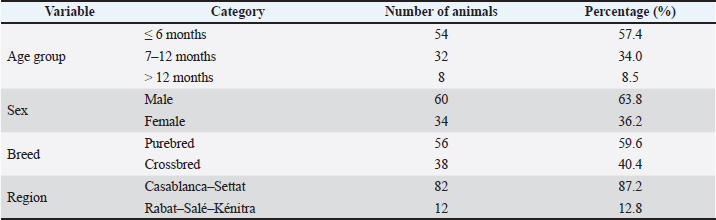
AbstractBackground: Bovine respiratory syncytial virus (BRSV) is a major viral pathogen involved in the bovine respiratory disease complex (BRD), causing substantial economic losses in cattle production worldwide. Despite its recognized importance, information on BRSV circulation and associated serological responses in Moroccan cattle remains limited. Aim: This study aimed to investigate the serological evidence of BRSV exposure and to identify epidemiological factors associated with BRSV seropositivity in clinically affected cattle from two major livestock-producing regions of Morocco. Methods: A cross-sectional seroepidemiological study was conducted between October 2020 and July 2021 in 16 commercial cattle farms located in the Casablanca–Settat and Rabat–Salé–Kénitra regions. A total of 94 serum samples were collected from cattle exhibiting clinical signs consistent with BRD. Anti-BRSV antibodies were detected using a commercial enzyme-linked immunosorbent assay (ELISA). Associations between seropositivity and potential risk factors, including age, sex, breed, and geographical origin, were evaluated using Fisher’s exact test and odds ratio analysis. Results: Seventy-four of the 94 tested animals were seropositive for BRSV antibodies, corresponding to an overall seropositivity rate of 78.7% (95% CI: 69.3–86.2), indicating widespread exposure among symptomatic cattle. No significant associations were found between seropositivity and age (p=0.29), sex (p=0.51), or sampling region (p=0.10). On the contrary, purebred cattle showed significantly higher seropositivity than crossbred animals (87.5% vs. 65.8%; OR=3.64, 95% CI: 1.27–10.43; p=0.016). Because sampling was restricted to clinically affected animals, the findings reflect exposure among symptomatic cattle rather than population-level seroprevalence. Conclusion: The study demonstrates widespread serological evidence of BRSV exposure among clinically affected cattle in Morocco, supporting the endemic circulation of the virus in the investigated herds. The high antibody detection rate highlights the need for strengthened surveillance programs, improved biosecurity measures, and the implementation of effective vaccination strategies to reduce the impact of respiratory disease in cattle production systems. Further studies combining serological and molecular approaches are warranted to better characterize BRSV epidemiology and transmission dynamics in Moroccan cattle populations. Keywords: Bovine respiratory syncytial virus, Cattle, Humoral immune response, Morocco, Seroepidemiology. IntroductionBovine respiratory disease (BRD) remains one of the most important health challenges affecting cattle production worldwide. This multifactorial syndrome results from complex interactions among infectious agents, environmental stressors, management conditions, and host immune responses (Kurćubić et al., 2018). Viral pathogens play a critical role in the early stages of the disease by damaging the respiratory epithelium and altering local immune defenses of the respiratory tract, which facilitates secondary infections caused by opportunistic bacterial pathogens (Brodersen, 2010; Panciera and Confer, 2010). Among the viral pathogens associated with BRD, bovine respiratory syncytial virus (BRSV) is considered one of the most important agents involved in cattle respiratory infections. BRSV belongs to the genus Orthopneumovirus within the family Pneumoviridae and primarily affects the lower respiratory tract of infected animals (Koteneva et al., 2025). Infection with BRSV induces both innate and adaptive immune responses, including the production of virus-specific antibodies that play a crucial role in limiting viral replication and contributing to protective immunity (Valarcher and Taylor, 2007; Ellis, 2017). However, immunity against BRSV is often incomplete, and reinfections may occur throughout the animal’s life (Barcelos, 2024). BRSV is a major respiratory pathogen in cattle and is associated with a wide range of clinical manifestations, including fever, coughing, nasal discharge, tachypnea, and respiratory distress (Santos-Rivera et al., 2022). Animals may develop dyspnea, marked depression, and occasionally subcutaneous emphysema in severe outbreaks (Perotta et al., 2025). Clinical severity may vary according to age and immune status and may be exacerbated by secondary bacterial infections, with young calves often exhibiting more severe disease (Martinez et al., 2022; Yamamoto et al., 2024). Because these clinical signs are not specific to BRSV infection, laboratory diagnostic methods are required to investigate viral exposure and support epidemiological studies. Because respiratory disease clinical manifestations are frequently non-specific and may result from infections caused by several respiratory pathogens, laboratory diagnostic techniques are essential for confirming exposure to specific viruses (Fulton and Confer, 2012). Serological methods are widely used to investigate the epidemiology of viral infections because they allow the detection of pathogen-specific antibodies and provide valuable information about previous exposure within animal populations (Werid et al., 2024). Enzyme-linked immunosorbent assays (ELISA) are commonly used in epidemiological investigations due to their high sensitivity, specificity, and suitability for large-scale serological screening (Larsen, 2000; Ellis, 2017). Therefore, serological studies are essential tools for understanding the circulation of infectious agents within cattle herds and for supporting disease surveillance and control strategies. By evaluating the presence of virus-specific antibodies, these investigations provide indirect evidence of viral exposure and contribute to a better understanding of the epidemiological dynamics of respiratory pathogens in livestock systems. In Morocco, information regarding the epidemiology and immune response associated with BRSV infection in cattle remains limited. Although BRSV represents an important health concern in cattle production systems, data on the circulation of BRSV and the serological status of cattle herds are still scarce. A recent seroepidemiological survey in several regions of Morocco found a high seroprevalence of BRSV (86.4%) in cattle (Alali et al., 2024). In this context, the present study aimed to investigate the serological evidence of exposure to BRSV in symptomatic cattle from selected regions of Morocco using an ELISA and to evaluate potential associations between seropositivity and animal-related factors such as age, sex, breed, and geographical origin. Materials and MethodsStudy area and sampling methodsSampling was conducted between October 2020 and July 2021 during routine veterinary investigations of suspected BRD outbreaks in 16 commercial cattle farms located in the Casablanca–Settat and Rabat–Salé–Kénitra regions of Morocco. Suspected outbreaks were identified through notifications from ONSSA-authorized field veterinarians who reported herds presenting with BRD-compatible respiratory clinical signs. Farm inclusion was based on convenience sampling according to outbreak notifications and farmer accessibility received during the study period. Affected herds were defined as farms in which multiple animals presented with respiratory signs suggestive of BRD. All clinically affected cattle identified within the investigated herds were clinically evaluated and consecutively sampled for serological analysis during field investigations. The clinical signs included coughing, nasal discharge, fever, dyspnea, and respiratory distress. A total of 94 cattle were sampled from the 16 farms investigated. The study included multiple animals originating from the same herd, with the number of sampled animals varying according to the outbreak size. The smallest sampled herd included 12 animals. Therefore, potential herd-level clustering effects cannot be excluded and should be considered when interpreting statistical analyses. Individual data sheets were used to record the identification number, sampling date, geographical origin, breed, sex, and age of each sampled animal. Sample collection and preparation of serumBlood samples were collected from the jugular vein of each animal using sterile vacuum tubes without anticoagulant. After collection, the samples were transported to the laboratory under refrigerated conditions. Blood samples were allowed to clot at room temperature and were subsequently centrifuged to separate the serum. Serum samples were transferred into sterile microtubes and stored at −20°C until further serological analysis. Serological analysisDetection of antibodies against BRSV was performed using a commercial ELISA kit (PrimaCheck BRSV Ab, Agrolabo, Italy) according to the manufacturer’s instructions. The assay is based on microtitration plates coated with the BRSV antigen. Serum samples were incubated in wells containing the viral antigen and the corresponding control antigen. After incubation and washing, a peroxidase-labeled anti-bovine IgG1 conjugate was added. The enzymatic reaction was performed using a tetramethylbenzidine substrate and was stopped with phosphoric acid. The optical density (OD) values were measured at 450 nm using a microplate reader. The results were expressed as the calculated sample values based on the difference between the OD obtained in BRSV-positive and -negative wells (ΔOD). The samples were interpreted according to the manufacturer’s criteria, and all samples classified as positive were considered seropositive for BRSV antibodies. Statistical analysisField data collected using individual data sheets were entered into a Microsoft Excel spreadsheet (Microsoft Office 2016) and organized for subsequent analysis. The dataset was then imported into IBM SPSS Statistics version 29.0.2.0 (IBM Corp., Armonk, NY, USA) for statistical analysis. The seropositivity rate was calculated as the proportion of ELISA-positive samples among the total number of animals tested. Associations between categorical variables (age group, sex, breed, and sampling region) and BRSV seropositivity were evaluated using Fisher’s exact test when expected cell counts were small. Odds ratios with their corresponding 95% confidence intervals (CIs) were calculated to estimate the strength of association between potential risk factors and BRSV seropositivity. The overall seropositivity rate and its 95% CI were estimated using the exact binomial method. A p-value < 0.05 was considered statistically significant. Ethical approvalBlood samples included in this study were collected during routine veterinary investigations of suspected BRD outbreaks. Sampling was performed by the investigators in the presence of private veterinary practitioners who reported the affected herds and were involved in field investigations. No animals were subjected to experimental procedures, and no additional interventions were performed solely for research purposes. Therefore, formal ethical committee approval was not required. ResultsCharacteristics of the study populationA total of 94 bovine serum samples were included in this study. The sampled animals comprised males and females belonging to different breeds, including Limousine, Montbéliarde, Belgian Blue, Charolais, and crossbred cattle. Animals were collected from several sampling areas, including Skhirat, Oulad Zian, Mediouna, Casablanca, Oulad Frej, Jamaa Bni Hellal, Khmis Zemamra, and Benslimane. Table 1 summarizes the distribution of animals according to age group, sex, breed, and sampling region. Table 1. Characteristics of the study population.
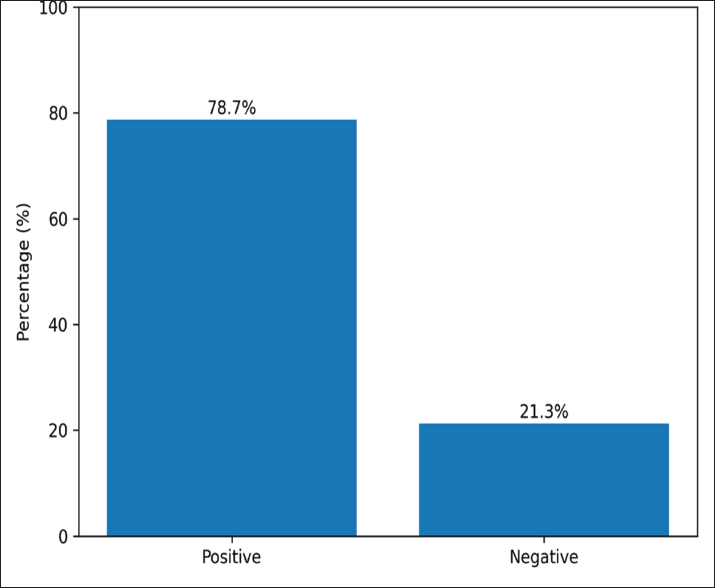
Overall seropositivity of BRSV antibodiesAmong the 94 serum samples tested, 74 were positive for antibodies against BRSV, corresponding to an overall seropositivity rate of 78.7% (95% CI: 69.3–86.2). Figure 1 shows the distribution of seropositive and seronegative animals.
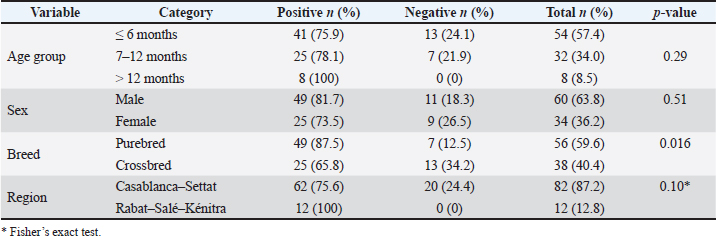
Fig. 1. The overall seropositivity rate of antibodies against BRSV in symptomatic cattle (n=94). Distribution of BRSV seropositivity according to potential risk factorsTable 2 presents the distribution of BRSV seropositivity according to age group, sex, breed, and sampling region. Table 2. Distribution of BRSV seropositivity according to age, sex, breed, and sampling region.
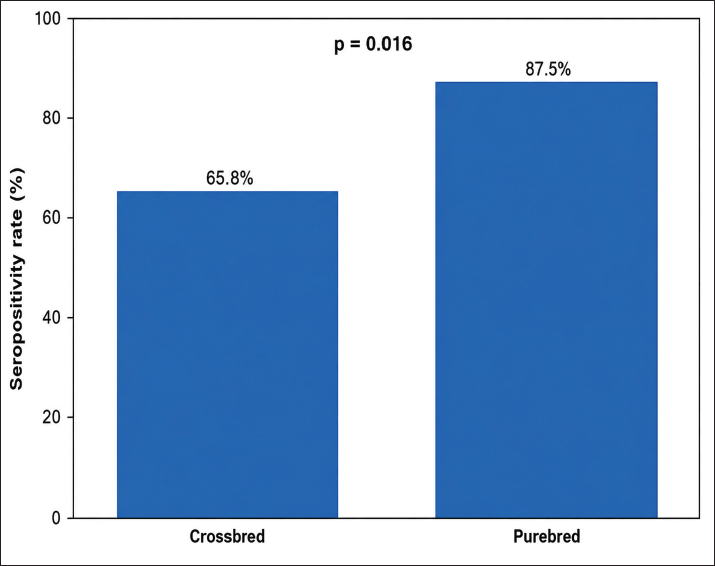
• AgeThe seropositivity rate varied slightly among the age groups. Animals aged ≤ 6 months showed a seropositivity rate of 75.9% (41/54), whereas animals aged 7–12 months showed a seropositivity rate of 78.1% (25/32). All animals aged >12 months were seropositive (100%, 8/8). However, the association between age group and BRSV seropositivity was not statistically significant (p=0.29). • SexThe seropositivity rate was slightly higher in males (81.7%, 49/60) than in females (73.5%, 25/34). Nevertheless, no significant association was observed between sex and BRSV seropositivity (p=0.51). • BreedWhen animals were grouped according to breed type, purebred cattle (Limousine, Montbéliarde, Belgian Blue, and Charolais) showed a higher seropositivity rate (87.5%, 49/56) than crossbred animals (65.8%, 25/38). The odds of BRSV seropositivity were higher in purebred cattle (OR=3.64; 95% CI: 1.27–10.43), and this association was statistically significant (p=0.016). The distribution of the seropositivity rate according to breed is illustrated in Figure 2.
Fig. 2. Seropositivity rate of BRSV antibodies according to breed type (crossbred vs. purebred cattle). • RegionThe seropositivity rate differed between the 2 regions. The Rabat–Salé–Kénitra region had a seropositivity rate of 100% (12/12), whereas the Casablanca–Settat region had a seropositivity rate of 75.6% (62/82). However, the association between the sampling region and BRSV seropositivity was not statistically significant (p=0.10). DiscussionThis study investigated the serological evidence of BRSV exposure in symptomatic cattle from several regions of Morocco. The results revealed a high overall seropositivity rate of 78.7%, indicating substantial exposure of clinically affected cattle to BRSV. BRSV is recognized as one of the most important viral pathogens associated with BRD, representing a major cause of morbidity and economic losses in cattle production systems worldwide (Valarcher and Taylor, 2007; Ellis, 2017; Headley et al., 2022). The high seropositivity rate observed in this study is consistent with previous reports from different parts of the world, where BRSV is known to endemically circulate in cattle populations. In Morocco, our findings are similar to those of Alali et al. (2024), who reported a seroprevalence of approximately 86.4% in cattle from several regions of the country. This similarity highlights the widespread exposure of BRSV among clinically affected cattle in the investigated Moroccan herds and is consistent with previous evidence suggesting endemic circulation of the virus in the region. Several studies conducted in Europe have reported seroprevalence values ranging between 60% and 90%, depending on herd structure and management practices (Valarcher and Hägglund, 2006). Recent studies have also reported comparable levels of seropositivity; for instance, a seroprevalence of approximately 78.9% was reported in cattle herds in Bulgaria, indicating widespread exposure of animals to BRSV in endemic production systems (Marutsov et al., 2024). Similar findings have been reported in North America, where widespread exposure to BRSV has been documented in both dairy and beef cattle herds (Brodersen, 2010). Studies conducted in African and Middle Eastern countries have reported seroprevalence levels ranging from 60% to 85%, indicating that BRSV is widely distributed across diverse cattle production systems (Alemayehu et al., 2020; Ibrahim et al., 2021). The consistently high seropositivity rates reported across different geographical regions may reflect the endemic nature of BRSV in cattle populations. The efficient transmission of the virus through close animal contact and repeated exposure over time likely contributes to the widespread development of BRSV-specific antibodies within herds. In endemic production systems, seropositivity often reflects cumulative exposure at the individual and herd levels. Taken together, these findings suggest widespread exposure to BRSV among clinically affected cattle in the Moroccan herds under investigation, which is consistent with the worldwide endemic circulation of BRSV in cattle populations (Taylor, 2023). However, because the study relied exclusively on serological detection of antibodies, the findings should be interpreted cautiously as evidence of previous exposure or immune response to BRSV rather than direct evidence of active infection or causality in the observed respiratory disease. In addition, as part of broader respiratory disease investigations, respiratory samples were collected from the same animals during field investigations for subsequent molecular analyses. One of the most notable observations of the present study was the high seropositivity detected in calves younger than 6 months (75.9%), suggesting that BRSV exposure may occur early in life. BRSV is a highly contagious respiratory virus that rapidly spreads within cattle herds through respiratory secretions and close contact between animals (Valarcher and Taylor, 2007). However, the ≤6-month age category included calves at different stages of early-life immune development. The relative contribution of maternally derived antibodies and natural exposure to BRSV could not be distinguished in the present study. Future investigations using finer age stratification would help to better characterize the dynamics of passive immunity and early-life exposure to BRSV in Moroccan cattle populations. Moreover, the interpretation of serological results in very young calves should be approached with caution. In neonatal animals, antibodies detected by ELISA may partly reflect maternally derived antibodies acquired through colostrum rather than antibodies produced following active infection (Meyer et al., 2023). Colostral antibodies can persist for several months and may influence the interpretation of serological assays in young calves (Hägglund et al., 2022). Nevertheless, early exposure to respiratory viruses is common in cattle production systems, particularly in environments where animals are housed in groups, facilitating viral transmission within herds (Ellis, 2017; Ellis, 2022). Therefore, the high seropositivity observed in young animals in this study may reflect a combination of passive immunity and early natural exposure to BRSV. Although seropositivity tended to increase with age, reaching 100% in animals aged >12 months, the association between age group and BRSV seropositivity was not statistically significant. Nevertheless, this pattern suggests a progressive accumulation of exposure to the virus over time, which is characteristic of endemically circulating pathogens within cattle herds (Hoppe et al., 2018). A slightly higher seropositivity rate was observed in males (81.7%) compared with females (73.5%), although this difference was not statistically significant. Similar observations have been reported in previous epidemiological studies, where no consistent association was identified between sex and BRSV infection risk (Brodersen, 2010; Hussain et al., 2019). These findings suggest that sex is not a major determinant of susceptibility to BRSV infection in cattle. Interestingly, a significant association was observed between breed type and BRSV seropositivity. The seropositivity rate was significantly higher in purebred cattle (87.5%) than in crossbred animals (65.8%), and the odds of BRSV seropositivity were significantly higher in purebred cattle (OR=3.64; 95% CI: 1.27–10.43). Although the mechanisms underlying this difference remain unclear, previous studies have suggested breed-related variation in susceptibility to respiratory infections. Genetic differences in immune response and host susceptibility may influence the outcome of viral infections (Ellis, 2017). In addition, purebred animals are often raised in more intensive production systems, where higher stocking density and increased animal contact may facilitate viral transmission within herds (O’Donoghue et al., 2025). However, potential confounding factors such as herd management practices, production intensity, or regional differences cannot be excluded because no multivariable analysis was performed. Therefore, the observed association between breed type and BRSV seropositivity should be interpreted with caution. Regarding the geographic distribution of seropositivity, animals from the Rabat–Salé–Kénitra region showed a seropositivity rate of 100%, whereas animals from the Casablanca–Settat region showed a slightly lower prevalence (75.6%). Although this difference was not statistically significant, the number of animals sampled from the Rabat–Salé–Kénitra region was limited (n=12), restricting the epidemiological interpretation of this finding and reducing the strength of regional comparisons. However, it may reflect local clustering of infection at the herd level. BRSV outbreaks often occur at the herd level due to the virus’s high transmissibility, which can rapidly spread among animals in close contact (Valarcher and Hägglund, 2006). Therefore, differences in herd management practices, animal movements, or biosecurity measures may contribute to local variations in virus circulation (Callan and Garry, 2005). The epidemiological significance of BRSV exposure in Morocco should also be considered in the context of local cattle production systems. Although multivalent respiratory vaccines that include BRSV antigens are available, farming practices remain variable and are influenced by economic considerations, management priorities, and farmer awareness. Furthermore, investigations of respiratory diseases are often initiated following the occurrence of clinically clear outbreaks, whereas routine laboratory testing for respiratory pathogens is not consistently implemented. The coexistence of dairy and fattening production systems, frequent animal movements, mixing of animals from different sources, variable biosecurity practices, and inconsistent implementation of preventive measures may all contribute to the persistence and transmission of respiratory pathogens within cattle populations. These factors should be considered when interpreting the widespread serological evidence of BRSV exposure observed in this study. Despite these findings, several limitations should be considered when interpreting the results of this study. First, the study relied on the serological detection of antibodies, which reflects previous exposure to BRSV rather than active infection. Serological assays provide valuable information on the circulation of the virus at the population level but do not allow precise determination of the time of infection. Because sampling was restricted to clinically affected animals, the findings should be interpreted as evidence of BRSV exposure among symptomatic cattle rather than representative estimates for the general cattle population. Moreover, the presence of maternally derived antibodies in young calves may influence serological results, particularly in animals sampled during the first weeks of life (Tuncer and Yeşilbağ, 2015). Furthermore, the relatively small number of animals in certain categories, such as older animals and some geographic areas, may have limited the statistical power to detect significant associations for some variables. Future studies combining serological and molecular diagnostic approaches, such as reverse transcription polymerase chain reaction (RT-PCR), would provide a more comprehensive understanding of the epidemiology and circulation dynamics of BRSV in Moroccan cattle. Overall, the high seropositivity rate detected in this study indicates that BRSV circulates widely among cattle in Morocco. These findings provide valuable baseline data on the epidemiology of BRSV in Moroccan cattle herds, where epidemiological information on this virus remains limited. They also highlight the importance of improving disease surveillance and implementing effective preventive strategies to mitigate the impact of respiratory infections in cattle. Improved herd management practices, enhanced biosecurity measures, and vaccination programs, where available, may reduce viral transmission and limit the economic impact of BRSV infections in cattle production systems. ConclusionThis study provides new insights into the serological exposure to BRSV among clinically affected cattle from 2 major livestock regions of Morocco. The high overall seropositivity rate detected (78.7%) indicates widespread serological evidence of BRSV exposure within the investigated herds. No significant associations were observed between BRSV seropositivity and most of the investigated variables, including age, sex, and sampling region. However, a significantly higher seropositivity rate was observed in purebred cattle compared with crossbred animals, suggesting that breed-related factors or differences in management systems may influence exposure to BRSV. The high antibody detection rate observed in this study highlights the need for improved disease surveillance and preventive strategies in Moroccan cattle production systems given the important role of BRSV in the BRD complex. Strengthening herd health management, implementing effective biosecurity measures, and considering vaccination programs may help reduce viral transmission and limit the economic impact of respiratory diseases in cattle. Future studies combining serological and molecular diagnostic approaches, particularly RT-PCR, would provide a comprehensive understanding of the circulation dynamics and epidemiology of respiratory viruses among cattle herds in Morocco. AcknowledgmentsThe authors would like to thank the staff of the Regional Laboratory of Analysis and Research of the National Office of Food Safety (ONSSA), Casablanca, Morocco, for their technical assistance and support during sample collection and laboratory analysis. Conflict of interestThe authors declare no conflict of interest. FundingThis research received no specific grant from any funding agency in the public, commercial, or not-for-profit sectors. Authors' contributionsMohammed Filali contributed to the study design, sample collection, serological analysis, statistical analysis, data interpretation, and manuscript drafting. Hanane Khallouki and Fatiha El Mellouli contributed to the laboratory work, data collection, and manuscript revision. Hamid Lakhiari supervised the study, contributed to data interpretation, and critically revised the manuscript. All authors have read and approved the final version of the manuscript. Data availabilityThe data supporting the findings of this study are available upon reasonable request from the corresponding author. ReferencesAlali, S., Laabouri, F.Z., Choukri, I., Outenrhrine, H., El Ghourdaf, A. and El Berbri, I. 2024. Bovine respiratory disease: sero-epidemiological surveys in unvaccinated cattle in Morocco. World. Vet. J. 14(4), 476–489. Alemayehu, H., Leta, S., Hailu, B. and Teshale, A. 2020. Seroprevalence of bovine respiratory syncytial virus in cattle in Ethiopia. Trop. Anim. Health Prod. 52, 1237–1243. Barcelos, L.S., Ford, A.K., Frühauf, M.I., Botton, N.Y., Fischer, G. and Maggioli, M.F. 2024. Interactions between bovine respiratory syncytial virus and cattle: aspects of pathogenesis and immunity. Viruses 16(11), 1753. Brodersen, B.W. 2010. Bovine Respiratory Syncytial Virus. Vet. Clinics. North. Amer. Food. Anim. Pract. 26, 323–333. Callan, R.J. and Garry, F.B. 2005. Biosecurity and bovine respiratory disease. Vet. Clin. North. Am. Food. Anim. Pract. 18(1), 57. Ellis, J.A. 2017. How efficacious are vaccines against bovine respiratory syncytial virus in cattle? Vet. Microbiol. 206, 59–68. Ellis, J.A. 2022. Update on bovine respiratory syncytial virus and other respiratory pathogens of cattle. Vet. Clin. North Am. Food Anim. Pract. 38(1), 1–15. Fulton, R.W. and Confer, A.W. 2012. Laboratory test descriptions for bovine respiratory disease diagnosis and their strengths and weaknesses: gold standards for diagnosis, do they exist?. Can. Vet. J. 53(7), 754. Hägglund, S., Blodörn, K., Näslund, K., Vargmar, K. and Valarcher, J.F. 2022. Maternal antibodies and their influence on respiratory viral infections in calves. Vet. Microbiol. 267, 109377. Headley, S.A., Okano, W., Balbo, L.C. and Alfieri, A.F. 2022. Bovine respiratory disease: new perspectives on viral and bacterial interactions in cattle. Vet. Res. Commun. 46, 289–304. Hoppe, I.B.A.L., Medeiros, A.S.R.D., Arns, C.W. and Samara, S.I. 2018. Bovine respiratory syncytial virus seroprevalence and risk factors in non-vaccinated dairy cattle herds in Brazil. BMC. Vet. Res. 14(1), 208. Hussain, K.J., Al-Farwachi, M.I. and Hassan, S.D. 2019. Seroprevalence and risk factors of bovine respiratory syncytial virus in cattle in the Nineveh Governorate, Iraq. Vet. World 12(11), 1862. Ibrahim, A.A., Ahmed, M.M., El-Sayed, A.A. and Al-Hosary, A.A. 2021. Serological evidence of bovine respiratory syncytial virus infection in cattle in the Middle East. Vet. World. 14, 650–656. Koteneva, S.V., Glotov, A.G., Glotova, T.I. and Nefedchenko, A.V. 2025. Bovine respiratory syncytial virus infection: clinical manifestations, pathogenesis and molecular epidemiology. Veterinariya Segodnya 14(2), 133–139. Kurćubić, V., Đoković, R., Ilić, Z. and Petrović, M. 2018. Etiopathogenesis and economic significance of bovine respiratory disease complex (BRDC). Acta. Agric. Serb. 23(45), 85–100. Larsen, L.E. 2000. Bovine respiratory syncytial virus (BRSV): a review. Acta Vet. Scand. 41, 1–24. Martinez, D.A., Newcomer, B., Passler, T. and Chamorro, M.F. 2022. Efficacy of bovine respiratory syncytial virus vaccines to reduce morbidity and mortality in calves within experimental infection models: a systematic review and meta-analysis. Front. Vet. Sci. 9, 906636. Marutsov, P., Zarkov, I., Stoyanov, G. and Stoev, S. 2024. Seroprevalence of bovine respiratory syncytial virus in cattle herds in Bulgaria. Vet. Sci. 11, 78. Meyer, G., Foret-Lucas, C., Delverdier, M., Cuquemelle, A., Secula, A. and Cassard, H. 2023. Protection against bovine respiratory syncytial virus afforded by maternal antibodies from cows immunized with an inactivated vaccine. Vaccines 11(1), 141. O’Donoghue, S., Waters, S.M., Morris, D.W. and Earley, B. 2025. A comprehensive review: bovine respiratory disease, current insights into epidemiology, diagnostic challenges, and vaccination. Vet. Sci. 12(8), 778. Panciera, R.J. and Confer, A.W. 2010. Pathogenesis and pathology of bovine pneumonia. Vet. Clin. North Am. Food Anim. Pract. 26, 191–214. Perotta, J.H., Silva, I.V., Rodriguez, M.C., Joineau, M.E.G., Tschá, M.K., De Sousa, R.S., Dall Agnol, A.M., Silva, F.H.P., Buczinski, S., Headley, S.A. and Barros Filho, I.R.D. 2025. Outbreak of respiratory disease due to bovine respiratory syncytial virus with concomitant infections by Histophilus somni and Pasteurella multocida in adult dairy cows and calves from Southern Brazil. Animals 15(20), 3015. Santos-Rivera, M., Woolums, A.R., Thoresen, M., Meyer, F. and Vance, C.K. 2022. Bovine respiratory syncytial virus (BRSV) infection detected in exhaled breath condensate of dairy calves by near-infrared aquaphotomics. Molecules 27(2), 549. Taylor. 2023. Bovine respiratory syncytial virus: pathogenesis, immunity and control. Vet. Microbiol. 280, 109685. Tuncer, P. and Yeşilbağ, K. 2015. Serological detection of infection dynamics for respiratory viruses among dairy calves. Vet. Microbiol. 180(3-4), 180–185. Valarcher, J.F. and Hägglund, S. 2006. Viral respiratory infections in cattle. Vet. Res. 37, 373–394. Valarcher, J.F. and Taylor, G. 2007. Bovine respiratory syncytial virus infection. Vet. Res. 38, 153–180. Werid, G.M., Wubshet, A.K., Araya, T.T., Miller, D., Hemmatzadeh, F., Reichel, M.P. and Petrovski, K. 2024. Detection of bovine respiratory syncytial virus in cattle: a systematic review and meta-analysis. Ruminants 4(4), 491–514. Yamamoto, S., Okumura, S., Kobayashi, R., Maeda, Y., Takahashi, F. and Tanabe, T. 2024. Bovine respiratory syncytial virus enhances the attachment of Trueperella pyogenes to cells. J. Vet. Med. Sci. 86(10), 1068–1075. | ||
| How to Cite this Article |
| Pubmed Style Filali M, Khallouki H, El-mellouli F, Lakhiari H. Serological evidence and epidemiological patterns of bovine respiratory syncytial virus in symptomatic cattle from Morocco. Open Vet. J.. 2026; 16(7): 4132-4140. doi:10.5455/OVJ.2026.v16.i7.4 Web Style Filali M, Khallouki H, El-mellouli F, Lakhiari H. Serological evidence and epidemiological patterns of bovine respiratory syncytial virus in symptomatic cattle from Morocco. https://www.openveterinaryjournal.com/?mno=320136 [Access: June 30, 2026]. doi:10.5455/OVJ.2026.v16.i7.4 AMA (American Medical Association) Style Filali M, Khallouki H, El-mellouli F, Lakhiari H. Serological evidence and epidemiological patterns of bovine respiratory syncytial virus in symptomatic cattle from Morocco. Open Vet. J.. 2026; 16(7): 4132-4140. doi:10.5455/OVJ.2026.v16.i7.4 Vancouver/ICMJE Style Filali M, Khallouki H, El-mellouli F, Lakhiari H. Serological evidence and epidemiological patterns of bovine respiratory syncytial virus in symptomatic cattle from Morocco. Open Vet. J.. (2026), [cited June 30, 2026]; 16(7): 4132-4140. doi:10.5455/OVJ.2026.v16.i7.4 Harvard Style Filali, M., Khallouki, . H., El-mellouli, . F. & Lakhiari, . H. (2026) Serological evidence and epidemiological patterns of bovine respiratory syncytial virus in symptomatic cattle from Morocco. Open Vet. J., 16 (7), 4132-4140. doi:10.5455/OVJ.2026.v16.i7.4 Turabian Style Filali, Mohammed, Hanane Khallouki, Fatiha El-mellouli, and Hamid Lakhiari. 2026. Serological evidence and epidemiological patterns of bovine respiratory syncytial virus in symptomatic cattle from Morocco. Open Veterinary Journal, 16 (7), 4132-4140. doi:10.5455/OVJ.2026.v16.i7.4 Chicago Style Filali, Mohammed, Hanane Khallouki, Fatiha El-mellouli, and Hamid Lakhiari. "Serological evidence and epidemiological patterns of bovine respiratory syncytial virus in symptomatic cattle from Morocco." Open Veterinary Journal 16 (2026), 4132-4140. doi:10.5455/OVJ.2026.v16.i7.4 MLA (The Modern Language Association) Style Filali, Mohammed, Hanane Khallouki, Fatiha El-mellouli, and Hamid Lakhiari. "Serological evidence and epidemiological patterns of bovine respiratory syncytial virus in symptomatic cattle from Morocco." Open Veterinary Journal 16.7 (2026), 4132-4140. Print. doi:10.5455/OVJ.2026.v16.i7.4 APA (American Psychological Association) Style Filali, M., Khallouki, . H., El-mellouli, . F. & Lakhiari, . H. (2026) Serological evidence and epidemiological patterns of bovine respiratory syncytial virus in symptomatic cattle from Morocco. Open Veterinary Journal, 16 (7), 4132-4140. doi:10.5455/OVJ.2026.v16.i7.4 |


